


News
Week in Week Out: 1st Grade Care accused of ordering a client to be abandoned

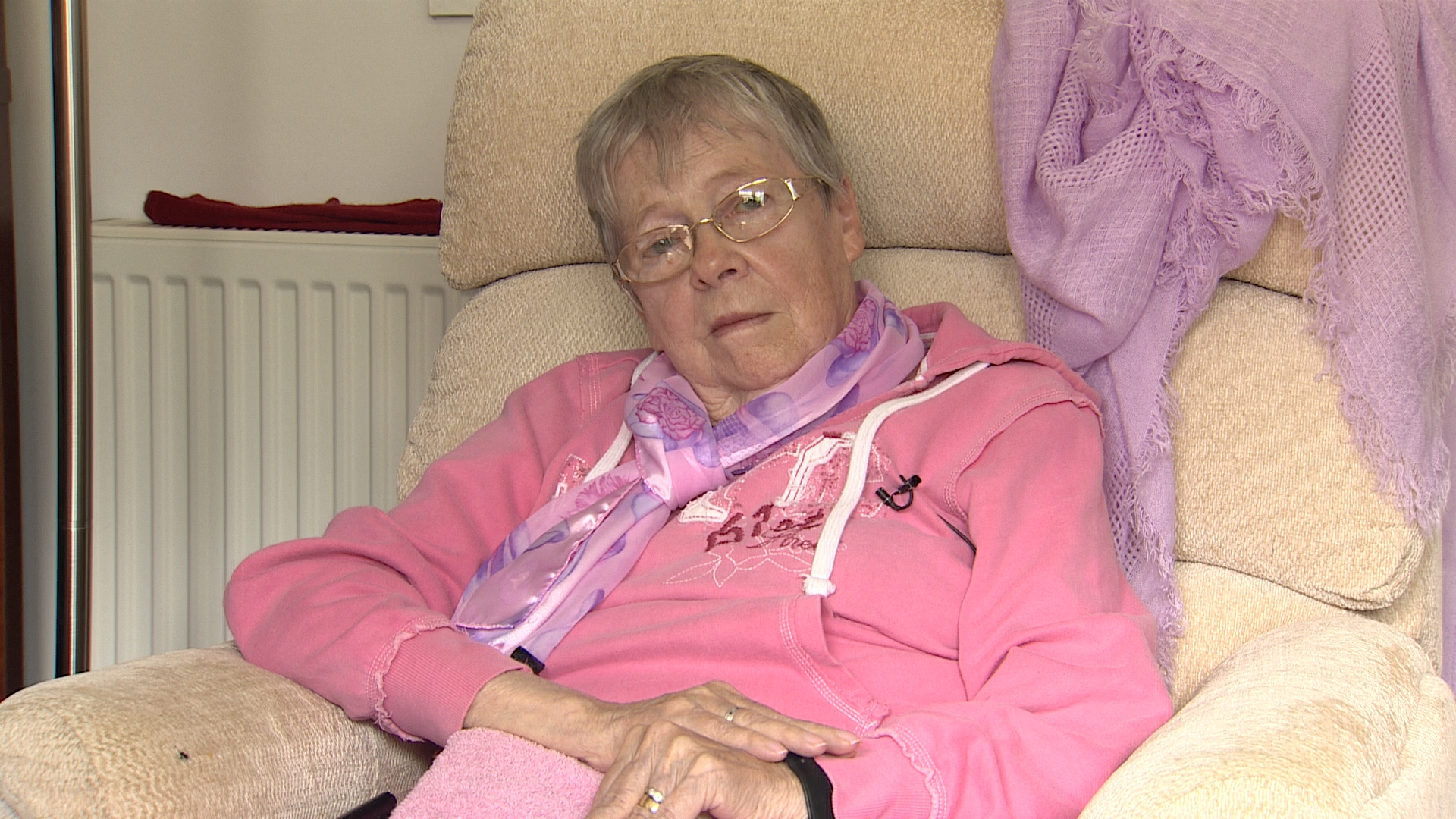

Marie Perry – George’s wife
A Welsh council is investigating a case made in a Week in Week Out programme where a care worker was ordered to leave a distressed 92-year-old woman alone on the floor of her home, following a fall.
That careworker is employed by a firm which tenders for work in Pembrokeshire and Cardiff.
Vale of Glamorgan Council-contracted 1st Grade Care is accused of ordering the care worker to abandon Doris Jones from Barry, and attend their next call before an ambulance or relative arrived.
The care worker told Week in Week Out: “I rang the paramedics straight away and all the time she’s on the floor. I then rang the office to say my lady is on the floor and was told to leave the call within the time I was allocated and go to my next call. I asked if somebody could do my next call for me because I didn’t feel happy leaving her, and I was told no. I had to leave her and to leave the door open for the paramedics.”
The care worker says she felt so awful about what she was asked to she do she challenged the order: “I asked if they would be happy if it was their mother lying on the floor and somebody left. I was told it was just the job.”

It’s a shocking accusation. We spoke to the son of 92-year-old Doris Jones who took the call. He told us there had been many concerns with 1st Grade Care including missed and shortened calls. When his mother came out of hospital she was placed with another care company at the family’s request. Doris Jones passed away last year.
1st Grade Care has been in operation since 2011 and was set up by former property developer Michael Poole.
 The allegation levelled against the company is just one of a series made on Week In Week Out by families unhappy at the level of care provided as well as care workers who say the company failed to train them and they found it impossible to meet the demands of their everyday rotas.
In a damning report by the Care Standards Inspectorate for Wales (CSSIW) published in January this year, 1st Grade Care was said to be putting service users in “unnecessary and significant risk to their health, safety and well-being due to a lack of sufficient training for a high percentage of staff.” Issues surrounding rotas were also found. The company was served with a non-compliance notice and the CSSIW have been back to re-inspect. They say they expect to publish a new report by the end of the month.

Jackie Toom worked for the company in Pembrokeshire as a care worker and admits to being regularly late to assist clients as she struggled to follow a rota that only gave 15 minutes to travel from St David’s to Newport, or ended one call in Milford Haven and started the next at a location north of Haverfordwest, at the same time.
“You can’t be in two places at the same time. To get from A to B in zero minutes. We are not given any travel time so we could get more working hours – more calls.”
Marie Perry from Pembroke has Parkinson’s Disease and needed a care package to help her get to the bathroom four times a day but her husband George tells the programme visits were regularly late or even missed.

Mr Perry, who has had major heart surgery and whose condition is deteriorating, was left to lift his wife when care workers were late or didn’t turn up. He says he is angry over the experience and doesn’t understand why the authorities haven’t investigated the company earlier. Mr Perry told The Herald: “I don’t know how much control the local authority has over them. It’s not being properly policed otherwise they would have lost their contract some time ago”.
Week in Week Out has discovered that 1st Grade Care has come under scrutiny by both Pembrokeshire and Vale of Glamorgan but neither council has thought it appropriate to cancel the company’s contract.
In a statement 1st Grade Care, said that the company admits they have been failings managing care workers appointments but they now have a new monitoring system in the Vale of Glamorgan. But they had no comment about why problems with rotas and training had continued in Pembrokeshire despite a damning inspection in the Vale, and targets set by both councils.
Welsh councils have been under pressure to save money and drive down costs with Welsh Local Government Association figures showing £55 million shortfall in adult services over the past financial year.
There are over 400 registered care companies in Wales. The industry argues that for them to operate effectively a minimum payment of £15.74 per hour is needed, with even more in rural areas. But Week In Week Out has discovered that only three councils in Wales are paying this basic rate.
Industry insiders say the hourly rate councils are prepared to pay means they are increasingly unable to deliver services to home users effectively as they drive down their own costs to survive.
In Cardiff a new tendering system has been introduced that sees care companies bid against each other in a live auction for care packages. Professor Luke Clement from Cardiff University and an expert in social care law says he is worried by a system he believes lacks humanity and dignity.
Cardiff Council has defended the system saying it is offering value for money, improving quality as well as attracting new companies. But Week In Week Out has learned that the UK’s largest care company Allied Healthcare has pulled out of Cardiff, saying their decision was due in part to the new auction system.
Professor Clement is also critical of the inspectorate CSSIW. He told the programme: “If it is their job to make sure the sort of abuses and failures we are discussing don’t happen then clearly it’s not doing its job properly. If things go wrong there may be a letter or a slap on the wrist but companies are not being closed down”.
The Inspectorate has the power to shut down care companies that aren’t complying with regulatory standards. In the programme the CSSIW said the last year they had shut down five following inspections and 14 companies had been given strict conditions to conform to. David Francis, Assistant Chief Inspector of CSSIW said more people were coming forward with complaints tripling over the last four years, but they wanted to hear from more. He said: “If there are people out there who wish to make contact with us we welcome that. We would welcome them raising their concerns with us.”
Last year plans by Powys to reorganise home care fell into chaos and hit the headlines after companies failed to deliver and were shut down. Assembly Member Kirsty Williams says there were a number of issues that caused the new system to collapse. She wants councils to respond quicker when things go wrong. She said: “They simply do not know what is happening on the ground and then that makes the system really vulnerable. It relies on individuals making complaints and what we know about people in receipt of domiciliary care is often they are really frightened to speak out because they are worried that their carers are going to be taken away from them, they are worried that they will get people into trouble and often people are so grateful have any kind of support they are very reluctant to speak out if things are going wrong.”
The Welsh Government is working on a new law to strengthen the inspection of Domiciliary Care companies. Health Minister Mark Drakeford told the programme: “Our bill allows us to be helpful to those companies when we can help them to improve. But where there are companies who provide services of the sort that would not be acceptable to you or me or the people watching this programme. We want the law to be quicker, more effective and to make sure these companies are no longer part of our landscape”
- Please watch BBC Week in Week Out, Tuesday, June 9, BBC One Wales, 10.35pm


LABOUR SAYS MINISTERS MUST EXPLAIN COST AND TIMETABLE FOR PYLON PLANS
PLAID CYMRU’S approach to energy infrastructure has come under scrutiny after Energy Minister Adam Price was challenged over plans to reduce the use of overhead pylons in Wales.
Mr Price defended the Welsh Government’s position during an appearance on BBC Radio Wales’ Sunday Supplement, arguing that communities must have greater confidence in how major grid projects are handled.
Plaid Cymru has pledged to give communities a stronger voice over energy developments and to look more closely at alternatives to overhead transmission lines, including underground cabling where possible.
The issue has become increasingly sensitive in rural parts of Wales, where proposed pylon routes linked to renewable energy schemes have raised concerns about landscape impact, tourism and local consultation.
However, Welsh Labour said the minister had failed to explain when any restriction on pylons would take effect, or who would pay the additional cost of placing cables underground.
A Welsh Labour spokesperson said: “Adam Price keeps saying how clear their manifesto was and yet he won’t say when they’re banning pylons. They won’t say who is paying for the extra cost of undergrounding cables.
“Without certainty, companies won’t invest. That’s thousands of clean, green energy jobs at risk. Plaid need more than a plan to have a plan.”
Labour said the Welsh Government must now set out how its policy would work in practice, including whether it amounts to an outright ban, what exemptions would apply, and how any extra costs would be funded.
The debate highlights the challenge facing ministers as Wales seeks to expand renewable energy generation while addressing public opposition to large-scale grid infrastructure.

HORSES, STALLS AND FAMILY CROWDS RETURN TO MONKTON
FAMILIES, horse owners and visitors turned out in force for Pembroke Fair on Saturday (May 23), with many praising the event as one of the best organised in recent years.
Held at the Community Centre Field in Monkton, the annual fair brought together horse owners, traders and local families for a traditional day centred around horses, ponies, stalls and socialising.
Coloured cobs, heavy horses, ponies and horse-drawn traps attracted attention throughout the day, with many visitors gathering around the field to watch the animals being shown and led around the site.



A variety of stalls selling everything from clothing and ornaments to tack and second-hand goods helped create a lively market atmosphere, while food vendors kept visitors fed throughout the day.
Despite overcast conditions at times, the event remained busy, with many attendees staying for several hours to enjoy the traditional fair atmosphere.
Community members later took to social media to praise the smooth running of the event, with several publicly thanking organiser Charlie Price for his efforts in bringing the fair together.
Comments described the day as “well organised” and praised the welcoming atmosphere, with many saying it was encouraging to see a long-standing local tradition continuing to thrive.
The fair once again brought together members of the travelling community, local residents and horse enthusiasts from across west Wales.






A horse drive was also due to take place on Sunday (May 24), continuing the weekend’s celebrations.
Photo captions:
Traditional gathering: Horses, ponies, horse-drawn carts and market stalls drew crowds to Pembroke Fair in Monkton on Saturday (Pic: Herald).

A HEALTH board has been criticised by Audit Wales after GP contracts worth more than £10m were awarded without sufficient due diligence checks.
Aneurin Bevan University Health Board allowed a GP partnership associated with eHarley Street Primary Care Solutions to take on eight GP contracts in south-east Wales, with a combined annual value of around £10.1m.
Audit Wales said the board should have carried out greater scrutiny before approving the arrangements, including checks on financial resilience, workforce plans, business risks and the partnership’s ability to manage several practices at once.
However, the watchdog found no evidence of fraud and noted the board was dealing with significant pressure in general practice, including vacant contracts and limited interest from other bidders.
The report said weaknesses in governance and scrutiny contributed to later disruption and uncertainty for patients and staff when problems emerged.
Concerns included financial and workforce pressures, unpaid invoices, and issues relating to tax and pension payments. Some contracts were later handed back, requiring the health board to step in to protect services.
Natasha Asghar MS, Welsh Conservative Shadow Cabinet Minister for Health and Social Care, said the findings were “deeply concerning”.
She said: “Patients and staff were left facing disruption and uncertainty because proper scrutiny was not carried out before these contracts were awarded.
“The Welsh Conservatives believe lessons must be learned to ensure robust checks are in place, protect frontline services and restore confidence in primary care across Wales.”
Aneurin Bevan University Health Board accepted the recommendations and said it had already strengthened its processes.
Audit Wales said the case highlighted the need for stronger checks before GP contracts are transferred, particularly when a single partnership is taking on multiple practices in a short period.



Business14 hours ago
Plaid energy policy challenged by Labour after Adam Price interview
LABOUR SAYS MINISTERS MUST EXPLAIN COST AND TIMETABLE FOR PYLON PLANS PLAID CYMRU’S approach to energy infrastructure has come under...


Community14 hours ago
Pembroke Fair praised as well-organised community event
HORSES, STALLS AND FAMILY CROWDS RETURN TO MONKTON FAMILIES, horse owners and visitors turned out in force for Pembroke Fair...


Local Government3 days ago
Youngest mayor in century takes office in Haverfordwest
Randell Izaiah Thomas-Turner makes history as town’s first millennial mayor and first from a diverse background HAVERFORDWEST has welcomed a...


Community3 days ago
Pembroke Fair set to return after last year’s success
STALL HOLDERS INVITED AS HORSE DRIVE PLANNED PEMBROKE Fair is set to return this weekend following the success of last...


Crime3 days ago
Neyland man accused of running over traffic worker’s foot
Jury hears conflicting accounts over roadworks incident in Milford Haven A NEYLAND man has appeared before Swansea Crown Court accused...


Community3 days ago
New pilot boat Llanion dedicated at emotional Milford Haven ceremony
Vessel dedicated at Mackerel Quay as Port marks major investment in safety and resilience MILFORD HAVEN’S new state-of-the-art pilot vessel...


Local Government4 days ago
Police and GoSafe to target speeding in Newport and Dinas
RESIDENTS’ concerns over speeding and anti-social driving have prompted planned enforcement action in the Newport and Dinas areas. Dyfed-Powys Police...


Community5 days ago
Safety first as Milford Haven’s new pilot boat marks end of troubled chapter
Gary Solomon, who was aboard St Davids during the 2016 collision, helped shape new self-righting vessel Llanion from conception to...


Crime5 days ago
Cocaine courier caught with £15,000 haul in Pembroke Dock
Defendant transported high-purity drugs from Cardiff to Pembrokeshire for £210 A PEMBROKESHIRE man caught transporting more than £15,000 of high-purity...


News5 days ago
Car bursts into flames near Redberth Croft as road closed after incident
Nobody injured after vehicle fire near A477 prompts emergency response A CAR was destroyed by fire near the entrance to...
-

 News2 days ago
Watchdog criticises health board over £10m GP contract checks
-

 Crime4 days ago
Farm owner in court after 26 dogs removed over welfare concerns
-
 News3 days ago
Paul Davies meets Openreach Cymru at the Senedd to discuss Full Fibre rollout
-

 Crime5 days ago
Tree surgeon sentenced for failing to provide breath test
-

 Crime5 days ago
Pembrokeshire teenager admits driving almost four times over drug-drive limit
-

 News5 days ago
Milford man admits handling stolen goods from three local properties
-

 Crime6 days ago
Builder jailed for £82,000 fraud affecting 18 victims
-

 Crime3 days ago
Milford Haven man admits affray after alleged pub incident