

Education
Teacher shortage ‘threatens Welsh speaker target’


SENEDD members warned a shortage of teachers could undermine a target to reach a million Welsh speakers and double daily use of the language by 2050.
Eluned Morgan, standing in for Jeremy Miles, who resigned as economy and Welsh language secretary that day, gave a statement on the Welsh education bill on July 16.
She said the bill, which was introduced in the Senedd this week, will give every child in Wales a fair chance of becoming Welsh speakers.
Baroness Morgan told the debating chamber or Siambr that the bill would put the vision of a million Welsh speakers on a statutory footing.
But opposition parties warned the success of the bill will hinge on the teaching workforce.

Tom Giffard raised concerns about the recruitment and retention of Welsh-language teachers, questioning if the workforce is adequately prepared to meet the challenge.
The Conservatives’ shadow Welsh language secretary said teachers who teach through the medium of Welsh are, on average, older than their counterparts in classrooms.
Mr Giffard warned the bill will add to the workload of teachers who are already grappling with a new curriculum and additional learning needs reforms.
He supported moving away from the “blunt instrument” of “fluent” or “non-fluent” to the Common European Framework of Reference for Languages (CEFR).
But he cautioned against “lowering the bar” to count people towards the target of a million Welsh speakers set out in the Cymraeg 2050 strategy.
Plaid Cymru’s Heledd Fychan agreed the workforce will be pivotal to the success of the bill.
“If we don’t have the numbers in schools, then we won’t be able to achieve that ambition,” she said. “We do need to see definite targets in terms of increasing the number able to teach through the medium of Welsh because we aren’t hitting the targets as they currently stand.”

Ms Fychan, who represents South Wales Central, also raised concerns about dual-stream schools being seen as the solution.
She said: “Only a small number of schools operate according to this model and I’m not aware of comprehensive research that demonstrates this model works in Wales.”
Arguing the best way for a child to learn is to be immersed in Welsh-medium education, she said most children continue to be denied the chance to become confident Welsh speakers
Mike Hedges, whose daughter teaches in a Welsh-medium school on Ynys Mon, hailed a “huge improvement” in the teaching of Welsh in English-medium primary schools.
“I think there really has been a huge change,” said the Labour backbencher. “When I visit English-medium schools in Swansea, like I did on Monday, I hear Welsh spoken, see it on classroom walls and see Welsh on notice boards.”
Mr Hedges, who represents Swansea East, said this has been made possible by a one-year Welsh-language sabbatical course for primary school teachers.
Rhys ab Owen, who sits as an independent, called for a secondary school in south Cardiff to ensure Welsh-medium education is available in one of Wales’ most deprived communities.
The South Wales Central MS also raised concerns about unequal access to Welsh-medium education for disabled children and young people.
Cefin Campbell was involved in development of the bill as part of Plaid Cymru’s now-collapsed cooperation agreement with the Welsh Government.
Mr Campbell, who established the first of Wales’ 22 Menter Iaith, which provide community support for learning the language, said: “What concerns me a great deal … is the deficiencies in terms of a bilingual workforce.”
The Plaid Cymru MS for Mid and West Wales raised concerns about low numbers of students studying A-level Welsh.
Baroness Morgan recognised the workforce challenges, saying the Welsh Government is seeking to attract more people to train to become teachers.
The health secretary, who was previously responsible for the language, said incentives are offered to get more teachers to train through the medium of Welsh.
She stressed the census will determine progress against the target of a million Welsh speakers, raising concerns that people “tick that they don’t speak Welsh when they do”.
Baroness Morgan, who attended the first Welsh-medium school in Cardiff, pointed to “huge” progress and “transformational” change over the past 50 years.
She told the chamber: “When I was going to school, people would throw stones at our bus because they didn’t want a Welsh school in their area. That’s the reality of the situation.”


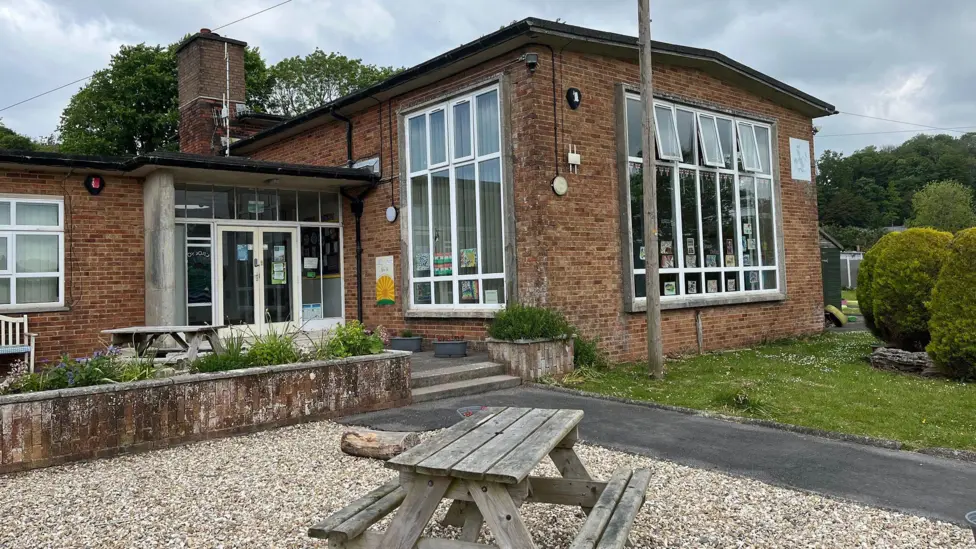
CARMARTHENSHIRE COUNTY COUNCIL failed to properly assess the Welsh-language impact of plans to close Ysgol Llansteffan before moving to publish a statutory closure notice, the Welsh Language Commissioner has found.
The adjudication follows a complaint by Cymdeithas yr Iaith over the council’s handling of the future of the Welsh-medium school, which is due to close formally on August 31, 2026.
In correspondence with Cymdeithas yr Iaith, the Commissioner said the council had accepted that its original Welsh Language Impact Assessment was insufficient.
The Commissioner did not uphold every part of the complaint. Cymdeithas had argued that there was insufficient capacity in other Welsh-medium schools in the Carmarthen town area, and that some pupils could be pushed out of Welsh-medium education. However, the Commissioner said it was not within her powers to investigate school-place data in that way.
But she did find that the council’s original assessment failed to deal “conscientiously” with the effect that closing the school would have on the community of Llansteffan.
Cymdeithas yr Iaith had argued that it was unreasonable for the council to describe the language impact of closing what it called the most important Welsh-medium institution in the village as “neutral”. The group said the decision ran counter to efforts to strengthen rural Welsh-speaking communities.
The Commissioner found that Carmarthenshire County Council had failed to comply with Welsh Language Standards 88, 89 and 90, which require public bodies to assess the impact of policy decisions on the Welsh language.
Her adjudication says the council later revised its Language Impact Assessment during the course of the investigation. However, the Commissioner made clear that such consideration should have formed part of the decision-making process from the outset.
The Commissioner said: “To comply with the standards, it is essential that consideration of Welsh language effects forms an integral part of the policy-making process from the outset, rather than being separate from the decision itself or addressed at the end of the process.”
She added that the council’s process flow chart should include a clear requirement for the Welsh-language effect of a proposed school closure to be considered from the very start.
The Commissioner does not have the statutory power to overturn the school closure decision itself. Her role is to determine whether the council complied with the Welsh Language Standards and to require future compliance.
Speaking on behalf of Cymdeithas yr Iaith in Carmarthenshire, Ffred Ffransis said the decision confirmed that the council’s process had been flawed.

He said: “The simple truth of the matter is that the Cabinet of Carmarthenshire County Council in November 2025 took the decision to issue a Statutory Closure Notice for Ysgol Llansteffan based on a defective Language Impact Assessment.
“The fact that they took later steps to amend and mitigate does not compensate for the harm done by this injustice to the pupils and the local community.
“We have already been informed that one young family has put their house on the market to move to an area which has a school.
“We shall be drawing the attention of the Chief Executive Officer, Wendy Walters, to the lack of a strategic approach across departments.
“There is an application to build affordable homes in the village, but attempts to revive the community by attracting young families are being undermined by the closure of the school by another council department.”
The council’s Cabinet decided on November 17, 2025, to issue a closure notice for Ysgol Llansteffan using the shortened process available for schools with fewer than ten pupils. Cymdeithas says the number of pupils had risen from eight to 17 during the process.
The full council later agreed to close the school after considering the objections report at the beginning of March 2026. Cymdeithas says councillors were not told at that meeting that a complaint had been made about the original Language Impact Assessment.
Parents have already had to register their children at other schools for the next academic year.
A legal challenge to the closure decision is understood to be due to be heard in August, shortly before the school’s formal closure date.

Pupils at Ysgol Glannau Gwaun have been celebrating after their school became one of only nine in Wales to achieve Gold Active Travel status
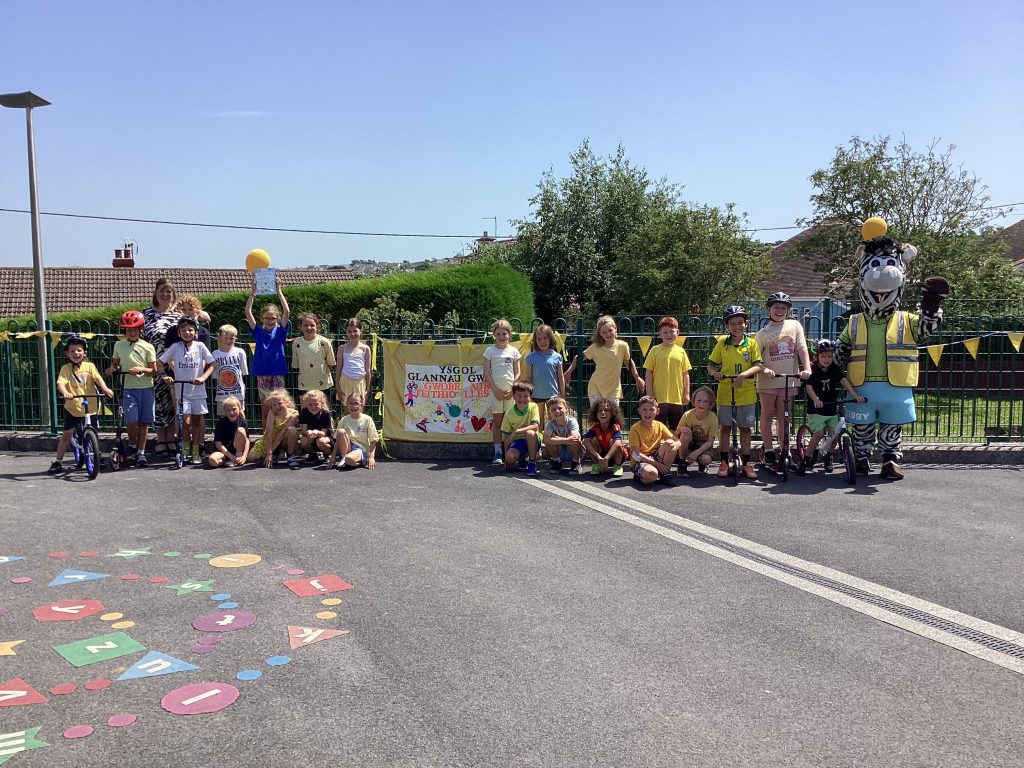
The Fishguard school recently travelled to the Senedd in Cardiff to receive its prestigious Walk, Wheel, Cycle Gold Active Travel Award, recognising the work pupils and staff have done to promote walking, cycling and scooting.
It was the second time pupils from Ysgol Glannau Gwaun had travelled to the capital to present their active travel projects to a range of audiences.
The school now has a fleet of 60 scooters and 40 bicycles, allowing children from Nursery through to Year 6 to build their confidence and skills.

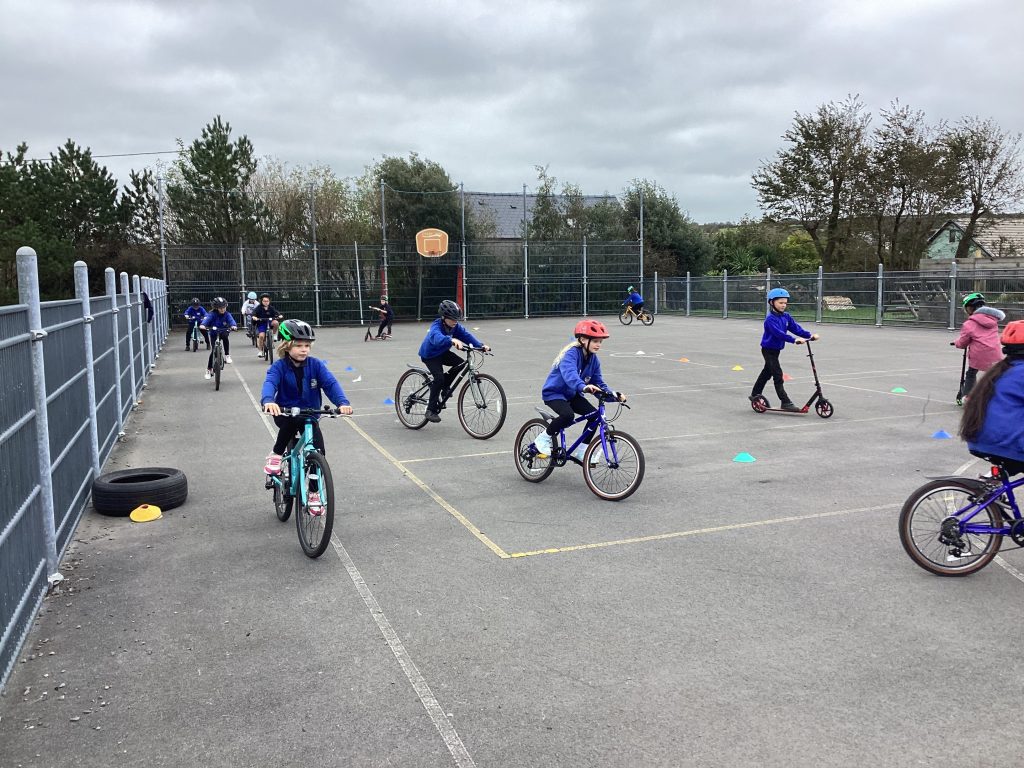
Through a range of grants and funding opportunities, weekly cycling and scooter sessions are now offered to all pupils, regardless of age or ability.
In 2023, only 11 of 41 pupils were able to complete their Level 1 and 2 cycle training, as many did not have access to a bicycle.
Since then, the school has worked hard to change that. Thanks to investment in school bikes, every pupil can now take part in cycle training.
Older pupils have also taken on leadership roles, supporting younger children with balance bike and scooter sessions.
Progression Step 3 pupils have designed a 1.5km community scooter trail, beginning at Fishguard Library and finishing in Goodwick. The route has been created not only for pupils, but for the wider community.
To further encourage active travel, the school also loans scooters to families, helping to ensure everyone has the opportunity to take part.
Staff help run a walking bus to after-school music activities at the secondary school, while the School Senedd regularly develops new ideas to promote active travel.
One recent initiative was a six-hour scootathon, which raised £1,000 for the RNLI.
To mark the Gold award, the school held a special celebration day for all pupils. Fusion Extreme delivered BMX workshops, while British BMX champion Matti Hemmings impressed pupils with a spectacular display of skills.
Pupils also presented their journey to achieving Gold status to parents, governors and community partners, including Transition Bro Gwaun, which helped fund the school’s bicycle fleet.
Headteacher Mrs Mari Jones said: “I am incredibly proud of our pupils, whose enthusiasm, leadership and commitment have driven many of the initiatives that contributed to this award.”
Deputy Headteacher Mrs Sharon Osborne added: “We are extremely grateful to the Pembrokeshire Road Safety Team, Alice from the Walk, Wheel, Cycle Trust, Transition Bro Gwaun and the Catrin Vaughan Foundation for their support.
“Their funding and resources have enabled our pupils to develop exceptional cycling and scooting skills, alongside valuable leadership and communication skills.
“This has culminated in pupils confidently presenting their achievements to a wide range of audiences.”
Pupils say their active travel journey does not end with the Gold award, with more ideas already being planned.
As they proudly put it, nothing stands still at Ysgol Glannau Gwaun.

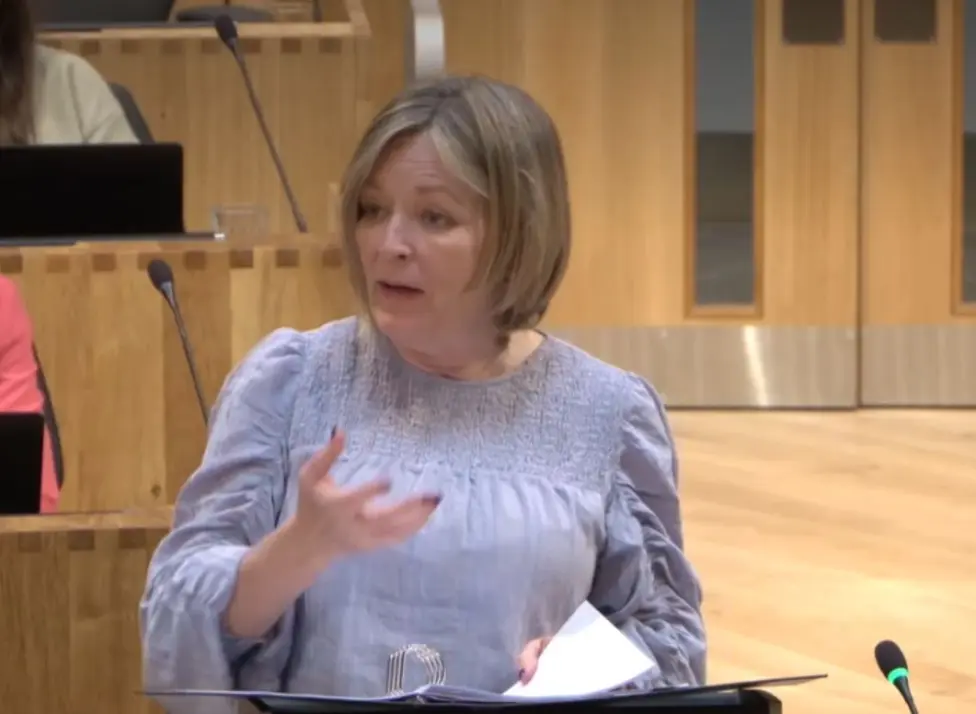
WALES’ education minister has vowed to tackle the “root causes” of antisocial behaviour in schools.
Plaid Cymru’s Anna Brychan was pressed on the Welsh Government’s plans to fix the issue by Reform MS Paul Marr on Wednesday July 1.
Referencing Plaid’s 100 day plan, Ms Brychan said the government will address the root causes of behavioural challenges, including “attendance, wellbeing and wider needs”, through a “co-ordinated whole system approach.”
She noted the importance of early intervention and aligning support services to “enhance learning environments”.
Welcoming Ms Brychan’s commitment to early intervention, Mr Marr said parents in his Ceredigion Penfro constituency want to know “why schools are increasingly being expected to deal with the threat of knife crime without proper resources.”
Calling on the Welsh Government to commit to funding preventable security measures and emergency response training, he noted: “Policies and plans, with respect, Minister, do not stop blades.”

Mr Marr also referred to his experience working in the prison service, where he said attacks on staff with bladed instruments became “a regular occurrence”.
He called for assurances for teachers from Ms Brychan that, with rising numbers of incidents, these attacks are “not expected to be their new norm”.
She said: “Every learner has the right to feel safe and know they belong in a school, are able to attend, participate and achieve.
“And the same is true of members of staff, and ensuring the safety and wellbeing of our school workforce is equally a priority for us.”
Labour’s Shav Taj spoke of the importance of correctly framing the debate around antisocial behaviour in schools.

She said: “While challenging behaviour is obviously a real concern, we’re hearing very clearly from unions but also staff on the ground, that it is actually increasingly linked to unmet needs, particularly around mental health and additional learning needs as well.”
Ms Taj went on to emphasise the importance of ALN reforms and ensuring the right level of support is in place through “a person-centred, needs-led system”.
She continued: “What teachers and teaching assistants are continuously telling us is that too often they’re being left to manage increasingly complex needs without it.
“So while some may frame this purely as an issue of discipline, isn’t the reality that where needs aren’t being met early, those pressures are simply playing out and compounding in the classroom?”
Ms Taj asked how the Welsh Government plans to ensure mental health provision in schools is properly resourced, including school counselling and wider ALN support.
Ms Brychan responded saying her points are “exactly the reasons” the programme will look at “wellbeing, attendance, and wider needs through a co-ordinated whole-system approach.”
She added: “She [Ms Taj] touches on ALN; that is a wider issue in our system, and that’s precisely why we want to bring all of these areas together and to recognise the barriers to learning that are part of this area of concern for us, and that’s why we have framed our response in this way.”
Ms Brychan was also pressed for an update on the progress made so far towards introducing a foundational literacy and numeracy plan.
Reform MS David Mills told the Siambr that Estyn found roughly 20% of pupils leave primary school functionally illiterate – a figure he described as “frightening”.

He called for the minister to set out “a clear timetable” for bringing the plan forward, and how it will deliver “measurable improvements” in both literacy and numeracy.
Ms Brychan stressed the problem is not with Welsh learners, and said: “Our learners are able to achieve and have potential comparable to anywhere in the world. It isn’t the lack of a willing workforce either.
“It is, I think, a lack of understanding of the expectations around progression in literacy and numeracy, and that’s precisely why we are introducing this literacy and numeracy foundational plan.”
Ms Brychan reassured the member that she is working “at pace”, noting that on her second day in the job she wrote to schools to outline the Welsh Government’s work on the plan, promising an update at the end of the summer term, before the framework is introduced in the autumn.
Natasha Asghar, of the Welsh Conservatives, questioned the deputy minister on what steps the Welsh Government is taking to boost the number of apprenticeships in Wales.
Noting that university isn’t “for everyone”, Ms Asghar stressed the importance of apprenticeships as a route into the workplace for “those who want to earn and learn at the same time”.

Recalling a commitment from Plaid’s election manifesto, she noted the party promised to expand both work experience and apprenticeships.
However, Ms Asghar went on to share a conversation she had recently with Jane Blackwell – a franchisee of five McDonald’s restaurants in the Newport area – who noted that despite wanting to take on more apprenticeships she is limited to due to the strict criteria of the apprenticeship levy.
Ms Asghar said: “We have a situation here where a business owner with multiple sites is contributing towards the apprenticeship fund, but isn’t able to access it to take on her own apprentices; it is, frankly, absurd”.
She called on the deputy minister to commit to meeting with Jane to discuss the issue and “iron out the problems” to start getting more young people into work.
In response, Cefin Campbell – the deputy minister for skills and tertiary education – said the Welsh Government is currently investing £151 million in apprenticeships to support delivery across Wales.

He said: “We believe that apprenticeships are a cornerstone of Wales’s post-16 skills system and a key policy, as you mentioned, for economic growth, fair work and productivity.
“They provide high-quality routes into employment, supporting people of all ages and helping employers develop the workforce they need.”
The deputy minister agreed with Ms Asghar that the current apprenticeship offer needs changes to reflect both “changing economic needs and the needs of businesses”.
He added: “A new apprenticeship programme from August 2027 will deliver a more flexible and responsive model for employers and delivery partners, shaped by extensive engagement, led by Medr.
“Now, this reform should be seen as part of a wider drive to create clearer pathways, improve parity of esteem with academic routes, and strengthen alignment between skills and economic growth.”



Community22 seconds ago
Haverfordwest Castle refurbishment reaches new heights as roof lifted into place
Major milestone reached in project to transform historic gaol building into flagship visitor attraction A MAJOR milestone has been reached...


Business1 day ago
Pembrokeshire lands £98m share of Wales marine energy boom
New industry report says county has received the second highest level of marine energy investment in Wales, supporting more than...


Crime1 day ago
First aider tells jury teacher was “crying, shaking” after classroom stabbing
A SCHOOL first aider has told a jury that teacher Vicki Williams was “crying, shaking” and in “complete shock” after...


Crime2 days ago
Teacher feared she was dying after Milford Haven classroom stabbing
A TEACHER allegedly stabbed in the head at Milford Haven Comprehensive School told a jury she feared she was dying...


News2 days ago
Farage to resign as MP and fight Clacton by-election amid finance row
NIGEL FARAGE has announced he will resign as MP for Clacton and stand again in the by-election he intends to...
Crime2 days ago
Teacher tells jury there were ‘no issues’ with accused pupil hours before ‘stabbing’
Milford Haven teacher gives evidence as trial of 15-year-old continues at Swansea Crown Court A TEACHER allegedly stabbed at Milford...


News3 days ago
Major incident stood down after fire at Impala Terminal in Milford Haven
Fire involved decommissioned oil tank containing residual crude oil and around 60 cylinders A MAJOR incident declared during a fire...


News3 days ago
Large fire breaks out at Impala Terminal in Milford Haven
Black smoke seen for miles as emergency services respond to incident at former Puma Energy site A LARGE fire has...
Crime3 days ago
Prosecution outlines ‘planned attack’ as Milford Haven teacher stabbing trial opens
Jury hears teenager allegedly brought kitchen knife into school before teacher was stabbed in the head THE JURY in the...

Crime3 days ago
Boy, 15, denies attempted murder of Milford Haven teacher in ‘horrifying’ attack
Swansea Crown Court hears dramatic opening of trial over February stabbing A 15-YEAR-OLD boy from Milford Haven has gone on...
-
 Community6 days ago
Closure-threatened Stepaside school expected to remain open
-
 Education6 days ago
Education secretary vows to tackle ‘root causes’ of antisocial behaviour in schools
-

 Crime7 days ago
Llandeilo man accused of rape sent to Crown Court
-

 Community6 days ago
Saundersfoot Harbour regeneration project wins national planning award
-
 Education6 days ago
First Minister pressed on biological sex, additional learning needs, and NHS jobs
-

 Education6 days ago
Ysgol Glannau Gwaun celebrates prestigious Gold Active Travel award
-
News3 days ago
Large fire breaks out at Impala Terminal in Milford Haven
-

 Health6 days ago
NHS at 78: A moment to give back to the service Wales helped create