


News
Call for EU to act on ‘devastating’ price cuts



Accused: Phil Hogan
ANNOUNCEMENTS by Arla and First Milk at the beginning of July that they were to cut the price paid to dairy producers by 1p/litre has resulted in a deepening sense of crisis within the Welsh dairy industry.
Plaid Cymru’s Shadow Minister for Rural Affairs, Llyr Gruffydd AM, called on the European Agriculture Commissioner, Phil Hogan to acknowledge that there is a crisis in the Welsh dairy sector on the day that he visited the Royal Welsh Agricultural Show.
The EU Commissioner will visited the show on Monday (Jul 20), as dairy farmers in Wales continue to produce milk at a loss with no prospect of a price increase until at least next year.
Mr Hogan has been widely criticised for refusing to acknowledge the true scale of problems facing the industry. He was criticised for claiming in January that milk prices were holding up well and there was no dairy crisis, and was further challenged to make the long overdue recognition by MEPs in the European Parliament earlier this month.
Plaid Cymru’s Shadow Minister for Rural Affairs, Llyr Gruffydd AM said: “With devastating milk price cuts at farm gate level, the short-term fortunes of dairy production is pretty grim. No business can carry on producing at a loss for very long and it is time for the Commissioner to acknowledge the scale of the crisis. Producers have seen more than a third knocked off their milk price in less than 12 months and this is having huge repercussions for the rural economy.”

The AM continued: “The Royal Welsh Agricultural Show is the biggest event in our farming calendar, and if the EU Commissioner is meeting with farmers here today then he needs to be honest with them. That means acknowledging that the dairy industry is in crisis. After seeing the Tory UK government cut the overall CAP budget by 10% and then a Labour Welsh Government cutting direct subsidies to Welsh farmers by £1/4bn, plummeting farm-gate prices come at a most difficult time.”
Pointing out the role of supermarkets in driving down prices, Mr Gruffydd concluded: “Large retailers also have a key role to play. Using milk as a loss leader inevitably devalues the product and it should not be happening.”
Optimism expressed by Welsh Conservatives that the removal of milk quotas in an already difficult market would not lead to price falls for Welsh farmers has been shown to be nothing more than wishful thinking. The fears of the FUW that abandoning quotas would adversely impact smaller producers, who predominate in the Welsh dairy market, appear at this stage to have been fully borne out.
Rob Harrison, head of the NFU’s dairy board said: “450 quitting dairy farming since this time last year in England and Wales. The recent series of cuts have highlighted the need for short-term solutions to address the problems happening now – farmers need urgent help from industry and Government. We need Government to move away from paying lip service and focus on the here and now. Their long-term solutions must take a back seat while we focus on the immediate crisis; we need them to insist on best practice in the supply chain, look at growing dairy consumption and supporting more investment in dairy processing in the UK – and this needs to happen now.”

Since 2002, more than half of Britain’s dairy farmers have gone out of business, defeated by rock-bottom prices and rising costs. For the past few months, even those that have survived have been caught up in another perfect storm. Britain consumes more than four-fifths of the milk it produces, but its price is dictated globally, by the cost of producing milk in, say, New Zealand or the US.


57-year-old due in court following alleged knife and stalking offences
A MAN has been charged with attempted murder following a serious incident in Carmarthen town centre last week.
Dyfed-Powys Police confirmed that James McKenna, aged 57, from Carmarthen, has been charged with attempted murder, possession of a bladed article in a public place, and stalking.
The charges relate to an incident in Carmarthen Park on Thursday (Jan 29), which prompted a significant emergency services response and caused concern among residents.
Police have not yet released full details of the circumstances, but officers were seen in and around the park area for several hours following the incident while enquiries were carried out.
McKenna is due to appear before Llanelli Magistrates Court on Thursday (Feb 5).
The Herald understands the case involves allegations of both violence and targeted behaviour towards an individual, with stalking listed among the charges.
Public concern
Carmarthen Park is a popular and busy public space used daily by families, dog walkers and joggers, and incidents of this severity are rare.
The news has prompted concern locally, particularly as the alleged offences include possession of a knife in a public place.
Residents have previously raised questions about safety in parks and open spaces across west Wales, especially during darker winter evenings.

Court proceedings
At this stage, the charges remain allegations and the case will now proceed through the courts.
Magistrates will decide whether the case is sent to Crown Court due to the seriousness of the attempted murder charge.
Further details are expected to emerge during Thursday’s hearing.

The Herald will be attending court and will provide updates as they become available.

Man walked into police station after months avoiding authorities
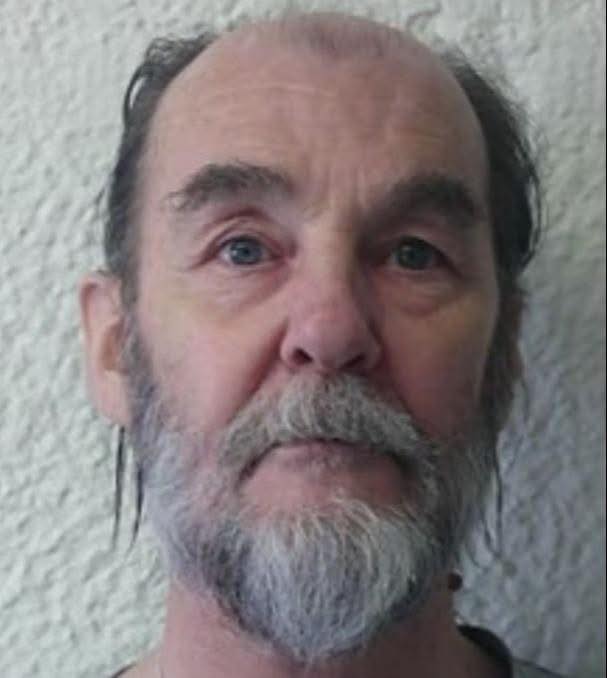
A CONVICTED sex offender who told police he intended to live “off grid” rather than comply with legal monitoring rules has been jailed after handing himself in at a Pembrokeshire police station.

Christopher Spelman, aged 66, of no fixed address, appeared for sentence at Swansea Crown Court after admitting breaching the notification requirements of the sex offenders register.
The court heard Spelman was released from prison in Dorset on July 4 last year but immediately refused to provide police with an address, despite being legally required to do so within three days.
Instead, he indicated he planned to buy a tent and live outdoors.
Prosecutor Brian Simpson said officers subsequently launched a nationwide search when Spelman failed to make contact with police. Public appeals were issued and his case featured on the television programme Crimewatch.

Detectives believed he had been travelling around the UK using public transport and staying at campsites. He was known to have links to several areas including Merseyside, Manchester, Devon, Cornwall and Hampshire.
His whereabouts remained unknown until January 3 this year, when he walked into Haverfordwest police station and was arrested. It is unclear how long he had been in Pembrokeshire.
Spelman previously served seven years in prison after being convicted in 2014 of 12 counts of sexually assaulting a girl under the age of 14. He was placed on the sex offenders register for life.
The court heard this was not the first time he had failed to comply with the rules. After an earlier release in 2016, he again failed to register his address and avoided police for around five years before being caught.
He has 11 previous convictions for 29 offences.
Defence barrister Andrew Evans described the case as unusual and said his client had long disputed his original conviction and had expressed a wish to live “outside society”.
However, he said Spelman had gradually accepted that he remained subject to court orders and now wanted more stable accommodation and a chance to rebuild his life. The defendant asked the court to impose a custodial sentence so arrangements could be made for his future release.

Judge Geraint Walters noted there were signs Spelman wished to change but warned that any further breaches would result in longer prison terms.
With credit for his guilty plea, Spelman was sentenced to 10 months in prison. He will serve up to half in custody before being released on licence.
Ex-Ospreys captain was almost twice over limit in Pembroke town centre
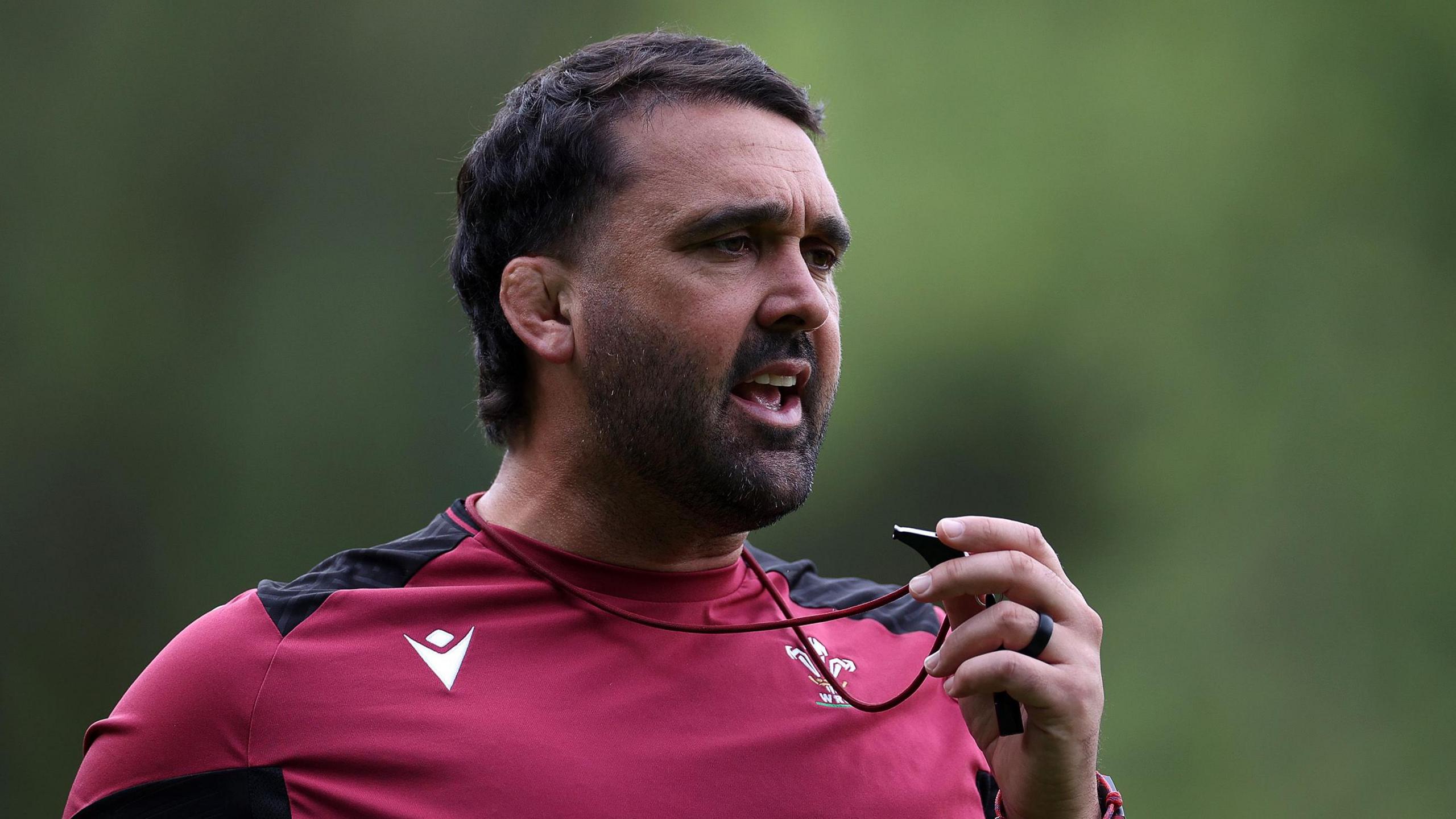
Former Wales back row Jonathan Thomas has admitted driving through Pembroke town centre on Christmas Day when he was almost twice over the drink-drive limit.
This week Haverfordwest magistrates heard that Thomas, 43, was stopped by officers as he drove his Mercedes CLA 220 along The Green, Pembroke, at around 5pm on Christmas Day.
“The officers were very concerned at the manner of his driving, as the car was being driven erratically and was swerving to the other side of the road,” said Crown Prosecutor Sian Vaughan.
“When Jonathan Thomas got out of the car, the officers could see that he was having difficulty standing and was unsteady on his feet.”
Subsequent breathalyser tests showed Thomas had 62 mcg of alcohol in his system, the legal limit being 35.
Thomas, who has no previous convictions, pleaded guilty to the drink-drive charge and was represented in court by solicitor Jess Hill.
“He has family in the area and had travelled to spend time with them on Christmas Day,” she told the magistrates. “He’s very remorseful for his actions and hugely regrets his decision that day.”
Jess Hill concluded by saying that Thomas is currently “between jobs and living off his savings”.
Thomas, who gave his address as Main Road, Bredon, was disqualified from driving for a total of 18 months.

“The length of your disqualification reflects the fact that you were more than a little bit over the limit,” commented the presiding magistrates when imposing sentence.
He was fined £120 and ordered to pay £85 costs and a £48 court surcharge.
The former Wales back row left his role as Swansea RFC head coach at the beginning of December 2025 as a result of ongoing health concerns. He was forced to retire from playing in 2015 on medical advice after being diagnosed with epilepsy and is one of the 390 former rugby union players currently taking part in a concussion lawsuit against the sport’s authorities.

“Long-standing issues linked to the head trauma have caused me some concern recently and it has been impossible for me to give the role everything it needs,” he said in a previous interview with the BBC.
His rugby career started out with Pembroke RFC juniors before moving to Swansea RFC, which he captained when he was 19. He then joined the Ospreys where, over a ten-year period, he won four league titles and an Anglo-Welsh Cup. He was the youngest player to captain the Ospreys and, at the time of leaving, was the joint highest appearance holder, together with Andrew Bishop, on 188 appearances.
His international career saw him play for Wales at Under-16, Youth, Under-19, Under-21 and Sevens levels. He made his senior international debut against Australia in 2003, featured at the 2007 Rugby World Cup and was part of two Six Nations Grand Slam-winning sides in 2005 and 2008. Between 2004 and 2011, Thomas was included in every Wales Six Nations squad. In his appearances for Wales, he scored seven tries.


Crime7 hours ago
Sex offender jailed after living off grid in Pembrokeshire and refusing to register
Man walked into police station after months avoiding authorities A CONVICTED sex offender who told police he intended to live...


Crime14 hours ago
More rape and sexual assault survivors to get right to challenge dropped cases
New review scheme to be rolled out across CPS Cymru-Wales following successful pilot SURVIVORS of rape and serious sexual assault...

Crime1 day ago
Man spared jail after admitting child abuse image offences
Police seized devices after intelligence linked Pembrokeshire address to illegal cloud storage accounts A 23-YEAR-OLD Pembrokeshire man has avoided immediate...


Community2 days ago
Cleddau at heart of major water reforms as ministers promise ‘fundamental reset’
New regulation plan aims to tackle pollution, sewage spills and ageing infrastructure COMMUNITIES along the River Cleddau could see tighter...


Crime2 days ago
Man caught in hotel sting after trying to meet girl, 13
Laugharne defendant confronted by paedophile hunters at St Clears Travelodge before suspended jail term at Swansea Crown Court A LAUGHARNE...


News2 days ago
Princess of Wales visits historic Pembrokeshire woollen mill
Catherine the Princess of Wales visited Melin Tregwynt, a historic family-owned woollen mill, today, highlighting the enduring traditions and skills...


Crime2 days ago
Arrest made after Carmarthen park stabbing investigation
Police thank community and media following public appeal to trace suspect AN ARREST has been made following last week’s stabbing...


Crime2 days ago
Search continues for attempted murder suspect after Carmarthen park stabbing
Police expand searches across riverbank and woodland as public urged to come forward with information DYFED-POWYS POLICE say their search for...


Community3 days ago
Flood alert issued for Pembrokeshire coast this evening
Pembrokeshire residents are being urged to prepare for possible flooding along the coastline between St Dogmaels, Cardigan and Amroth, after...

News3 days ago
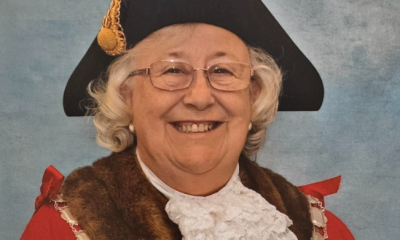
Tributes paid to Pembroke Dock Councillor and former Mayor Pamela George
It is with great sadness that the Pembroke Dock community mourns the passing of Councillor Pamela George. Pamela, affectionately known...
-
 Health7 days ago
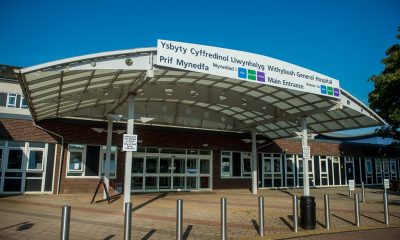
Consultation reveals lack of public trust in health board
-
News2 days ago
Princess of Wales visits historic Pembrokeshire woollen mill
-

 Crime5 days ago
Pembroke man accused of child sex offences sent to Swansea Crown Court
-

 Community7 days ago
Campaign to ‘save’ River Cleddau hits over 2,200 signatures
-

 Health3 days ago
Doctor struck off after sexual misconduct findings at Withybush Hospital
-
 Business6 days ago
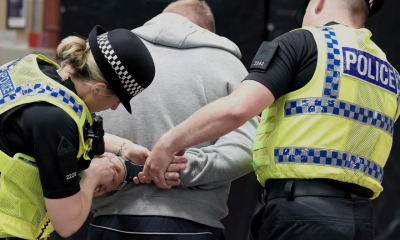
Eight-year prison sentence after vehicle stop uncovers drugs worth over £150,000
-
 Crime1 day ago
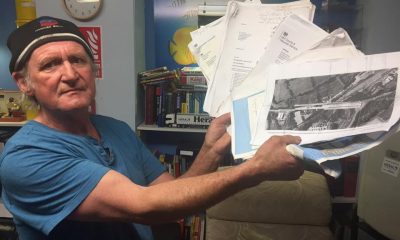
Hakin man’s appeal delayed again as Crown Court seeks guidance on insurance law
-

 Community5 days ago
50s women threaten legal action over pension compensation refusal