


News
Empty promises as election looms

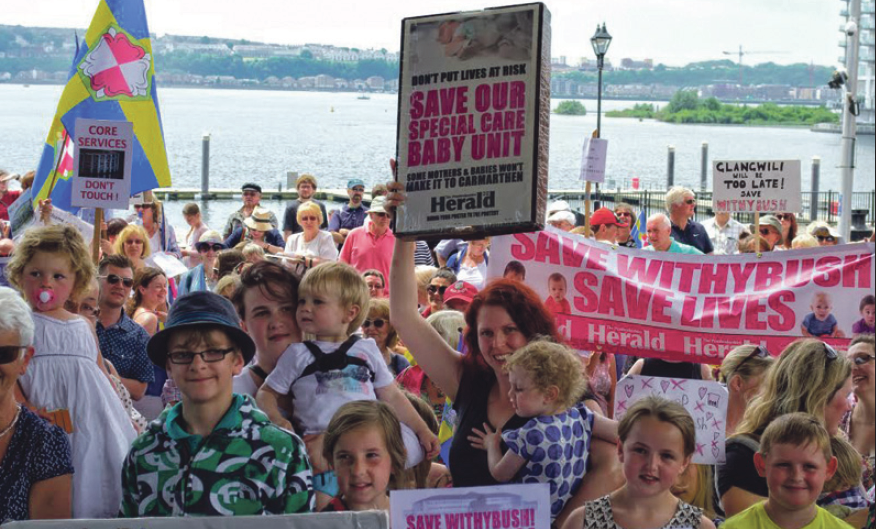
 A PRESS release from Preseli Pembrokeshire AM Paul Davies has claimed that in the event the Conservatives are able to form an administration after May’s elections to the Senedd, it will act to return services transferred from Withybush back to the Haverfordwest hospital.
At the same time, Angela Burns, Mr Davies’s fellow shadow front bench spokesperson issued her own release pledging the reopening of Tenby’s Minor Injuries Unit. With elections upon us later this year, a conversation Mr Davies had with local health campaigner David Williams appears to add more flesh to the bones of Mr Davies’s promise to return clinical specialisms to Haverfordwest. On the Save Withybush SCBU page, David Williams recounts a conversation he had with the AM. And the first question alights upon a key point.
Asked whether he has made the statement because the Conservatives haven’t a hope of a being in power after May 16, Mr Davies denies the promise is an empty one. However, as Mr Davies is wellaware, the chances of the Conservatives being in a position to bring such a policy to fruition is mathematically negligible. As a statement of principle, Mr Davies’s words might merit praise as a promise that can be delivered, it is of no consequence at all. And much the same might be said for Ms Burns’s promise to return an MIU to Tenby.
Clinical priorities take second place
Perhaps more seriously, Mr Davies lays himself open to a potential charge of hypocrisy. When asked how he would tackle the clinical priorities expressed by the Wales Deanery – the body responsible for the postgraduate training of doctors and the allocation of junior doctors to hospitals – Mr Davies suggested that clinical expertise would bow to political will. The very sort of coercion alleged by the Conservatives and hospital campaigners against the Labour Government in Cardiff Bay.

Paul Davies is reported to say: “The Welsh Deanery are appointed and funded by Welsh Government, so we will tell them this is what we are going to do so you have to get the people in place to make it happen, as recruitment & training are the deanery responsibilities.” Bearing in mind that one of the primary complaints of the Welsh Conservatives is that the current Welsh Government has failed to listen to clinical concerns, it now appears to be countenancing listening to some clinical concerns but ignoring others to suit its own political agenda.
Drakeford hits back
Criticism of Mr Davies was swift, Mark Drakeford the Welsh Health Minister was quick to draw attention to inconsistencies between what Mr Davies has published and what he and the Secretary of State for Wales have said to the Minister elsewhere. A Welsh Government spokesperson told The Herald: “During a recent meeting with the Minister for Health, Stephen Crabb MP and Paul Davies AM acknowledged that a sustained effort now needs to be made by all stakeholders to change the public narrative around the future of Withybush Hospital.” The spokesperson continued: “These plans are simply not backed up by any clinical evidence whatsoever.
“A review by the Royal College of Paediatrics and Child Health concluded there is no clinical sense in reversing the decision to remove maternity and paediatric services from Withybush Hospital. It found the new arrangements are safe, sustainable in the long-term, have led to improved outcomes for mothers and babies, there is better compliance with professional standards and more women are being cared for in the Hywel Dda area than previously. “The hospital plays – and will continue to play – an important role in the provision of services for people in Pembrokeshire. It will be important for us all to highlight the many steps being taken to strengthen services at Withybush Hospital, and to help the local community understand Withybush’s future is secure.”
Moving the debate on
That viewpoint is as one with the views of The Health Board itself. Chief Executive of the Health Board Steve Moore has made it abundantly clear in a number of public statements that the Board is not considering returning services transferred to Glangwili elsewhere. In an interview with this newspaper last November, Interim Clinical Lead Iain Robertson-Steel said: “For six months clinicians here have been working towards formulating a viable strategy for Withybush’s service delivery … the decision-making process has been clinically-led.”
Following Mr Davies press release, Health Board Chief Executive Steve Moore said: “As a Health Board we are committed to the future of Withybush Hospital and are working hard to improve and develop services in partnership with the people of Pembrokeshire.” On the particular services referred to by Mr Davies, Mr Moore told The Herald: “I know there has been public concern about changes to some women and children’s services, which is why we asked for an independent review by the Royal Colleges. They were clear in their advice to us that there was no clinical sense in reversing the changes and found evidence of improved outcomes for patients.

“We are however continuing our conversation with patients, staff and the general public to make further improvements to the patient experience of care, such as the transport schemes we have put in place and looking closely at family accommodation as we progress with the Phase Two capital project to improve the environment at Glangwili Hospital.” Even though the Conservatives are most unlikely to put public money where Paul Davies’s mouth is, the AM does not appear to have factored in the capital costs already incurred by the Board and what will be done to replace money spent by the Board in pursuit of clinical policies if they are to be displaced by political ones.
Davies pilloried
Plaid Cymru’s Preseli Pembrokeshire candidate for the Senedd elections was withering in his condemnation of Mr Davies. Herald columnist John Osmond, himself a highly visible and long-term campaigner in support of the Hospital, attacked the loss of services from Withybush as ‘deplorable’ and ‘unacceptable’.
Turning his fire on the Conservative AM, said: “Paul Davies is safe in making all the pledges he likes about returning services to Withybush, blithely confident in the knowledge that the Conservatives will be unable to form a government in Cardiff Bay following the next election. They are miles away from forming a majority administration on their own, and the fact is that no-one with any clout would consider working with them in a coalition. As far as forming a government is concerned the Welsh Tory Party is a busted flush.
“On the NHS Paul Davies and the Tories are complete hypocrites. They claim to be standing up to defend public services, and in particular Withybush hospital, when it is their Westminster Government’s ideologically driven public expenditure cuts that are the prime cause of the predicament the NHS finds itself in. They claim to be ring-fencing the NHS but their spending increases are running behind inflation. “Meanwhile, their swingeing cuts to local government budgets means that social services are in crisis and older people are bed blocking the acute hospital sector. Paul Davies should be ashamed of himself for shouting from the side-lines in west Wales while it is his own Home Counties Tory Party that is hitting the people he claims to represent.”



RSPCA says police are also investigating after further reports in same town
FRESH concerns have been raised in Milford Haven following reports of new animal shootings in the town.
The RSPCA has confirmed it is aware of further incidents and said Dyfed-Powys Police are also believed to be involved.
An RSPCA spokesperson said: “This is concerning and our hearts go out to anyone who has been affected by these incidents.
“Anyone with any information is asked to contact the RSPCA appeals line number on 0300 123 8018 and refer to incident number 01751732 or please contact the police who are also investigating.”
The latest reports follow earlier incidents in the Hakin area, where cats and wildlife were targeted with an air gun.
Earlier this month, the RSPCA issued an appeal after a cat died after being shot for a second time. A pigeon was also put to sleep after being found with an airgun pellet injury, while several cats had previously been shot in the area.
The charity said anyone caught deliberately using an air gun to injure an animal can face up to five years in prison and an unlimited fine under the Animal Welfare Act.
Deliberately injuring or killing wild birds is also a criminal offence under the Wildlife and Countryside Act 1981.
The RSPCA added that cats and wildlife are particularly vulnerable because they are often outside with nobody to protect them.
Anyone with information should contact the RSPCA appeals line on 0300 123 8018, quoting incident number 01751732, or contact Dyfed-Powys Police.

CEREDIGION Penfro MS Anna Nicholl has welcomed the Welsh Government’s broad ambition to strengthen rural resilience and sustainability, but has warned that farmers and local communities must be involved in shaping the detail if policies are to work in practice.
Speaking during a Senedd debate on June 23, Ms Nicholl referred to a recent visit to a farm in Pembrokeshire with the Farmers’ Union of Wales, where she heard first-hand about the significant challenges facing the sector.
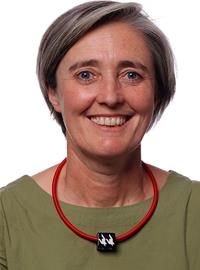
She highlighted examples of farms working with Farming Connect to reduce emissions, boost biodiversity and increase profits at the same time.
Ms Nicholl welcomed some of the Government’s stated priorities, including tackling bovine TB, reforming nitrate vulnerable zone regulations and cutting red tape, saying they had given the industry “fresh hope”.
But she pressed ministers on how they would work with farmers when drawing up the detail of future policy.
In response, the Cabinet Minister for Rural Resilience and Sustainability said the Sustainable Farming Scheme was being refined following feedback, with an emphasis on working with the sector, making the system easier to navigate and offering greater long-term certainty.
Ms Nicholl said: “It’s clear that change is needed to respond to the climate and nature crises, but that change must happen with our rural communities, not against them.
“It’s not just farming that matters here – it’s about keeping our food system strong, supporting local businesses, and securing jobs in our rural areas.
“Farmers in Ceredigion and Pembrokeshire want to see a system that is fair, simple to navigate, and provides real financial security, while also tackling the nature and climate crisis.
“It’s positive to hear that the Government is talking about less bureaucracy and more partnership. I look forward to seeing that happen in practice now.”
Photo caption: Anna Nicholl MS, Member of the Senedd for Ceredigion Penfro, on a farm visit in north Pembrokeshire arranged by the Farmers’ Union of Wales.

Round Table says legal clarity over pedestrian access is still holding up event plan
TENBY ROUND TABLE has welcomed Pembrokeshire County Council’s statement that it wants the Tenby Summer Spectacular to go ahead, but says one key legal question remains unanswered.
The council said on Wednesday (Jun 24) that it had not requested or directed that the event should be cancelled, and that it wanted to see the Spectacular proceed if safety requirements could be met.
But organisers say they are still waiting for a detailed response from council officers on how pedestrian access to the licensed event area at Tenby Harbour can be lawfully managed.
Tenby Round Table said volunteer members were “working tirelessly” to prepare the information needed to finalise the Event Management Plan.
However, it said the final version could not be completed until the question of lawful pedestrian access had been answered by Pembrokeshire County Council.
In a statement, Tenby Round Table said: “We welcome Cllr Miller’s statement. We obviously share his desire to see these events go ahead, they are important for the community and for the charities that benefit from them.
“We would like to clarify the position of where we are in the process however. Volunteer members of Tenby Round Table are working tirelessly to prepare all the information required to finalise our Event Management Plan.
“The reason we cannot produce the final version of this is the one outstanding question, how pedestrian access to the licensed event area will be lawfully managed, which only PCC can answer.
“A detailed response to this, backed up with a legal framework, is what we have been waiting for nine months for from PCC.”
Round Table said its most recent email on the issue was sent on Monday and had not yet been acknowledged or answered.
It said that email was itself chasing a response which had already passed an extended deadline.
The statement added: “This response is the single most important element currently holding up our EMP submission and our ability to confirm the events can proceed.

“We would very much welcome Cllr Miller’s and Cllr Skyrme-Blackhall’s encouragement of the relevant PCC officers to respond by the deadline set, as to date this press release has been our only communication from PCC since our announcement.”
Earlier, Pembrokeshire County Council Deputy Leader Cllr Paul Miller said the authority had supported the Spectacular for nearly 15 years and had not sought its cancellation.
He said: “The Spectacular is a much-loved event with significant number of attendees. As a result, we have an important duty to make sure the event can take place safely to address the concerns formally raised by the Responsible Authorities under the Licensing Act, which include the blue light services.
“Tenby Harbour is a working harbour and a key community asset – and just as every year this event needs to be licensed, and the organisers need to provide important information on how they plan to safely manage the event.”
Cllr Miller added: “As a council, we very much want this event to go ahead but we have to make sure the event is safe for the public, with the right safety measures in place.
“Once the organisers provide the required information, the Licensing Sub-Committee, currently scheduled for July, will consider the event application, in exactly the same way they consider the large number of other events which occur across Pembrokeshire each year.”
Local member Cllr Sam Skyrme-Blackhall also said she wanted to see the Spectaculars go ahead.
She said: “It is important for locals and visitors alike to celebrate Tenby, have fun and raise money for worthy causes.
“I am really encouraged from meetings that I have had with senior officers that everyone is ready to do all that they can to enable these events to go ahead.”
The future of this year’s Tenby Spectaculars now appears to rest on whether the outstanding legal question over pedestrian access can be resolved in time for organisers to submit their final Event Management Plan ahead of the Licensing Sub-Committee hearing expected in July.



Local Government12 hours ago
Tenby Spectacular row continues as organisers say key question remains unanswered
Round Table says legal clarity over pedestrian access is still holding up event plan TENBY ROUND TABLE has welcomed Pembrokeshire...


Community1 day ago
Manorbier fire scandal: Council’s payout just £63,777 after school destroyed
PEMBROKESHIRE COUNTY COUNCIL has accepted an insurance settlement which leaves it with just £63,777.07 after the catastrophic fire which destroyed...


News2 days ago
Bus overturns in major incident near Kidwelly
All passengers rescued as emergency services remain at scene A BUS overturned on the A484 between Kidwelly and Ferryside on...


Community2 days ago
Tenby Summer Spectacular cancelled amid council row over harbour access
Organisers say popular charity events cannot safely go ahead without clear powers to control crowds TENBY ROUND TABLE has announced...


News3 days ago
Motorcyclist dies after four-vehicle crash on A40 in Carmarthenshire
A MOTORCYCLIST has died following a four-vehicle collision on the A40 between St Clears and Whitland. Dyfed-Powys Police said the...


News3 days ago
Rhun ap Iorwerth urges new deal for Wales after Starmer quits
First Minister says next Prime Minister must focus on greater powers, fair funding and respect for Wales’ democratic mandate FIRST...


News3 days ago
How Labour’s landslide victory unravelled in just two years
Prime Minister announces resignation after losing support within his own party as Andy Burnham emerges as overwhelming favourite to take...


News3 days ago
Long Course Weekend set to bring thousands to Pembrokeshire
Three days of swimming, cycling and running will once again transform Tenby into one of the UK’s biggest endurance sporting...

Community4 days ago
The gentle giant behind the tattoos
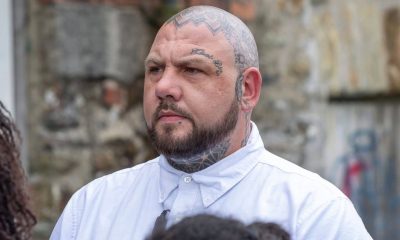
Pembrokeshire security worker Josh Davies praised for professionalism, kindness and proving first impressions can be wrong JOSH Davies is hard...


Charity5 days ago
Toy Story fans fill charity toy box at Haverfordwest cinema
Donations pour in for SNAP Specialist Play as families embrace Toy Story 5 launch A TOY STORY-themed charity appeal at...
-

 Crime7 days ago
Milford Haven man jailed for breaching domestic violence protection order
-

 News7 days ago
Crash on Freeman’s Way causes school-run chaos across Haverfordwest
-

 Health5 days ago
Woman jailed assaults on police, harassment and XL Bully possession
-

 Crime5 days ago
Milford Haven woman spared jail despite string of shop thefts
-
 Crime7 days ago
Portfield Gate man faces careless driving allegation after Tufton crash
-
Community4 days ago
The gentle giant behind the tattoos
-

 Local Government6 days ago
Pembrokeshire faces accessible housing shortage as 403 people wait for homes
-

 Crime5 days ago
Spittal man to stand trial accused of ABH
Tomos
January 30, 2016 at 8:59 am
after years and years of our MPS claiming they have no respomsibility and can do nothing regarding the fiasco that is the IPiG I found that IPiG councillors supporting and helping our two Conservative MPs I gave up on the, for years I’ve voted Conservative, I’ve supported Somon Hart when he defends fox hunting BUT supporting IPiG councillors rather than chucking these councillors out of the Tory party ?
Disgusting 🙁
[email protected]
February 5, 2016 at 9:06 pm
I notice above piece has been slightly changed from what was published in the paper a few weeks ago to which my comment was removed under facebook and letter to paper not printed. However it is still incorrectly quoting some words in RCPCH review to alter public perception. The review stated “in general services were safe” and I note that the line in article has changed from “improved outcomes for mothers & babies” to improved outcomes for patients. In fact the original report said “improving outcomes for mothers & babies” and only looked at from when moved to the then present so does not necessarily mean improved since before moved. Maybe the Plaid columnist regrets his ferocious attack in hindsight when a few days after his party said they would make same promise and some will wonder why they rule out any cooperation with a party that made it first.
Further quotes from RCPCH –
5.2.2 Historically Hywel Dda has not struggled to recruit to obstetric training posts and Withybush enjoyed a strong reputation as a centre to train, despite the low numbers of births. More recently however, RCOG and Deanery requirements that trainee placements should have at least 2500 births and run with 11-post rotas have required consolidation…..
5.8.4 The recent GMC obstetric trainees survey (August 2015) indicated that the Hywel Dda Health Board was one of the lowest-scoring services for trainee satisfaction, ranking 133rd out of 148 for overall satisfaction, 139th for educational supervision, 101st for workload and 97th for clinical supervision….
jaquan kidd
October 8, 2025 at 8:39 pm
This deserves more attention. Stream wontumi tv sports live streaming — regional updates and highlights. works great on mobile and desktop. program schedule, replays. works great on mobile and desktop.