


Farming
Fear discounters could affect supply chain



Continuing growth: Aldi and Lidl make giant strides
AFTER another year of disruption in the UK grocery sector, the latest supermarket Christmas figures make for interesting reading. The big four retailers – Tesco, Asda, Sainsbury’s and Morrisons – continued to lose market share to the discounters, Aldi and Lidl.
With the big four reporting massive falls in profits in their half-year results, it’s clear the largest retailers are struggling under this pressure. As a result, a staggering £1bn was wiped off the value of fresh food sales in 2015 (The Grocer Top Products Survey, 2015) as prices were slashed to prevent customers leaving for the discounters.
Although low prices are good news for consumers, the worry for producers is that these ongoing price cuts will be passed onto the supply chain. As retailers focus on meeting consumers’ demands, we have the potential to push the credentials of British products. The NFU will continue to work with all the major retailers in 2016 to ensure that any changes to the supply chain do not impact negatively upon producers.
Data from Kantar Worldpanel suggests Sainsbury’s is recovering slightly, with its share of UK spending now 0.8% higher than at the start of 2015. Likewise, The Cooperative (+1.4%), Waitrose (+1.5%) and the Symbol & Independent sector (Nisa, Londis etc.) (+0.2%) have also seen their market share increase over the last year. Although, it’s worth bearing in mind the whopping 18.5% increase for Lidl and a 13.35% increase for Aldi. In fact, Aldi and Lidl now account for over 10% of UK grocery spending.
It’s almost certain Aldi and Lidl will continue to grow rapidly throughout 2016, but the precise effect on the other retailers is harder to predict. An unexpectedly strong Christmas performance from Tesco and Morrisons complicates things. Many retailers’ improved sales have been down to heavy discounting to entice Christmas shoppers. Therefore, only their year-end profits will show the true cost of this discounting.

Overall, it’s likely 2016 will see further shelf-edge price cuts from the big four alongside new store formats, as supermarkets try to differentiate themselves. Premium retailers like Waitrose and M&S remained profitable during 2015 – although with Aldi and Lidl increasingly targeting wealthier customers – the pressure will be on to up their game. M&S food produced their highest Christmas sales ever, but for Waitrose, Christmas sales were surprisingly down 1.4% on last year.


A CALL to keep a holiday pod sited on a Pembrokeshire farm, as part of a wider holiday pod farm diversification over two areas which saw the larger part supported, has been approved by county planners.
In an application given delegated approval at the June meeting of Pembrokeshire County Council’s planning committee, Bill Ridge of Vaynor Farm Ltd, Bethesda, through agent Gerald Blain Associates Limited, sought retrospective permission to keep a self-catering pod at Broomley Farm, Sodston, Narberth, works having been completed in 2022.
The application is part of a wider scheme of holiday pods diversification encompassing two farms.
Back in December 2025, Pembrokeshire County Council’s planning committee granted delegated retrospective permission to Vaynor Farm Ltd for the siting of two self-catering holiday accommodation pods at The Cart House, Vaynor Farm, Bethesda, near Narberth as part of a farm diversification enterprise.
A supporting statement accompanying the latest application said: “Vaynor farm is a 400-acre working dairy farm with a herd of 700 milking cows. The enterprise comprises of three self-catering pods. Two of the pods are situated at the Vaynor homestead and another at the opposite end of the holding at Broomley farm.
“The first unit was sited adjacent to Vaynor farm stead some four years ago and a further two added in subsequent years. The units have enjoyed successful occupancy rates over several years offering a unique secluded tourism offer on a working dairy farm, more detail of which is outlined within the supporting business plan.”
It said the Broomley farm application before committee was a resubmission of a previously refused scheme, adding: “It should be noted that this application was originally part of [the application] which was recommended approval at planning committee in December 2025. This element however was separated due to its location on another part of Vaynor farm deeming it not possible to be considered under the same application.”
At the December meeting, an officer report said: “A business plan has been submitted with [that] application, which explains that due to uncertainties associated with dairy farming, the applicant has sought to diversify the farm enterprise to incorporate tourism accommodation.”
An officer report accompanying the latest application for members said: “The development of the accommodation pod has led to positive economic and social impacts, evidence has clearly demonstrated how income from the accommodation pods is used to support the overall combined Broomley Farm and Vaynor Farm enterprise.

“The proposed location of the accommodation pod is not considered to have led to an unacceptable impact on the character and appearance of the area given their siting adjacent to the Broomley Farm farmstead complex.”
Members backed the head of planning being given delegated powers to approve the scheme subject to a Section 106 legal agreement and conditions including the pod be limited to short-term holiday use only.


ANDREW RT DAVIES has called on Wales’ new Plaid Cymru government to publish an urgent bovine TB plan before the Royal Welsh Show, warning that farmers need clarity after years of herd breakdowns, cattle losses and uncertainty.
The Conservative Shadow Farming Minister used First Minister’s Questions to challenge Rhun ap Iorwerth on whether his administration will change direction on one of the most divisive issues in Welsh agriculture.
Mr Davies asked the First Minister to explain what “science-led” policy means under Plaid Cymru, and whether a new plan will be brought forward before the Royal Welsh Show in July — the biggest event in the Welsh farming calendar.
Mr ap Iorwerth did not give a timetable, saying only that the Cabinet Minister would bring forward details “in due course”.
Mr Davies said: “For too long, the approach to bovine TB in Wales has been determined by ideology, not science.
“Welsh farmers need a proper plan, not warm words. They deserve to know before the Royal Welsh Show what this new government intends to do.”
Bovine TB remains one of the most serious pressures facing Welsh farming, with affected families dealing with repeat testing, herd restrictions, the slaughter of cattle, compensation disputes and the mental strain of prolonged outbreaks.
The issue is particularly sensitive in west Wales, where herds in high-risk areas have faced more frequent testing and long-running restrictions.
Farming unions have repeatedly called for a change in direction, arguing that the current approach has failed to give the industry confidence. NFU Cymru has said the next Welsh Government must make “drastic changes” to give young farmers hope for the future.
Any new policy is likely to reignite debate over cattle movement controls, testing, vaccination, biosecurity, compensation and the controversial question of badger control.
Animal welfare and conservation groups are expected to resist any return to culling, while many farmers argue that every part of the disease cycle must be addressed if Wales is to make real progress.
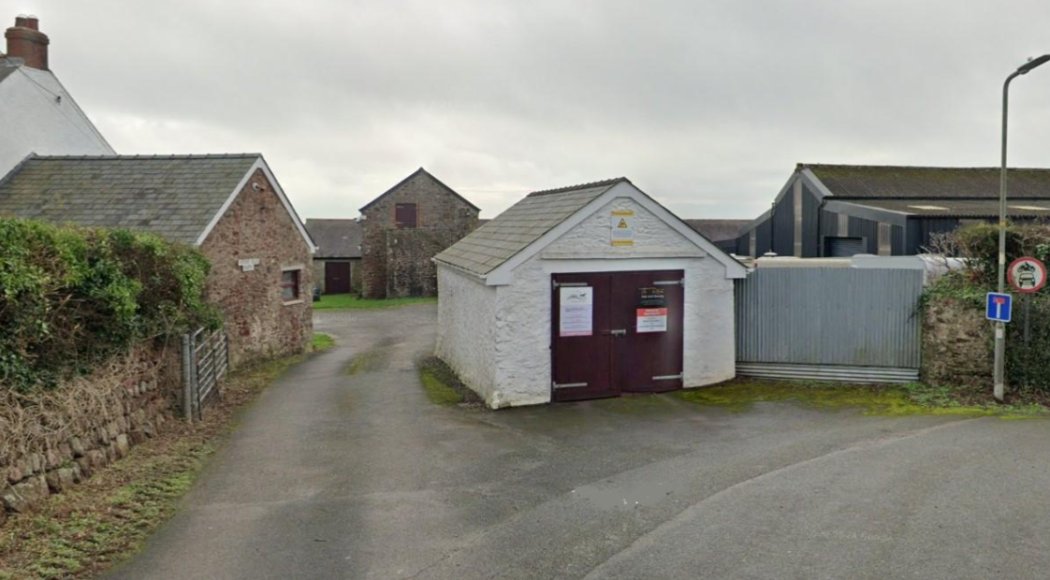
PLANS to expand a Pembrokeshire holiday operation which was voted as the best of its type in the UK by the Caravan Club in its very first year of operation have been given the go-ahead.
In an application to Pembrokeshire Coast National Park, Dean and Sharon Philpin sought permission to expand the existing holiday operation at Woody Kiln Farm, Herbrandston Village, Herbrandston by converting a former agricultural barn to four short-term holiday lets.
A supporting statement through agent Hayston Developments & Planning Ltd said: “Woody Kiln Farm is located to the east of Herbrandston village, to the south easterly side of Havens Park residential estate. It is a registered agricultural holding, and the land is used mainly for the raising and grazing of sheep covering 12 / 13 acres.
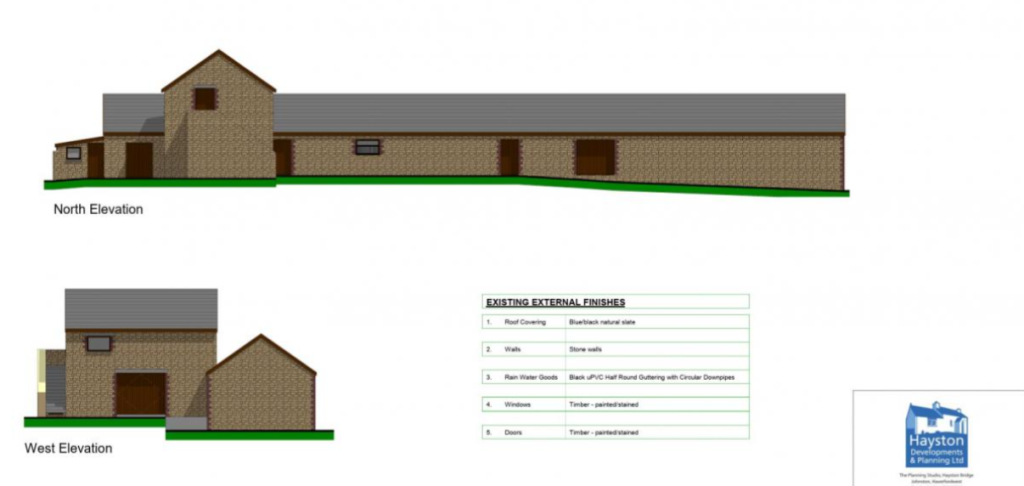
“The farm complex comprises of a number of traditional outbuildings and the applicants main dwelling surrounding a surfaced courtyard. Immediately to the south is a caravan site registered with the Caravan & Motorhome Club as a Certificated Location for up to five touring caravans and motorhomes.
“This Certificated Location has been in operation for 10 years and was the first ever site to be voted the best site in UK on its first year of operating by its members. In recent years it was voted best site in Wales.”
The site has won many similar Certificated Location awards.
It went on to say: “The application proposal relates to a total of three barns that integrate into one building footprint. It is intended to reuse the barns and provide four short-term holiday let units that will be run in conjunction with our client’s current Caravan Club site, situated immediately to the east of the barns.”
It was described as: “A sympathetic design that incorporates no change to the footprint or roof design and little change to the fenestration is the main theme of the design strategy.”
An officer report recommending approval, subject to conditions including a unilateral undertaking to provide a contribution to affordable housing said: “Strategic Policy have advised that the scale and layout of the units could lend themselves to residential use and that an affordable housing contribution may be required.
“Whilst the proposed use is short-term holiday let given that the properties are capable of use as full residential properties, it is proposed that a full unfettered residential permission be granted, with no condition for holiday let-only, meaning that the property could be used for full residential use or second home use.”
Based on current affordable housing contributions, that amounted to £26,170, the report said.
The application was conditionally approved, conditions including the affordable housing element.




Community16 hours ago
HMS Erebus tragedy links Pembroke Dock ship to Templeton family
DNA breakthrough identifies cabin boy David Young as exhibition marks 200 years since ship’s launch ON MAY 19, 1845, a...


Community19 hours ago
Narberth cash machine closures spark urgent access review
CALLS have been made for an urgent review of access to cash in Narberth after two town centre ATMs were...


Health1 day ago
First Minister quizzed on Welsh NHS pressures in his first-ever FMQs
SENEDD Members pressed the First Minister over the state of the health service in Wales, as the Plaid Cymru leader...


Community2 days ago
Historic paddle steamer Waverley to return to Fishguard this month
THE WORLD’S last seagoing paddle steamer will return to Fishguard this month as part of her annual visit to South...


Local Government2 days ago
National Express use of new Haverfordwest interchange still subject to risk checks
A RUMOUR that National Express coaches may struggle to use Haverfordwest’s new transport interchange has been denied by Pembrokeshire County...


Crime2 days ago
Milford Haven man jailed for illegal Premier League streaming service
A MILFORD HAVEN man who supplied illegal Premier League streams and loaded Firesticks to almost 2,000 customers has been jailed...


Community3 days ago
RNLI lifeguards rescue beachgoers during busy heatwave weekend
FOUR PEOPLE RESCUED AS RIP CURRENTS AND OFFSHORE WINDS HIT PEMBROKESHIRE BEACHES RNLI lifeguards in Pembrokeshire rescued four people and...


Local Government3 days ago
Council and school staff pay row could hit Pembrokeshire services
COUNCIL workers, carers and school support staff in Pembrokeshire could be drawn into a growing UK-wide pay dispute after GMB...


Health3 days ago
Hywel Dda to hold second consultation on future of stroke services
A SECOND phase of public consultation is to be held on the future of stroke services across Hywel Dda University...


Community3 days ago
Warning as algal blooms mistaken for sewage on Welsh coast
Beachgoers urged to avoid contact with suspicious foam and report pollution concerns NATURAL RESOURCES WALES has issued summer advice to...
-

 Health7 days ago
Paul Davies warns health board over Withybush and Bronglais services
-

 Crime7 days ago
Carmarthenshire man sent to Crown accused of 33 historic sexual offences
-
Crime2 days ago
Milford Haven man jailed for illegal Premier League streaming service
-

 Crime18 hours ago
Milford Haven man bit neighbour’s neck near cashpoint
-
Crime2 days ago
Haverfordwest man admits cocaine offence as Crown disputes basis of plea
-

 Crime7 days ago
Suspended prison sentence for man who left dogs without vet care
-

 News7 days ago
Vehicle destroyed in early morning fire in Pembroke
-

 News7 days ago
Davies calls for NHS foreign language interpreters to be scrapped
https://sidneysaca432316.blog2freedom.com
May 31, 2026 at 6:07 am
References:
Red rock casino spa https://sidneysaca432316.blog2freedom.com