


Politics
‘Unacceptable complacency’ over Brexit


 THE FIRST MINISTER today appeared to admit that his government failed to make preparations for a public Brexit vote said the Tories; despite having issued dire warnings before the poll about the impact of a vote to leave the EU.
Leader of the Welsh Conservatives, Andrew RT Davies, quizzed the First Minister in plenary on his government’s preparations for a vote to leave the EU.
He also pressed Mr Jones on the need for the Welsh Government’s response to the referendum to be reflective of the will of the Welsh people.
Speaking outside the chamber, Mr Davies repeated calls for ‘Leave’ campaigners to be given a role in formulating that response.
He said:“The First Minister repeatedly warned of the dire consequences of a vote to leave the EU, and yet it appears that he didn’t think it necessary to get his government to prepare for such an eventuality.

“Such complacency is unacceptable and explains, in part, his failure to see this result coming.
“In contrast, we learnt yesterday that the UK Government undertook detailed contingency planning – in particular, planning for the impact on financial stability.”
Mr Davies also stressed the need for ‘Leave’ campaigners to be given a role in preparing Wales’ response to the referendum result.
He said:“It is vital that the First Minister moves to endorse the will of the Welsh people and accepts the result of Thursday’s vote fully and without qualification.

“Despite the expectations of many, including Carwyn Jones, Wales has proven itself to be a Eurosceptic nation, but we cannot ignore the fact that significant numbers of people supported a remain vote and we will respect their views and ensure that their concerns are addressed.
“Clearly, both the Labour Party and Plaid Cymru misunderstood this. Those parties, unlike the Welsh Conservative Party, do not reflect the balance of opinion which exists amongst the Welsh public.
“As negotiations in relation to the UK’s withdrawal from the EU continue, the Welsh Government must ensure public opinion is better reflected as part of this process.

“ Wales needs strong leadership that reflects the wishes of its people, and ensures the best deal for our country in this new era. That must include a role for those politicians of all parties who campaigned for a vote to leave.”


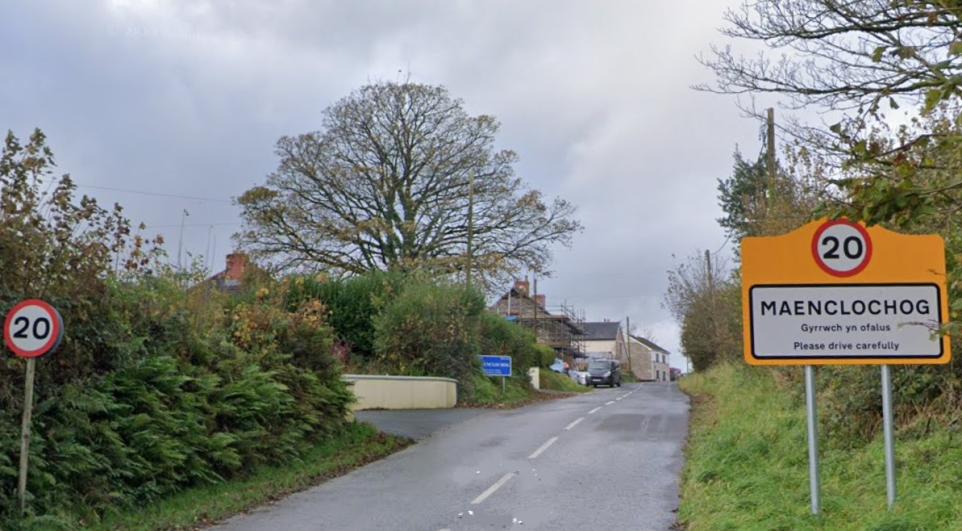
A CARE HOME scheme for a Pembrokeshire village, which saw objections from the local community council after youngsters had ‘absconded’ from similar sites locally, will need a formal application, planners have said.
In an application to Pembrokeshire County Council, Future Nest Care Ltd, through agent Evans Banks Planning Limited, sought a certificate of lawfulness to allow the use of dwelling house Brynawel, Maenclochog as a care home for two youngsters between the ages of five and 16 with specific needs.
A supporting statement said the youngsters would be supported by three qualified and experienced staff members during the day and two at night; the certificate of lawfulness application made to establish that formal planning permission is not required to use an existing two-storey detached dwellinghouse into a residential care facility to accommodate two children, supervised 24/7 by staff.
It added: “The proposed use is designed to provide a safe, nurturing, and family-style environment to help the young residents develop essential life skills and prepare for independent living. The residing youngsters will attend local schools or colleges and participate in community life, in the same manner as any young person living in a traditional family home.
“The qualified and experienced staff will prepare those children for their re-introduction back into a life without supervised care. The residing youngsters would attend the local school or further education college, as would any youngster under 18 living in a family home.”
However, Maenclochog Community Council objected to the proposals after residents expressed their concerns.
In its objection, it said: “This proposal has raised significant concern within the village, particularly as there are already multiple provisions for similar accommodation on the outskirts of Maenclochog.
“In the past, young people accommodated at these facilities have frequently absconded, leading to repeated searches across the surrounding area. This history heightens local anxiety regarding the introduction of further such provision within the village.”
It added: “Neighbouring residents have not been consulted regarding the proposed change of use, which has led to unease and a lack of confidence in the applicants’ intentions and in the suitability of the site for this form of development.”
It went on to say: “Before any decision is made, Maenclochog Community Council strongly believes that local residents should be afforded the opportunity of a public consultation. While the proposal may represent an economic decision for the property owners, it has wider implications for the village and its residents.”
An officer report recommended refusal of the certificate of lawfulness, concluding that “a material change of use would occur in relation to the proposed use of the site and as a result a certificate of proposed lawful use cannot be granted”.
In refusing the lawfulness call, planners said “the frequency of staff changes and the number of vehicle movements associated with the proposed use of the property would be materially different to those associated with its lawful use as a dwelling,” the material change of use to a care home requiring a formal planning application.


A CALL by a Pembrokeshire shooting club for more disability-friendly facilities has been given the go-ahead by county planners.
In an application to Pembrokeshire County Council, Haverfordwest Target Shooting Club, through agent Andrew Sutton Architecture, sought permission for an extension to existing target shooting club building at The Firing Range, Withybush Road, Haverfordwest to improve accessibility and internal facilities, together with associated landscaping works.
A supporting statement said: “The club’s own published history states it was founded in 1968, moved from the Drill Hall to the old wartime airfield butts at Withybush by the early 1970s, and had developed facilities over time, including the clubhouse by 1999. The established leisure/community use has existed on the site for a number of years and the proposal does not seek to intensify the core activity beyond that already authorised/established.”
It added: “The primary objective of the scheme is to improve inclusive access to the club’s facilities for disabled users and those with reduced mobility. The internal arrangement will provide adequate entrance and lobby space, clear accessible routes and appropriately designed sanitary accommodation, including an accessible wetroom/shower and separate WC.”
It also said accessible parking and surfacing designed to provide a firm, even, slip-resistant route from parking to the principal entrance.
It added: “The Equality Act 2010 places duties on service providers to make reasonable adjustments so that people with additional access needs are not placed at a substantial disadvantage.
“The proposal is therefore a positive enhancement to a community/leisure facility and supports wider policy objectives for inclusive environments.”
It went on to say: “The club operates within a highly controlled environment, and the proposed works will maintain and enhance safety and security measures.”
The application was conditionally approved by planners.

A HEALTH board has been criticised by Audit Wales after GP contracts worth more than £10m were awarded without sufficient due diligence checks.
Aneurin Bevan University Health Board allowed a GP partnership associated with eHarley Street Primary Care Solutions to take on eight GP contracts in south-east Wales, with a combined annual value of around £10.1m.
Audit Wales said the board should have carried out greater scrutiny before approving the arrangements, including checks on financial resilience, workforce plans, business risks and the partnership’s ability to manage several practices at once.
However, the watchdog found no evidence of fraud and noted the board was dealing with significant pressure in general practice, including vacant contracts and limited interest from other bidders.
The report said weaknesses in governance and scrutiny contributed to later disruption and uncertainty for patients and staff when problems emerged.
Concerns included financial and workforce pressures, unpaid invoices, and issues relating to tax and pension payments. Some contracts were later handed back, requiring the health board to step in to protect services.
Natasha Asghar MS, Welsh Conservative Shadow Cabinet Minister for Health and Social Care, said the findings were “deeply concerning”.
She said: “Patients and staff were left facing disruption and uncertainty because proper scrutiny was not carried out before these contracts were awarded.
“The Welsh Conservatives believe lessons must be learned to ensure robust checks are in place, protect frontline services and restore confidence in primary care across Wales.”
Aneurin Bevan University Health Board accepted the recommendations and said it had already strengthened its processes.
Audit Wales said the case highlighted the need for stronger checks before GP contracts are transferred, particularly when a single partnership is taking on multiple practices in a short period.



Business1 day ago
Plaid energy policy challenged by Labour after Adam Price interview
LABOUR SAYS MINISTERS MUST EXPLAIN COST AND TIMETABLE FOR PYLON PLANS PLAID CYMRU’S approach to energy infrastructure has come under...


Community1 day ago
Pembroke Fair praised as well-organised community event
HORSES, STALLS AND FAMILY CROWDS RETURN TO MONKTON FAMILIES, horse owners and visitors turned out in force for Pembroke Fair...


Local Government4 days ago
Youngest mayor in century takes office in Haverfordwest
Randell Izaiah Thomas-Turner makes history as town’s first millennial mayor and first from a diverse background HAVERFORDWEST has welcomed a...


Community4 days ago
Pembroke Fair set to return after last year’s success
STALL HOLDERS INVITED AS HORSE DRIVE PLANNED PEMBROKE Fair is set to return this weekend following the success of last...


Crime4 days ago
Neyland man accused of running over traffic worker’s foot
Jury hears conflicting accounts over roadworks incident in Milford Haven A NEYLAND man has appeared before Swansea Crown Court accused...


Community4 days ago
New pilot boat Llanion dedicated at emotional Milford Haven ceremony
Vessel dedicated at Mackerel Quay as Port marks major investment in safety and resilience MILFORD HAVEN’S new state-of-the-art pilot vessel...


Local Government4 days ago
Police and GoSafe to target speeding in Newport and Dinas
RESIDENTS’ concerns over speeding and anti-social driving have prompted planned enforcement action in the Newport and Dinas areas. Dyfed-Powys Police...


Community5 days ago
Safety first as Milford Haven’s new pilot boat marks end of troubled chapter
Gary Solomon, who was aboard St Davids during the 2016 collision, helped shape new self-righting vessel Llanion from conception to...


Crime5 days ago
Cocaine courier caught with £15,000 haul in Pembroke Dock
Defendant transported high-purity drugs from Cardiff to Pembrokeshire for £210 A PEMBROKESHIRE man caught transporting more than £15,000 of high-purity...


News6 days ago
Car bursts into flames near Redberth Croft as road closed after incident
Nobody injured after vehicle fire near A477 prompts emergency response A CAR was destroyed by fire near the entrance to...
-

 News3 days ago
Watchdog criticises health board over £10m GP contract checks
-

 Crime5 days ago
Farm owner in court after 26 dogs removed over welfare concerns
-

 News4 days ago
Paul Davies meets Openreach Cymru at the Senedd to discuss Full Fibre rollout
-

 Crime5 days ago
Tree surgeon sentenced for failing to provide breath test
-

 Crime5 days ago
Pembrokeshire teenager admits driving almost four times over drug-drive limit
-

 News5 days ago
Milford man admits handling stolen goods from three local properties
-

 Crime7 days ago
Builder jailed for £82,000 fraud affecting 18 victims
-

 Crime4 days ago
Milford Haven man admits affray after alleged pub incident
mitolyn
January 29, 2026 at 4:40 am
**mitolyn**
Mitolyn is a carefully developed, plant-based formula created to help support metabolic efficiency and encourage healthy, lasting weight management.