


News
Assembly debate on battling bovine TB

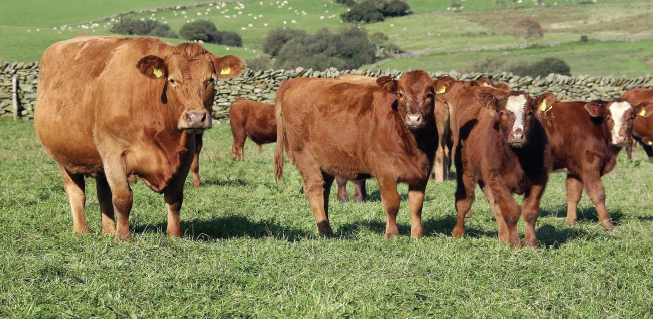

Over 8,100 a year: BTB cattle slaughtered in Wales
“THE TOTAL number of Welsh cattle slaughtered in 2015 due to bTB (bovine TB) has gone up by 27% from 2014 and now counts for 8,103 cattle slaughtered a year.
That’s 675 cattle per month, 169 per week and 24 cattle slaughtered every day.”
These figures were given by Glyn Roberts, President of the Farmers Union of Wales, in a briefing in advance of a debate on the issue in the Assembly on September 28.
Glyn Roberts went on to say that the official advice to the Welsh Government in 2011 estimated that vaccination was likely to lead to a net cost of £3.5m. On the other hand, culling badgers in the Intensive Action Area could be expected to save farmers and government £31,000. In the Assembly debate, a cross-party motion called on the Welsh Government ‘to take decisive action to tackle bovine TB by committing to use the most effective measures to control and eradicate bovine TB and ensuring that testing and movement restrictions are proportionate to the disease status of an area’. The debate was proposed by Plaid Cymru AMs Simon Thomas and Llyr Huws Gruffydd, Paul Davies of the Welsh Conservatives and Neil Hamilton of UKIP.
THE DEBATE

The fact that bovine TB remains a significant problem for farmers in Wales is not contested. Arguments do rage, however, about how badgers are implicated in the transfer of the disease and how best it can be controlled. Three elements of any strategy that are always hotly contested are the culling of badgers and the vaccination of cattle and/or badgers. Opening the Assembly debate, Simon Thomas, Shadow Cabinet Secretary for Energy, Climate Change and Rural Affairs for Plaid Cymru, explained that the motion was worded to reflect advice given to the Government by its own consultative group on animal health. The advice recommended a TB eradication programme that would be a combination of different measures aimed at all sources of TB, both those within the herd and those within the wildlife reserve. A different assessment was advised in areas where incidents were low, with rules made to proportionately reflect the status of the disease. Simon Thomas went on to quantify the impact of the disease in various areas of Wales, highlighting the cost of compensation to the taxpayer, around £100 million across the whole of Britain. He then raised the question of Brexit and what that would mean for EU continuing to accept beef and dairy produce from Wales, which does have an elevated level of TB in its cattle herd. Like most of the speakers who followed him, Simon Thomas highlighted the emotional distress that bovine TB and culling cattle meant for the farming community across Wales.
TO CULL OR NOT TO CULL
On the thorny issue of a badger cull, Labour’s Joyce Watson quoted Lord Krebs, one of the UK government’s most respected scientific advisers who has reported on the issue: “Badger culling is a sideshow. The only effective way to stop TB is stopping the spread from cattle to cattle by more testing and a much better test.” Responding to Joyce Watson, UKIP’s Neil Hamilton said: “The Krebs report has been criticised for many reasons on account of the weaknesses and anomalies in its strategies.” Based on a report produced by the British Veterinary Association, Hamilton proposed ‘that a targeted, effective and humane [badger] cull is going to have to be part of a long-term policy of eradication’. Conservative Mark Isherwood also cited the British Veterinary Association’s report: “They believe that slaughtering cattle that test positive for bovine TB is essential to control the disease in cattle, but has not been enough to get on top of the disease. Therefore, they also believe that badger culling in a targeted, effective and humane manner is necessary in carefully selected areas.
“They state that vaccination of both cattle and badgers should play a central role in any bovine TB eradication policy, but its current role should not be overstated or exaggerated.” Plaid Cymru’s Llyr Huws Gruffydd also backed a cull unequivocally: “The time has come for the Government here to be brave and to face the reality once and for all. We need a badger cull scheme as part of the solution to TB in Wales, and we need it now.”

UKIP’s Mark Reckless expressed his reservations about a badger cull, fearing that ‘for some, the idea of culling badgers will be a solution, if not a silver bullet. I think a great deal of belief is invested in it. Whereas, even if we were to go down the route of really significant and continual badger culling, it is not clear to me, at least, how much effect that would have on the problem, even if it were to have some, and I continue to study the evidence on either side of this’. UKIP’s Caroline Jones also spoke up against the idea of a badger cull as a panacea. She told the Assembly: “The most effective measures to control and eradicate the disease are increased biosecurity and vaccination, and not wiping out the entire badger population in the UK.”
Cabinet Secretary for Environment and Rural Affairs, Lesley Griffiths, responded to the debate for the government: “As Members will have seen from the latest business statement, I will be making an oral statement on a refreshed approach to TB eradication on October 18. Therefore, I don’t intend to go into too much detail today… I have made very clear my intention to refresh the TB programme in Wales, to ensure it’s robust and fit for purpose, and I will certainly not turn my back on the extremely important Welsh agriculture sector. I support the motion proposed today, and believe the only way to tackle this issue is to use a combination of the most appropriate and effective measures, proportionate to the different risk areas in Wales. All measures applied must be supported by firm evidence and veterinary risk assessment, focusing on all routes of transmission, not just transmission from wildlife reservoirs, which seems to receive all the attention.” Presiding Officer Elin Jones, Ceredigion’s AM, concluded the debate when the motion was agreed without objection.
A HOLISTIC APPROACH

Following the debate, Simon Thomas told The Herald: “Bovine TB continues to have a devastating effect on farming in Wales and remains one of the biggest threats to our cattle herd. It is the responsibility of the Welsh Government to respond to the situation and Plaid Cymru as the official opposition in Wales will scrutinise their actions. The debate was an opportunity to bring attention to this important issue. It is essential that we deal with this issue after the decision to leave the European Union.
“Farming unions have expressed their concern it could be used as a bargaining chip and used to hit Welsh dairy exports. The fact that the Welsh Government and Labour Assembly Members did not oppose the cross-party motion shows they realise we must have a credible strategy to control disease in the wildlife population. The Party of Wales believe that there needs to be a holistic approach to eradicating this disease and that any increased burdens on the movement and testing regime must be matched by policy measures which deal with the disease. Plaid Cymru recognises that tackling the disease within the wildlife population has to go hand in hand with animal testing and movement restrictions. The suspension of the badger vaccination trials within the intensive action area has highlighted how vulnerable a single approach to disease control within the wildlife population can be.”


Town’s civic leaders praised as event highlights community spirit
A HOST of civic dignitaries and community representatives joined residents for this year’s Milford Haven Founders Day, helping to mark the town’s annual celebration of its heritage and community spirit.
The event, held on Saturday, welcomed mayors and representatives from towns across Pembrokeshire, alongside police officers, clergy and local business leaders.
Milford Haven Founders Day organisers thanked guests for attending and supporting the occasion, describing their presence as helping to make the day “even more special”.
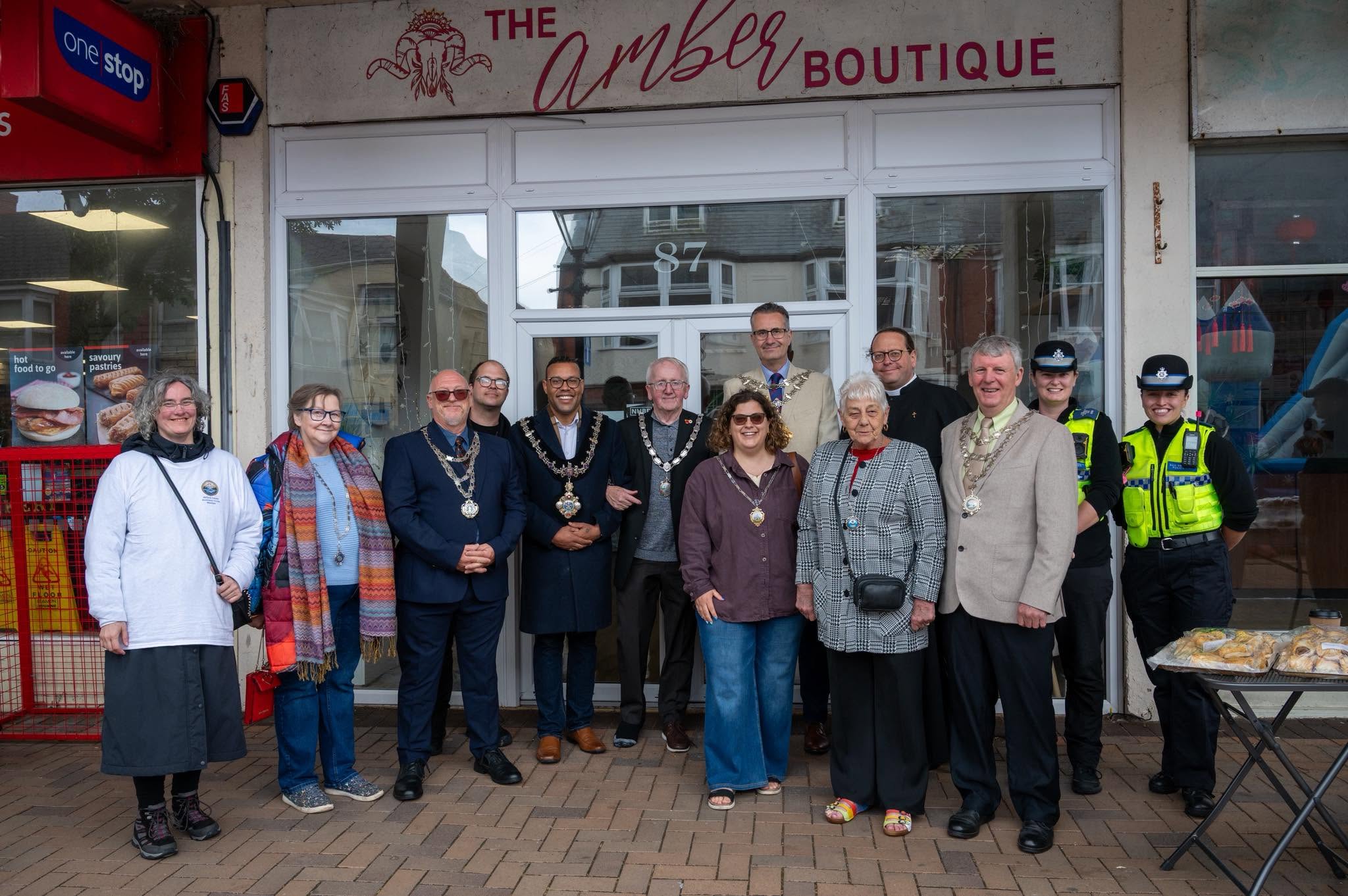
Among those attending were the Mayor of Milford Haven, Mark Woodward, accompanied by Mayoress Evija Upeniece Woodward; the Mayor of Haverfordwest, Councillor Randell Izaiah Thomas-Turner, accompanied by Mayoress and Sheriff Councillor Dani Thomas-Turner; the Mayor of Pembroke, Jonathan Grimes; the Mayor of Pembroke Dock, Councillor Tony Wilcox; and the Mayor of Neyland, Councillor Peter Hay, accompanied by Mayoress Mitzy Hay.
The event also welcomed local Police Community Support Officers from Milford Haven and Neyland Police, Reverend Dr Adrian Furse of St Katharine and St Peter’s Church, Milford Haven, Milford Haven Business Circle chairman Byron Thomas Jenkins, and treasurer Amanda Dyson.
Organisers said the strong turnout from civic leaders reflected the importance of Founders Day as a celebration of Milford Haven’s identity and local pride.
A spokesperson for Milford Haven Founders Day said: “Your presence and support helped make the day a memorable celebration of our town, its history and its community spirit. We are truly grateful that you took the time to join us and share in the festivities.”
Pembroke Mayor Jonathan Grimes later praised the event, commenting: “Thank you for the kind invitation – it was a wonderful event!”
Photo caption:
Civic guests: Mayors, community representatives and local officers gather during Milford Haven Founders Day celebrations (Pic: Captured Soul Photography).

WELSH CONSERVATIVE Shadow Farming Minister Andrew RT Davies has called on Plaid Cymru ministers to stop funding public information campaigns which he says undermine Welsh meat.
The criticism follows a Welsh Government response to a written question from Welsh Conservative Senedd Leader Darren Millar, which showed £662,000 was allocated to the Climate Action Wales campaign during 2025-26.
Examples of the campaign include online advice on ‘green food choices’, sustainable eating and meat-free options, alongside wider material on energy, travel and consumer behaviour.
The campaign gives advice on reducing carbon emissions through choices on food, travel, energy and purchasing. Its sustainable food guidance says meat is among the largest contributors to greenhouse gas emissions, particularly from ruminant livestock such as cows and sheep.

It also advises people to limit red and processed meat, while saying those who do eat meat should try to buy local, sustainably farmed produce where available.
Mr Davies said Welsh meat should be promoted rather than undermined.
He said: “Welsh meat is of the highest quality and the industry forms a key part of our economy.
“Plaid Cymru separatists must celebrate it, not fund campaigns that undermine Welsh meat.
“No project aimed at discouraging meat consumption should receive public funds.”
The Welsh Government response said the figures related to public information campaigns connected to the previous government’s policies.

SCHOOL leaders have warned that a Welsh Government plan to increase incentive payments for trainee teachers in priority subjects risks creating a “two-tier workforce”.
NAHT Cymru said the move may help attract some new teachers, but warned it does not address the wider recruitment and retention crisis facing schools across Wales.
The Welsh Government’s priority subject incentive scheme offers grants to eligible postgraduate teacher trainees in subjects including biology, chemistry, design and technology, digital technology and computer science, mathematics, international languages, physics and Welsh.
Laura Doel, national secretary of NAHT Cymru, said: “While we agree that an ambitious plan to help schools struggling with recruitment and retention of teachers is needed, we don’t think focusing on subject-specific incentives is the way to go.
“This risks creating a two-tier workforce and appears to be a short-term sticking plaster solution for a systemic problem.”
She said there appeared to be no requirement for teachers to remain in schools for a set number of years after induction in order to keep the payment.
Ms Doel added: “We know a significant proportion of teachers leave the profession within the first five years of teaching.”
NAHT Cymru said ministers should focus instead on the wider pressures affecting teachers, school leaders and primary schools, as well as secondary subjects where recruitment is difficult.
The union said improving pay, terms and conditions, and reducing workload would do more to make teaching an attractive long-term career.
Ms Doel said: “By going further in restoring the real-terms value of pay, which fell sharply over the previous decade, improving terms and conditions, and bearing down on unsustainable levels of workload, ministers could make the profession an attractive long-term career proposition once again.
“But schools also need fairer funding to recruit the staff and support staff they need and deliver for pupils.”
She said ensuring schools receive the full consequential funding owed through the Barnett Formula should be a priority for the new administration.

NAHT represents more than 38,000 school leaders across early years, primary, secondary and special schools in England, Wales and Northern Ireland.


Crime9 hours ago
Farmers fined in bovine TB scandal face fresh court action
Hartt family members listed at Haverfordwest Magistrates’ Court over unpaid penalties linked to major cattle prosecution TWO PEMBROKESHIRE farmers convicted...


Crime13 hours ago
Pembrokeshire child killer stabbed to death in prison cell, murder trial hears
Kyle Bevan, jailed for the murder of Haverfordwest toddler Lola James, was allegedly stabbed 25 times and left ‘as if...


News20 hours ago
Pendine cliff fall victim recovering after major emergency response
A 22-YEAR-OLD man who suffered serious injuries after falling from cliffs overlooking Pendine Beach is recovering well following emergency surgery....


Community22 hours ago
Commissioner launches free course to help tackle ageism in Wales
A NEW free learning course has been launched to help people across Wales recognise and challenge ageism. The Older People’s...


News2 days ago
First Minister challenged over jobs for student nurses
REFORM WALES has accused the First Minister of failing to guarantee jobs for student nurses in Wales, despite continuing pressure...


Crime2 days ago
Knife blankets call as school staff face rising violence fears
GMB says protective equipment should be considered where risk assessments show staff could face blades SCHOOL staff should be given...


News2 days ago
Claire Archibald secures review of Milford Haven train times
RURAL TRANSPORT CONCERNS RAISED WITH TFW CLAIRE ARCHIBALD MS has secured a review of train times between Milford Haven and...


Crime2 days ago
PCC review calls for stronger youth crime prevention work
REPORT MAKES 13 RECOMMENDATIONS A REVIEW into crime and anti-social behaviour services for young adults has called for stronger prevention...


Crime2 days ago
Families condemn failed appeal by paddleboard boss jailed over Haverfordwest tragedy
RELATIVES SAY LATEST COURT BID HAS REOPENED PAIN AFTER FOUR DEATHS ON WESTERN CLEDDAU THE FAMILIES of victims of the...


Crime2 days ago
MPs warn overcrowded Welsh prisons are undermining safety and rehabilitation
A DAMNING report by MPs has warned that overcrowding, staff shortages and rising pressure across Welsh prisons are undermining safety,...
-
Crime5 days ago
Paddleboard company owner loses bid to cut sentence over Haverfordwest tragedy
-

 Crime5 days ago
Milford Haven man admits harassment and assault
-

 News4 days ago
Community appeal for privacy after serious emergency in Pendine
-

 Crime3 days ago
Sex offender in senior role at Tenby family hotel
-

 Community3 days ago
Forgotten wartime archive found in Pembroke Dock attic after 80 years
-
Crime2 days ago
Families condemn failed appeal by paddleboard boss jailed over Haverfordwest tragedy
-

 Business5 days ago
Call for gym and Padel courts at Kiln Park Farm unanimously backed
-

 Community4 days ago
Founders Day hailed a success despite rising costs and extra security