


Community
Commissioner gives residents a voice


 DYFED-POWYS POLICE and Crime Commissioner Christopher Salmon has been to Tenby to discuss with residents the recent changes to the force and some of the issues around the town.
On February 21 the commissioner spent a day in the town as part of a series of ‘Your Voice’ days and he met up with business people, victims of crime, police officers and PCSOs, older people and other residents.
Matters discussed included Mr Salmon’s work to help develop a police force to meet modern needs across Dyfed-Powys, his news that the force would soon have 30 new police officer posts and his desire to see more imaginative thinking in preventing youth crime.
Mr Salmon said: “The best outcome I can have in my role is the prevention of crime and I’ve heard of a few Tenby issues that I’ll be following up on.
“These include the possibility of extra powers for PCSO’s in relation to parking fines, dog fouling penalty notices and orders which can see individuals removed from a public location for 24 hours.”

The Commissioner’s visit to Tenby began with a town centre walkabout with PCSO’s Sarah Smith and Andrew Griffiths.
Over refreshments at Caffe Vista, he talked to David Petersen of West Wales Animal Aid and Doug Waters of the Tenby and District Licensed Victuallers Association (LVA).
At the Salvation Army coffee shop in Upper Park Road, he met Major Martyn Clements and friends of the church.
Mr Salmon hosted a public surgery which attracted four individual visitors for private meetings at the Fourcroft Hotel then spoke with officers at Tenby Police Station.

Mr Salmon said: “This was a people-focused day for local people to air their views. As their voice in crime and policing I need to understand their thoughts and, to those who missed out, I say ‘Please contact me through my Office.’
“Your Voice days are all about me gaining a greater understanding of the crime and policing needs of local people.”
Mr Salmon plans more Your Voice days through 2014, right across each Dyfed-Powys county of Carmarthenshire, Ceredigion, Pembrokeshire and Powys.

The schedule includes St David’s (May), Aberaeron (June), Milford Haven (September) and Cardigan (November).



A SAPLING descended from the famous Sycamore Gap tree has been planted at Carew Castle, giving fresh life in Pembrokeshire to one of Britain’s most cherished natural symbols.
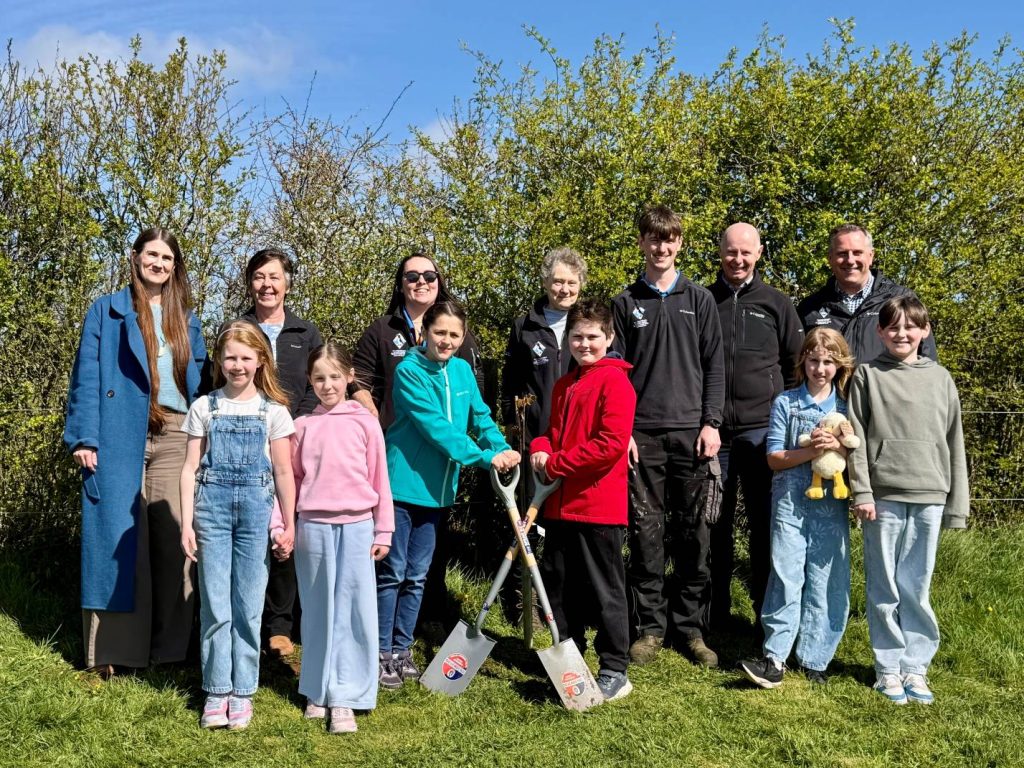
The young tree was planted on Thursday (Apr 2) as Pembrokeshire Coast National Park joined the UK’s other National Parks in a shared act of remembrance and renewal.
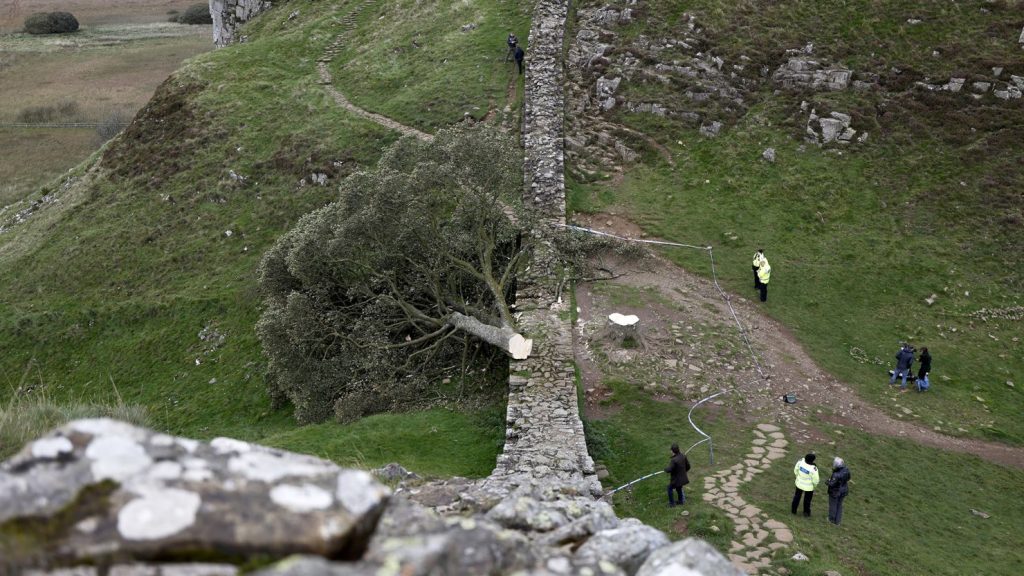
The original Sycamore Gap tree, which stood beside Hadrian’s Wall for more than 150 years, was felled in 2023, sparking sadness across the country. Cuttings and seeds salvaged after its destruction were carefully nurtured by the National Trust at its Plant Conservation Centre before being distributed to all 15 UK National Parks.
Now, one of those saplings has found a new home at Carew Castle, linking Pembrokeshire with landscapes across the country through a living symbol of resilience, heritage and hope.
The planting was attended by Pembrokeshire Coast National Park Authority Chair Dr Madeleine Havard, Vice Chair Cllr Claire George, Authority Member and local county councillor Vanessa Thomas, Chief Executive Tegryn Jones, and Director of Nature and Tourism James Parkin. Local children also took part in the event.

The Park Authority said the planting reflected a shared duty to care for special places and to pass them on to future generations.
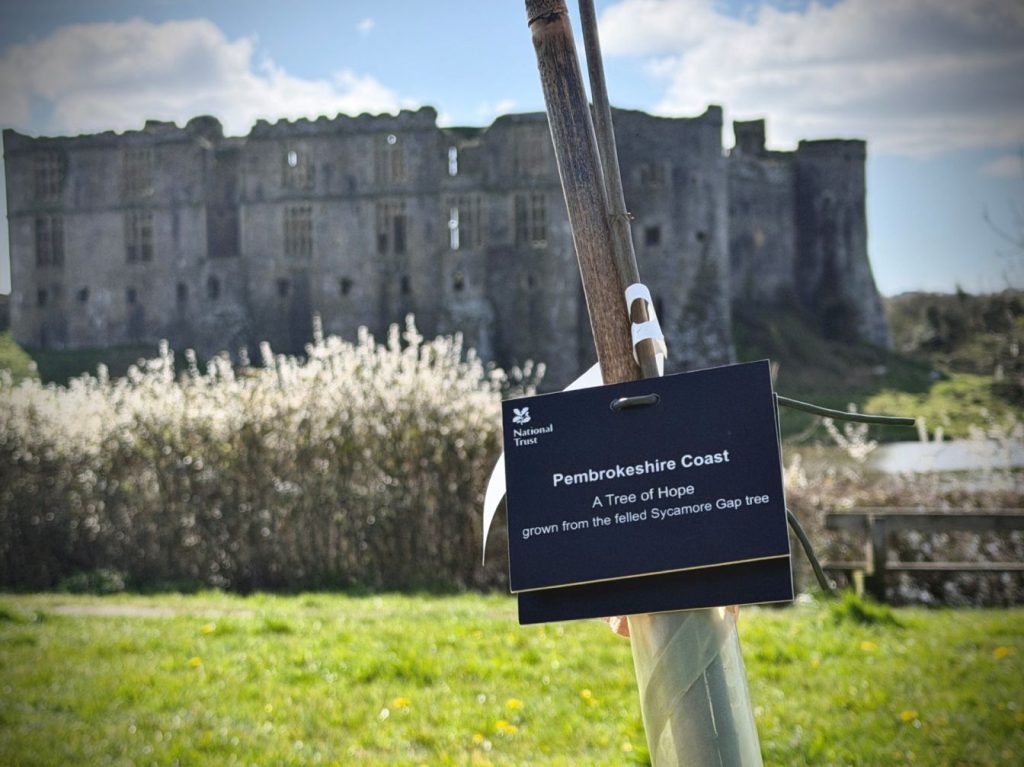
Dr Havard said: “The Sycamore Gap tree was a powerful symbol of our connection to nature and heritage. While we cannot replace the landmark that was lost, planting this sapling at Carew Castle ensures its legacy grows here in Pembrokeshire.
“It serves as a living reminder of our role as guardians of these landscapes and our commitment to the generations who will enjoy them in the years to come.”
Carew Castle was chosen as the planting site because of its rich history and its importance within the National Park.

National Parks said each of the 15 saplings will be cared for by local teams, creating a lasting symbol of the enduring strength of nature in some of the UK’s most treasured places.
Caption: A descendant of the Sycamore Gap tree is planted at Carew Castle by National Park representatives and local children.


HOMELESSNESS in Wales remains at worrying levels despite a small drop in official figures, according to charity Crisis.
New Welsh Government data published on Thursday (Apr 2) shows that 6,426 households were living in temporary accommodation on September 30, 2025 — a one per cent fall on the same point last year, but still the third highest figure on record.
The statistics, covering the period from April to September 2025, also show that just over a third of households in temporary accommodation were being housed in bed and breakfast accommodation. That figure fell from 41 per cent to 35 per cent compared with the same period a year earlier.
During the six-month period, 3,645 households were threatened with homelessness, down 10 per cent on the previous year. In 58 per cent of those cases, homelessness was successfully prevented for at least six months, compared with 56 per cent the year before.
A further 5,556 households were assessed as homeless and owed a duty to help secure accommodation, a drop of 14 per cent. Of those, 28 per cent were successfully helped to secure accommodation, compared with 25 per cent last year.

Crisis said the figures do not capture the full scale of the problem, warning that many people experiencing hidden homelessness are not included in council records.
Ahead of the Senedd election in May, the charity is calling on all political parties in Wales to make ending homelessness a priority.
Crisis said the recently passed Homelessness and Social Housing Allocations (Wales) Act, which received cross-party backing in the Senedd, could help reduce homelessness in future. However, it warned that the next Welsh Government would need to back the new law with proper investment and a clear plan for delivery.
Debbie Thomas, Head of Policy and Communications at Crisis in Wales, said: “While today’s statistics show a welcome decrease in the numbers of people experiencing homelessness, this is certainly no time for complacency.
“The picture in Wales remains deeply troubling as thousands of people are still living in instability, with the numbers of people living in temporary accommodation being the third highest on record.
“Behind these numbers are families and individuals stuck for months in temporary accommodation, often without basic cooking or washing facilities, unsure when they will have a stable place to call home.
“Through our services, we see every day the impact homelessness has on people’s lives, including their physical and mental health. No one should have to experience long-term trauma because of insecure housing.

“With housing services across the country struggling with continuously high caseloads, we need the next Welsh Government to commit to ending homelessness for good.”
She added that the new homelessness law offered hope, but said meaningful change would depend on firm commitments after the election.
“We must see a clear plan to end homelessness, investment in actioning the new homelessness law, and building the social homes we so desperately need,” she said.
“With the right action and political will, we can build a future where everyone in Wales has a safe, secure place to call home.”

THE PORT OF MILFORD HAVEN has renewed its Gold Associate Supporter sponsorship of the Duke of Edinburgh’s Award, continuing its backing for young people across Pembrokeshire during the charity’s 70th anniversary year.
The Port has supported the programme since 2021. In 2025 and 2026, the DofE is expected to support 375 young people across nine schools in the county: Milford Haven School, Ysgol Harri Tudur, Haverfordwest High, Ysgol Greenhill School, Portfield School, Redhill School, Ysgol Bro Preseli, Ysgol Caer Elen and Ysgol Penrhyn Dewi.
The partnership helps more young people take part in volunteering, physical activity, skills development and expedition activities. Extra funding will also support efforts to reach marginalised groups.
The Duke of Edinburgh’s Award is widely recognised for helping young people aged 14 to 24 build confidence, resilience and practical life skills. By continuing its support at gold level, the Port is helping more young people in Pembrokeshire gain new experiences and develop skills for the future.
Ian Gwilym, of DofE Wales, said: “It’s fantastic that the Port of Milford Haven is continuing its valuable support at gold level, especially in this 70th anniversary year for the DofE. This partnership shows how strongly the Port values giving young people opportunities to gain meaningful experiences and life-enhancing skills. Their support is helping more young people in Pembrokeshire step forward with confidence into their futures.”
Anna Malloy, Communications and Marketing Director at the Port of Milford Haven, said: “We are incredibly proud to celebrate the DofE’s 70th anniversary as a gold sponsor. The programme reflects values that matter deeply to us as an organisation – determination, leadership, community spirit and personal growth. By supporting young people across Pembrokeshire, we’re investing in a future generation that is skilled, resilient and ready to contribute to our community and region.”



Crime6 hours ago
Driver spared jail after crash killed young couple
A PEMBROKE DOCK driver who caused the deaths of a young couple in a road crash has been given a...


Entertainment10 hours ago
BBC unveils major new Welsh dramas with Tenby set for prime-time spotlight
New crime series Old Town Murders and supernatural thriller The Witch Farm will both be filmed and set in Wales...


Health11 hours ago
No jobs for new paramedics in Wales as graduates told to apply for technician roles
Students trained at public expense urged to take lower-grade jobs as anger grows over NHS workforce planning NEWLY qualified paramedics...


News1 day ago
Health minister refuses to act on Withybush despite 15,000-signature petition
Senedd pressure grows as Welsh Government declines to intervene over surgery fears THE WELSH GOVERNMENT has refused to step in...


Business2 days ago
Fishguard to Wexford rail tunnel plan backed by Elon Musk firm
Six-hour London to Dublin service proposed in £32bn project ahead of Senedd election PLANS for a rail tunnel linking west...


Charity2 days ago
Milford Haven charity honoured with King’s Award for voluntary service
A PEMBROKESHIRE charity supporting vulnerable young people has received one of the highest honours in the UK for voluntary work....


News3 days ago
Plaid Cymru launches bid to lead next Welsh Government
Party positions itself as ‘government-in-waiting’ ahead of May election PLAID CYMRU has formally launched its campaign for the 2026 Senedd...


Crime3 days ago
Police appeal after attempted child abduction in Haverfordwest
DYFED-POWYS POLICE has launched an appeal for witnesses following a reported attempted abduction of a 12-year-old girl in Haverfordwest. The...


Crime4 days ago
Gunshot fired by police during incident in Milford Haven
A POLICE officer discharged a firearm during an incident in Milford Haven on Saturday evening (March 28), prompting an investigation...


Community5 days ago
Three Amigos Easter Run roars through Pembrokeshire
MOTORCYCLE enthusiasts turned out in force today (Saturday, March 28) as the popular Three Amigos Easter Run returned to the...
-

 Education7 days ago
Ysgol Henry Tudor reassures parents over Sikh ceremonial kirpan
-

 Crime6 days ago
Taylor wins appeal as Crown Court quashes ‘no insurance’ conviction
-

 Crime6 days ago
Appeal dismissed in blood sample case after court rejects PTSD defence
-

 Business6 days ago
Popular extreme sport off Pembrokeshire coast to become licenced activity
-

 Local Government6 days ago
Pembrokeshire Coast National Park members salaries to rise
-

 Crime6 days ago
Four men fined over illegal cockle gathering on the Burry Inlet
-

 Charity3 days ago
RSPCA calls for stronger animal welfare measures as Welsh Labour launches manifesto
-

 Charity6 days ago
Foley House to become cancer support centre in memory of Adam Evans-Thomas