


Politics
Retailers’ no deal reality check


THE HEADS of the UK’s major food retailers, including McDonald’s, M & S and Asda, have written to MPs and dramatically spelt out their view of the risks of leaving the EU without an agreement.
The warning comes shortly after the revelation that Britain has begun stockpiling food, fuel, spare parts and ammunition at military bases in Gibraltar, Cyprus and the Falklands in case of a no-deal Brexit.
With all contingency plans routinely labelled ‘Project Fear’ by those Brexiters stuck on transmit instead of receive, the retailers have taken a significant risk in sticking their collective head above the parapet by trying to address a substantial issue which is rather glossed by those proclaiming the benefits and underplaying the downside of a crash out Brexit.
The letter is backed by the British Retail Consortium, which represents over 70% of Britain’s retailers by turnover.
The Government said that it was taking special measures to minimise the impact of a no-deal Brexit on supermarkets’ suppliers and insisted that food was not going to run out as a result.

“The government has well-established ways of working with the food industry to prevent disruption and we are using these to support preparations for leaving the European Union.”
The Food and Drink Federation, which represents thousands of food processors and manufacturers, has said a no-deal Brexit would be a “catastrophe”, with uncertainty undermining investment and constraining businesses’ ability to plan and export.
DEAL OR NO DEAL: THE LETTER
On behalf of our businesses and the wider food industry, we want to highlight to you the challenges for retailers and the consequences for millions of UK consumers of leaving the European Union without a deal at the end of March. While we have been working closely with our suppliers on contingency plans it is not possible to mitigate all the risks to our supply chains and we fear significant disruption in the short term as a result if there is no Brexit deal. We wanted to share with you some practical examples of the challenges we are facing.
Our supply chains are closely linked to Europe – nearly one-third of the food we eat in the UK comes from the EU. In March the situation is more acute as UK produce is out of season: 90% of our lettuces, 80% of our tomatoes and 70% of our soft fruit are sourced from the EU at that time of year. As this produce is fresh and perishable, it needs to be moved quickly from farms to our stores.
This complex, ‘just in time’ supply chain will be significantly disrupted in the event of no deal. Even if the UK government does not undertake checks on products at the border, there will still be major disruption at Calais as the French government has said it will enforce sanitary and customs checks on exports from the EU, which will lead to long delays; Government data suggest freight trade between Calais and Dover may reduce by 87% against current levels as a result. For consumers, this will reduce the availability and shelf life of many products in our stores.
We are also extremely concerned about the impact of tariffs. Only around 10% of our food imports, a fraction of the products we sell, is currently subject to tariffs so if the UK were to revert to WTO Most Favoured Nation status, as currently envisaged in the no-deal scenario, it would greatly increase import costs, which could in turn put upward pressure on food prices. The UK could set import tariffs at zero but that would have a devastating impact on our own farmers, a key part of our supply chains.
Our ability to mitigate these risks is limited. As prudent businesses we are stockpiling where possible, but all frozen and chilled storage is already being used and there is very little general warehousing space available in the UK. Even if there were more space it is impossible to stockpile fresh produce, such as salad leaves and fresh fruit. Retailers typically store no more than two weeks’ inventory and it becomes difficult to restock stores if the supply chain is disrupted. We are also attempting to find alternative supply routes but there are limited options and not enough ferries, so this could only replace a fraction of the current capacity.

We are extremely concerned that our customers will be among the first to experience the realities of a no deal Brexit. We anticipate significant risks to maintaining the choice, quality and durability of food that our customers have come to expect in our stores, and there will be inevitable pressure on food prices from higher transport costs, currency devaluation and tariffs.
We are therefore asking you to work with your colleagues in Parliament urgently to find a solution that avoids the shock of a no deal Brexit on 29 March and removes these risks for UK consumers.



SAMUEL KURTZ MS has renewed calls for stronger action to tackle water pollution in Pembrokeshire after joining local open water swimmers in Saundersfoot.
The Carmarthen West and South Pembrokeshire Senedd Member attended a morning sea swim with groups including the Numb Nuts and the Blue Tits on Friday (Mar 13), where concerns were raised about sewage discharges into Welsh waterways.
He said public frustration over water quality was continuing to grow.
“Pembrokeshire is blessed with some of the most beautiful coastline and waterways in the UK, and they should be protected for everyone who lives here and enjoys them,” said Mr Kurtz.
“However, I regularly hear from residents, swimmers, surfers and local businesses who are deeply frustrated by repeated reports of sewage discharges into our rivers and seas, while water company executives continue to receive large bonuses or hide behind a not-for-profit status.”
Mr Kurtz welcomed enforcement action taken against Welsh Water following pollution incidents, but warned that fines alone were not enough.
“Penalties must lead to meaningful improvements,” he said. “The money should be reinvested directly into upgrading sewage infrastructure so these incidents become far less frequent.
“Customers should not be left paying higher water bills to fix failures that should have been addressed years ago.”
He also stressed that responsibility for water quality lies with the Welsh Government.

“Water quality in Wales is fully devolved, meaning decisions about regulation, environmental standards and oversight are made here in Wales, not in Westminster,” he said.
Mr Kurtz has repeatedly raised concerns in the Senedd about pollution affecting Pembrokeshire’s rivers and coastline, including the River Cleddau and designated bathing waters.
In a previous debate, he called for a statutory duty on water companies to take all reasonable steps to prevent sewage discharges into rivers, lakes and the sea—similar to measures introduced in England. The proposal was rejected by Welsh Labour ministers.

He said the response reflected a wider reluctance to adopt stronger measures.
“Time and again I have raised concerns about sewage discharges and their impact on our environment, only to see sensible proposals dismissed,” he said.
“This isn’t about politics—it’s about protecting our environment and restoring public confidence in the safety of our waterways.”
Mr Kurtz also highlighted the role of community groups and local initiatives, including the Cleddau Project, which aims to improve the ecological health of the river catchment.
“There is some excellent work happening locally,” he said. “But we need a joined-up, Wales-wide approach rather than piecemeal action.
“That means tackling sewage infrastructure, agricultural run-off, environmental monitoring and enforcement together. I will continue to press this issue in the Senedd.”
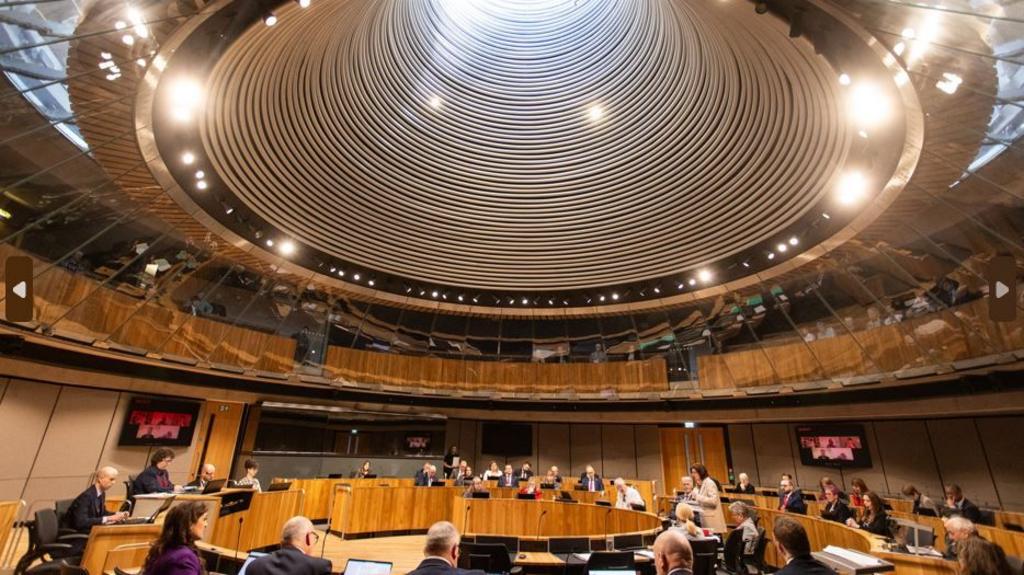
THE WELSH CONSERVATIVES have tabled a Senedd debate this week setting out what they describe as a plan to “fix Wales” after nearly three decades of Labour-led government.
The party claims that, after twenty-seven years of Labour in power — supported at times by Plaid Cymru and the Liberal Democrats — Wales is falling behind the rest of the UK on key measures including health, education and the economy.
Figures highlighted by the Conservatives include one in four people currently on NHS waiting lists, with thousands waiting more than two years for treatment. Emergency departments in Wales are also said to be among the worst performing in Britain.
In education, Wales continues to rank at or near the bottom of UK league tables, with rising absenteeism and ongoing concerns over teacher recruitment and morale.
Economically, the party says Wales has some of the lowest wages in Great Britain and faces ongoing challenges in boosting productivity and employment.

Ahead of the debate, the Conservatives outlined a series of policy proposals, including:
- Cutting income tax by 1p to stimulate growth
- Declaring a health emergency to tackle NHS backlogs and increase bed capacity
- Scrapping stamp duty on primary homes
- Removing business rates for pubs, post offices and small firms
- Expanding free childcare, including allowing payments to grandparents
- Providing a £100 million boost for farmers and replacing the proposed Sustainable Farming Scheme
- Investing in infrastructure, including the M4 relief road and upgrades to the A55 and A40
- Reversing default 20mph speed limits
- Reducing bureaucracy and focusing on frontline delivery
Leader of the Welsh Conservatives, Darren Millar MS said the current system “isn’t working” and argued his party has a “credible and costed plan” to improve public services and economic performance.
He said: “We will cut taxes, boost growth, and fix our public services.
“We want to see a Wales that thrives, with a stronger economy, a properly functioning NHS, and opportunities for people in every corner of the country.”

The debate is scheduled to take place in the Senedd on Wednesday evening.

CONTROL of a £547m Local Growth Fund has been returned to the Welsh Government, with ministers setting out plans to use the money to boost the nation’s economy over the next three years.
During a visit to Ebbw Vale on Friday (Mar 20), First Minister Eluned Morgan is expected to outline details of a new Investment Plan, endorsed by both the Welsh and UK governments. The plan sets out how funding will be allocated across priority areas and within Wales’ four economic regions.
The fund will focus on three key areas: supporting productive and competitive businesses, improving skills and helping people into work, and investing in infrastructure.
Ministers say the programme is designed to empower regional decision-making while targeting areas with the greatest economic need. The aim is to increase productivity, support business growth and create better-paid jobs across Wales.
Funding will be distributed based on tailored regional plans, reflecting local strengths and opportunities, including sectors such as advanced manufacturing and clean energy.

The First Minister, Eluned Morgan said: “I’m really pleased decisions on this post-EU funding, which is so important in supporting regional and local economic growth in Wales, are being returned to the Welsh Government.
“We want to use all the levers we have to stimulate economic growth, especially in parts of Wales where economic inactivity and unemployment are higher and wages are lower.”
The Cabinet Secretary for Economy, Energy and Planning, Rebecca Evans added: “The Local Growth Fund for Wales will help create and secure jobs in key industries, providing exciting opportunities for people to develop high-quality, long-term careers.
“We will work with local government and other partners to ensure the fund is used effectively to create jobs, unlock growth and deliver for Wales.”

Secretary of State for Wales, Jo Stevens said: “This transformational funding will create jobs, boost productivity and support economic growth across all parts of Wales.
“Decisions about how funding is used in Wales are best made in Wales, and this agreement delivers our commitment to return control of post-EU funding to Wales.
“It is another example of the UK and Welsh governments working together to deliver for our communities.”




Business4 hours ago
Could Primark be coming to Haverfordwest? Major retailer in talks for former Wilko site
Council confirms advanced discussions as speculation grows over high street boost HAVERFORDWEST could soon see a major high street revival,...


Business4 hours ago
Rail investment ‘could unlock 40,000 jobs and £11bn for Wales’ says new report
RAILWAY stations across Wales could help unlock around 40,000 jobs and more than £11 billion for the economy by 2036,...


Local Government5 hours ago
Milford Haven set for £200m investment with schools, leisure centre and rail upgrade
Council outlines major plans for town with backing from Welsh Government MILFORD HAVEN is set for a major transformation with...


Community23 hours ago
Broad Haven volunteers secure ‘national asset’ status for nature reserve
A SMALL stretch of woodland and former opencast coal mine has been transformed into a nationally recognised biodiversity site, in...


Entertainment2 days ago
Tenby steams up in spectacular style as crowds flock to festival
Colourful parade, towering creations and Victorian flair bring town centre to life TENBY was transformed into a vibrant Victorian fantasy...


Crime3 days ago
Publican jailed for six years for supplying cocaine and cannabis
Milford Haven man sentenced at Swansea Crown Court following drug dealing operation A MILFORD HAVEN publican has been jailed for...


Local Government3 days ago
Poverty summit highlights support efforts across Pembrokeshire
A SUMMIT bringing together key organisations from across Pembrokeshire has highlighted both the scale of local poverty and the work...


Education4 days ago
Milford Haven school plans unveiled but funding not yet secured
PLANS for a new £100 million school in Milford Haven have been unveiled, but the project has not yet secured...


News4 days ago
Council unveils plans for new state-of-the-art secondary school in Milford Haven
PEMBROKESHIRE COUNTY COUNCIL has revealed plans for a new state-of-the-art school in Milford Haven, promising modern, inspiring learning spaces for...


Health4 days ago
NHS waiting list falls — but cancer delays and diagnostic backlog worsen
Record progress claimed by Welsh Government as critics warn key targets are still being missed THE NHS in Wales has...
-

 News6 days ago
Emergency services flood Haverfordwest after reports of person in river
-

 Crime5 days ago
Mother given community order after admitting child cruelty offence
-
Health4 days ago
NHS waiting list falls — but cancer delays and diagnostic backlog worsen
-

 News6 days ago
Senedd vote to ban greyhound racing hailed as ‘landmark moment’ by charities
-
 News6 days ago
Senedd votes to ban Greyhound racing in Wales to protect animal welfare
-

 News5 days ago
Reform secures first Pembrokeshire councillor in Hakin by-election win
-

 Crime5 days ago
Woman stole from pharmacy despite ban, court hears
-

 Crime4 days ago
Illegal workers found at Cardigan takeaway after immigration raid