


Education
Plaid wants ‘spot checks’ for schools


 PLAID Shadow Education Minister Simon Thomas has said it is time the Welsh Government introduced spot checks for schools without giving notice.
His comments come ahead of a statement by the Welsh Government on a National Model of Professional Learning in the Senedd. Mid and West AM Simon Thomas, Shadow Education and Skills Minister for Plaid Cymru said: “Estyn, the education watchdog inspects schools every six years, and it is time for us to consider spot inspections. We need to consider giving Estyn the ability to go into schools to see the real situation in the classroom, without giving months’ notice. I hope that that is a suggestion that the Welsh Government can take forward. This statement has been a long time coming. “Excellent teaching is the most important factor in ensuring children in Wales receives a world class education. “Despite all the initiatives for educational reform put forward by the current Welsh Government, teaching standards in schools are still variable. The Welsh Government both micromanages teachers and blames them for failings in the education system.” “A Plaid Cymru Welsh Government after 2016 would invest in training for both the existing and future education workforce on literacy, numeracy, breaking the link between poverty and poor attainment and improving attendance and behaviour.”


Campaigners call for delay amid Welsh language investigation and rising pupil numbers
PARENTS and campaigners have urged Carmarthenshire County Council’s Cabinet not to recommend the closure of Ysgol Llansteffan when members meet on Monday (Feb 23).
The appeal comes ahead of a proposed decision that could see the village’s Welsh-medium primary school close in August this year.
The Ysgol Llansteffan Parents and Teachers Association (PTA), supported by Cymdeithas yr Iaith, has written to councillors calling for the process to be halted, arguing that key evidence remains incomplete and that the case for closure is flawed.

Among their concerns is an ongoing investigation by the Welsh Language Commissioner into the language impact assessment used to support the closure proposal. Campaigners say it would be inappropriate for the council to make a final decision before the investigation is concluded.
They also claim no council decision-makers have visited the school to verify the information used in the proposal, despite significant changes in circumstances, including a rise in pupil numbers to 17 as of January 2026.

The PTA argues that this increase undermines earlier projections and raises questions about the reliability of longer-term forecasts used to justify closure.
Financial concerns have also been raised. While council documents suggest annual savings of around £112,000, campaigners say transport costs of approximately £50,000 per year and inflationary pressures have not been clearly accounted for, potentially overstating the net benefit.
Parents say closure would remove parental choice and risk damaging Welsh-medium education in the area by forcing some children to travel further or potentially move into English-medium provision.
Cymdeithas yr Iaith has backed the PTA’s call, warning that the council’s objection report failed to properly address concerns that insufficient school capacity elsewhere could push pupils out of Welsh-medium education altogether.

Campaigners have also criticised what they describe as factual inconsistencies in the council’s reports, including outdated enrolment figures and conflicting capacity estimates for neighbouring schools.
The PTA has asked the council to defer any decision until updated data is available, the Commissioner’s findings are published, and alternative options for sustaining the school have been fully explored.
In their letter, parents stressed they remain willing to work constructively with the council to develop a long-term solution that would allow the school to remain open as a sustainable Welsh-medium provision for the community.

Carmarthenshire County Council has previously said the proposal is intended to address falling pupil numbers, high surplus places and financial pressures at the school. Cabinet members were told earlier in the process that neighbouring Ysgol Llangain would have sufficient capacity to accommodate pupils if the closure proceeds, and that transferring learners would provide access to improved facilities and help ensure long-term sustainability of education provision in the area.
The final decision is expected to be taken by full council in March following the Cabinet’s recommendation.

Victim says teachers should not be turned into “security guards” after Ammanford attack
A TEACHER who was stabbed multiple times by a pupil at a Carmarthenshire school has criticised proposals to introduce weapon scanners in classrooms, warning they risk shifting responsibility onto already overstretched staff.
Liz Hopkin was attacked by a teenage student at Ysgol Dyffryn Aman, Ammanford, on Wednesday (Apr 24, 2024), in an incident that shocked communities across Wales.
Speaking to BBC Radio Wales, Ms Hopkin said she does not believe scanners are “the answer” to preventing violence in schools and warned they could undermine relationships between teachers and pupils.
She said the focus should instead be on preventing young people from bringing weapons to school in the first place.
“This isn’t about preventing people bringing knives into school in the first place. This is just about detection,” she said.
“If by the time you’ve got the knife in school, you’ve missed so many opportunities prior to that to stopping that knife coming in in the first place.”
Ms Hopkin also warned that introducing scanning responsibilities could place teachers in unsafe and inappropriate situations.
“To stop putting the responsibility onto schools — we already have enough responsibility with less and less and less resources,” she said.
“You’re adding the role of security guard to teachers who are trying to build relationships with young people.”
Despite suffering serious injuries in the attack, she said she still did not believe scanners were the right approach.
“In my own head, as somebody who’s been right at that point where I’ve been stabbed — I was stabbed five times and feared that I would die — I still don’t think it’s a good idea,” she said.
The Welsh Government told the BBC that its work around weapons in schools forms part of a wider strategy to improve behaviour, with a strong emphasis on prevention rather than enforcement.

Officials said any decision to use scanners would be made by individual local authorities, and there is no expectation that teachers or school staff should carry out security duties.
Some councils have already trialled handheld scanners. Cardiff Council has supplied them to schools, but they are only used when there is a clear concern a pupil may be carrying a weapon.
The stabbing at Ysgol Dyffryn Aman led to renewed debate about school safety across Wales, including behaviour management, pupil support services, and funding pressures facing education.
Ms Hopkin added: “I would never ever suggest that anybody put themselves at risk to check. That’s not our role.”
(Image: BBC)

Fully funded research opportunity aims to widen access for disadvantaged students
SWANSEA UNIVERSITY has been selected to host a prestigious artificial intelligence research programme supported by Google DeepMind, offering fully funded opportunities to undergraduate students from disadvantaged backgrounds.
The Research Ready AI Programme will run from June 8 to July 31, 2026, providing participants with hands-on experience in areas including machine learning, robotics, natural language processing and data science.
Students will also benefit from industry engagement, mentoring from leading researchers, and the opportunity to present their work at a final research conference.
The initiative is designed to widen participation in the rapidly growing AI sector by supporting students who may not otherwise have access to research opportunities.
Participants will receive a weekly stipend, free accommodation and travel costs, ensuring financial barriers do not prevent involvement.
Training will include sessions delivered by a Turing Fellow alongside academic experts, giving students insight into cutting-edge research and career pathways in artificial intelligence.
An online information webinar will take place on Tuesday (Feb 25), with applications closing on March 15.
Organisers say the programme aims to build confidence, skills and networks among students who are traditionally under-represented in AI and technology careers.
Swansea University was chosen to host the programme following a competitive selection process, reflecting its growing reputation in computational research and innovation.



News14 hours ago
Council tax to rise again as Pembrokeshire sets new budget
Schools and social care receive extra funding in 2026–27 spending plans PEMBROKESHIRE COUNTY COUNCIL has approved its budget for the...

Health14 hours ago
Stroke patients to be transferred to Carmarthen under new health plan
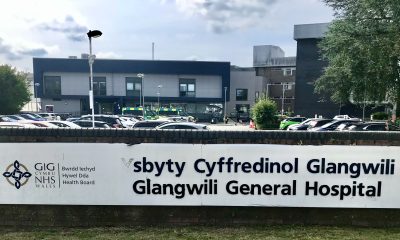
Withybush to provide initial treatment before specialist care elsewhere PEMBROKESHIRE patients who suffer a stroke are set to be transferred...


Health1 day ago
Health board confirms major hospital changes across west Wales
Emergency surgery centralised as Withybush role shifts toward planned care MAJOR changes to hospital services across west Wales have been...


Health1 day ago
Withybush loses emergency surgery in shock health board decision
Paul Davies vows Senedd fight as fears grow over travel times and patient safety PEMBROKESHIRE patients will be forced to...


Business2 days ago
Mounting complaints: More Computer Solutions Wales customers claim losses
Business owner issues legal threats and IPSO complaint to this newspaper while refusing to answer detailed questions about customers who...


Local Government2 days ago
Milford Haven Hakin by-election candidates confirmed
THE LIST of candidates standing in the upcoming Pembrokeshire County Council by-election for the Milford Haven: Hakin ward has been...


Crime3 days ago
Telecom vandal admits causing £33,000 damage to Pembroke Dock network
Fibre cables cut in early-morning incident that triggered major service disruption A PEMBROKE DOCK man has admitted causing more than...


Community3 days ago
Smiles all round for Pancake Day celebrations in Tenby
TENBY was filled with laughter, cheers and the smell of freshly cooked pancakes on Tuesday (Feb 17) as the town’s...


Crime4 days ago
Man charged with GBH with intent following incident involving ‘Pembrokeshire Patriot’
Defendant remanded in custody as case linked to police raids on Friday A MAN has been charged with causing grievous...


Business4 days ago
Svitzer crews at Milford Haven vote for industrial action in pay dispute
Union ballot raises concerns over potential disruption at key UK energy port SVITZER crews working in the Port of Milford...
-
Health1 day ago
Withybush loses emergency surgery in shock health board decision
-
Health1 day ago
Health board confirms major hospital changes across west Wales
-

 Health1 day ago
Health board: Changes will bring “resilience and sustainability” to West Wales services
-

 Business3 days ago
MS’s host business advice surgery following demand from Business Rates Online Forum
-
Community5 days ago
Hywel Dda hospital services decisions will be made next week
-

 Community6 days ago
Second Milford Haven webcam launched after 1.3m views and US TV feature
-
Business4 days ago
Svitzer crews at Milford Haven vote for industrial action in pay dispute
-

 News6 days ago
Darren Millar rules out post-election pact with Reform or Plaid