


Community
Trecadwgan farm to be sold by auction

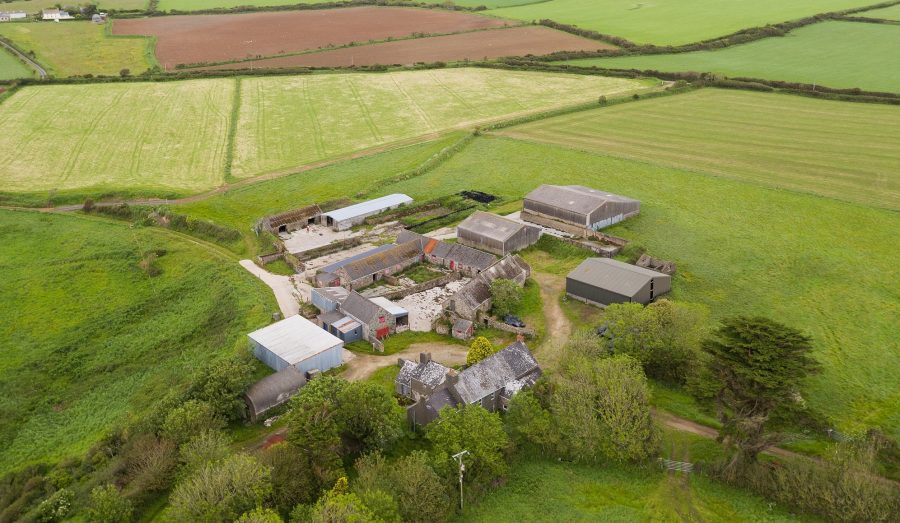
PEMBROKESHIRE COUNTY COUNCIL has decided to sell Trecadwgan Farm by way of public auction.
The Council’s decision has been made in order to bring the sale process to a conclusion and give interested parties a fair and transparent opportunity to purchase Trecadwgan Farm.
The property was originally placed with a local agent for sale by way of public auction in July 2019 after the Council’s Cabinet resolved to sell the Farm on the open market to create a significant capital receipt.
However, it was withdrawn from public auction at the request of the community group known as ‘Save Trecadwgan Farm’ to give them an opportunity to prepare a business plan and seek finance in order to purchase the same on the open market.
Due to the interest shown in the Farm and the offers being made by interested parties, the Council decided that having withdrawn the property from public auction, to conduct the sale by way of private treaty.
Offers were made via the Council’s agent who undertook a standard sales process up to the set date whereby any party who made an offer were advised whether or not the offer made was the highest received.
As part of the process a local charitable foundation made the highest offer by the specified date to purchase the Property and accordingly the Council issued the draft documentation to their solicitors.

It is understood that the foundation had agreed to allow the local community group to use the Farm.
Notwithstanding that the terms and conditions of the transaction were disclosed to all interested parties in the particulars of sale, the foundation would not accept the contract conditions and subsequently withdrew their offer.
Having taken the advice of its agent, the Council agreed that the parties who made unsuccessful offers should be contacted to confirm whether they were still interested and if so to confirm the value of their offer.
At this time a third party who had not been part of the original offer process made the highest offer which again was accepted by the Council subject to contract.

Although the third party was not a party approached by the Council’s agent, as the third party had not previously made a bid, the offer was accepted on the basis of the Council’s duty under section 123 of the Local Government Act 1972 to obtain the best consideration which can reasonably be obtained. It is understood that the third party also intended to allow the Community group to occupy the Farm although the terms and conditions are unknown to the Council.
However, the statutory duty and supporting case law relevant to the sale of property by local authorities indicates that the Council has a duty to give consideration to any offer made to the Council.
The Council has now received a number of further higher offers to purchase the Farm.

“Having originally taken the property out of the auction at the request of the Community Group, the Council has, due to the statutory provisions found itself in a difficult and time consuming sales process,” said Cllr Bob Kilmister, Cabinet Member for Finance.
“Therefore to ensure that the sale process can be brought to a conclusion and ensure that all interested parties are given a fair and transparent opportunity to purchase the Farm, the Council has decided to sell the Farm by way of a public auction.”
Cllr Kilmister went on to explain that it is sound practice that local authorities should dispose of surplus land wherever possible.
“Generally it is expected that land should be sold for the best consideration reasonably obtainable,” he said.
“However, it is recognised that there may be circumstances where an authority considers it appropriate to dispose of land at an undervalue. Authorities should clearly not divest themselves of valuable public assets unless they are satisfied that the circumstances warrant such action.
“The General Disposal Consent (Wales) 2003 which enables the sale at an undervalue gives local authorities autonomy to carry out their statutory duties and functions, and to fulfil such other objectives as they consider to be necessary or desirable. However, when disposing of land at an undervalue, authorities must remain aware of the need to fulfil their fiduciary duty in a way which is accountable to local people.
“The Council has not resolved to use the general consent in this matter on the basis that the Farm will create a substantial capital receipt which is essential given the severe financial pressures the Council is presently facing.”









THE FINAL sign-off for a pilot scheme for foster carers in Pembrokeshire to be exempt from council tax payments, has been backed by senior councillors.
Last July, Pembrokeshire County Council Cabinet members backed a pilot scheme, giving 100 per cent exemptions for those meeting the criteria, running from April 1 of this year, up to March 31, 2029.
In a report presented by Cabinet Member for Young Persons, Community, Well-being and Future Generations Cllr Marc Tierney, members heard the average yearly cost of a young person being supported by an in-house foster carer per year is £22,770, while the cost for those in in residential care per year is £409,812, a variance of £387,042 per year.
“It is evident that if we can support more people to foster through a council tax discretionary discount scheme, this will benefit the Local Authority by reducing reliance on far more expensive residential care placements, or independent fostering agency arrangements, whilst enabling children to remain in their own communities,” the report said.
It added: “Based on the 25/26 Council Tax (Band D) equivalent rate of £2,059.82 per annum, the cost of implementing a 100 per cent discount per year for current mainstream foster carers would be £133,888.30. It is noted that there may be some households within this cohort who are already receiving some sort of discount, however £133,888.30 should be the maximum impact.”

Offset against that, current costs for Independent Fostering Agencies placements are some £1,956,500; the spend for the same number of children placed with in-house foster carers based on average placement costs would £796,920 per annum, an annual variance of £1,159,580 less per year compared to IFA placement costs.
“Introducing this discount on a pilot basis would be with a view to identifying if additional costs incurred by implementing this scheme would be offset by reducing the number of children and young people placed with Independent Fostering Agencies and increasing the number of children being cared for via in-house foster carers,” the report said.
It added: “This proposal will also have the added benefit of creating capacity for more young people looked after to remain close to their families, their homes, their schools, and communities thus retaining crucial local links and support networks.”
At the March meeting of Cabinet, members were asked to again back the scheme, with minor amendments to eligibility, which was supported by Cabinet.
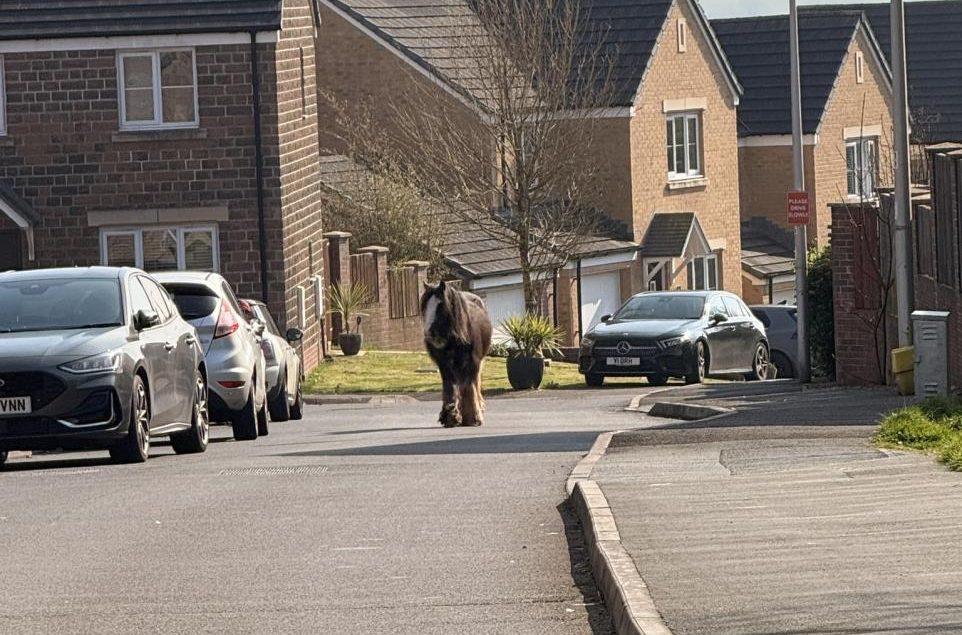
Animal seen galloping through residential streets and towards main road
POLICE are reportedly tracking a loose horse which strayed into a residential area of Pembroke.
The animal was first spotted in Gatehouse View before making its way onto a nearby main road.
A post on the Pembroke and Pembroke Dock Citizens’ Forum said the horse had left Gatehouse View and was seen heading towards the road by Pembroke Leisure Centre.
The resident wrote: “Anyone recognise it? Police following it.”
The horse was later reported to be galloping down Buttermilk Lane in the direction of Martha’s.

Stray horses are not uncommon in the area. In January, several animals were reported loose around Pembroke and along the A477, particularly near Buttermilk Close and the Cleddau Bridge.
Those incidents created a hazard for motorists, prompting Pembrokeshire County Council to step in and return the animals. Drivers were advised to take extra care and avoid startling them.

Beloved character to greet visitors as Heritage Centre reopens for new season
CHARLIE the 100-year-old ventriloquist’s doll is coming out of retirement — and back to where it all began.
Visitors to Pembroke Dock Heritage Centre will be greeted by the much-loved character when the attraction reopens for the new season on Monday (March 30).
It marks a nostalgic return for Charlie, who once performed in the very same building — then the Royal Dockyard Chapel — alongside his original owner, Ernie James, a Pembroke Dock bus company proprietor. Over the years, the duo became a familiar and popular act on the Pembrokeshire variety circuit.
Today, Charlie is cared for by Paul Elliott, of Llanreath, who inherited the doll from his father, Fred Elliott — better known locally as magician ‘Mr E’, whose shows delighted audiences for decades.
Charlie has also recently enjoyed a brush with national attention, appearing alongside Paul at a BBC Antiques Roadshow event in Swansea.
The Heritage Centre will offer free entry on opening day, with Charlie and Paul on hand to meet visitors and share stories from a century of entertainment.



Entertainment13 hours ago
Tenby steams up in spectacular style as crowds flock to festival
Colourful parade, towering creations and Victorian flair bring town centre to life TENBY was transformed into a vibrant Victorian fantasy...


Crime2 days ago
Publican jailed for six years for supplying cocaine and cannabis
Milford Haven man sentenced at Swansea Crown Court following drug dealing operation A MILFORD HAVEN publican has been jailed for...


Local Government2 days ago
Poverty summit highlights support efforts across Pembrokeshire
A SUMMIT bringing together key organisations from across Pembrokeshire has highlighted both the scale of local poverty and the work...


Education3 days ago
Milford Haven school plans unveiled but funding not yet secured
PLANS for a new £100 million school in Milford Haven have been unveiled, but the project has not yet secured...


News3 days ago
Council unveils plans for new state-of-the-art secondary school in Milford Haven
PEMBROKESHIRE COUNTY COUNCIL has revealed plans for a new state-of-the-art school in Milford Haven, promising modern, inspiring learning spaces for...


Health3 days ago
NHS waiting list falls — but cancer delays and diagnostic backlog worsen
Record progress claimed by Welsh Government as critics warn key targets are still being missed THE NHS in Wales has...


Crime4 days ago
Rapist jailed after ‘abhorrent’ attacks on woman and children
Haverfordwest man told police “women won’t have sex without force” A HAVERFORDWEST man who raped a woman and a young...


News4 days ago
Reform secures first Pembrokeshire councillor in Hakin by-election win
Late Reform candidate takes seat as independent surge and Labour withdrawal shape contest REFORM UK candidate Scott Thorley has won...


News4 days ago
Scott Thorley elected as Pembrokeshire’s first Reform councillor
REFORM UK candidate Scott Thorley has won the Hakin by-election after securing 179 votes. The full result is as follows:...


News5 days ago
Police confirm man has died after being recovered from River Cleddau
Major emergency response in town centre after concerns raised for man in water A MAN has died after being recovered...
-

 News7 days ago
Fishguard linked to allegations in Many Tears Animal Rescue investigation
-

 News5 days ago
Emergency services flood Haverfordwest after reports of person in river
-

 Crime4 days ago
Mother given community order after admitting child cruelty offence
-
Health3 days ago
NHS waiting list falls — but cancer delays and diagnostic backlog worsen
-

 News4 days ago
Senedd vote to ban greyhound racing hailed as ‘landmark moment’ by charities
-

 international news7 days ago
UK considers military options as pressure grows to secure Strait of Hormuz
-
 News4 days ago
Senedd votes to ban Greyhound racing in Wales to protect animal welfare
-
 Crime6 days ago
Man cleared of sexual assault allegation after magistrates rule no case to answer