


News
Volunteer officers give up time to police during the pandemic


WHILE most people are staying home to stay safe, a small army of volunteers has been patrolling the streets to help protect communities.
Dyfed-Powys Police’s Special Constabulary has boosted numbers on the frontline, giving up hundreds of hours to support their regular colleagues in dealing with crime and enforcing new COVID-19 legislation.
Special Inspector Haydn Bradley-Davies is one of the 46 unpaid officers to step up during the pandemic, logging a mammoth 2,500 hours and carrying out 287 duties between them in April.
For S/Insp Bradley-Davies, 280 hours have been spent on duty since March 21 – five times the hours he would usually volunteer in a month.
Despite the added risks of patrolling and coming into contact with members of the public, he did not hesitate in offering his time. As he heads back to his regular full-time job, he’s given an insight into the challenges and rewards of being a Special during this extraordinary time.

He said: “I felt it was really important that I was helping the force out during its time of need, managing the new legislation and public order.
“When the new legislation was announced back in March, the Chief Constable sent a letter to Specials asking for assistance, and I felt it was essential that I helped out as much as I could.
“I knew the new rules would mean extra challenges for regular officers, who would be committed with road checks and additional patrols, as well as dealing with reports of crime. It was important to me to be able to do my bit to help my colleagues.”
Since March 21, S/Insp Bradley-Davies has attached himself to the Aberystwyth response code he usually volunteers alongside. When he would usually be working his desk job with the Welsh Government, he’s been responding to calls from the public, updating victims of crime on enquiries, protecting vulnerable people and implementing the new legislation.

Specials across the force have made seven arrests and assisted in 28, attended 25 domestic calls, carried out 656 vehicle stops, recorded five drug seizures and conducted 322 stop checks.
S/Insp Bradley-Davies said: “Enforcing the regulations has mainly involved educating members of the public in the Aberystwyth and North Ceredigion area of the new rules and their own responsibilities, as well as helping them understand what they should all be doing to protect themselves and others,” he said.
“This has been mainly via foot patrol in hotspots where there are likely to be more people, and also conducting static road checks to make sure people are only travelling for essential reasons.

“Alongside this, we’ve responded to high risk missing persons calls, assisted with scene guard following a sudden death, reports of criminal damage, burglaries and domestic incidents.”
Despite having four years of Special experience under his belt, this is the first time S/Insp Bradley-Davies has followed a shift pattern of six days on and four days off alongside his colleagues. And although he has made the most of the opportunity, he admits it hasn’t been without its challenges.
“I have worked with Code E for the majority of my specials career, so to be there with them every shift, seeing the challenges they face day to day, and to support them as much as I have was a huge pleasure,” he said.
“I’ve felt I have become so much closer to my colleagues over the past seven weeks. It’s very much like being part of a family being on shift, which has been the most enjoyable part.
“As someone who works and has always worked flexible working hours, I have found the move to a shift work pattern quite different. I’m used to the occasional night shift with my Special Constable role, but working a full pattern is challenging.
“I have enjoyed the experience, but I think it has shown me that I am not a shift person and I want to continue as a Special Constable working alongside my full time role.”
Dyfed-Powys Police currently has 88 Special Constables, who work across the force area. Many carry out the role alongside full time work and family commitments. For S/Insp Bradley-Davies and his colleagues, the opportunity to support his colleagues full time, on paid and unpaid leave, would not have been possible without the backing of their employers.
He said: “My employers at the Welsh Government have always been supportive of my role as a Special Constable and volunteering in general. Since the announcement of lockdown they have been even more supportive than normal, and allowed me to be released in order to assist Dyfed-Powys with their work.”
Special Chief Inspector Chris Evans thanked all Specials for the work they have carried out in recent weeks.
He said: “DPP Specials have been fantastic during this period. A huge thank you to them for all that they are doing.
“Thank you also to the employers of Specials who have supported their communities by allowing Specials to be on duty with the Employer Supported Policing scheme.”












Peaceful sign-holders face uncertainty as judges weigh legality of Palestine Action ban
A HIGH-stakes court ruling due on Friday (Feb 13) could determine whether nearly three thousand people arrested for holding protest signs were unlawfully treated as terror suspects.
Judges at the Royal Courts of Justice are expected to deliver a long-awaited Judicial Review decision into the Government’s decision to proscribe Palestine Action, a direct-action group campaigning against arms companies linked to Israel.
Campaigners say 2,787 people were arrested across the UK for peacefully displaying placards reading: “I oppose genocide. I support Palestine Action.”
They argue those arrests – made under terrorism legislation – represent one of the most sweeping crackdowns on non-violent protest in modern British history.
Supporters from Defend Our Juries and its “Lift The Ban” campaign say they will again hold signs outside the court from 10:00am, even if that risks further arrests.
If the ban is ruled unlawful, lawyers say hundreds of pending prosecutions could collapse.
If upheld, more demonstrators could face criminal charges.
A spokesperson for the group said: “The public knows the difference between protest and terrorism. Peaceful people holding signs should never have been treated as extremists.”

Largest civil disobedience campaign
Organisers describe the protests as the largest UK-wide campaign of non-violent civil disobedience in recent years, with silent vigils held in towns and cities across England, Wales, Scotland and Northern Ireland.

They claim counter-terrorism resources have been diverted away from genuine threats to process peaceful demonstrators instead.
Police morale has also been affected, they say, with officers placed in the position of arresting people engaged in silent protest.
Government under pressure
The proscription was introduced by Home Secretary Yvette Cooper, who argued the group’s actions crossed the line into criminality.

But critics allege the decision followed lobbying from arms manufacturers and pro-Israel interests, a claim ministers deny.
A recent Channel 4 News documentary examined meetings between ministers and industry representatives, raising further political questions.
Prime Minister Keir Starmer has also faced scrutiny over the Government’s stance after campaign actions targeted property linked to him in Scotland.
Rights concerns
Human rights organisations say the case could set an important precedent for the future of protest laws.
Amnesty International UK warned the ban marked “a substantial departure” from how protest movements are normally handled, while Liberty argued counter-terror powers were historically intended for groups using violence against people.
United Nations experts have also raised concerns that criminalising peaceful assembly risks putting the UK “out of step” with other democracies.
Legal battle
The Judicial Review challenge, brought by Palestine Action co-founder Huda Ammori, was granted four grounds, including whether the ban breaches rights to freedom of expression and assembly and whether ministers failed to follow proper consultation procedures.
Parts of the Government’s defence were heard in secret under a closed material procedure, a move criticised by civil liberties lawyers.
Campaigners have described the court hearing as a test of whether protest can still be treated as a democratic right.
What happens next?
The ruling, expected mid-morning, could immediately reshape ongoing cases.
If the judges strike down the proscription, arrests and charges linked solely to sign-holding protests may be deemed unlawful.
If they uphold it, campaigners say they will continue demonstrating regardless.
One organiser said: “Whatever the decision, people of conscience will keep standing up. Holding a sign is not terrorism.”
The outcome is likely to be closely watched not only by those arrested, but by campaigners, police forces and civil liberties groups across the UK.

HEALTH staff across Wales and the rest of the UK are set to receive a 3.3 per cent pay rise from April after the Government accepted the latest recommendations from the independent review body – but unions say the increase still falls short after years of falling real-terms wages.
The decision follows months of pressure from unions representing nurses, paramedics, porters and other frontline staff, many of whom have taken industrial action in recent years amid rising workloads and the cost-of-living crisis.
The Health Secretary has confirmed that ministers will implement the headline award recommended by the NHS Pay Review Body for workers in England, Wales and Northern Ireland, meaning most staff covered by the Agenda for Change contract will see their salaries rise at the start of the new financial year.
Union leaders say the timing is welcome – but the figure itself does not go far enough.
Responding to the announcement, GMB Trade Union said the increase marks the first time in several years that NHS staff will receive their pay award on schedule, avoiding the delays that have previously left workers waiting months for back pay.
Rachel Harrison, national secretary for the union, said: “GMB welcomes the efforts made to ensure NHS workers will receive their pay increase when it is due, in April.
“The first time this will have happened in years.
“But this award is just not enough to make up for more than a decade of pay cuts under the Tories. NHS workers deserve more and GMB will fight for that at the long overdue Agenda for Change structural talks we have now been promised.
“GMB reps will now meet to discuss the pay award and determine next steps.”
Years of pressure
Health unions argue that although pay has risen in cash terms, inflation and years of below-inflation settlements have left many National Health Service workers worse off than they were a decade ago.
Since 2010, a combination of pay freezes, capped rises and soaring living costs has eroded real-terms earnings, with some estimates suggesting experienced staff are thousands of pounds a year worse off compared to pre-austerity levels.
Recruitment and retention remain major concerns across Welsh hospitals and ambulance services, with health boards continuing to rely on agency staff to plug gaps.

Union representatives say pay remains one of the biggest factors pushing experienced workers to leave the profession.
Impact in Wales
For NHS staff in west Wales, including Pembrokeshire and Carmarthenshire, the award will be felt from April payslips, covering a wide range of roles from healthcare assistants and cleaners to nurses, paramedics and administrative teams.
While some will welcome the certainty of an on-time rise, local staff have previously told The Herald that rising energy bills, fuel costs and housing pressures mean even modest increases are quickly swallowed up.
GMB said it will now consult workplace representatives on whether further action is needed and will push for wider reforms during upcoming structural talks on pay bands and career progression.
The union added that “timely” must not be confused with “sufficient”.
For many on the frontline, the question is no longer just when pay rises arrive – but whether they are enough to keep the health service staffed at all.
Teenagers rescued from rocks as late-night tide trap sparks call-out
ANGLE lifeboat crew have responded to two emergency shouts this week, including a late-night rescue of three teenagers cut off by the tide.
Volunteers from RNLI Angle Lifeboat Station were first tasked at 6:23pm on Tuesday (Feb 10) to assist in the search for a missing surfer at Broughton Bay, on the Gower.
With Burry Port Lifeboat Station inshore lifeboats also responding and other all-weather lifeboats in the area unavailable, Angle’s crew began mustering for immediate launch.
However, the shout was cancelled before the lifeboat launched after the surfer was located safe and well.
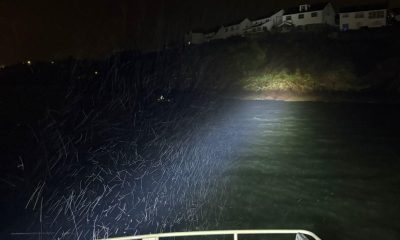
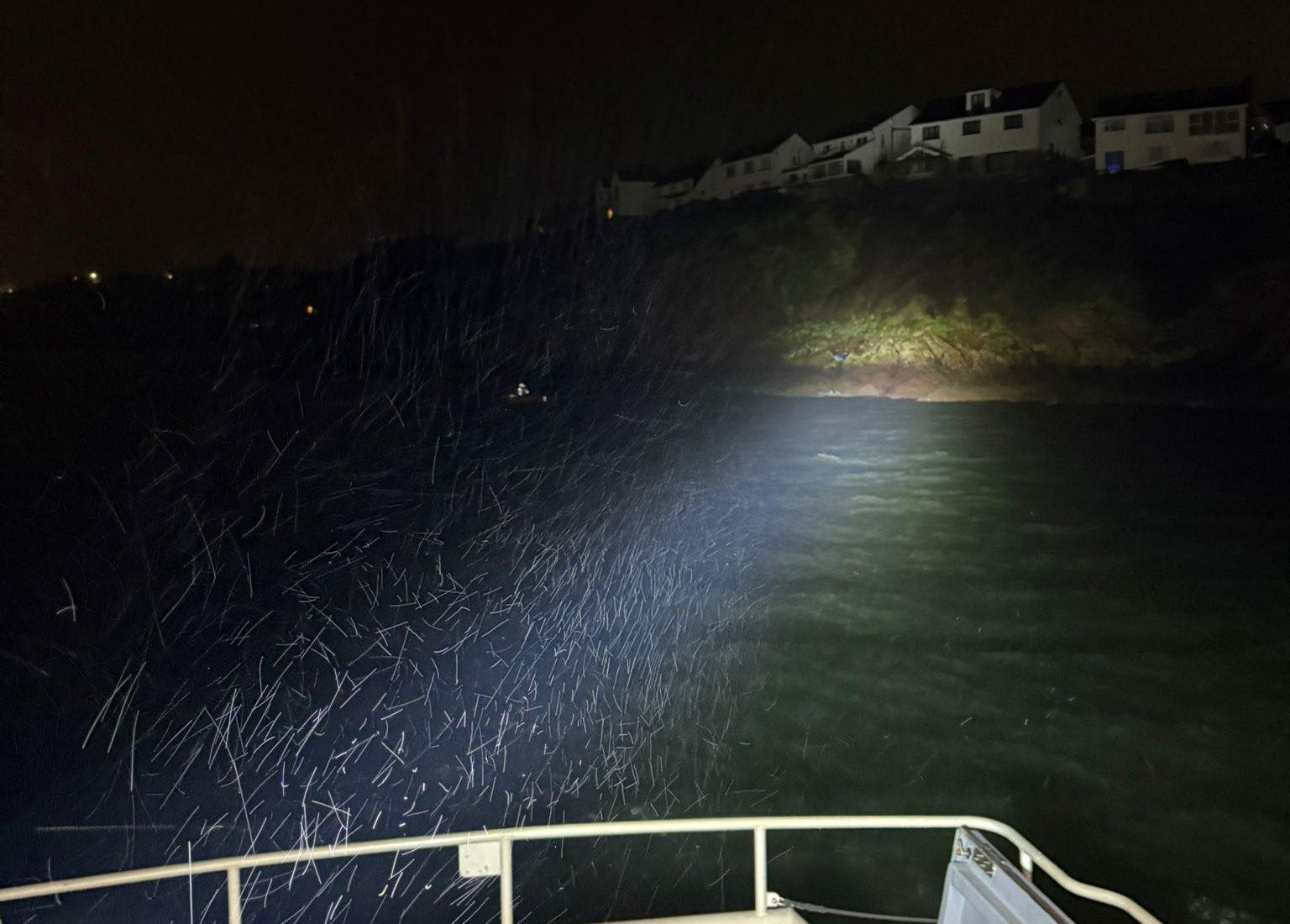
Just two days earlier, at 11:24pm on Monday (Feb 8), the crew had launched to reports of three teenagers stranded between Hakin Point and Conduit Beach after becoming cut off by the incoming tide.
The lifeboat quickly located the group on rocks made slippery and hazardous by heavy rain. Unable to climb to safety, the teenagers were stranded as the tide rose around them.
The crew deployed the station’s inflatable Y-boat, allowing rescuers to reach the casualties and transfer them safely back to the all-weather lifeboat.
They were then brought a short distance into the marina and handed into the care of family members, alongside HM Coastguard Dale Coastguard Rescue Team and police.
With no further assistance required, the crew stood down and the lifeboat was refuelled and made ready for service again by 1:00am.
RNLI volunteers are reminding the public to check tide times and sea conditions before heading onto the coast, particularly during the winter months when weather and visibility can deteriorate quickly.



Crime9 hours ago
Pendine man jailed for abducting and drugging teenage girl
Offender had 1,101 unlawful images of children stored on his devices, including 122 Category A images – the most serious...

Crime1 day ago
Publican admits supplying cocaine and cannabis at Crown Court
Admits cocaine and cannabis supply but denies intent and cash allegations A MILFORD HAVEN pub landlord has admitted supplying cocaine...

Local Government1 day ago
Plaid win in Fishguard North East by-election
PLAID CYMRU has taken the Fishguard North East seat on Pembrokeshire County Council following this week’s by-election. Billy Shaw was...


News2 days ago
Man to return to court over alleged harbour collision
Three charges relate to navigation of vessel in Milford Haven A NEWPORT man is due to return to court later...

Business3 days ago
Computer Solutions Wales under fire from customers
Claims of unreturned devices, unpaid refunds and small claims court cases as company blames landlord dispute CUSTOMERS across west Wales...


News3 days ago
Starmer under fire as aides quit and Scottish Labour leader calls on him to resign
Two senior Downing Street exits in 24 hours as Anas Sarwar breaks ranks, but ministers insist the Prime Minister is...


News3 days ago
Fresh concerns over £60m A40 scheme after resurfacing works just months after opening
QUESTIONS are being asked about the condition of the newly-opened A40 Llanddewi Velfrey to Redstone Cross carriageway after sections of...
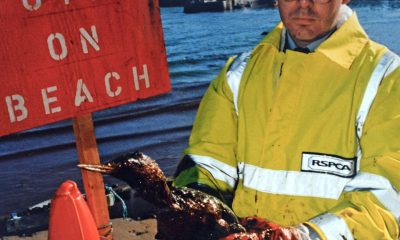

Charity4 days ago
RSPCA looks back at the Sea Empress oil tanker disaster 30 years on
Charity reflects on one of the biggest environmental disasters to hit UK IN just a few days time it will...

Crime5 days ago
Pembroke Dock man admits threatening to hack woman’s head off with sword
Court imposes strict bail conditions and bans contact with named individuals ahead of sentencing A PEMBROKE DOCK man has admitted...


Crime5 days ago
Teenager remanded after teacher injured in knife incident at Milford Haven school
Fifteen-year-old charged with Section 18 grievous bodily harm and possession of a bladed article appears before Swansea magistrates A FIFTEEN-YEAR-OLD...
-
 Health1 day ago
Health Board to decide future of nine key services at two-day meeting
-
Business3 days ago
Computer Solutions Wales under fire from customers
-
 Business6 days ago
Six-figure negligence victory leaves retired builder trapped in divorce limbo
-

 Business5 days ago
Minimum alcohol price to rise by 30 per cent as retailers warn of border impact
-

 Community2 days ago
Facebook ‘news’ site targeting Herald editor collapses after community backlash
-

 Charity3 days ago
Welsh patient voices help shape new UK-wide online kidney forum
-
 News7 days ago
Political leaders and unions react to Milford Haven school assault
-
 Education6 days ago
Second west Wales school placed in lockdown within days