


Politics
Plaid proposes second home restrictions

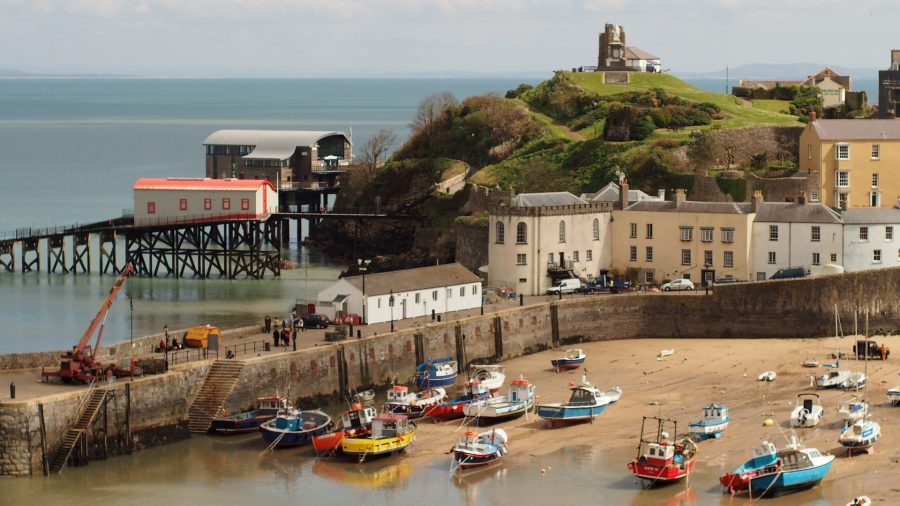
THE TIME has come for the Welsh Government to take firm actions to protect communities and first time buyers against the economic oppression of runaway second home purchases, according to Plaid Cymru.
On Wednesday (September 23) the party published a 16-page report containing five main recommendations ahead of a debate in the Senedd the same afternoon.
The proposed measures include:
• Changing planning laws to allow councils to impose a cap on the number of second homes, refuse permission for changing a dwelling from being from a primary to a secondary residence and disallow new properties from being purchased in areas where second homes make up to 20% of the local market
• Allowing council to charge council tax premiums of up to 200% on second homes and having the Welsh Government bring forward regulations to treble the LTT (Land Transaction Tax) charge on the purchase of second properties.
• Close the loophole that allows second home owners to register their property as “businesses” in order to avoid paying the council tax premium.
• Look at bringing in a licencing scheme for renting properties through companies such as AirBnB to control the amount of properties that can be used as a cash cow in popular holiday destinations where house prices are high.
• Proposals to empower councils to build houses with a local conditions on them, make it easier to bring empty properties back into use and redefine the term ‘affordable home’ (which currently includes properties worth over £250,000).
There were 4,000 in Pembrokeshire in 2018 (source PCC). In 2016 in Tenby, 35% of all homes were second homes/holiday lets (source PCC).
Lexden Terrace off St Julien Street, Tenby has six dwellings, five of which are second homes; in Harding Street, eight of eleven houses are second homes; in yet another street in central Tenby, 22 out of 31 houses are second homes.
Across West Wales, there are considerable fears that one of thecoronavirus pandemic has fuelled a housing ‘bubble’ due to the disease’s relatively low rate of infection and transmission in the locality.
“The proliferation of second homes in seaside towns and villages has been driving up property prices and driving away our young people for some time,” said Pembrokeshire County Councillor Mike Williams of Tenby.
“Unless action is taken to regulate the second home market, out coastal communities will become a playground for people who are rich enough to own more than one home. What use is the Future Generations Act if young people have no chance of having a future in their communities?”
Speaking to another local councillor last week, The Herald was told of one house which went on the market on a Friday this month and was sold to buyers from outside Pembrokeshire by the following Monday for £70,000 over its asking price.
When we spoke to a county councillor in Ceredigion, we were told a similar story: properties going onto the market are being snapped up over their asking price as second homes by outsiders attracted by the county’s excellent record handling the coronavirus pandemic.
Speaking about the publication of the report and ahead of the Senedd debate, Plaid Cymru’s shadow housing minister Delyth Jewell MS said: “People all over Wales have heard the cry of pain coming from the North West over the past few months, as the already unsustainable holiday homes situation spirals further out of control.
“The main purpose of devolution was so that we in Wales would have the powers to fix our problems ourselves, but the situation isn’t improving with over a third of homes sold in Gwynedd and Ynys Môn in the last financial year being purchased as second properties.
“12% of Gwynedd’s housing stock consists of second homes owned by people outside the county, this is among the highest in Europe and the subsequent price inflation in a low-wage area means that people are simply unable to buy a home within their own community.
“The series of measures proposed by Plaid Cymru today are designed to bring the situation under control and empower communities through targeted, proportional interventions and I hope the Welsh Government will consider them seriously.”
Ms Jewell added: “Countries all over the world have taken action in the face of similar circumstances, for example New Zealand and Denmark have simply banned property sales for non-citizens, and the Bolzano region is Italy has restricted the sales of holiday homes to people outside the region.
“We can’t go on like this, it’s not fair that people who are living in areas already disadvantaged in terms of a lack of work opportunities have to see their communities slowly being transformed as locals have to move away in order to find a house to live in.
“I am deeply concerned about the effect this will have on the Welsh language, it will be a stain on the conscience of the nation if the language is allowed to wither away in its heartlands simply because the Welsh Government doesn’t want to act.
“But this is an issue that affects the whole of Wales as house prices keep inflating – the measures on affordable housing, LTT rates and the localism clause would benefit first-time buyers all around the country.”



Calls grow for Welsh Government to match support offered to English venues
THE WELSH LIBERAL DEMOCRATS have urged the Welsh Government to review its business rates policy, warning that scaling back support for pubs and hospitality risks further closures across towns and villages.
Party leader Jane Dodds, who represents Mid and West Wales in the Senedd Cymru, said ministers should act quickly to protect local venues after additional support for pubs and music venues was announced for England by the UK Government.
The measures announced by the Chancellor do not automatically apply in Wales, leaving uncertainty over whether similar help will be introduced here.
Hospitality businesses across Pembrokeshire and Carmarthenshire have already reported rising energy bills, higher wage costs and reduced footfall since the pandemic. From April, current business rates relief is expected to be reduced, a move the Liberal Democrats say could place Welsh firms at a disadvantage compared with competitors over the border.
Dodds said that pubs, cafés and restaurants form “the heart of our communities” and warned that withdrawing relief now would be “a serious mistake”.

She told the Senedd that support “cannot stop at pubs alone” and should extend to the wider hospitality sector, including restaurants and family venues that rely heavily on seasonal trade and tourism.
“When questioned, the First Minister said she needed to examine the details of the English package before committing to anything similar for Wales,” Dodds said. “Without urgent action, we risk losing viable, well-loved businesses that communities simply cannot afford to lose.”
The party is also calling for UK-wide action, including a temporary reduction in VAT for hospitality and tourism, funded by a windfall tax on large banks.
However, Welsh Government sources have previously argued that decisions on rates relief must be balanced against pressures on public finances, with ministers required to prioritise health, education and other frontline services within a fixed budget. They have said any additional support would need to be affordable and targeted.
Industry bodies have echoed concerns about the challenges facing the sector. Trade groups say many independent pubs and cafés continue to operate on tight margins, particularly in rural areas where they serve as community hubs as well as businesses.
Local operators say clarity is now key, with decisions on staffing, stock and opening hours often planned months in advance.
With the next financial year approaching, hospitality owners will be watching closely to see whether Wales mirrors England’s support – or leaves businesses to absorb the extra costs alone.


Former cabinet minister says stepping down is ‘in best interests of the party’ as questions raised over historic payments
LORD MANDLESON has resigned his membership of the Labour Party, saying he does not want to cause “further embarrassment” following renewed controversy over his past links to convicted sex offender Jeffrey Epstein.
The former cabinet minister and one-time UK ambassador to the United States confirmed his decision in a letter to Labour’s general secretary after fresh documents released by the US Department of Justice appeared to reference him in connection with Epstein’s finances.
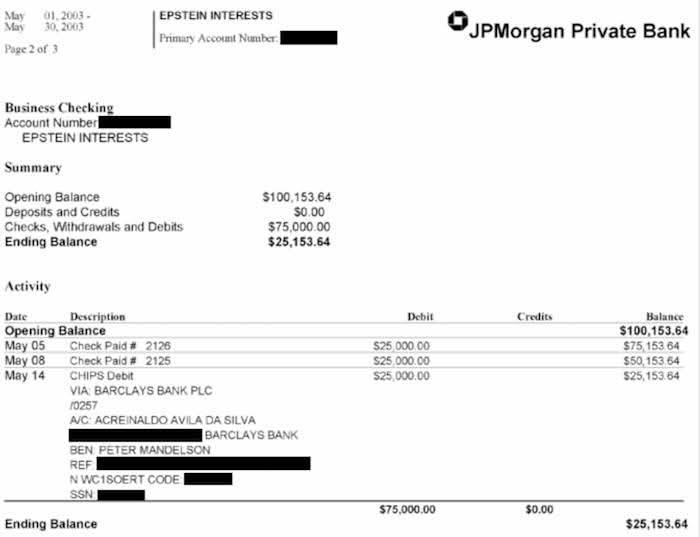
The files suggest that three payments of $25,000 — totalling $75,000, about £55,000 at today’s exchange rates — were allegedly made to Peter Mandelson in 2003 and 2004.
Lord Mandelson said he had “no record or recollection” of the transactions and believes the allegations may be false, but intends to investigate the matter himself.
In his resignation letter, he wrote that he felt “regretful and sorry” to be linked again to what he described as the “understandable furore” surrounding Epstein.
He added that stepping down from party membership was the responsible course of action while he reviewed the claims.
“I do not wish to cause further embarrassment to the Labour Party,” he said. “I have dedicated my life to the values and success of the party and believe I am acting in its best interests.”
Ambassador role ended
Lord Mandelson had been appointed the UK’s ambassador to Washington by Prime Minister Keir Starmer in December 2024.
However, he was removed from the post last year after earlier revelations about his past friendship and contact with Epstein, including emails showing communication after the financier’s 2008 conviction.

The latest release of files has also included photographs said to show Lord Mandelson alongside an unidentified woman. He said he could not place the location or circumstances of the images.
There is no suggestion that appearing in the documents or photographs indicates criminal wrongdoing.
‘Deep regret’
Earlier this weekend, Lord Mandelson reiterated his regret for ever having known Epstein and apologised “unequivocally” to the women and girls who suffered abuse.

“I want to repeat my apology to the women and girls whose voices should have been heard long before now,” he said.
Epstein died in prison in 2019 while awaiting trial on sex trafficking charges, but investigations into his network of associates continue to generate political fallout on both sides of the Atlantic.
Labour has not yet issued a detailed statement beyond confirming it had received Lord Mandelson’s resignation.

THE UK GOVERNMENT has ruled out handing control of policing and criminal justice to Wales, triggering fresh political debate over whether the Senedd should ever take responsibility for law and order.
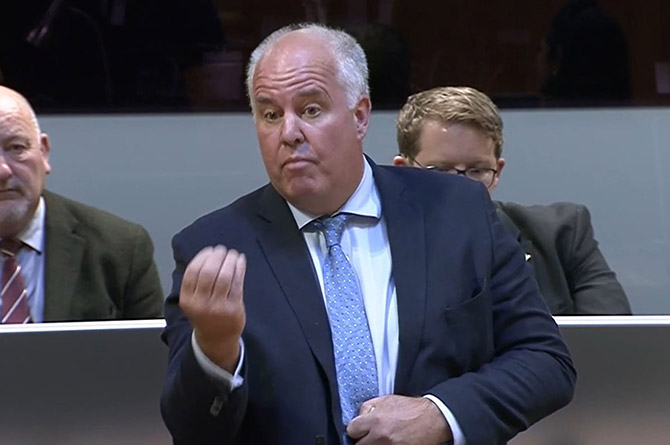
South Wales Central Conservative MS Andrew RT Davies said ministers were “right” to block further devolution, warning that separating Welsh forces from England would weaken efforts to tackle organised and cross-border crime.
His comments follow an exchange in the House of Commons, where Liz Saville-Roberts pressed the Home Secretary on transferring powers to Cardiff Bay. The Government confirmed it does not believe policing and criminal justice should be devolved.
“Must reflect the reality on the ground”
Mr Davies said proposals from Plaid Cymru and other devolution campaigners ignore how crime and communities operate in practice.
“The Senedd must not be put in charge of policing,” he said.
“Senedd ministers have an appalling track record on law and order. As senior police officers say, reforms must reflect the reality that many Welsh communities look east towards England far more than they do to other parts of Wales.”
Senior officers have echoed that concern.
Amanda Blackman, Chief Constable of North Wales Police, recently said her force area is “very much connected from a criminality perspective” to Merseyside and Cheshire.
“Our population move, if you like, is more east to west, west to east than it is north to south,” she said, pointing to the daily flow of commuters, shoppers and offenders across the border.

Long-running constitutional argument
Wales currently has four territorial forces – Dyfed-Powys, South Wales, Gwent and North Wales – but funding, legislation, prisons and the courts all remain under Westminster control.
Supporters of devolution argue this creates a “jagged” system, where services like health, housing and education are run by the Senedd but justice is not.
Plaid Cymru has repeatedly called for Wales to follow Scotland and Northern Ireland, both of which run their own justice systems.

They say decisions made in Cardiff could better reflect Welsh priorities, invest more in prevention, and link policing with mental health, youth services and social care.
A Plaid source said: “Communities in Wales should not have to rely on London to decide how their streets are policed. Justice should sit alongside the other services that deal with the causes of crime.”
Cost and complexity concerns
But critics warn that splitting away from England could come at a high price.
Establishing a separate legal and prison system would mean new administrative structures, courts oversight, inspection bodies and funding arrangements.
There are also practical questions around serious organised crime, counter-terrorism and specialist units that currently operate across England and Wales.
Former policing leaders have previously cautioned that criminals do not respect borders, and intelligence-sharing could become more complicated if systems diverge.
For rural areas such as Mid and West Wales, including Pembrokeshire, officers often work closely with English counterparts on drugs, county lines and cross-border burglary gangs.
Little appetite for change – for now
With the current Government making clear it has no plans to devolve the powers, the issue appears unlikely to change in the short term.
However, with constitutional reform regularly debated ahead of future elections, policing remains a live political question.
For now, responsibility for law and order stays firmly with Westminster – but the argument over who should control Wales’ justice system looks set to continue.



Crime5 hours ago
Arrest made after Carmarthen park stabbing investigation
Police thank community and media following public appeal to trace suspect AN ARREST has been made following last week’s stabbing...


Crime5 hours ago
Search continues for attempted murder suspect after Carmarthen park stabbing
Police expand searches across riverbank and woodland as public urged to come forward with information DYFED-POWYS POLICE say their search for...


Community11 hours ago
Flood alert issued for Pembrokeshire coast this evening
Pembrokeshire residents are being urged to prepare for possible flooding along the coastline between St Dogmaels, Cardigan and Amroth, after...

News14 hours ago
Tributes paid to Pembroke Dock Councillor and former Mayor Pamela George
It is with great sadness that the Pembroke Dock community mourns the passing of Councillor Pamela George. Pamela, affectionately known...


Health1 day ago
Doctor struck off after sexual misconduct findings at Withybush Hospital
Tribunal history reveals medic was removed in 2012 for dishonesty before being allowed back to practise A DOCTOR accused of...


News1 day ago
Policing powers stay with Westminster as devolution debate reignites in Wales
THE UK GOVERNMENT has ruled out handing control of policing and criminal justice to Wales, triggering fresh political debate over...


Climate2 days ago
Ice warning issued as temperatures fall below freezing across Pembrokeshire
Cold snap expected to create hazardous roads and pavements overnight into Monday morning PEMBROKESHESHIRE residents are being urged to take...

Crime4 days ago
Manhunt intensifies after woman seriously injured in Carmarthen park stabbing
Police say suspect known to victim as attempted murder investigation continues A MAJOR police manhunt is under way after a...


Health4 days ago
Consultation reveals lack of public trust in health board
EARLIER this week, Hywel Dda UHB published the results of a consultation into the future configuration of its clinical services....


Community5 days ago
Specialist team searches River Teifi in ongoing hunt for missing man
A SPECIALIST search team has carried out a renewed and highly technical search of the River Teifi in Cardigan as...
-
Health4 days ago
Consultation reveals lack of public trust in health board
-
 News6 days ago
Caldey still unsafe, survivors warn — despite Abbey’s reform claims
-

 Community5 days ago
Pembrokeshire students speak at national Holocaust Memorial Day event
-
 News6 days ago
Kurtz raises Gumfreston flooding in the Senedd as petition deadline nears
-

 Entertainment6 days ago
Rapunzel brings festive magic to Torch Theatre
-

 Crime6 days ago
Man denies murdering brother as jury hears of ‘ferocious attack’ at Morriston flat
-

 Community7 days ago
Storm Chandra: Morning impacts across Pembrokeshire
-

 Education5 days ago
‘Vulnerable teen’ questioned by police at Milford Haven School