


Politics
Will buying the town centre help council regenerate Haverfordwest?

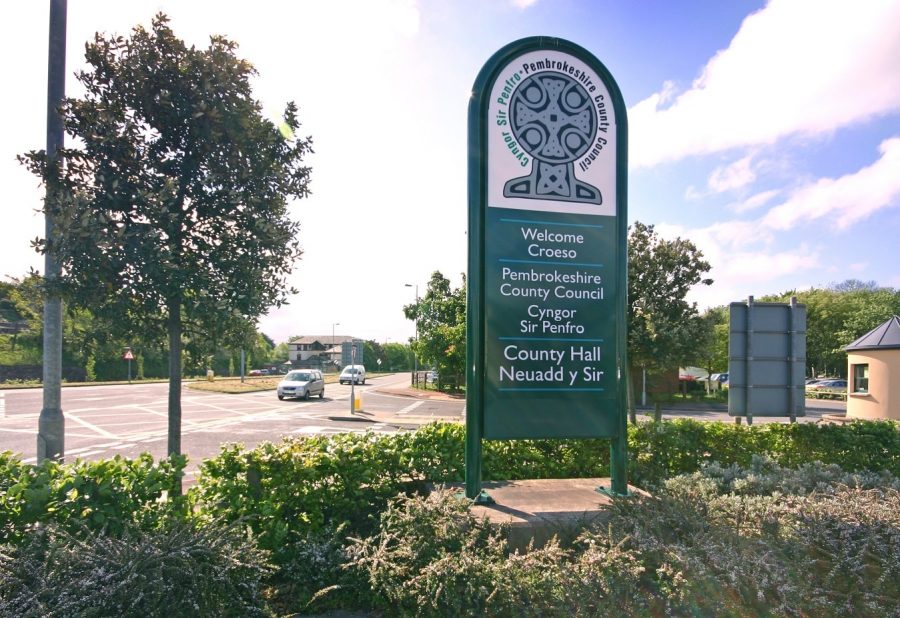
PEMBROKESHIRE COUNTY COUNCIL is looking to buy the Riverside Shopping Centre, Wilkinson’s store and Perrot’s Road car park in Haverfordwest, to support its ambitious regeneration programme for the town centre.
Cabinet approved the acquisition proposal on Monday (Nov 30) on condition that it is purchased is at less than market valuation
While that process is ongoing, Cllr Paul Miller has moved to explain the rationale behind it and discuss some of the issues which have been raised.
“I’m really pleased that this proposal has generated interest and I would like to try and answer for the public some of the questions which have come up so far. I’d also like to try and explain how our plans for the Riverside area fit within our wider Economic Development Plan for Pembrokeshire,” said Cllr Miller, Cabinet Member with Responsibility for Economic Development.
Sceptical about the plans, The Welsh Conservative Councillor group told The Pembrokeshire Herald: “While we support town centre regeneration, we have grave concerns regarding this decision by the Cabinet. We are still in a pandemic; the future of high street shopping is in the balance and this decision could have serious implications on Pembrokeshire’s tax payers. All councillors need more information on this project.
“The Councils focus should be on its core services; education and social services, and should leave owning shopping centres to specialist companies.”
Why is the council doing this?
“The Council has already developed a wide-reaching plan for the transformation of Haverfordwest.
“We’ve opened Glan-yr-Afon library and cultural centre, returning footfall to the town centre, we’re soon to start on site on Western Quayside – the former Ocky White building – creating an amazing food and beverage hub.
“We’re working on linking Bridge Street directly to the Castle and are committed to the wholesale redevelopment of the town’s unfit multi-storey car park.
“However, right in the middle of all those project sites, there is a fairly enormous space (in excess of 3 hectares) currently in the ownership of a single third party and that’s the Riverside Shopping Centre.
“Securing control of this site makes sense on a number of levels – not least because it enhances our ability to deliver on a whole-town plan. It also links directly to sites already in the Council’s ownership.”

If it goes ahead, how much will the acquisition cost?
“While negotiations are ongoing, and it should be stressed it may still not prove possible to agree a purchase price acceptable to both parties, I do not expect the Council’s contribution to the purchase price to exceed £700,000 including land tax charges. There are some maintenance liabilities we’ve identified which will be in addition to that sum.
“This level of capital funding is available from within the Council’s Property Investment Fund and so will not require additional borrowing. Nor will it directly impact on the Council’s revenue budget for other services or Council Tax levels.”
Risky, given the current economic climate?
“We’re going into this ‘eyes open’ to the worst case. Our worst-case scenario takes into account the current state of the market and the lease positions of the existing tenants.
“We know that more tenants will leave the centre over the next 12 months and we know things are going to get worse before they get better. Despite all that, our worst-case scenario still shows the centre to make a revenue surplus both in the particularly challenging short term and then to a greater extent in the medium term.
“The financial effect of the short term challenges are included in the modelling and actually the purchase price reflects that fact too. In addition, we anticipate further vacancies in the short term might actually be desirable, making easier some of the physical changes to the site that will inevitably be required.”

Isn’t there a risk this all goes wrong?
“There is always that risk. It’s no different to the risk associated with running our current industrial estate units. If all the tenants suddenly disappear, you’re left with no income to use to maintain the site.
“In this case, we’re very aware of the risks. We’re aware of the wider market position, of the businesses under pressure and aware of the number of leases expiring in the coming years.
“The Council’s officers and advisors put together three scenarios for cabinet to consider. A Best, Worst and Reasonable case. We focused our thinking around the worst-case model and that has driven our thinking on purchase price and determined our appetite for this at all.
“That worst-case scenario still shows the centre to make a revenue surplus both in the particularly challenging short term and then to a greater extent in the medium term.”
Is retail a dead duck?
“I accept completely that there is no future in retail-only town centres. We are not purchasing the Riverside because we think we’ve spotted something no one else has and that suddenly there is going to be some town centre shopping renaissance.
“We do however think our town centres have a future, just a different future. The Grimsey Review (just one example of the many such reviews into town centres) is clear both on the need for local leadership and public sector investment in transforming town centres. The review also has as one of its key findings the following; ‘There is a need for all towns to develop plans that are business-like and focused on transforming the place into a complete community hub incorporating health, housing, arts, education, entertainment, leisure, business/office space, as well as some shops, while developing a unique selling proposition (USP)’.
“That’s exactly what this purchase is about. It allows us to support a whole town plan for transformation not to ensure Haverfordwest continues to provide what people used to want but to ensure Haverfordwest provides what people want know and what people will want in the future.”
Aren’t they interfering in the role of the private sector?
“We know that the private sector is not going to repurpose our town centres for us. We also know how the Riverside has fared over the years in remote ownership. In my view we have a choice. We either say we don’t care about the town centre and it’s for the private sector to sort out, or, we recognise the role which a quality built environment plays in the wider offer of the County – and in turn how that supports economic activity.
“What I want to ensure is that we provide the local leadership and vision needed to see a transformation happen in Haverfordwest. We don’t think for a second we can bring about that transformation on our own but we do, absolutely, have a key role to play. In this case, that role is in securing the asset upon which future regeneration interventions will be built.”
Will the Council be managing the centre?
“The authority will not be directly managing the asset either in the short or the long term. This will be done by others and the costs of that management has been included in all of our modelling. To repeat, even our worst case model shows the site always making more income than it costs to run.”
Why should the Council get involved?
“To start with, because no one else is going to. I believe, strongly, that the quality of key town centres is important for the wider economic wellbeing of Pembrokeshire. We could, of course, just look the other way and say this is something for the private sector but I believe to do so would be a mistake.
“I do not believe that the local authority can transform Haverfordwest Town Centre on its own.
“However, I do believe we have a clear role to play in support and through the strategic acquisition proposed we can make that transformation deliverable.
“Beyond the strategic acquisition we are already in discussion with prospective private sector development partners and we anticipate taking those discussions forward with more vigour if the sale is completed.
“We don’t have a dream of doing this all on our own – but we know we have to play our part if we’re to deliver.”

Local Government
Fresh call for devolution of Crown Estate assets in Wales backed by county councillors


A FRESH call has been made for Crown Estate assets in Wales to be devolved to the country, a call backed by Pembrokeshire councillors last year, after it made £210m profit this financial year.
Today, June 26, the Crown Estate published its annual review, also releasing a Wales-specific review, showing that, in 2025-’26 its profits in Wales were £210m, up from £8.7m in 2020-’21.
Plaid Cymru Westminster Leader Liz Saville Roberts said that Plaid Cymru – which has long campaigned for the assets to be devolved – has a “mandate to keep fighting for fairness” with devolving the Crown Estate being a position held by every council in Wales.
The new Plaid Cymru Welsh Government is also pursuing control over natural resources, in line with Scotland, where the Crown Estate was devolved in 2017.
Ms Saville Roberts said that profits from Wales’ natural resources being sent to London is a “striking injustice” and that the next UK Government “must take steps to devolve the Crown Estate to Wales”.
Back in 2025, Pembrokeshire County Council joined other Welsh councils in supporting the Crown Estate assets in the county being devolved to its people.
The Crown Estate owns 65 per cent of Wales’ riverbeds and beaches.
Proceeds from the Crown Estate, which dates to the 17th century, are split by 25 per cent funding the Royal Family and 75 per cent to the UK Treasury.
Responsibility for the Crown Estate is already devolved to the Scottish Government, which has previously been reported as generating £103.6 million into the public coffers in Scotland in 2023.
A sticking point in Wales is that Westminster has to date been against any change.
A successful notice of motion before Pembrokeshire County Council, by Plaid Cymru councillor Michael Williams said: “We ask PCC to support the proposal for the Crown Estate assets to be devolved to the people of Wales, so that profits can be used to invest in the economy and communities of Wales.

“A poll in 2023 showed that 75 per cent of the population were in favour of taking control of the assets of the Crown estate rather than the profits going to the Treasury and the Crown.

“Local authorities are under huge financial pressure and placing the Crown Estate in the hands of Wales would be a significant step to address the lack of investment in our local government.
“We call upon the Welsh Government to ask Westminster to devolve the assets and revenue of the Crown Estates as a matter of urgency, as was done in Scotland in 2017.
“We demand that Wales is treated fairly and accepts management of the Crown Estate land for the benefit of the people of Wales.”
Councillors have previously heard the Crown Estates derives nearly £60,000 from some 16 leases in Pembrokeshire.
The £59,005 quoted at the time includes £26,600 for foreshore lease agreements, £8,520 for the land around Haverfordwest’s Riverside Market, and £12,800 for a sailing centre and car park at Cosheston Pill near Pembroke Dock.

MORE THAN 100 development schemes in Pembrokeshire, amounting to more than 2,300 homes, are in limbo due to the ongoing Nitrogen Neutrality guidelines from Natural Resources Wales, councillors heard.
At the June meeting of Pembrokeshire County Council’s services overview and scrutiny committee, members received an update on the ongoing issue of Nitrogen Neutrality which has led to delays in many housing schemes in the county since its introduction last June.
The area which development is required to demonstrate nitrogen neutrality is approximately 75 per cent of the county, including Haverfordwest, Narberth, Pembroke and Pembroke Dock.
The report, presented by Cabinet Member for Planning and Highways Cllr Jacob Williams, focussed on the implications of Natural Resources Wales’ (NRWs) Nutrient Neutrality requirements in respect of dissolved inorganic nitrogen (DIN) for development within the Milford Haven Inner waterbody catchment of the Pembrokeshire Marine Special Area of Conservation (SAC) and the measures being taken by the council at a local level to address this issue as well as the council’s contribution to regional and national initiatives.
The report said that, as of May, there were 21 planning applications which were in the system before the introduction of nitrogen neutrality requirements (June 2025) which are now caught and which remain undetermined, along with a further 66 undetermined since that date, and a further 15 applications which are caught by nitrates requirements, but which have not yet reached eight-week determination date.
It said the 102 developments caught by the nitrates issue amounted to some 35 per cent of the total undetermined applications; that figure even higher when determined (refused) schemes were taken into account.
Cllr Williams, who last year with the backing of full council, wrote a letter to the First Minister, conveying the authority’s “great concern over Natural Resources Wales’ recent river nitrates guidance in relation to development, and the serious effects this is having,” said that amounted to 2,376 of 6,741 potential housing units, adding that “Pembrokeshire County Council cannot approve development which is unable to demonstrate Nitrogen Neutrality”.
Last October, Cabinet endorsed an action plan to address the nitrates issue for affected development within its planning area, the early stages already delivered, with a final report due for Cabinet consideration this September in order to determine how mitigation opportunities identified might be taken forward.
Members backed a recommendation to note the action plan progress ahead of the report to Cabinet.

A CALL to allow a Pembrokeshire holiday let, part of a 1979 conversion scheme, to be used as a home for a recently married couple has been submitted to county planners.
In a certificate of lawfulness application to Pembrokeshire County Council, Ethan Tyrer seeks permission for the use of holiday let The Cottage, Llangloffan Farm, Castlemorris, as a residential dwelling.
A supporting statement accompanying the application says: “We are seeking a Certificate of Lawfulness to permanently live in the above address. My wife and I got married last October and we are trying to buy our home.
“Our offer has been accepted by the seller of The Cottage and we have a mortgage approved. The only thing that is holding up our exchange and completion is the planning issue.
“We just need legal certainly that we can live in the property as our permanent place of residence for the mortgage company. All the other properties at Llangloffan Farm are permanent dwellings so it makes sense that the cottage would be too. There is ample parking and a good-sized garden and the property is fully serviced and all ready to live in.
“We run a small local business (window cleaning) so our main work is in the vicinity of Fishguard, Goodwick and Porthgain so this property is the perfect location for our work.
“We are currently living with my parents which isn’t ideal and creating a bit of a strain on both of us. We just desperately want to be in our own home.”
It says an original 1979 application was granted to convert a range of outbuildings at Llangolffan Farm to form four units of holiday accommodation.
“We have taken pre-planning application advice and understand that it is considered that planning permission would not be required for the use of the building as a permanent dwelling house. However, for legal certainty a submission of a section 73 application [to vary or remove a condition of that scheme] would be needed.”
It finishes: “Our mortgage offer expires in September, so we are quite anxious to get this sorted as soon as feasibly possible.”
The application will be considered by county planners at a later date.



Community7 hours ago
Thousands line Cardigan streets for Lord Rhys homecoming parade
THOUSANDS of people lined the streets and quayside in Cardigan on Saturday as the town marked 850 years since Lord...


Crime1 day ago
Dyfed-Powys Police rated only ‘Adequate’ in organised crime inspection
A WATCHDOG has rated Dyfed-Powys Police only “Adequate” in its response to serious and organised crime, despite praise for the...


News1 day ago
Two taken to hospital after aircraft ditches in Cardigan Bay
Coastguard helicopter spotted two casualties after light aircraft came down off west Wales coast TWO people were taken to hospital...


Sport2 days ago
Long Course Weekend gets underway in Tenby as thousands head for county
Three days of swimming, cycling and running begin with The Wales Swim at North Beach THOUSANDS of athletes and supporters...


Climate2 days ago
Welsh waters, Westminster profits: Crown Estate row reignited in Wales
PLAID CYMRU has renewed calls for the Crown Estate to be devolved to Wales after figures showed income linked to...

News2 days ago
Reform MS: ‘I felt like shouting get out of the water’
Paul Marr says children playing in streams at Pembrokeshire beaches deserve better protection from pollution risks REFORM UK MS Paul...

Health3 days ago
Senedd backs call to rule out hospital downgrades after heated NHS debate
Reform UK amendment passes as West Wales hospital fears remain central political issue THE SENEDD has backed a call for...


News4 days ago
Coastguard callout payments axe sparks fears for coastal communities
VOLUNTEER coastguards across the UK are set to lose callout payments, prompting concern over the future resilience of emergency cover...


Farming4 days ago
Rural Wales ‘left out’ of net zero debate, warns carbon entrepreneur
A WELSH carbon entrepreneur has warned that rural Wales risks being left behind in the national conversation about net zero....


Local Government4 days ago
Tenby Spectacular row continues as organisers say key question remains unanswered
Round Table says legal clarity over pedestrian access is still holding up event plan TENBY ROUND TABLE has welcomed Pembrokeshire...
-

 Crime3 days ago
Police appeal after reported rape at Young Farmers rally
-

 Crime4 days ago
Woman sentenced over neglect of child at Haverfordwest property
-

 Crime4 days ago
Grandmother banned after cocaine drug-drive offence
-

 News6 days ago
Rhun ap Iorwerth urges new deal for Wales after Starmer quits
-

 Charity6 days ago
Sea shanties and street food bring crowds to Cardigan RNLI festival
-

 Crime5 days ago
Government fraud squad hunts down Covid loan scams
-
Crime1 day ago
Dyfed-Powys Police rated only ‘Adequate’ in organised crime inspection
-

 Health6 days ago
Ambulance delays and blocked beds putting Welsh patients at risk, watchdog warns