


News
New pay offer means teachers’ strikes have been called off in Wales


TWO days of planned strike action by teachers in Wales next week have been called off with a new pay offer set to be put to members. Members of the National Education Union (NEU) in Wales were set to walk out on March 15 and 16 in a move that was set to cause widespread disruption.
On Friday (Mar 10) the NEU said planned action in Wales for those days would now not take place as “constructive talks” with the Welsh Government had resulted in a revised pay offer.
David Evans, the NEU’s Wales Secretary, told Herald.Wales in a statement: “We have had lengthy negotiations with the Welsh Government and sought clarity which we did not have a few weeks ago. That this is a fully-funded offer will be a relief to our membership. We remain disappointed that the minister was unable to make a cash offer for support staff but at least he is now acknowledging the workload challenges there.”
Dr Mary Bousted and Kevin Courtney, joint general secretaries of the National Education Union, added: “We thank the Welsh Government for the constructive manner in which they have pursued a solution to the current dispute over pay. It is vital that we do all we can, together, to combat the recruitment and retention crisis and ensure that more people join the profession and stay in the profession. The Welsh Government recognises this and has also understood the importance of the pay offer being fully funded. In addition they have committed to working with us on tackling workload.
“This is in stark contrast to the behaviour of Gillian Keegan who is preventing talks in England. This week she refused even to talks at Acas. The NEU has said time and again we will enter negotiations. The talks can go ahead at any time – it is government who are declining and setting the preconditions, not the NEU.”

Responding to Mr Miles’ statement on the proposed pay and workload package for teachers in Wales Dr Patrick Roach, general secretary of the NASUWT, said: “Teachers will be concerned that the offer to pay additional money to teachers now must be honoured without strings attached. Teachers have seen the value of their pay plummet and are struggling with a cost of living crisis that is not of their making. The minister’s offer to deliver an award to teachers on a without prejudice basis before the end of the financial year should mean that teachers will benefit from additional money today rather than empty promises of jam tomorrow.”
Neil Butler, NASUWT national official for Wales, added: “The minister must not seek to play fast and loose with the negotiating machinery that exists in Wales and must ensure that the role of the independent pay review body is fully respected. The minister had already agreed to a remit to the review body (IWPRB). That must be honoured.”
The full holding offer from Welsh Government is as follows:
- 5% already awarded (fully-funded)
- An extra 1.5% fully consolidated
- 1.5% one-off cash payment
- This makes a total consolidated increase of 6.5% and an in-year boost for the current year of 8%
- The money would be paid in April and backdated to September provided NEU Cymru pauses next week’s industrial action
- For the next academic year 2023-24 unions can continue the dispute or accept a new 5% offer compared to the original 3.5% offer
The full text of the letter from education minister Jeremy Miles to unions, seen by Herald.Wales is as follows:

Dear all,
I would like to reiterate my thanks for the constructive talks we have had over recent weeks.
By working together, we have made good progress in a number of shared priority areas. During our meeting on Tuesday 7 th March, it was agreed I would write to you setting out the government’s position regarding the 2022-23 pay offer.

I hope that you would recognise that our talks over recent months have been productive and our negotiations conducted in good faith. However, we are fast approaching the end of the financial year and the 17th March deadline for practically delivering a payment in this year. I am concerned we have not yet agreed a deal for your members and that pupils risk missing out on more days of school.
The government has previously offered an additional 3% pay increase, of which 1.5% is consolidated and 1.5% is non-consolidated. This would mean members benefit from an 8% increase for 2022-23.
Despite this offer being rejected by both NEU and Nasuwt, I am willing, as a sign of good faith, to make this payment to teachers as soon as possible. As you know, the funds which we have managed to identify for this financial year would otherwise be used for other priorities, so I am keen to make sure that they don’t become unavailable for teachers’ pay due to the absence of overall agreement.
In return for the payment of the 3%, we would ask for full strike action, currently notified for 15th and 16th March to be paused, so that negotiations can continue. It is imperative that whilst we work together to seek a full resolution, we should not place pupils, in particular those preparing for and sitting exams, under additional pressure of losing more school days.
In light of that, we would ask for a suspension until the end of the academic year or until meaningful discussions have ceased. For those teaching unions who did not reach the legal threshold, we would request the same in respect of not re-balloting members during that time.
This solution will allow teachers to receive a significant back payment during this cost of living crisis, but it is also in the clear interests of Wales’s pupils, especially as the exam period approaches.
I believe making a payment without reaching an agreement and a significant pause of strike action while we continue discussions would be a strong signal of good faith from all parties and one which crucially benefits pupils and teachers whilst we seek a resolution.
I would like to be absolutely clear that I recognise that, despite making this payment, we would remain in dispute with the relevant trade unions and that the payment would not imply acceptance of the offer.
Notwithstanding the above, I believe we have an opportunity to settle this dispute in order to deliver in the interests of learners and your members. I am therefore prepared to propose that the current recommended pay award for 2023 – 24 of 3.5% be increased to 5% with effect from 1 September 2023. This would be a decision made without the need to refer that award to the Independent Welsh Pay Review Body and I confirm that it would be fully funded. If this proposal is accepted, taken together with the commitments on workload, we would regard the dispute as settled.
I would like now for us also to start delivering on the workload offer we have worked on together. My previous letter set out what the package available is.
Some unions have sought further clarity on some aspects. I believe we can best address those points by engaging on the substantive workload issues set out in the letter rather than negotiating the wording of the letter itself. That will allow us to get on with making a reality of the proposals.
For the avoidance of doubt we confirm that we are progressing a variety of issues relating to the deployment of teaching assistants in accordance with the existing arrangements we have in place. On the ‘no detriment’ principle, I can confirm that should conversations in England result in an offer for teachers and leaders which is higher than any pay settlement in Wales, we would match the pay award.
Yours sincerely,
Jeremy Miles, MS, Minister for Education and Welsh Language







Police say death not suspicious as 46-year-old arrested over alleged Class A drug supply
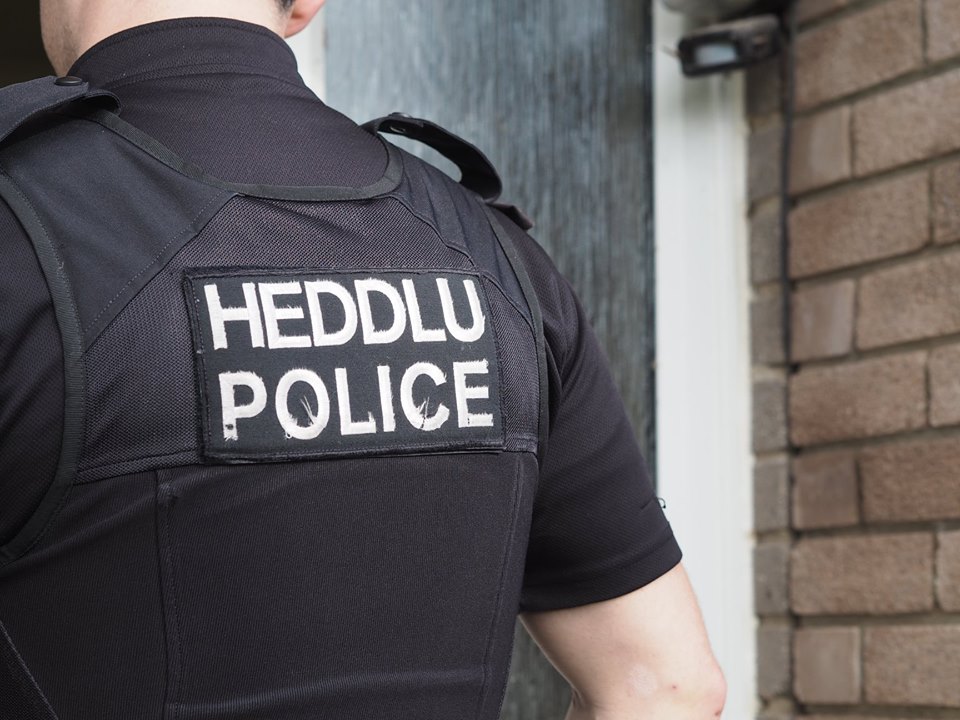
A MAN has died following a medical emergency at a property in Haverfordwest, police have confirmed.
Emergency services were called at 3:18pm on Wednesday (March 18) after a report of a medical incident.
A man was pronounced dead at the scene.
Dyfed-Powys Police said the man’s next of kin have been informed and are being supported by officers.
The death is not being treated as suspicious at this time.

However, police confirmed that a man, aged 46, was arrested on suspicion of being concerned in the supply of Class A drugs.
He has since been released under investigation while enquiries continue.
No further details about the deceased have been formally released.

FOUR people from Mynyddygarreg, Kidwelly, have been ordered to pay more than £129,000 following a successful prosecution for illegal dog breeding.
At Swansea Crown Court on Tuesday (Mar 10), before His Honour Judge Thomas KC, Stacey May June Edwards, Peter John Edwards, Sian Eleri Thomas and David Malcolm James Thomas, all of Sea Breeze, Mynyddygarreg, pleaded guilty to offences under the Breeding of Dogs (Wales) Regulations 2014.
The court imposed confiscation orders totalling £129,873.41 under the Proceeds of Crime Act across the four defendants. They were also ordered to pay £8,000 in costs, while each defendant received a £2,000 fine.
The investigation began in April 2021 after Carmarthenshire County Council’s Animal Health team received an enquiry from Peter Edwards about obtaining a dog breeding licence. Although licensing guidance was provided and a partial application was submitted in February 2022, this was later withdrawn.
In March 2024, the council received a complaint that puppies were being advertised for sale without the required licence. Officers subsequently contacted online advertising platforms and issued data requests to assess the scale of activity.
Analysis of records from Pets4Homes, Freeads and Gumtree revealed multiple litters being advertised by members of the same household.
Correspondence under the Police and Criminal Evidence Act confirmed that up to 25 dogs were kept at the property, including between 16 and 19 breeding females.
While some defendants claimed joint ownership of the dogs, others attempted to minimise their involvement.
The Herald understands that numerous puppy advertisements were posted between July 2020 and April 2025, demonstrating a sustained pattern of unlicensed breeding.
Carmarthenshire County Council’s Cabinet Member for Climate Change, Decarbonisation and Sustainability, Cllr Aled Vaughan Owen, said: “This case demonstrates the council’s firm stance against unlicensed and illegal dog breeding.
“These regulations are in place to protect animal welfare and ensure that breeding activities are subject to proper oversight. The scale of activity uncovered at this property was entirely unacceptable, and we welcome the court’s decision to issue significant confiscation orders under POCA.”
He added: “We urge anyone with concerns about illegal dog breeding to report it. Our Animal Health officers will continue to investigate thoroughly and take action against those who disregard the law.”

Residents are reminded that anyone breeding and selling dogs must comply with licensing regulations designed to protect both animal welfare and consumers.


Milford Haven man sentenced at Swansea Crown Court following drug dealing operation
A MILFORD HAVEN publican has been jailed for six years after admitting supplying cocaine and cannabis.
The defendant, who previously appeared before magistrates and was remanded in custody, was sentenced at Swansea Crown Court following an investigation into drug dealing activity linked to the town.

The court heard that he had been involved in the supply of Class A and Class B drugs, with evidence including material recovered by police and analysis of mobile phone data. Investigators said the activity had been ongoing since at least 2024.
Cocaine, a Class A drug, carries the most serious penalties under UK law, and the involvement of both cocaine and cannabis was reflected in the length of the sentence imposed.
During proceedings, the court was told that the case went beyond isolated incidents, with the defendant playing a significant role in the supply chain. The judge said the offending was serious and sustained, warranting an immediate custodial sentence.
He was sentenced to six years in prison.
The case had previously been heard at Haverfordwest Magistrates’ Court, where the defendant was remanded due to the seriousness of the allegations before being sent to the Crown Court for sentencing.




Crime1 hour ago
Publican jailed for six years for supplying cocaine and cannabis
Milford Haven man sentenced at Swansea Crown Court following drug dealing operation A MILFORD HAVEN publican has been jailed for...

Local Government4 hours ago
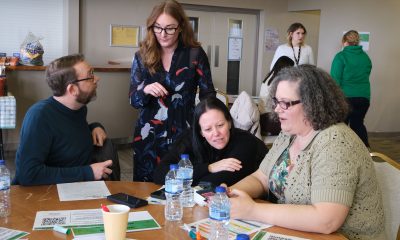
Poverty summit highlights support efforts across Pembrokeshire
A SUMMIT bringing together key organisations from across Pembrokeshire has highlighted both the scale of local poverty and the work...


Education1 day ago
Milford Haven school plans unveiled but funding not yet secured
PLANS for a new £100 million school in Milford Haven have been unveiled, but the project has not yet secured...


News1 day ago
Council unveils plans for new state-of-the-art secondary school in Milford Haven
PEMBROKESHIRE COUNTY COUNCIL has revealed plans for a new state-of-the-art school in Milford Haven, promising modern, inspiring learning spaces for...

Health1 day ago
NHS waiting list falls — but cancer delays and diagnostic backlog worsen
Record progress claimed by Welsh Government as critics warn key targets are still being missed THE NHS in Wales has...

Crime2 days ago
Rapist jailed after ‘abhorrent’ attacks on woman and children
Haverfordwest man told police “women won’t have sex without force” A HAVERFORDWEST man who raped a woman and a young...


News2 days ago
Reform secures first Pembrokeshire councillor in Hakin by-election win
Late Reform candidate takes seat as independent surge and Labour withdrawal shape contest REFORM UK candidate Scott Thorley has won...


News3 days ago
Scott Thorley elected as Pembrokeshire’s first Reform councillor
REFORM UK candidate Scott Thorley has won the Hakin by-election after securing 179 votes. The full result is as follows:...


News3 days ago
Police confirm man has died after being recovered from River Cleddau
Major emergency response in town centre after concerns raised for man in water A MAN has died after being recovered...

Community3 days ago
Davies and Kurtz urge groups to seek employability funding
Community organisations in Pembrokeshire encouraged to apply for new grants supporting skills and job access LOCAL Senedd Members Samuel Kurtz...
-

 News6 days ago
Rayner and Lammy visit Wales to discuss justice and community safety
-

 News5 days ago
Fishguard linked to allegations in Many Tears Animal Rescue investigation
-

 News3 days ago
Emergency services flood Haverfordwest after reports of person in river
-
 Local Government6 days ago
Investigation confirmed after inspectors visit Many Tears Animal Rescue
-

 Business7 days ago
Tesco B&Q Haverfordwest click and collect pod approved
-

 Crime2 days ago
Mother given community order after admitting child cruelty offence
-

 Community6 days ago
Town hall takeover plan questioned as cost figures conflict
-
Health1 day ago
NHS waiting list falls — but cancer delays and diagnostic backlog worsen