


News
RNLI lifeguards and lifeboat crews team up to rescue boats in Aberporth


IT WAS at around 4pm that Senior Lifeguard Lowri patrolling at Aberporth Beach witnessed a sailing boat capsize off Dyffryn Beach.
Lowri asked Lifeguard Amana to head straight out on a rescue board to see if the casualties were able to right their boat.
It quickly became clear that they required assistance, so Lowri asked Lifeguard Ela to also go out to help Amana with the casualties. There was a strong offshore wind that began blowing the lifeguards and casualties around the corner towards Tresaith.
As they blew further around the corner, Lowri lost communication with Ela and Amana so called HM Coastguard to request their assistance. The Coastguard tasked both Cardigan and New Quay lifeboats as well as Cardigan Coastguard Rescue Team.
Lifeguards Amana and Ela remained with the casualties, one of whom was losing consciousness and was confused. They continued to drift towards Tresaith Beach. They eventually drifted far enough to communicate with the lifeguards on Tresaith via their radios.

Tresaith Lifeguards Hannah Pusey and Tom Rees were then able to relay information regarding the casualties’ location and their condition directly to the Coastguard. Lifeguards Amana and Ela continued to support the casualties whilst awaiting the arrival of the lifeboat.
One of the casualty’s response levels were declining rapidly. He was unable to hold onto his boat or to get on the rescue board so had to be physically supported by the lifeguards. He was exhausted and very cold.
Cardigan lifeboat reached the scene and took both the casualties and the lifeguards back to Dyffryn Beach. Fortunately, the ambulance was waiting on arrival, so the casualties were immediately handed over to awaiting paramedics and the Coastguard.
Lifeguard Supervisor Sam Trevor said: ‘This incident happened on June 13. One of the casualty’s condition was declining rapidly when we handed him over to paramedics. Without Amana and Ela’s support the man wouldn’t have had the strength to support himself and would’ve been at serious risk of drowning.’

Cardigan lifeboat crew assisted the other boat owner with re-righting their boat and then towed the vessel back to Dolwen Beach.
The lifeguards were returned to shore and both Cardigan and New Quay lifeboats were stood down and returned to station.
Earlier in the same month, lifeguards at Newport Sands spotted a capsized sailing boat roughly a mile out from the shore. Due to the strong offshore wind the lifeguards were flying the orange windsock.

The two males who’d fallen out of the boat during the capsize struggled to right the boat and sounded a mayday call to Milford Haven Coastguard.
Senior Lifeguard Neve Davies decided against sending a team member to assist, as the boat was a long way outside of the lifeguard’s response zone of 400m and the strong offshore wind would have made the paddle back to shore very challenging.
Fishguard’s all-weather lifeboat and Cardigan’s inshore lifeboat were tasked to the scene. On arrival, Cardigan’s crew picked up the casualties and recovered them to shore.

The lifeguards checked them over to assess whether they required any further medical assistance. They were cared for in the lifeguard unit to warm up and be monitored, before leaving with the appropriate casualty care discharge information.
Peter Austin, Cardigan RNLI Lifeboat Operations Manager, said: ‘Both of these incidents highlight the importance of checking the conditions are safe and suitable before heading out on your chosen craft or activity.
‘Please remember to check the tides, wind direction and size of the swell before heading out to sea. Conditions can change very quickly and it’s easy to be caught off guard.
‘We always recommend wearing a lifejacket that will help you float and buy you precious time until help arrives. Make sure you always carry a means of calling for help so that if you ever find yourself in difficulty – you can call 999 and ask for the Coastguard.’
You can find specific water safety advice for your chosen activity by visiting RNLI.org/safety/choose-your-activity.
If you get into trouble in the water, remember Float to Live; tilt your head back with ears submerged and try to relax and control your breathing. Use your hands to help you stay afloat and then call for help or swim to safety if you can. Call 999 in an emergency and ask for the Coastguard.
READ THIS WEEK’S PEMBROKESHIRE HERALD HERE:
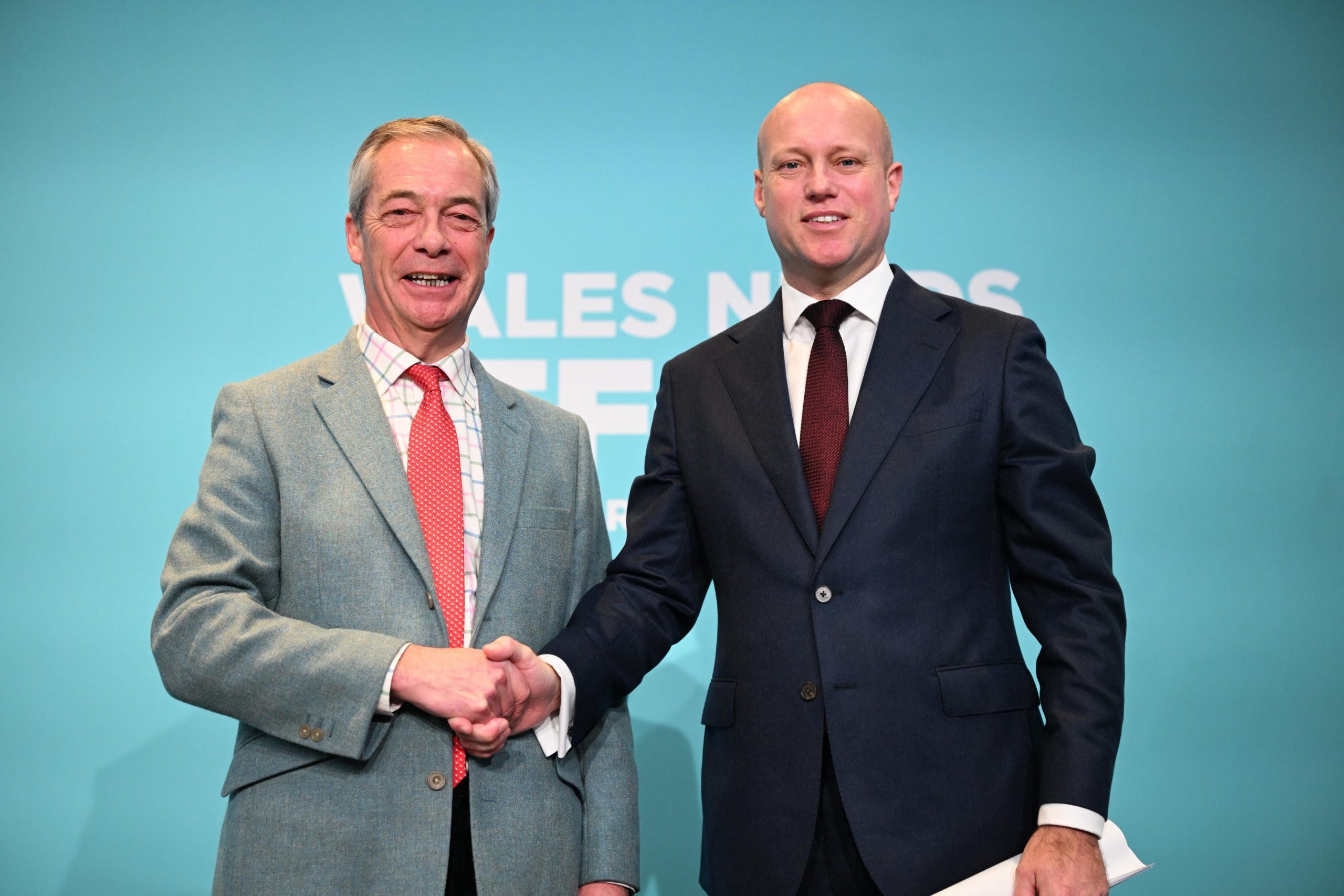
Monkton councillor tops Pembrokeshire list as party confirms Carmarthenshire names and includes Haverfordwest councillor in unwinnable Swansea spot
REFORM UK has unveiled its full list of candidates for the 2026 Senedd election, setting out its challenge across west Wales including Pembrokeshire and Carmarthenshire.
The party has named Susan Claire Archibald, a sitting councillor for Monkton on Pembroke Town Council, as its lead candidate for the Ceredigion Preseli, Mid and South Pembrokeshire regional list.
Speaking to The Herald, Archibald said: “I am honoured to represent Reform UK and Wales.” She added that a fuller statement outlining her priorities would be released in due course.
The remaining candidates on the Pembrokeshire regional list are Paul Marr, a former prison officer, Michael Allen, Elisa Randall, Peter John and Bernard Holton.
Carmarthenshire candidates named
Reform has also confirmed its list for the Caerfyrddin and Llanelli region, with Gareth Beer placed first, followed by Carmelo Colasanto, Sarah Edwards, Christopher Brooke, Alan Cole and Michelle Beer.

The announcement forms part of a nationwide rollout of candidates as the party seeks to establish itself as a credible electoral force ahead of the 2026 vote.
Thorley listed in Swansea region
Among the names included elsewhere is Scott Thorley, a Haverfordwest-based councillor and the first Reform representative elected to Pembrokeshire County Council.
Thorley appears on the party’s list for the Gower and Swansea West region, where he is placed sixth.
Under the Senedd’s proportional representation system, candidates placed lower on regional lists are significantly less likely to be elected, meaning his position is widely viewed as a paper candidacy to complete the slate.

Election framing
Reform Wales leader Dan Thomas said the party was offering voters a stark political choice.
He said: “After a hundred years of failure, Labour are finished in Wales. The choice at this election is what comes next — common sense and a fresh start with Reform, or independence by stealth with Plaid Cymru.”
The Herald understands that further announcements, including candidate profiles and policy details, are expected in the coming weeks as the campaign begins to take shape.


POLICE are appealing for witnesses following a serious assault in Fishguard that has left a man in hospital.
The incident happened on Main Street at around 11:00pm on Saturday (Mar 21), when the victim was reportedly punched, sustaining head injuries. He remains in hospital receiving treatment.
A 24-year-old man was arrested on suspicion of grievous bodily harm (GBH) and has since been released on bail while enquiries continue.
Dyfed-Powys Police are urging anyone who witnessed the incident, or who may have information that could assist the investigation, to come forward.
Anyone with information is asked to contact police quoting reference: 26*227686.
Information can be provided online via the Dyfed-Powys Police website, by emailing [email protected], by calling 101, or by sending a direct message on social media.
Alternatively, information can be given anonymously to Crimestoppers on 0800 555111 or via crimestoppers-uk.org.

Hourly rate to rise as costs increase
THE WELSH GOVERNMENT has confirmed an increase in the hourly rate paid to childcare providers under its Childcare Offer, following a review of funding levels.
The Minister for Children and Social Care, DAWN BOWDEN MS, announced that the rate will rise to £6.67 per hour from April 6, 2026. The increase of 4.18% comes after feedback from childcare providers and sector data gathered during 2025.
The Welsh Government said the change is designed to help providers cope with rising costs, including increases to the National Living Wage.
The Herald understands the review drew on responses from the Childcare Offer’s Annual Survey, as well as information from Care Inspectorate Wales’ Self-Assessment of Service Statement (SASS).
The move follows a policy shift announced last year to review the rate annually, rather than every three years, in a bid to make funding more responsive to pressures facing the sector.
As part of the update, the maximum charge for meals will also increase by 4.18%, which ministers say is intended to balance affordability for both providers and parents.
Dawn Boden said the Welsh Government remains committed to supporting the long-term sustainability of childcare services, adding that officials will continue working with the sector to explore further improvements.



News14 hours ago
Reform reveals west Wales candidates for Senedd battle
Monkton councillor tops Pembrokeshire list as party confirms Carmarthenshire names and includes Haverfordwest councillor in unwinnable Swansea spot REFORM UK...


Health21 hours ago
Clash over Withybush Hospital services as Paul Davies challenges First Minister
A HEATED exchange in the Senedd has laid bare growing tensions over the future of hospital services in west Wales....


Crime2 days ago
Police stop car in Pennar as three arrested in drugs investigation
Suspected drug driver report leads to major police response and multiple arrests DRAMATIC scenes were reported in Pennar on Monday...

Business2 days ago
New pilot vessel Llanion arrives at Milford Haven
State-of-the-art 22-metre craft marks reset after £3.6m pilot boat controversy THE PORT OF MILFORD HAVEN has taken delivery of a...


Community2 days ago
Sycamore Gap legacy tree to take root in Pembrokeshire landscapes
A SAPLING grown from the famous Sycamore Gap tree is set to become part of Wales’ protected landscapes — with...


Business3 days ago
Could Primark be coming to Haverfordwest? Major retailer in talks for former Wilko site
Council confirms advanced discussions as speculation grows over high street boost HAVERFORDWEST could soon see a major high street revival,...


Business3 days ago
Rail investment ‘could unlock 40,000 jobs and £11bn for Wales’ says new report
RAILWAY stations across Wales could help unlock around 40,000 jobs and more than £11 billion for the economy by 2036,...


Local Government3 days ago
Milford Haven set for £200m investment with schools, leisure centre and rail upgrade
Council outlines major plans for town with backing from Welsh Government MILFORD HAVEN is set for a major transformation with...


Community4 days ago
Broad Haven volunteers secure ‘national asset’ status for nature reserve
A SMALL stretch of woodland and former opencast coal mine has been transformed into a nationally recognised biodiversity site, in...


Entertainment5 days ago
Tenby steams up in spectacular style as crowds flock to festival
Colourful parade, towering creations and Victorian flair bring town centre to life TENBY was transformed into a vibrant Victorian fantasy...
-

 Health7 days ago
NHS waiting list falls — but cancer delays and diagnostic backlog worsen
-

 Crime6 days ago
Pembroke man remanded in custody over knife threat, assault and damage allegations
-

 Crime7 days ago
Illegal workers found at Cardigan takeaway after immigration raid
-

 Crime6 days ago
Broad Haven man remanded in custody over sexual harm prevention order breach
-

 News7 days ago
Council unveils plans for new state-of-the-art secondary school in Milford Haven
-

 Education7 days ago
Milford Haven school plans unveiled but funding not yet secured
-

 Farming7 days ago
£3 million secured to continue Welsh sheep genetics programme
-

 Community7 days ago
Former Neyland police officer Louis Knight dies aged 83