


News
Jamie Adams : ‘I am confident in the future of Pembrokeshire

 JAMIE ADAMS is confident and well-briefed – if a little tired after a night looking after his young twins.
Discussing the Welsh Government’s plans to scrap smaller authorities and merge them he offers a robust critique and criticism of Cardiff Bay’s plans. “While the process has been going on for some time, it seems like the Welsh Government has now come to a snap decision. Very often the justification for it is the fact that they consider small authorities are unable to meet their statutory obligation.
The First Minister has pointed out that six authorities have been in special measures. But the credibility of his position is somewhat undermined by the recent good news in Pembrokeshire and also in Anglesey and Rhondda Cynon Taf. “The obvious person to consult with when you are considering change is the person affected by the changes you propose. The Welsh Government has set out its stall and its aspiration. I do not for one minute think that is the finished article. The Welsh Government will have to give evidence to justify its position. “With respect, the Welsh Government has to understand the pressures and complexities of local government. I pay tribute to the staff of local government who deliver critical services to the people of their counties.
Against that, I set the fact that apart from a few direct services, such as the Trunk Road Agency, the Welsh Government delivers no direct services. If you take an overarching view like the WG has done, it is difficult to understand the detail of the processes you are trying to change. “The Welsh Government has a tendency to categorise councils in one of two ways. We are badged as a rural authority but we have pockets of urbanization and real deprivation. Nevertheless we are obliged to deliver services over a wide geographical area.
The details of service delivery are not well understood by Welsh Government.” And in Pembrokeshire? “Pembrokeshire is unique in many ways and we are often accused by the WG of being different. I don’t mind being different. We are very resilient as a county and as a people. We have a sense of community spirit and identity that is second to none. “I would fight in the last ditch for Pembrokeshire.

I believe we have the ability and talent within this authority and within Pembrokeshire to deliver local services for Pembrokeshire. We have had a glowing report from the Wales Audit Office on our progress and performance this year, education is moving forward. “But it is not only about the administrative side of things, this Council. It is something more than that. The brand of Pembrokeshire, for tourism, business, agriculture and produce is extremely strong. In most parts of the UK the Pembrokeshire name is synonymous with those and it is hard to think of another county with such a strong brand identity.” Is Williams a challenge to local democracy? “The proposal from Welsh Government does not include a proposal for district councils and there is a danger of making decision-making too remote from the people we serve.
There would be real issues with that. Look at newspapers, for example, if the decisions are made miles away how are you going to be able to hold the decision-makers to account? “We have sixty councillors who are out, about and contactable within their communities. They can be held to account. There is a considerable advantage to the fact that if you make a decision you believe to be right but is unpopular then you can be voted out. So, if I thought I did the right thing and lost an election, I would not be delighted but I could at least say that I did the right thing as I saw it. “But many professional politicians are in the position that they want to cling to their livelihoods.
We have an increasing number of democratic representatives who have not worked outside of politics and they are remote from those they represent. Increasing numbers of Assembly Members in Cardiff Bay is something we need to be wary. I question the need for additional assembly members. “Having said that, there are in my opinion too many county councillors. It was very strange thing to go so far down the process of re-assessing the number of county councillors and then changing direction. Discussing the complexities of local government funding, Jamie Adams believes that economies can be made by reducing bureaucracy: “My outlook is simple.
I want to deliver the best services we can within the budget we have. “There is a need for the process of funding services to be streamlined by the Welsh Government. There are around 120 grants for education from the Welsh Government. Now those schemes may have been set up with the best of intentions, but it increases the burden of bureaucracy. You have people in councils applying for these grants and another tier of people at the Welsh Government administering them.

So much of the funding that should flow down is instead being filtered down and sticking to the sides. “Local Government is far better placed to understand the needs of their communities and address those needs as we can provide a little bit of initiative or entrepreneurship rather than just follow a prescription from Cardiff Bay. In a way, I am frustrated by what can appear like box-ticking, but I know there have to be checks and balances to ensure we provide value for money. “The relationship with Welsh Government must be developed to build trust to allow them to consider more bespoke ways of delivering services with the funding provided.
The governance arrangements could be simplified. The simplification can begin between the WG and us, and the WAO could oversee and verify the process to ensure our services are continually improving.” Addressing the challenge of potential further administrative upheaval, Jamie Adams responds: “I think Williams has been a long time in the coming from Welsh Labour. It is a reaction to some very disappointing results for Labour in 2008’s elections. We are now in a different place in the local government family.
We don’t have that many disagreements, really and Labour functions in coalition in councils across Wales. “The proof of the pudding is the fact that no other parties in the Welsh Government are signing up to Williams. It is untested that Welsh Labour’s proposals will either improve services or reduce costs. And I am not convinced that it is best to sign up to a process that can show neither of those things. “That said, I am not afraid of change. I am very relaxed that in the future a council such as Pembrokeshire will not provide all of the services we do at the moment. But in terms of being held to account for their delivery, you have to have a touchable, reachable democratic body. As a council, perhaps we do not need all the tools in the box.

Greater fluidity about service delivery might be a way of reducing costs or delivering them more efficiently. “We already work in consortia with other councils to support improvements in our schools. We work on support and challenge with Carmarthenshire for our schools and we are already grouping together with five other counties within ERW, the regional education authority. We are already working together. But strangely, the Welsh Government broke down the transport service back to individual authorities and that seems inconsistent with what it is now saying about wanting to join things together to save money.
“It’s a very difficult thing to resolve as no evidence has been put forward to support what is simply an assertion made by the WG. The Williams Report provides NO cost/benefit analysis for anything and to proceed without it is pure folly. It grabs the headlines to reduce the number of CEO’s. As an easy sell, what could be better? But it is an argument that is not followed through. With Dyfed previously we ended up with a lot of substructures and increased bureaucracy and any savings could be swallowed up by that factor.
“Looking at Williams: we are potentially facing a 9 to 12% rise in Council Tax depending on whether we are merged with Ceredigion or a reconstituted Dyfed. People in Pembrokeshire are worried about the potential rise in Council Tax and do not see why they should pay more for their services. And I agree with them.” Looking at the number of controversies involving it, is Pembrokeshire County Council worth saving? “I appreciate that people are frustrated with what is reported in the papers about the Council. Some of our problems have arisen from the way we have dealt with issues in the past and a lot of them have arisen from the last term of council. “In terms of the evidence, I can say look where we were in 2012 and where we are now.
We have had a great outcome from Estyn and a very positive annual assessment from the WAO. We have renewed confidence in our governance arrangements and in scrutiny to hold the executive to account. “We have the ability to plan for the future. In that future, we will not look as we do now. We will have to change to reflect the cuts in budgets that are likely to continue for some time ahead. But in terms of our ability to deliver good quality services, we are beyond a doubt well placed to do that. “Where we have to work hard is to develop trust amongst ourselves: between councillors and officers and amongst councillors. We have to ensure our focus is on managing the budget, delivering services and not scoring political points for the sake of it. With that in mind, I am confident for the future of Pembrokeshire.”


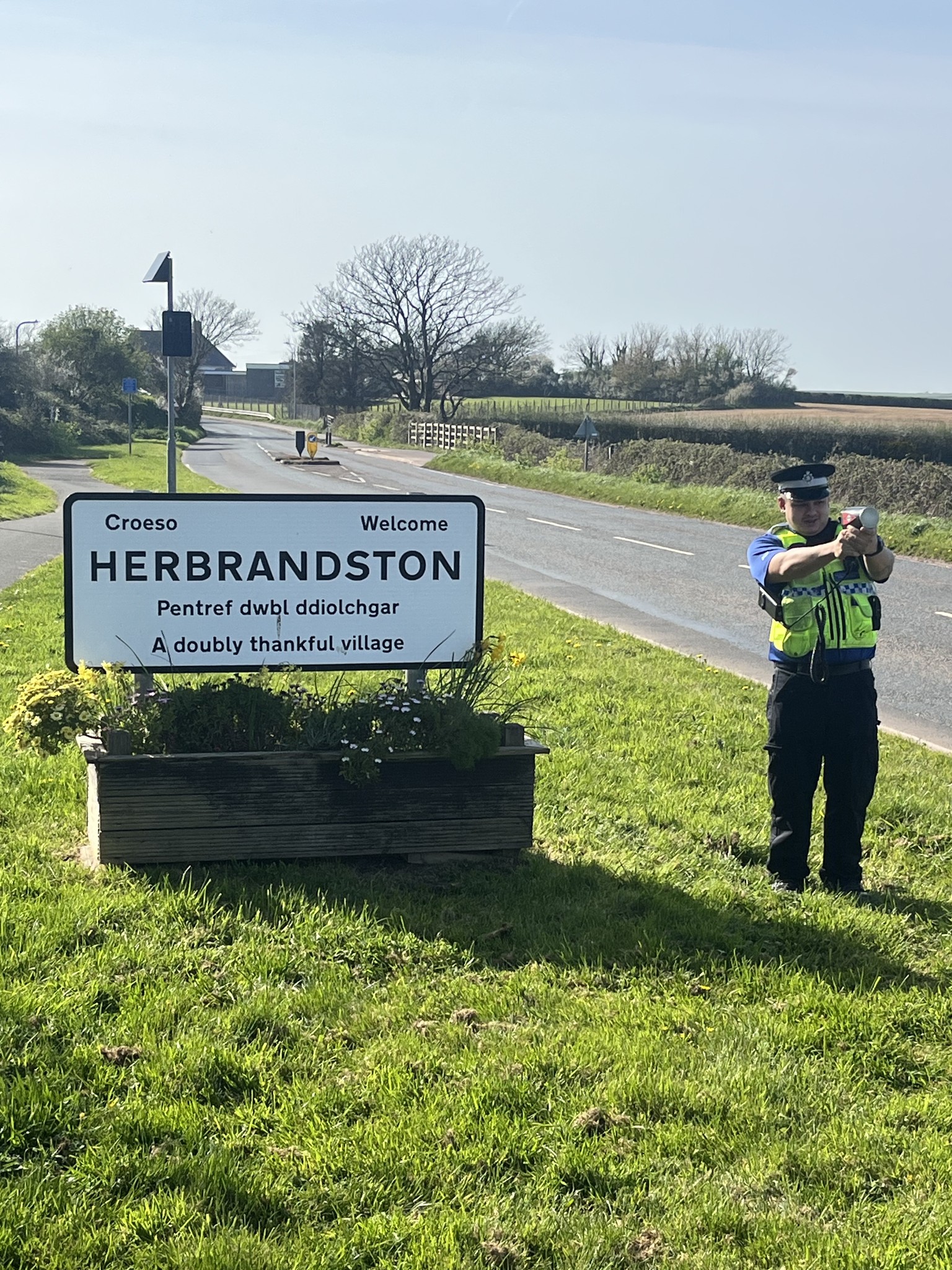
HERBRANDSTON residents flagged fast-moving traffic as a key concern, prompting police to carry out speed checks in the village.
Concern over speeding in Herbrandston has prompted a local police response, with PCSO Adam out in the village carrying out speed checks after residents raised the issue through DPP Connect.
Milford Haven and Neyland Police said the concerns emerged after officers signed local people up to the messaging service, which allows residents to share feedback and receive updates from police.
Many of those who responded said speeding through the village was one of their main worries.
In response, PCSO Adam was deployed to monitor traffic and check vehicle speeds.

The move is likely to be welcomed by residents who have grown tired of motorists treating the village like a racetrack.
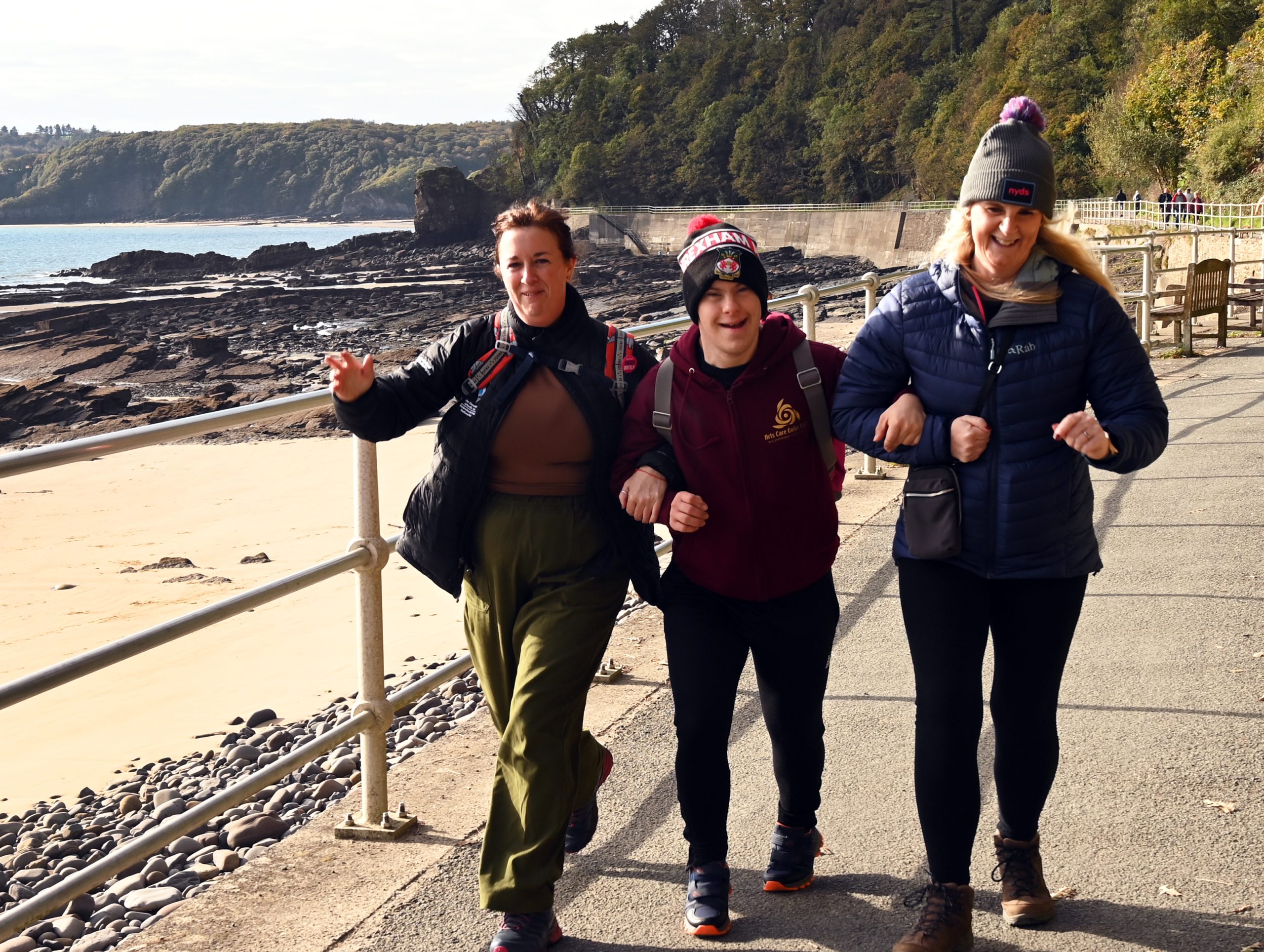
THE PEMBROKESHIRE COAST NATIONAL PARK AUTHORITY is inviting communities, workplaces, families and friends to take part in the 2026 Walk the Path for Wellbeing challenge, with this year’s event expanding across three counties for the first time.
Taking place on Sunday, May 10 and Monday, May 11, the challenge will bring people together to celebrate the spectacular West Wales coastline through walking and other forms of active travel, while highlighting the strong links between nature, movement and wellbeing. A reserve weekend of May 17 and 18 has also been set aside in the event of severe weather.
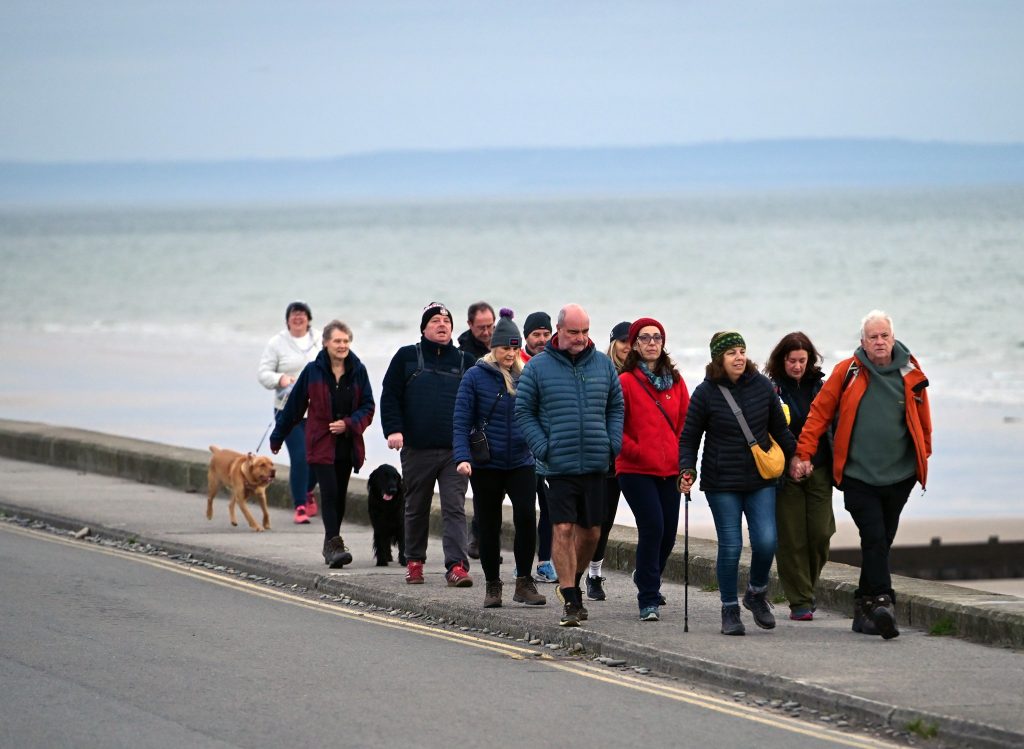
Building on feedback from last year, the event will now take place over two days rather than one, giving more people the opportunity to get involved and creating a longer window for celebration, storytelling and community spirit.
While last year’s challenge focused on the 186-mile Pembrokeshire Coast, this year’s event will also include sections of Carmarthenshire and Ceredigion, bringing even more communities into the shared coastal celebration.
The two-day event will feature self-led sections for group entry. With the focus firmly on enjoyment, there is no pressure to complete every stage, and participants are encouraged to do only as much as they feel comfortable with. Together, those individual efforts will contribute to a shared goal of covering the full 313 miles of coastline.

Angela Robinson, Health and Wellbeing Officer at the Pembrokeshire Coast National Park Authority, said: “The coast has an extraordinary ability to lift people, connect communities and create lasting memories. By extending the event across two days and into neighbouring counties, we’re opening the door to even more people to celebrate that connection together and share their experiences on social media.”
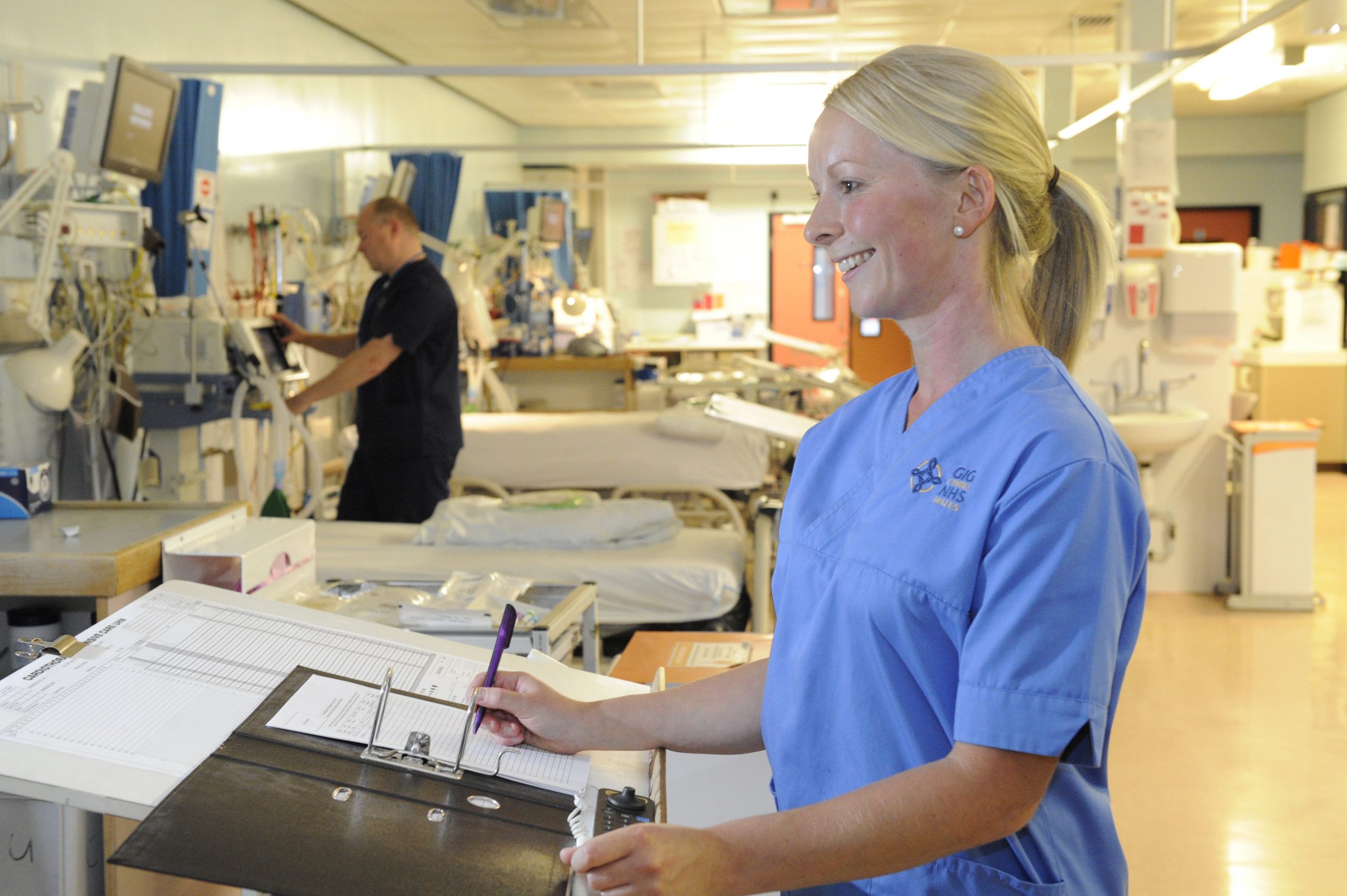
THE ROYAL COLLEGE OF NURSING WALES has warned of a growing jobs crisis for newly qualified nurses, saying a shortage of Band 5 posts could leave up to half of this year’s nursing graduates without work when recruitment opens.
The union said the situation was particularly alarming given the severe pressures already facing NHS Wales, with staff continuing to report overcrowded wards, unsafe conditions and unmanageable workloads across multiple health boards.
RCN Wales said the lack of available jobs for newly trained nurses pointed to a serious failure in workforce planning. It warned that losing new entrants to the profession would place even more strain on already overstretched services and could further affect patient care.
The organisation said the situation also undermined the Welsh Government’s and NHS Wales’ duty to improve the quality and safety of care.
RCN Wales is calling on the Welsh Government to provide urgent clarity on the scale of the shortfall, set out credible long-term workforce planning, and introduce immediate system-wide measures to recruit, retain and deploy the nursing workforce Wales needs.
The union said it had received assurances that students would not be penalised if posts were unavailable. That includes being released from any obligation to work in Wales and not being required to repay tuition fee support where workforce shortages prevent them from securing employment.
Professor Sandy Harding, Associate Director of Nursing at RCN Wales, said: “The situation facing newly registered nurses is deeply concerning and exposes serious failures in workforce planning.
“It is becoming increasingly clear that this situation is being driven by financial constraints, including the freezing of vacant posts within local health boards. Our NHS is under intense pressure, yet hundreds of newly qualified nurses may have no posts to enter. This is simply unacceptable.
“These students stepped forward for Wales, trained through immense challenges, and now face uncertainty at the very moment the system needs them most. They deserve far better.
“Every newly qualified nurse will be vital to meeting Wales’s care needs. The RCN will continue to demand transparency, accountability and long-term planning from the system. We will not stop speaking up for students, for our safety-critical nursing workforce, and for the people who rely on safe, high-quality care.”



Crime1 day ago
Four youths stabbed at Tenby railway station as two arrested
British Transport Police lead investigation after serious disorder involving group of youths FOUR youths suffered stab wounds during a major...

News2 days ago
Major emergency response in Tenby after incident near train station
Witnesses report injuries as police and ambulance crews remain at scene on Warren Street POLICE and ambulance crews remain at...


News2 days ago
Haverfordwest County AFC faces High Court winding-up threat from HMRC
Chairman says issue has been dealt with, but winding-up notice is still listed ahead of High Court hearing HAVERFORDWEST County...


Local Government2 days ago
Food hygiene checks have not been carried out in parts of a Welsh county since 2019
FOOD hygiene checks have not been carried out in parts of a Welsh county since 2019 due an inspection backlog,...


Local Government2 days ago
Bridge works on Neyland-Burton road to continue into late April
Council says safety repairs remain on programme but traffic lights will stay in place as major bridge scheme moves into...

Charity3 days ago
Angle RNLI answers string of call-outs across the Milford Haven Waterway
Volunteer crew launched for searches, police incidents, a medical evacuation and a grounded yacht during a busy spell from mid-February...


Charity3 days ago
St Davids RNLI launches on Easter Monday after drifting kayak spotted off Solva
Missing vessel recovered near shore after coastguard confirms it had been reported lost days earlier ST DAVIDS RNLI launched on...


News3 days ago
Diesel nears £2 a litre in Pembrokeshire as drivers scramble for cheaper fuel
Johnston forecourt hits 194.9p while wide price gaps and rush to fill up pile pressure on motorists across the county...


News4 days ago
St Davids Cathedral marked Easter Sunday with full day of worship
FROM dawn vigil to choral evensong, the cathedral welcomed worshippers for one of the most important days in the Christian...


Crime4 days ago
Neyland man spared immediate jail over aggravated vehicle taking
Defendant given a suspended prison sentence after magistrates heard the offence was serious enough to cross the custody threshold KRISTIAN...
-

 News6 days ago
Accommodation providers in Wales will be required to register under new law
-
Crime1 day ago
Four youths stabbed at Tenby railway station as two arrested
-

 Entertainment6 days ago
From Milford Haven to the world: The story of The Evolution Experience
-

 Entertainment7 days ago
BBC unveils major new Welsh dramas with Tenby set for prime-time spotlight
-

 Community7 days ago
Sycamore Gap legacy takes root at Carew Castle
-

 Crime7 days ago
Driver spared jail after crash killed young couple
-

 News4 days ago
Eluned Morgan targets Haverfordwest as Welsh Labour fights to hold its ground
-
 Community4 days ago
Johnston FC pays tribute after sudden death of Rhyan Nolan, 27
Roy
September 3, 2014 at 12:50 am
Jamie must be talking about a different Pembs! Perhaps there is such a thing as a parallel universe after all. Overpaid officials, illegal pension payments and a “Porsche on the Council”. Bullying, child abuse, it goes on.
Cardiff doesn’t understand Pembs is the only bit he has got right – they don’t understand how £250,000 of public funds ended up with a property developer and Jamie fudges every attempt to explain it.
Tomos
September 5, 2014 at 11:59 am
Jamie – I’m a good dog, I’ve learnt verbatim what mister jones told me to say, so I’ll get my doggie biscuit, a walk and keep my job and the special allowance – that’s good isn’t it? 😉