


News
Pembrokeshire Council Deputy Leader sets out green vision for region

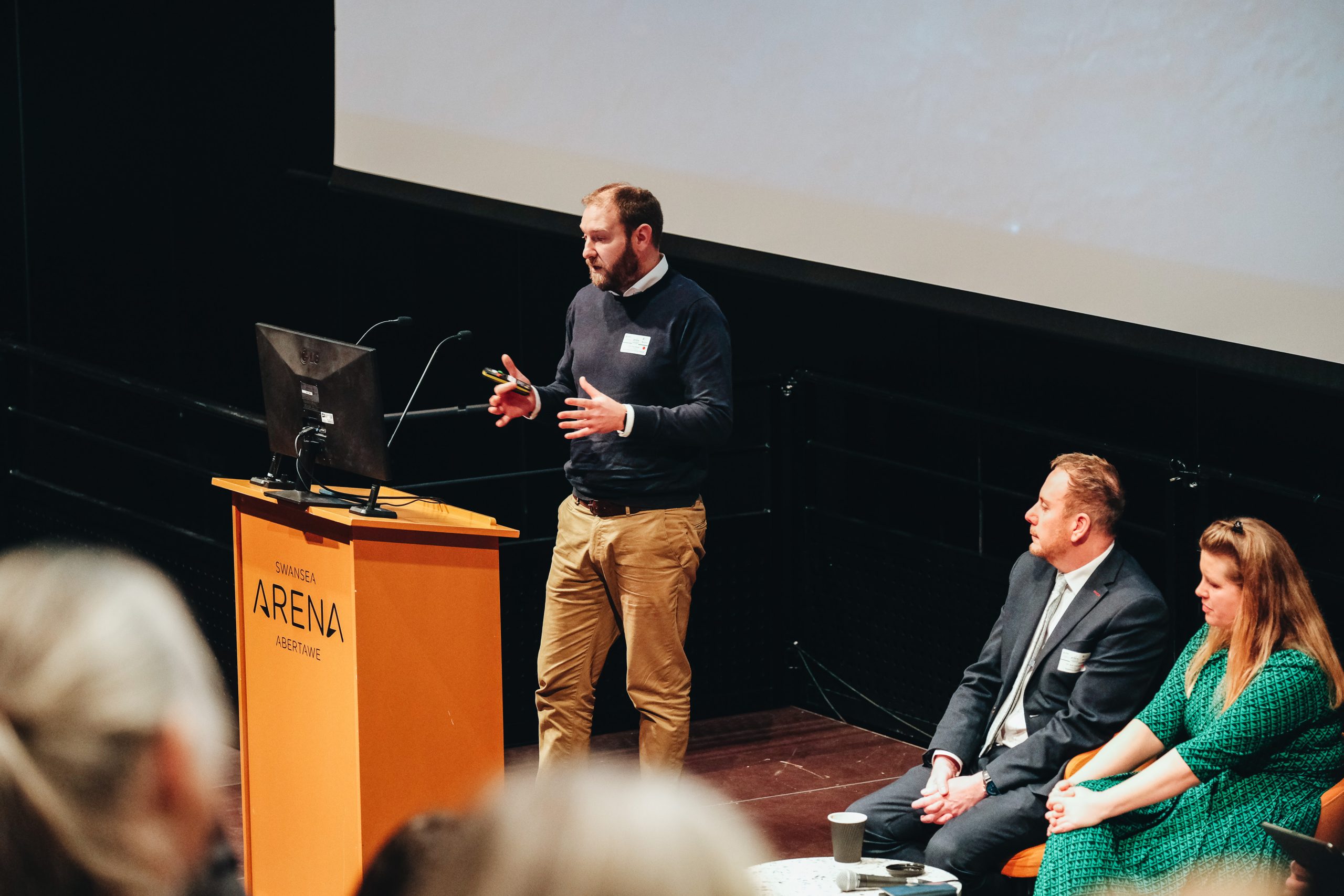
SPEAKING in the opening session at the inaugural Green Economy Conference in Swansea on Wednesday, Cllr Paul Miller, Deputy Leader and Cabinet Member for Place, the Region and Climate Change at Pembrokeshire County Council, highlighted the importance of the Milford Haven Waterway in helping to realise the vision of net zero industries in South Wales by 2040, delivering a 40% percent reduction of current Welsh CO2 emissions.
“If we get it right, it allows us to retain 130,000 jobs associated with industry in southwest Wales and unlock £30bn investment opportunities,” he said.
“The Crown Estate have set out their aspirations for floating offshore wind in the Celtic Seas, and they’re enormous. We need to get our region ready to harness the benefits of that opportunity and also to secure its delivery.
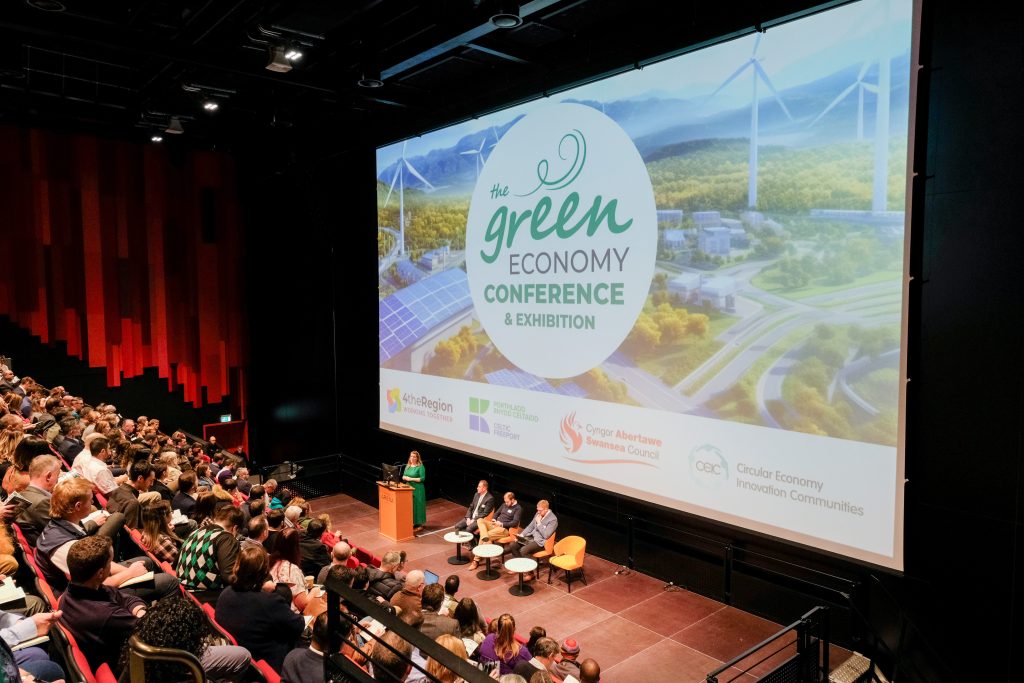
“It’s not just about floating offshore wind, it’s about what that green energy generation allows us to do onshore, and the additional opportunities that that presents. This year we are starting to talk about a potential hydrogen network across South West Wales: how can we create green hydrogen, use it to feed industry and southwest Wales, and use that as a product that decarbonises operations across the region?”
He said the possibilities spanned everything from producing green hydrogen for buses and transport as discussed by Cllr Stewart, through to examining how to use green hydrogen in industrial processes.

He added that it is important to recognise that some carbon will always be produced by our existing industries, so it is important to look to the future of carbon shipping, capture and storage as well.
“Milford Haven Energy Kingdom is allowing us to do some of that,” he said. This is a programme of work funded by UK Research and Innovation as part of their Industrial Strategy Challenge Fund, to explore the potential of zero carbon hydrogen alongside renewable electricity to meet future energy needs of buildings, power generation, and refuelling transport.
He also welcomed the major companies, including Norwegian Government owned Statkraft, which are investing in Pembrokeshire.
“Were competing globally for investment, and the fact that they’re here is a good start,” he said. “We need to create the right conditions for them to want to invest in this region ahead of some of the other opportunities that their key decision makers will be considering.”
He added that the Celtic Freeport, due to be formally designated by the Welsh and UK Governments in spring/summer 2024, will be key to this.
“It is part of that preparing our region for the opportunity and placing us to win those investment decisions,” he said.
“What it does, we hope, is create the right investment conditions, and allow us to see some of the benefits retained locally, which will then allow us to invest further in some of the infrastructure that we know is needed to support that industrial revolution.

“It’s game changing on its own, but taken together with a series of interventions working with our regional partners, it has the potential to really transform the regional economy.”
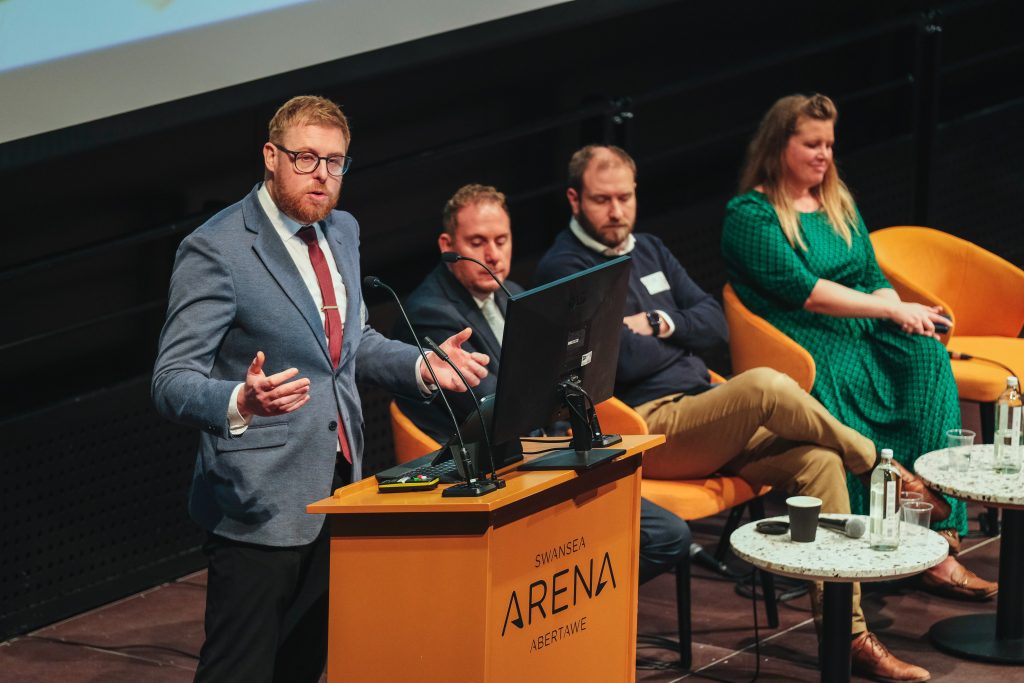
Over 1500 people attended the inaugural Green Economy Conference and Exhibition at Swansea Arena on Wednesday, which set out to strengthen communication and collaboration to build a green economy in South West Wales. Themes addressed included green jobs, greener transport, and how to decarbonise existing businesses.
The conference included a session on the circular economy in the region, which included input from the people behind several innovative businesses and initiatives including Rob Poyer of Nappicycle and Natural UK; James Dovey of Blueprint; Deborah Baldrey of Swanse University and Tata Steel; Ruth Marie Mackrodt of Wool Insulation Wales; and Gary Walpole of CEIC Wales. The discussion addressed how to make use of shared resources, creating networks to reduce, reuse and recycle materials across the region.
This was followed by a renewable energy panel discussion, featuring Abi Beck from RenewableUK Cymru, Tom Sawyer from Port of Milford Haven and Celtic Freepor, Andrew Hartson from ABP and Celtic Freeport, Kamal Rajput from Tata Steel, Joseph Kidd from Hiraeth Energy and Marine Energy Wales, and Arwyn Williams from Pembrokeshire College. The panel discussed why the Celtic Freeport will be transformational, and how to maximise the benefits of renewables projects for local communities and the regional economy.
The construction and buildings panel discussion brought together Elfed Roberts from Pobl Housing Group, Oonagh Gavigan from Neath Port Talbot Council, Darren Thomas from Morgan Sindall Construction, Paul Gwynn from Raven Delta Group, and Jane Lewis from Regional Learning and Skill to discuss innovations and sustainable approaches in the built environment.
The final session explored how to decarbonise your business, bringing together Chris Dhenin from the Development Bank of Wales, Matthew Jobes from Edmondson Electrical, Huw Watkins from BIC Innovation and Trac C, and Tanya Nash from Future Clarity to discuss how regional businesses can start (and continue) their journey of sustainability and what support and funding is available.
Following the conference, Dawn Lyle, chair of 4theRegion, which organised the event, said:
“It’s really been an honour for our small team at 4theRegion to have so many people interested in, and working in, the green economy, come together at Swansea Arena in just the way we had hoped. There have been some fantastic businesses and organisations exhibiting and from all accounts, some really great conversations and connections made.
“If we are to create a sustainable future, it’s imperative to strengthen communication and collaboration through discussions and meetings such as those which took place today. So much more can be achieved when ideas are exchanged, innovations discussed, and information shared. It’s about building an ecosystem to support our common aims.
“We intend to run this conference on an annual basis. We depend on our sponsors and exhibitors to show their support for the events that we run, and so we will go where the energy is, but our hope is to be back at Swansea Arena on Tuesday November 19 next year.”

Ysgol Penrhyn Dewi praised for pioneering ideas to protect rivers, wildlife and the environment
A PEMBROKESHIRE school has been recognised at a prestigious Wales-wide climate awards ceremony after pupils impressed judges with innovative ideas to tackle biodiversity loss and water pollution.
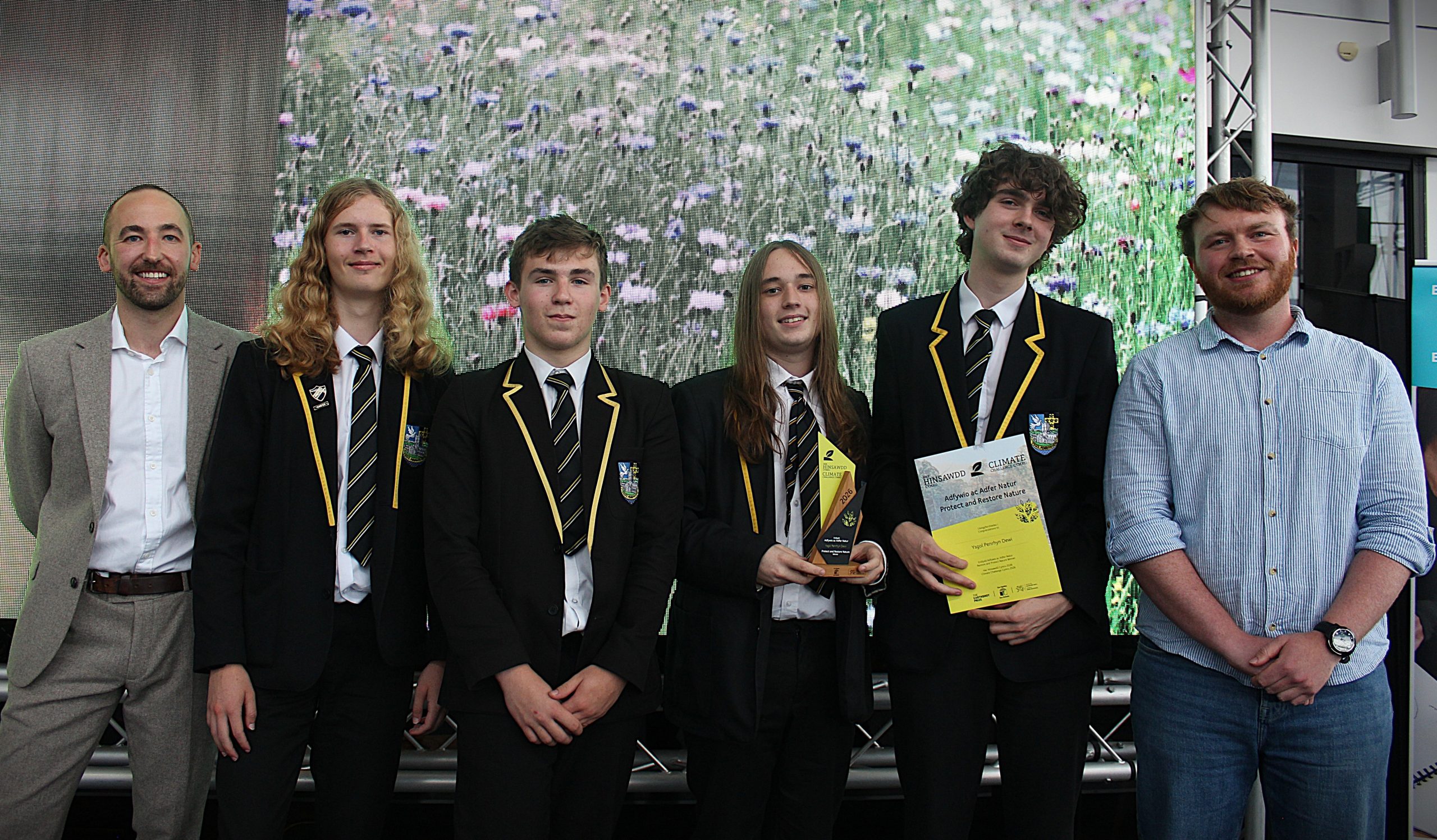
Ysgol Penrhyn Dewi was named the winner of the Protect and Restore Nature category in Keep Wales Tidy’s Climate Challenge Cymru competition, inspired by The Earthshot Prize.
The school earned the award for a series of creative environmental solutions, including proposals for solar-powered systems designed to help protect rivers and lakes while improving local biodiversity.
Pupils and staff travelled to Cardiff to receive the award during a special ceremony held on Wednesday (June 17), where they were presented with their trophy by ecologist and nature campaigner Joe Wilkins.
Climate Challenge Cymru invited primary and secondary schools from across Wales to submit short videos showcasing innovative ideas to tackle one of five major environmental challenges, known as the Earthshots. These included creating a waste-free world, improving air quality, tackling climate change, protecting nature and restoring the world’s oceans.
The Pembrokeshire school’s winning entry stood out for its imaginative approach to protecting natural habitats and improving water quality through sustainable technology.
Lucy Vaughan, Geography Teacher and Leader of Pupil Voice at Ysgol Penrhyn Dewi, said: “I have been so impressed with all of the amazing entries that have been shared at this prestigious event and am immensely proud of our pupils for winning this challenge.
“The creativity, passion, teamwork and commitment they have shown have been truly inspiring. Their innovative ideas and determination to make a positive difference for the environment give me real hope for the future.”
Keep Wales Tidy Chief Executive Owen Derbyshire praised the standard of entries from schools across Wales.
He said: “It has been a privilege to spend the day at Climate Challenge Cymru, surrounded by the ideas and ambition of young people from right across Wales.
“The projects on display are a testament not only to their creativity but to their resolve to make a real difference in Wales and beyond. Seeing the next generation lead with such confidence gives me every reason to be optimistic about what lies ahead.”
The competition is organised by Keep Wales Tidy’s Eco-Schools team in partnership with the Welsh Government and is inspired by The Earthshot Prize, the international environmental initiative launched by Prince William to encourage practical solutions to the world’s biggest environmental challenges.

The success of Ysgol Penrhyn Dewi highlights the growing role Pembrokeshire’s young people are playing in developing innovative ideas to tackle environmental issues, particularly those affecting the county’s rivers, coastline and wildlife.
Photo caption: Award winners: Pupils from Ysgol Penrhyn Dewi celebrate after winning the Protect and Restore Nature category at the Climate Challenge Cymru awards in Cardiff, alongside Keep Wales Tidy Chief Executive Owen Derbyshire (left) and ecologist Joe Wilkins (right).

HOMELESS people in Pembrokeshire are being offered extra support as Wales continues to face extreme heat.
The Wallich, which runs rough sleeping outreach and drop-in support in Haverfordwest, said people sleeping rough, living in cars, or staying in poor quality temporary accommodation are among those most at risk during the heatwave.
Outreach teams are helping people stay safe by offering water, sun cream, hats, wet wipes and other essentials.
Jamie-Lee Cole, Strategic Communications Lead for The Wallich, said: “People on the streets and living in poor quality or temporary housing are the most affected by climate change.
“They are the most exposed to extreme weather events like a heatwave, as well as heavy rain and cold in the winter.”
The charity said it is also offering advice on dehydration, sunstroke, worsening health conditions, wounds, and the added risks of drug and alcohol use during hot weather.
People are being encouraged to use cooler public spaces, such as libraries and support centres, during the hottest parts of the day.
The Wallich said some councils in Wales have activated Severe Weather Emergency Protocol, but called for all local authorities to include specific heatwave plans.
Ms Cole added: “It’s a sign of the times unfortunately that extreme heat will feature year on year, and we must make sure there are adequate and cool daytime spaces for people experiencing homelessness to access.”
The charity is also supporting people sleeping in cars, warning that vehicles can become dangerously hot.
Members of the public in Pembrokeshire are being urged to check on anyone they are worried about.
Ms Cole said: “If someone looks unwell and you feel safe to approach them, ask if they’re okay.

“Encourage them to move into shade or a cooler space. Alert emergency services if you think someone needs help in the heat.
“Offer people experiencing homelessness a cold drink and a chat, just like you would anyone else in your community.”
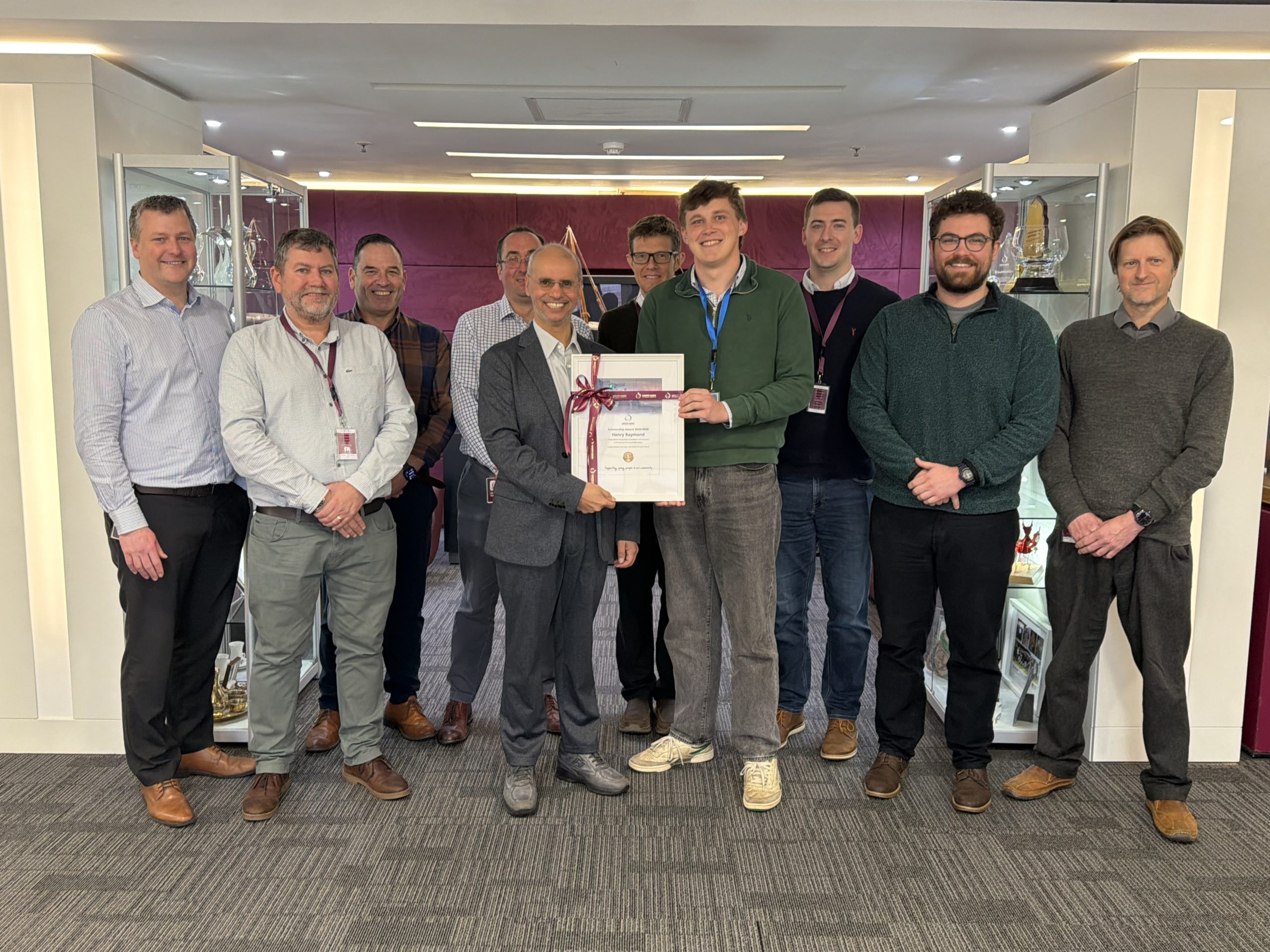
A FORMER Ysgol Penrhyn Dewi pupil has been awarded a £5,000 scholarship by South Hook LNG.
Henry Raymond, who is in the second year of a five-year Chemical and Environmental Engineering degree at the University of Nottingham, is the latest recipient of the company’s annual scholarship award.
South Hook said Henry had shown strong academic performance, a clear work ethic, and a keen interest in the role of engineering within the energy sector.
The scholarship is aimed at supporting local students as they progress in higher education, particularly in engineering, science and business-related subjects.
Applicants are assessed through a written application and an informal interview, with the award forming part of South Hook LNG’s wider commitment to supporting education and young people in the local area.
Henry was invited to South Hook earlier this year, where he was presented with a certificate and the £5,000 award. The funding will help with student costs over the remainder of his studies.
Henry said: “I’m very grateful to South Hook to have received this award. The financial support will make a huge difference to life as a student, and it’s incredible to have this kind of backing from a major player in the energy industry.”
South Hook LNG’s General Manager, Hamad Al Samra said: “We are pleased to have once again received applications from so many committed and capable young people.
“The team involved in the selection process at South Hook were particularly impressed by Henry’s dedication and commitment to his chosen subject.
“We are pleased to offer our support and wish him the very best in his future studies.”
South Hook LNG’s Scholarship Programme encourages applications from local students seeking higher education in engineering, science or business-related disciplines.
Details of how to apply for the 2026/27 award will be available on the company’s website during September.
Scholarship success: Henry Raymond, South Hook LNG’s 2026 scholarship recipient, with members of the South Hook team involved in assessing the applications.


News2 hours ago
Coastguard callout payments axe sparks fears for coastal communities
VOLUNTEER coastguards across the UK are set to lose callout payments, prompting concern over the future resilience of emergency cover...


Farming4 hours ago
Rural Wales ‘left out’ of net zero debate, warns carbon entrepreneur
A WELSH carbon entrepreneur has warned that rural Wales risks being left behind in the national conversation about net zero....


Local Government19 hours ago
Tenby Spectacular row continues as organisers say key question remains unanswered
Round Table says legal clarity over pedestrian access is still holding up event plan TENBY ROUND TABLE has welcomed Pembrokeshire...


Community2 days ago
Manorbier fire scandal: Council’s payout just £63,777 after school destroyed
PEMBROKESHIRE COUNTY COUNCIL has accepted an insurance settlement which leaves it with just £63,777.07 after the catastrophic fire which destroyed...


News2 days ago
Bus overturns in major incident near Kidwelly
All passengers rescued as emergency services remain at scene A BUS overturned on the A484 between Kidwelly and Ferryside on...


Community3 days ago
Tenby Summer Spectacular cancelled amid council row over harbour access
Organisers say popular charity events cannot safely go ahead without clear powers to control crowds TENBY ROUND TABLE has announced...


News3 days ago
Motorcyclist dies after four-vehicle crash on A40 in Carmarthenshire
A MOTORCYCLIST has died following a four-vehicle collision on the A40 between St Clears and Whitland. Dyfed-Powys Police said the...


News3 days ago
Rhun ap Iorwerth urges new deal for Wales after Starmer quits
First Minister says next Prime Minister must focus on greater powers, fair funding and respect for Wales’ democratic mandate FIRST...


News3 days ago
How Labour’s landslide victory unravelled in just two years
Prime Minister announces resignation after losing support within his own party as Andy Burnham emerges as overwhelming favourite to take...


News4 days ago
Long Course Weekend set to bring thousands to Pembrokeshire
Three days of swimming, cycling and running will once again transform Tenby into one of the UK’s biggest endurance sporting...
-

 News7 days ago
Crash on Freeman’s Way causes school-run chaos across Haverfordwest
-

 Health5 days ago
Woman jailed assaults on police, harassment and XL Bully possession
-

 Crime5 days ago
Milford Haven woman spared jail despite string of shop thefts
-

 Community4 days ago
The gentle giant behind the tattoos
-

 Local Government7 days ago
Pembrokeshire faces accessible housing shortage as 403 people wait for homes
-

 Crime5 days ago
Spittal man to stand trial accused of ABH
-

 Crime5 days ago
Carmarthenshire pensioner, 86, accused of causing prostitution for gain
-

 Entertainment4 days ago
Harbour Fest to bring music, food and maritime magic to Milford Waterfront