


Business
Many homeowners in Wales ‘failing to protect their family’s financial futures’


ALMOST a third of homeowners in Wales are failing to protect their family’s financial futures
25.01.2024 – Almost a third (32%) of adults in Wales have not made financial arrangements to protect their families when they die, new research has revealed.
A survey, by Lycetts Financial Services (LFS), also revealed that 32% do not understand how Inheritance Tax could affect their loved ones.
“Most people focus on earning enough to buy a home and accumulate other assets during their lifetime,” said Nick Straker, LFS Divisional Director. “They regard this as more important than considering the potential tax consequences further down the line.
“However, the start of a new year is the ideal time to take stock of your financial assets and circumstances, and plan for the future. It could be the most important resolution you ever make.”

Currently, the first £325,000 of an estate is not subject to Inheritance Tax under the “Nil Rate Band” (NRB). Where the family home is also passed to a direct descendant then the NRB is boosted by a further £175,000 to £500,000.
If a couple are married and pass assets each to other, then the NRB can be inherited so that it can be up to £1million on the last to die. However, the rise in property values in recent years has still seen more people’s assets exceed the threshold and be subject to a 40% tax rate.
Straker said: “A Potentially Exempt Transfer (PET) allows you to make financial gifts of unlimited value without there being an Inheritance Tax liability. The only proviso is that the individual making the gift must survive for the following seven years, and that the gift itself is potentially subject to Capital Gains Tax (CGT) on transfer.
“Before committing to PETs, consideration should be given to what your future financial needs may be. With life expectancy increasing, you need to consider how much income you will require to continue living the life you want to lead.

“The problem of giving assets away is that you don’t know how long you are going to live and there may also come a time when you need to pay for care and nursing home costs.
“The wisdom of making a PET when your children may be young, impulsive and have not yet established themselves, is another important consideration. Generally, people are getting married later and having children later, so planning becomes more difficult.
“Life Insurance, however, is a good short term measure. It provides protection for loved ones if something were to happen unexpectedly, and is relatively inexpensive. When your children are likely to be settled and more mature, and you have a better idea of your financial needs going forward, a PET might then be explored or other IHT plans can be considered.”

Straker also reinforced the importance of building up a pension fund, which can offer further financial support for a spouse and family.
“Pensions are highly tax efficient and are not affected by Inheritance Tax. You are never too young to start saving for your pension and should aim to build as big a fund as possible.
“My final piece of advice is to seek guidance from an experienced financial adviser. An audit of all assets is a good starting point to plan for the future.
“A YouGov survey revealed that that only 31 per cent of those who made resolutions in 2023 kept them all, but arranging your finances is one you should definitely stick to.”


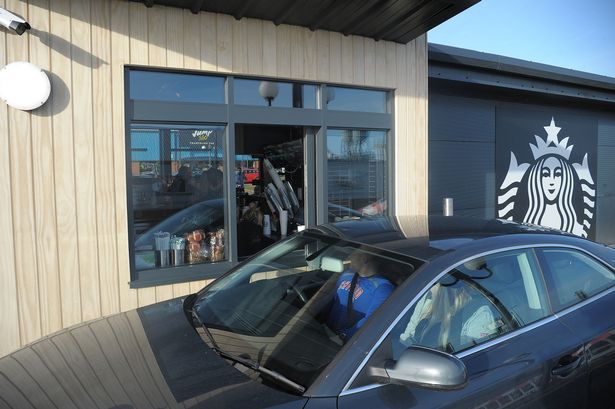
PLANS for what would be the first drive-through Starbucks coffee shop in Pembrokeshire, and a Greggs bakery, on the site of a car dealership have been submitted to the county council.
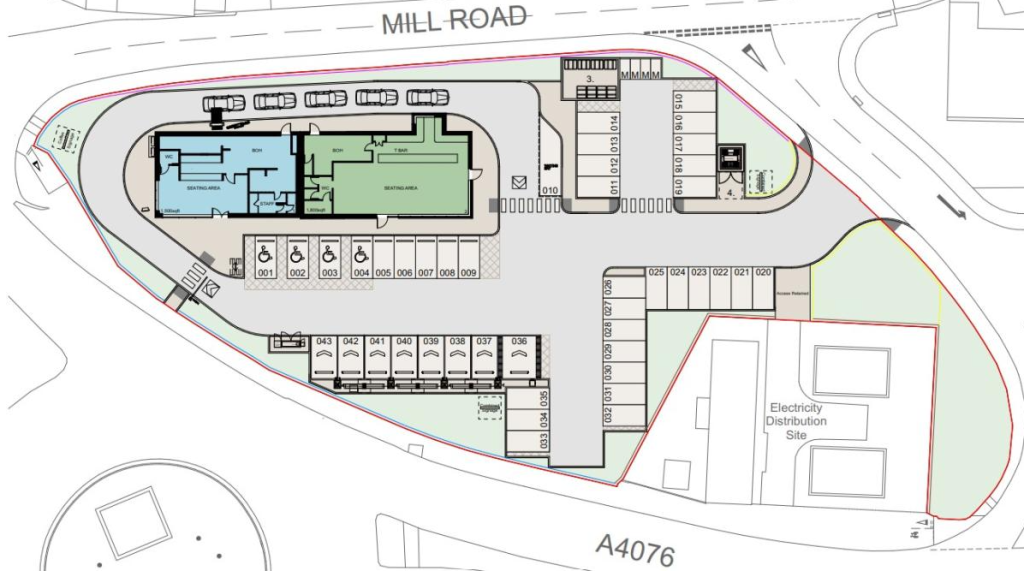
Birmingham-based GC No.9 Ltd, through agent Simply Planning, seeks permission for the demolition of the existing building, and the erection of a drive-thru Starbucks coffee shop, a Greggs baked goods food store, along with electric vehicle charging points at the PMS dealership, Salutation Square, Haverfordwest.
It includes 35 parking spaces and eight EV charging bays.
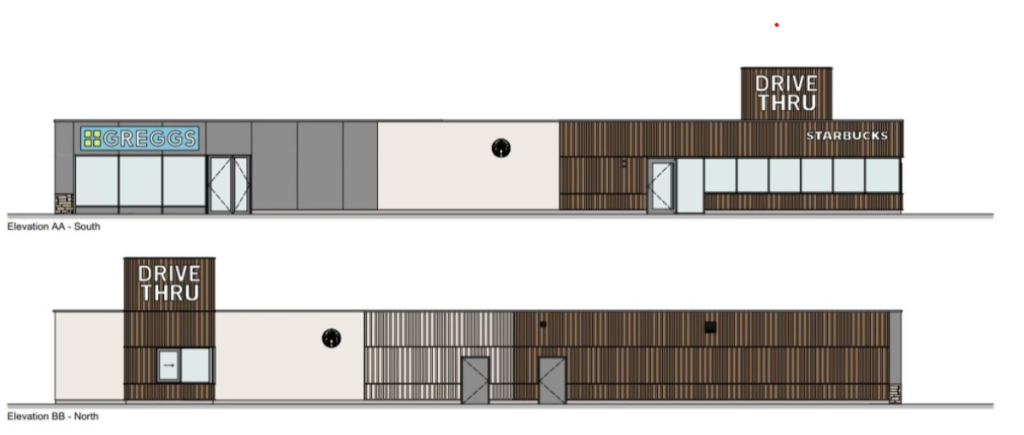
If approved, it is hoped some 30-40 jobs will be created; the Starbucks coffee shop would be the only such outlet for the general public in the county, with Pembrokeshire College having a Starbucks for students.
Back in 2024, permission was granted for a drive-thru Starbucks coffee shop on land adjoining Days Garage, Fishguard Road, Haverfordwest, but was never progressed; the operator for that scheme since confirming they would not be proceeding with that option, preferring the PMS site close to the town centre, a supporting statement says.
It adds: “The drive-thru unit will be occupied/operated by Starbucks, a national coffee retailer. Starbucks are one of the principal coffee shop operators in the UK, providing the public with a high-quality offer of hot and cold drinks, cafes and pastries and a limited range of related foods. As such, it will provide an attractive social setting for people to meet and will provide in the region of 20-25 jobs, principally available to local people.
“The store will be operated by The Magic Bean Company, the first licensee of Starbucks to open a drive thru. Established in 2014, The Magic Bean Company is a business founded in South Wales that employs local people. They are Starbuck’s only national growth partner covering England and Wales, developing the green electric vehicle Starbucks platform.
“The other proposed unit will be occupied/operated by Greggs plc. Greggs plc is the UK’s leading bakery retailer, famous for its baked goods, sandwiches and sweet items. The commercial unit will offer fresh, affordable food ‘on-the-go’ and create a further 15 full-time equivalent jobs. As with Starbucks, the jobs will primarily be provided to local people.
“The proposed operators have confirmed that no existing stores would close as a result of these proposals.”

It adds: “Given that Greggs intend to retain their town centre format store within Haverfordwest town centre, it is considered that there will not be any impact to the health of the designated town centre as a result of the proposed development.”
Comparing this scheme to the previously-approved site, it said the “limited negative impacts” of that scheme would be lessened by the new proposal, which would also support the nearby town centre, “given the ease of pedestrian access from the site”.
It added: “It should also be noted that there is a dearth of comparable roadside provision along the A40 as a whole. The nearest comparable units are in St Clears, Carmarthenshire and are located outside the designated town centre.

“The proposals would not compete with the town centre units in Haverfordwest and will invariably also help to retain lost expenditure within Pembrokeshire itself.”
The application will be considered by county planners at a later date.
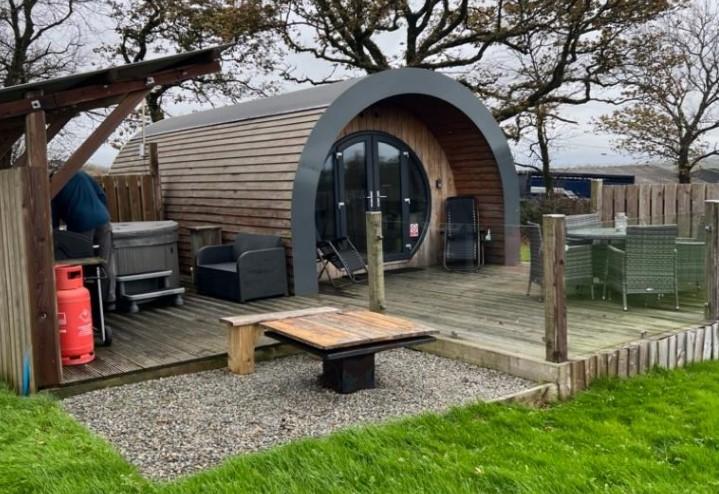
A CALL to keep a holiday pod sited on a Pembrokeshire farm, as part of a wider holiday pod farm diversification over two areas which saw the larger part supported, has been submitted to county planners.
In an application to Pembrokeshire County Council, Bill Ridge of Vaynor Farm Ltd, Bethesda, through agent Gerald Blain Associates Limited, seeks retrospective permission to keep a self-catering pod at Broomley Farm, Sodston, Narberth, works having been completed in 2022.
The application is part of a wider scheme of holiday pods diversification encompassing two farms.
Back in December, Pembrokeshire County Council’s planning committee granted delegated retrospective permission to Vaynor Farm Ltd for the siting of two self-catering holiday accommodation pods at The Cart House, Vaynor Farm, Bethesda, near Narberth as part of a farm diversification enterprise.
A supporting statement accompanying the latest application says: “Vaynor farm is a 400-acre working dairy farm with a herd of 700 milking cows. The enterprise comprises of three self-catering pods. Two of the pods are situated at the Vaynor homestead and another at the opposite end of the holding at Broomley farm.
“The first unit was sited adjacent to Vaynor farm stead some four years ago and a further two added in subsequent years. The units have enjoyed successful occupancy rates over several years offering a unique secluded tourism offer on a working dairy farm, more detail of which is outlined within the supporting business plan.”
It says the Broomley farm application is a resubmission of a previously refused scheme, adding: “It should be noted that this application was originally part of [the application] which was recommended approval at planning committee in December 2025. This element however was separated due to its location on another part of Vaynor farm deeming it not possible to be considered under the same application.”
At the December meeting, an officer report said: “A business plan has been submitted with [that] application, which explains that due to uncertainties associated with dairy farming, the applicant has sought to diversify the farm enterprise to incorporate tourism accommodation.
“The application makes the case that the proposed development represents farm diversification. It is acknowledged that the development has resulted in the provision of an alternative type of holiday accommodation for which it has been demonstrated there is a demand, contributing to the diversity and quality of accommodation available within the county and supporting an existing farm business, with consequent economic and social benefits.

“Evidence has been provided that demonstrates the extent to which the pods have provided income which has been used to support the farm business.”
That application was conditionally approved; the latest part to be considered by planners at a later date.
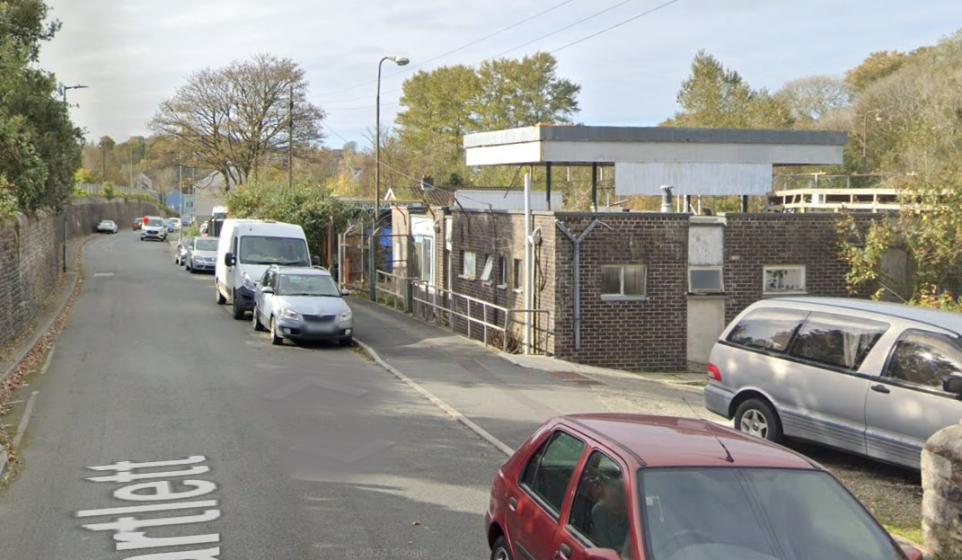
A CALL for the retrospective conversion of office space previously connected to a Pembrokeshire car hire business to a chocolate factory, a beauty salon and a laundrette has been refused by county planners.
In an application to Pembrokeshire County Council, Mr M Williams, through agent Preseli Planning Ltd, sought retrospective permission for the subdivision of an office on land off Scotchwell Cottage, Cartlett, Haverfordwest into three units forming a chocolate manufacturing, a beauty salon, and a launderette, along with associated works.
A supporting statement said planning history at the site saw a 2018 application for the refurbishment of an existing office building and a change of use from oil depot offices to a hire car office and car/van storage yard, approved back in 2019.
For the chocolate manufacturing by ‘Pembrokeshire Chocolate Company,’ as part of the latest scheme it said: “The operation comprises of manufacturing of handmade bespoke flavoured chocolate bars. Historically there was an element of counter sales but this has now ceased. The business sales comprise of online orders and the delivery of produce to local stockist. There are no counter sales from the premises.”
It said the beauty salon “offers treatments, nail services and hairdressing,” operating “on an appointment only basis, with the hairdresser element also offering a mobile service”. It said the third unit of the building functions as a commercial laundrette and ironing services known as ‘West Coast Laundry,’ which “predominantly provides services to holiday cottages, hotels and care homes”.
The statement added: “Beyond the unchanged access the site has parking provision for at least 12 vehicles and a turning area. The building now forms three units which employ two persons per unit. The 12 parking spaces, therefore, provide sufficient provision for staff.
“In terms of visiting members of the public the beauty salon operates on an appointment only basis and based on its small scale can only accommodate two customers at any one time. Therefore, ample parking provision exists to visitors.
“With regard to the chocolate manufacturing and commercial laundrette service these enterprises do not attract visitors but do attract the dropping off laundry and delivery of associated inputs. Drop off and collections associated with the laundry services tend to fall in line with holiday accommodation changeover days, for example Tuesday drop off and collections on the Thursday.
“With regard to the chocolate manufacturing ingredients are delivered by couriers and movements associated with this is also estimated at 10 vehicular movements per week.”
The application was refused on the grounds it represents an unjustified out of centre use with regard to the salon and nail bar, “insufficient information has been provided to justify the loss of B1 employment floorspace,” and “the introduction of a hairdressing salon and nail bar, uses typically found within established shopping centres, into this out of centre location would undermine the strategic role, vitality, and viability of Haverfordwest town centre”.



News10 hours ago
Reform reveals west Wales candidates for Senedd battle
Monkton councillor tops Pembrokeshire list as party confirms Carmarthenshire names and includes Haverfordwest councillor in unwinnable Swansea spot REFORM UK...


Health17 hours ago
Clash over Withybush Hospital services as Paul Davies challenges First Minister
A HEATED exchange in the Senedd has laid bare growing tensions over the future of hospital services in west Wales....


Crime1 day ago
Police stop car in Pennar as three arrested in drugs investigation
Suspected drug driver report leads to major police response and multiple arrests DRAMATIC scenes were reported in Pennar on Monday...


Business2 days ago
New pilot vessel Llanion arrives at Milford Haven
State-of-the-art 22-metre craft marks reset after £3.6m pilot boat controversy THE PORT OF MILFORD HAVEN has taken delivery of a...


Community2 days ago
Sycamore Gap legacy tree to take root in Pembrokeshire landscapes
A SAPLING grown from the famous Sycamore Gap tree is set to become part of Wales’ protected landscapes — with...


Business3 days ago
Could Primark be coming to Haverfordwest? Major retailer in talks for former Wilko site
Council confirms advanced discussions as speculation grows over high street boost HAVERFORDWEST could soon see a major high street revival,...


Business3 days ago
Rail investment ‘could unlock 40,000 jobs and £11bn for Wales’ says new report
RAILWAY stations across Wales could help unlock around 40,000 jobs and more than £11 billion for the economy by 2036,...


Local Government3 days ago
Milford Haven set for £200m investment with schools, leisure centre and rail upgrade
Council outlines major plans for town with backing from Welsh Government MILFORD HAVEN is set for a major transformation with...


Community3 days ago
Broad Haven volunteers secure ‘national asset’ status for nature reserve
A SMALL stretch of woodland and former opencast coal mine has been transformed into a nationally recognised biodiversity site, in...


Entertainment4 days ago
Tenby steams up in spectacular style as crowds flock to festival
Colourful parade, towering creations and Victorian flair bring town centre to life TENBY was transformed into a vibrant Victorian fantasy...
-

 Health7 days ago
NHS waiting list falls — but cancer delays and diagnostic backlog worsen
-

 Crime6 days ago
Pembroke man remanded in custody over knife threat, assault and damage allegations
-

 Crime7 days ago
Illegal workers found at Cardigan takeaway after immigration raid
-

 Crime5 days ago
Broad Haven man remanded in custody over sexual harm prevention order breach
-

 Education7 days ago
Milford Haven school plans unveiled but funding not yet secured
-

 News7 days ago
Council unveils plans for new state-of-the-art secondary school in Milford Haven
-

 Farming7 days ago
£3 million secured to continue Welsh sheep genetics programme
-

 Community6 days ago
Former Neyland police officer Louis Knight dies aged 83