


Business
Pembrokeshire Chili Farm explains why Britons crave spicy foods


A NEW study conducted by Pembrokeshire Chilli Farm has uncovered the reasons behind Britons’ growing fondness for spicy foods. The research highlights that 72% of UK adults are drawn to spicy food for the thrill it provides, overshadowing the health benefits that capsaicin offers.
The study, which surveyed 1,846 UK adults aged 18 and over, delved into the nation’s increasing love for heat in their cuisine. It found that more than half of the respondents (56%) eat spicy foods for their health advantages, with capsaicin known to boost metabolism, aid digestion, and release endorphins.
The allure of a thrilling dining experience is a significant factor for many. A striking 72% of participants stated that the sensation of heat enhances their meals. Additionally, 16% admitted to seeking out extremely hot foods for an even greater thrill.
Global cuisine has notably influenced this trend, with 67% of adults being introduced to spicy foods through international dishes. Indian cuisine led the way (43%), followed by Thai (38%) and Mexican (19%).
Interestingly, the survey revealed that only 21% of respondents were introduced to spicy foods as children, with most adopting it in adulthood. Women were more likely to consume spicy foods for health benefits (59%) compared to men (41%).

Michelle Rosser, co-founder and Managing Director of Pembrokeshire Chilli Farm, shared her insights: “As a chilli lover, there is nothing more rewarding than seeing people embrace and enjoy the thrill of spicy foods. Our research highlights all the great reasons people enjoy eating spicy foods, and I share the same reasons myself! If you are looking to get into eating spicier foods, I suggest starting with milder spices and working your way up. As your tolerance builds, you can start to experiment with hotter varieties of peppers and hot sauces. It is also a good idea to have yoghurt or milk on hand just in case the spice gets a little too hot to handle!”
Pembrokeshire Chilli Farm produces a range of chilli-based products and supplies crops to other commercial food producers. For more details, visit www.pembrokeshirechillifarm.com.


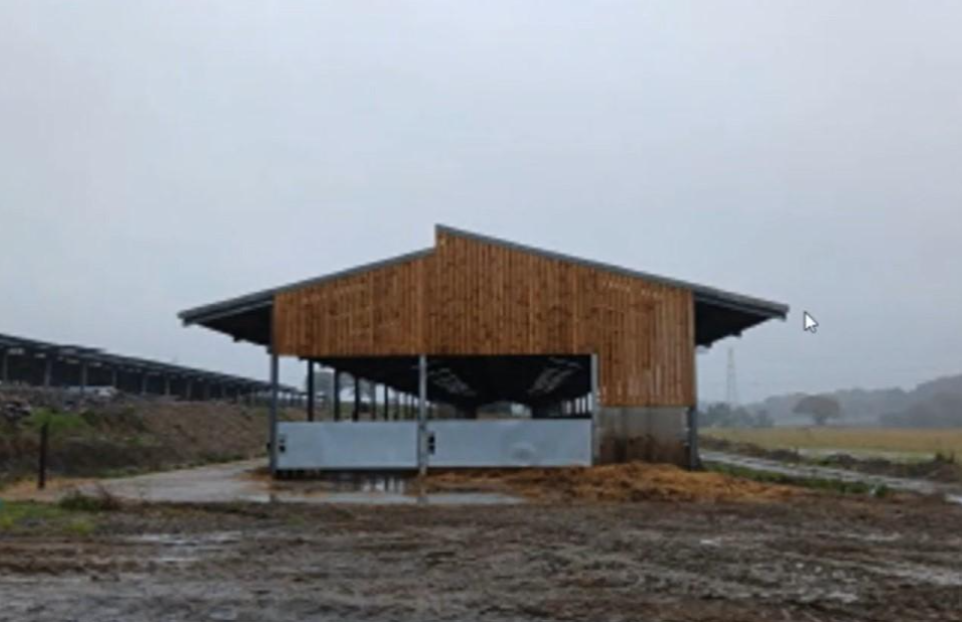
THE FINAL sign-off for plans for a heifer accommodation building and associated works at one of Pembrokeshire’s largest dairy farms, with a milking herd of 2,000 cows, have been given the go-ahead.
In an application backed by councillors at the December meeting of Pembrokeshire County Council’s planning committee, Hugh James of Langdon Mill Farms Ltd sought permission for a 160-metre-long heifer accommodation building, a slurry separation/dewatering building and associated yard areas at 1,215-hectare Langdon Mill Farm, near Jeffreyston, Kilgetty.
A supporting statement through agent Reading Agricultural Consultants said: “The holding currently has a milking herd of approximately 2,000 cows, which are housed indoors for the majority of the year, with dry cows and heifers grazed outdoors when weather and soil conditions permit.
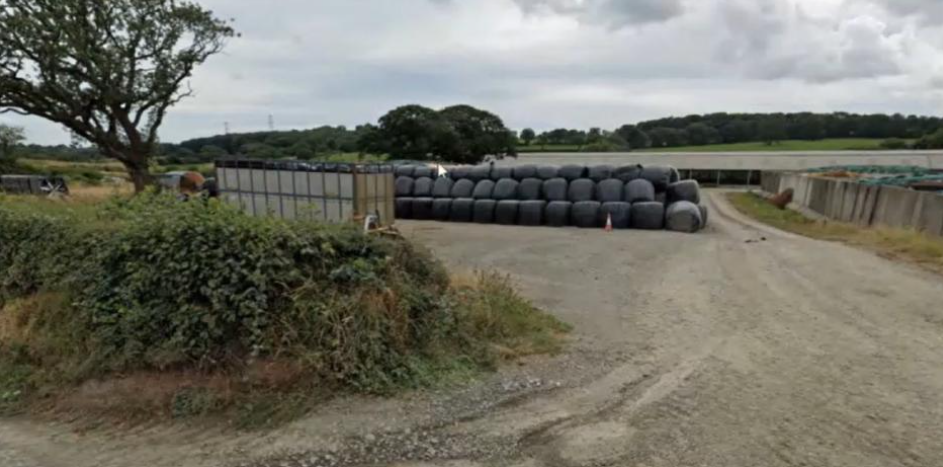
“There has been significant investment in buildings and infrastructure at the farm over the last decade in respect of cattle accommodation, slurry storage, milking facilities, Anaerobic Digestion (AD) plant, feed storage. Recently a calf and weaned calf accommodation buildings were approved by Pembrokeshire County Council with construction almost complete.
“The unit is efficient, achieving yields of more than 10,000 litres/cow/year, with cows being milked three times/day in the 60-point rotary parlour. Langdon Mill Farm currently directly employs 21 full-time, and three part-time staff. Of these, four live on site in the two dwellings opposite the farm, with the remaining staff living in the locality.”
It added: “Although the unit has previously purchased heifers to aid expansion, the farm now breeds most of its own replacements to improve genetics and to minimise the ongoing threat of bovine tuberculosis (bTB).”
It said the proposed building would be used by heifers between the ages of 7-22 months, the siting “directly influenced by the adjacent calf and weaned calf buildings, with livestock being moved from one building to the next as they get older”.
Members unanimously supported the recommendation of approval, giving delegated powers to the interim head of planning to approve the application following the final approval of a habitats regulations assessment.
An officer report published yesterday, February 5, said Natural Resources Wales confirmed it had received the assessment, and, “in consideration of the mitigation measures detailed and on the understanding there is no increase in stock, they agree with the LPA’s conclusion that an adverse effect upon the integrity of the SAC [Special Areas of Conservation] sites can be ruled out”.

Formal delegated approval has now been granted by officers.

A NEW report by the British Business Bank and Economic Intelligence Wales shows that while most Welsh SMEs remain financially stable, many continue to face barriers to accessing finance and are less likely than their counterparts in other devolved nations to seek funding for future growth.
The Wales SME Access to Finance Report 2026 has found that 66% of Welsh SMEs are currently using external finance, and eight in ten (80%) report a positive cash flow position. Despite this, 19% of smaller Welsh businesses reported experiencing barriers to accessing finance, the highest proportion among the devolved nations.
The report also highlights a more cautious outlook among Welsh SMEs when it comes to future investment. Just 17% of Welsh businesses expect to require additional finance over the next year, compared with 42% in Northern Ireland and 47% in Scotland. While 62% of Welsh SMEs that anticipate needing finance say they are confident about securing it, overall demand for funding remains lower than elsewhere in the UK.
Regional variations within Wales are also evident. SMEs based in North Wales and South West Wales were more likely to report barriers to finance (both 21%), while South West Wales businesses were least likely to feel confident about securing additional funding. At the same time, SMEs in South East Wales were most likely to report a finance requirement above £250,000, reflecting differing growth profiles across regions.

The findings underline the importance of a diverse and accessible finance ecosystem to support business investment, innovation and growth across all parts of Wales.

Susan Nightingale, Director UK Network, British Business Bank, said: “Welsh businesses continue to show resilience and confidence, with most reporting positive cash flow and steady growth expectations. Yet, clear regional and structural differences remain in access to finance, particularly for smaller businesses and sole traders. With Wales recording the highest share of smaller businesses experiencing barriers to finance among the devolved nations, it is vital that all businesses, wherever they are in the country, have the knowledge, confidence and support to secure the right finance for them. This will be key to unlocking sustainable growth across every part of Wales.”
Giles Thorley, Chief Executive of the Development Bank of Wales, said: “This year’s Wales SME Access to Finance Report shows a mixed picture. It’s encouraging to see many Welsh SMEs reporting strong cash flow, yet concerning that confidence and demand continue to lag behind other UK nations. If we want our businesses to innovate, invest and grow, closing that gap must remain a priority.
“Improving access to finance isn’t something any one organisation can solve alone, but the Development Bank of Wales will continue to play a vital role in supporting SMEs, working alongside partners across the wider finance ecosystem to help businesses invest, innovate and grow.”
Economic Intelligence Wales is a unique research collaboration between the Development Bank of Wales, Cardiff Business School, Bangor Business School, the Enterprise Research Centre, and the Office for National Statistics (ONS).


BUSINESS leaders, students and policymakers will gather in Pembrokeshire next month to mark International Women’s Day with an event focused on opportunity, leadership and retaining talent in West Wales.

The third annual Partners in Progress: Give to Gain conference will take place on Friday (Mar 6), bringing together established professionals and the next generation of workers to share practical advice and real-world experience.
The event is organised by Institute of Directors Wales, in partnership with Bluestone National Park Resort and the Welsh Government through Trade & Invest Wales.

Hosting the conference in West Wales, rather than a city centre, aims to highlight the growing opportunities available in regional communities and the role local employers play in keeping skilled people closer to home.
Running from 10:00am to 2:00pm, the programme will include panel discussions, site tours and networking sessions. Sixth form, college and university students will be encouraged to question speakers directly about careers, leadership and progression.

Speakers include Belinda Houghton-Jones of RBC Brewin Dolphin, Alex Shufflebottom Jones, former managing director of Shufflebottom Ltd and now an investor and mentor, Dr Owain James of Darogan, and Jane Wallace-Jones, founder of Something Different. The panel will be chaired by Richard Selby, National Chair of IoD Wales.
Organisers say the focus will be firmly practical, with businesses sharing examples of how they are developing staff, widening access to opportunity and building inclusive workplaces.
The discussion comes as Welsh firms continue to report difficulties recruiting and retaining skilled staff. IoD Wales’ latest State of the Nation survey found that skills shortages remain the biggest concern for almost four in ten organisations.
Jo Price, Nations Manager for Wales at IoD Wales, said the aim is to connect experience with ambition.

She said: “Partners in Progress is about bringing people together to tackle real challenges facing businesses and future talent in Wales.
“By connecting leaders and students in West Wales, we can share what works, build confidence and create opportunities where people live and want to work.”

Rebecca Rigby, Director of Operations at Bluestone, added: “We’re proud to host this event for a third year. It’s about creating meaningful connections between future talent and inspirational leaders, and showing what’s possible beyond the big cities.”

Thanks to Welsh Government support, tickets are fully funded, although places are limited. Standard prices are £25 plus VAT for members and £35 plus VAT for non-members.
Places can be booked online via the IoD website.



Crime23 hours ago
Pembroke Dock man admits threatening to hack woman’s head off with sword
Court imposes strict bail conditions and bans contact with named individuals ahead of sentencing A PEMBROKE DOCK man has admitted...


Crime1 day ago
Teenager remanded after teacher injured in knife incident at Milford Haven school
Fifteen-year-old charged with Section 18 grievous bodily harm and possession of a bladed article appears before Swansea magistrates A FIFTEEN-YEAR-OLD...


Crime2 days ago
Police confirm teacher was stabbed at school as teenager appears in court
15-year-old charged with Section 18 GBH with intent and possession of a bladed article on education premises POLICE have confirmed...


Crime2 days ago
Man arrested for murder following death of pensioner in Pembroke Dock
Officers called to Hawkstone Road property as investigation continues and residents urged to come forward DYFED-POWYS POLICE officers have launched...


Crime2 days ago
Teacher discharged as Milford School to reopen Monday after serious assault
Deputy head praises ‘calm and professional’ staff and pupils during lockdown A TEACHER injured in a serious incident at Milford...


Crime3 days ago
Teacher discharged as police step back from Milford Haven school after assault
Teenager remains in custody as school closes and patrols increased to reassure community POLICE have confirmed they are no longer...


Crime3 days ago
Teacher injured and teenager arrested for attempted murder at Milford Haven School
Lockdown triggered as pupil allegedly attacks staff member with weapon – boy, 15, held on suspicion of attempted murder A...


international news4 days ago
Pembrokeshire women conquer Atlantic in epic 3,000-mile row
PEMBROKESHIRE’S all-female rowing crew Merched y Mor have completed one of the hardest endurance challenges on the planet after crossing...


Crime4 days ago
Sex offender jailed after living off grid in Pembrokeshire and refusing to register
Man walked into police station after months avoiding authorities A CONVICTED sex offender who told police he intended to live...


Crime4 days ago
More rape and sexual assault survivors to get right to challenge dropped cases
New review scheme to be rolled out across CPS Cymru-Wales following successful pilot SURVIVORS of rape and serious sexual assault...
-
Crime4 days ago
Sex offender jailed after living off grid in Pembrokeshire and refusing to register
-

 Health3 days ago
Health board targets rise in steroid and gym drug use across west Wales
-

 News6 days ago
Princess of Wales visits historic Pembrokeshire woollen mill
-
Crime3 days ago
Teacher injured and teenager arrested for attempted murder at Milford Haven School
-

 Crime5 days ago
Hakin man’s appeal delayed again as Crown Court seeks guidance on insurance law
-

 Crime6 days ago
Arrest made after Carmarthen park stabbing investigation
-

 Crime4 days ago
Johnston man remanded in custody over knife and assault charges
-
Crime6 days ago
Man guilty of threatening to kill Herald editor