


Business
Welsh crab and lobster survey and online events for recreational shellfish fishers


WELSH crab and lobster survey and online events for recreational shellfish fishers
Download
Seafish, the public body that supports the UK seafood industry, is inviting recreational crab, lobster and crawfish fishers in Wales to take part in a survey and attend online engagement events.
The survey and events have been arranged by Seafish as part of a new Welsh crab and lobster Fishery Management Plan (FMP) which is being developed by the Welsh Government and due for publication in 2026.
Recreational fishers are classed as anyone fishing simply for leisure and personal consumption, as opposed to commercial business, with the survey and engagement events open to both Welsh residents and visitors.
Seafish wants to hear from pot fishers and divers / spearfishers who have an interest in crab, lobster, and crawfish fisheries in Welsh waters.
FMPs cover all removals of shellfish from a stock; this means that recreational shellfish fisheries will be included in the plan, so it is important that the views and expertise of recreational fishers are gathered as they are important stakeholders in Welsh fisheries.

Seafish has been commissioned by the Welsh Government to carry out online engagement events and a short online survey to understand more about how recreational shellfish fishers would like to see crab, lobster, and crawfish managed in the future.
Lewis Tattersall, Head of Fisheries Management at Seafish, said: “Recreational fisheries for crab, lobsters and crawfish provide cultural and economic value to coastal communities in Wales, as well as being a hobby that many people enjoy. In managing fisheries, we must account for all catches removed from the stock to ensure long-term sustainability. This means future fisheries management plans for shellfish will include recreational catches of shellfish.
We want to make sure that recreational shellfish fishers are involved in the early stages of FMP development and that their views on how fisheries should be managed are heard. The Seafish events and online survey are a great opportunity for recreational shellfish fishers to share their experience and insight, and the outputs of this work will be important in shaping future management of Welsh fisheries”.
In April, Seafish engaged with the commercial fishing sector to gather their views on current and future management of the Welsh crab and lobster fishery.

The focus of this second round of engagement is on recreational potters, divers, and intertidal gleaners / gatherers who catch brown crab, velvet crab, spider crab, European lobster, and crawfish in the Welsh zone.
The online engagement events and survey offer recreational shellfish fishers the opportunity to voice their opinions on how Welsh shellfish fisheries are currently managed, and how they would like to see them managed in the future through the fisheries management plan.
Seafish wants to know what current management works well to protect shellfish stocks, what could be improved to improve sustainability and how recreational shellfish fisheries would like to be involved in the next stages of FMP development by Welsh Government. The ultimate aim of the FMP is to deliver sustainable shellfish fisheries in Wales and to protect these valuable stocks for future generations.



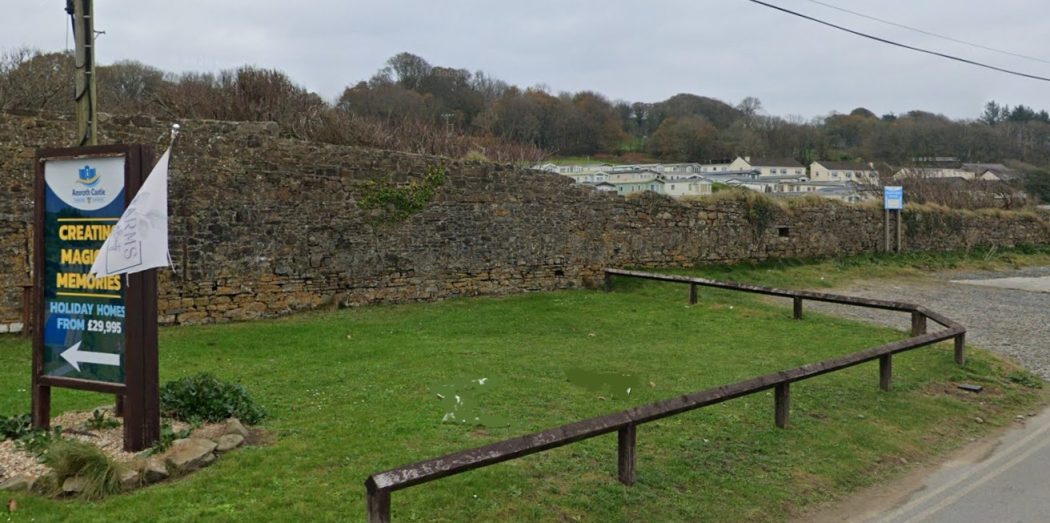
A CALL to allow a south Pembrokeshire caravan site to move to having caravans all-year-round, which led to fears of a precedent that other parks would be able to operate without seasonal restrictions, has been refused.
In an application to Pembrokeshire Coast National Park, Amroth Castle Holidays Ltd, through agent Laister Planning Limited, sought a Certificate of Lawfulness for the use of land for the siting of static caravans for all year occupancy (including as a sole or main place of residence) at Amroth Castle Holiday Park, Amroth.
Local community council Amroth had objected to the call, saying a 12-month use license “would open the park to residential occupation rather than tourism and this was to be resisted”.
It also raised concerns including the application opening “an opportunity to change the caravans to chalets/lodges which are larger in size and will take up more room, potentially extending the area of the park and increasing density”.
It added: “No other caravan/lodge or chalet holiday parks in the Amroth community area of the National Park are allowed to offer 12 months residency on site and so approving this application would set up a precedent for other holiday parks to follow and operate without restriction.”
A supporting statement cited previous permissions at the site in 1967, 1970 and 1985; saying a condition in the latter approval which said the authority “does not authorise” the occupancy of caravans from January 10-Februrary 28 “does not impose a requirement or limitation on the occupancy but instead simply clarifies what the permission authorises”.
“Therefore, going beyond this occupancy would not be a breach of condition and any attempt to enforce it as a prohibition would struggle to identify a breach of planning control. Therefore, it is the applicant’s position that the seven week out-of-season period is not enforced by a planning condition and would be possible to extend such occupancy, provided that it does not amount to a material change use.”
An officer report recommending the certificate be refused, said: “The use of the land as a caravan site was established in the previous planning consents, as mentioned above.
“It was further established through these permissions that the caravans would be limited in number and locations within the site and would be occupied only as temporary accommodation, and not for any period between January 10 and February 28 in any year.”
Dealing with the point raised in the supporting statement, the report said: “Seasonal occupancy conditions are a long-established tool used by planning authorities to distinguish between holiday use and permanent residential occupation. The underlying principle is that a mandatory period of non-occupation breaks the continuity required for a property to be considered a permanent residence. This approach has historically been favoured by many local authorities because it is perceived as readily enforceable through simple site inspections during the specified closed period.”
It said all-year-round caravans at the site “would go above and beyond existing authorisations as established by the 1965, 1967, 1970 and 1985 planning consents,” adding it would “result in a definable character change to the site of a magnitude that would be sufficient to amount to a material change of use requiring planning permission”.
This refusal means that any proposal for year-round caravan occupancy at the site would need a formal planning application.


FURTHER work at a Pembrokeshire seaside village pub have been given the go-ahead following a previous approved works scheme aimed at addressing “adverse comment from members of the community”.
In an application to Pembrokeshire Coast National Park approved late last year, Unicorn Fairs Pension Scheme, through agent Flora MacRae, sought permission for works, including replacement of existing veluxes with dormers to the rear roof and the installation of roof lanterns to the existing flat roof, at The Royal George, 13 High Street, Solva.
The Royal George is a public house, but has not been in use for several years now and is in need of renovations and modernising, the applicants said, with works having started last May.
A supporting statement accompanying the application said: “The Royal George is an hotel with associated bar and restaurant in the conservation area of Upper Solva, it is not listed. The owners leased the property on a full repairing lease for a period in excess of 10 years before the tenant unfortunately died.
“Subsequent to this event the owners spent most of 2023 and 2024 trying to sell the property without success.
“Following adverse comment from members of the community the owners decided that they would try to improve the external appearance of the building.”
After that approval, a further application by the same people was made to the Park, seeking amendments to the rear of the pub, including new sliding doors and large windows to the rear facade, extending the terrace area and the installation of a slatted timber screen.
An officer report recommending approval said: “The proposed works affect the rear of the premises which is not readily visible from the public realm.
“The ground floor of the building has been significantly extended with bar extensions, the proposed alterations to the glazing (including the insertion of bi-fold doors) having minimal impact on character.
“Similarly, the enlargement of the rear terrace and the proposed timber screen have little impact, the terrace taking in a section of the existing car park.”
It said one letter had objected to the scheme, raising an objection to the loss of parking spaces for the public house, but said the Royal George has no parking requirements.
The latest application was conditionally approved by Park planners.


A CALL to allow the expansion of a Pembrokeshire waste recycling business of over 25 years standing has been submitted to county planners.
In an application to Pembrokeshire County Council, TBS Skips, through agent Harries Planning Design Management, seeks retrospective permission for the expansion of an existing recycling processing yard, waste storage and engineering works to form an earth bund at Waterston Industrial Estate, near Milford Haven.
A supporting statement accompanying the application says: “The applicants have run a successful skip hire and waste/recycling separation and recovery facility from the adjacent site for over 25 years.
“The business accepts waste from skips and scrap metal, separates the materials collected, stores the separated material until it is collected to be processed. As modern recycling processes have advanced the availability to separate and collect more materials for recycling has increased and this has led to the requirement to have additional space to store separated materials.”
It goes on to say: “This application seeks approval for the retrospective extension of the existing recycling processing yard, waste storage and the formation of an earth bund. This expansion includes the change of use of the unallocated land to the east.”
It says there is now a requirement for more space “to provide suitable separation and to encourage best practice”.
“The proposal involves the concreting of the portion of the yard, with concrete walling to contain both the yard and materials to prevent spillage into the adjacent land areas. Further to this, the proposal seeks an oil separator and silt trap to ensure no leaching of any liquids or oils from the site. Both will be built to the relevant specifications to ensure safe working.
“An earth bund has been formed along the eastern boundary to screen the existing and extended site from neighbouring views into the site. The proposal seeks to plant native species along this bunding to provide additional screening and encourage biodiversity enhancements. Additionally, significant native planting is proposed to the southern boundary to screen the proposal from the neighbouring business.”
It finishes: “The development will therefore underpin the continued operation of a successful enterprise in a sustainable manner, without harming the sensitive character of Waterston. It has been deemed that this business will not introduce a use incompatible with the area and has been designed to reduce visual harm. Overall, it will contribute to a diverse and resilient rural economy.”
The application will be considered by county planners at a later date.



Crime19 hours ago
Man accused of six rapes including alleged Haverfordwest offence
A MAN has been sent to Crown Court accused of six rapes, including an alleged offence at a Haverfordwest campsite....


News20 hours ago
Childcare row erupts as Plaid faces questions over costs and delivery
Opposition parties clash over flagship pledge as Senedd debate exposes growing divisions PLAID CYMRU’S flagship promise to create what it...


Crime1 day ago
Farmers fined in bovine TB scandal face fresh court action
Hartt family members listed at Haverfordwest Magistrates’ Court over unpaid penalties linked to major cattle prosecution TWO PEMBROKESHIRE farmers convicted...


Crime2 days ago
Pembrokeshire child killer stabbed to death in prison cell, murder trial hears
Kyle Bevan, jailed for the murder of Haverfordwest toddler Lola James, was allegedly stabbed 25 times and left ‘as if...


News2 days ago
Pendine cliff fall victim recovering after major emergency response
A 22-YEAR-OLD man who suffered serious injuries after falling from cliffs overlooking Pendine Beach is recovering well following emergency surgery....


Community2 days ago
Commissioner launches free course to help tackle ageism in Wales
A NEW free learning course has been launched to help people across Wales recognise and challenge ageism. The Older People’s...


News3 days ago
First Minister challenged over jobs for student nurses
REFORM WALES has accused the First Minister of failing to guarantee jobs for student nurses in Wales, despite continuing pressure...

Crime3 days ago
Knife blankets call as school staff face rising violence fears
GMB says protective equipment should be considered where risk assessments show staff could face blades SCHOOL staff should be given...


News3 days ago
Claire Archibald secures review of Milford Haven train times
RURAL TRANSPORT CONCERNS RAISED WITH TFW CLAIRE ARCHIBALD MS has secured a review of train times between Milford Haven and...


Crime3 days ago
PCC review calls for stronger youth crime prevention work
REPORT MAKES 13 RECOMMENDATIONS A REVIEW into crime and anti-social behaviour services for young adults has called for stronger prevention...
-

 Crime7 days ago
Paddleboard company owner loses bid to cut sentence over Haverfordwest tragedy
-

 Crime6 days ago
Milford Haven man admits harassment and assault
-

 News5 days ago
Community appeal for privacy after serious emergency in Pendine
-

 Crime4 days ago
Sex offender in senior role at Tenby family hotel
-

 Crime3 days ago
Haverfordwest pair accused of £80,000 rogue trading frauds
-

 Community4 days ago
Forgotten wartime archive found in Pembroke Dock attic after 80 years
-
Crime3 days ago
Families condemn failed appeal by paddleboard boss jailed over Haverfordwest tragedy
-
Crime3 days ago
Knife blankets call as school staff face rising violence fears