


Climate
Ministers set to ‘accelerate’ planning decisions in clean energy push

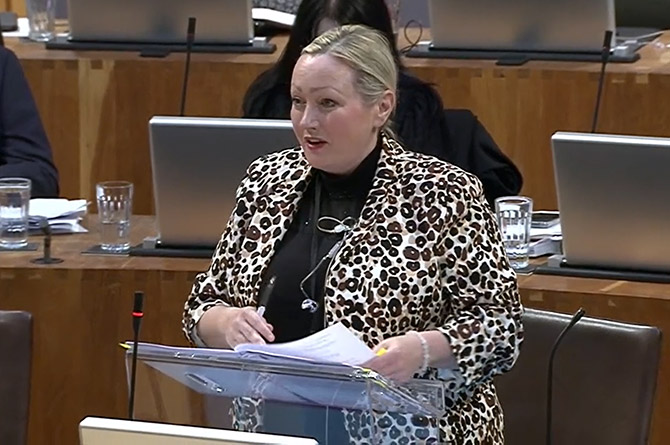
WALES’ economy secretary vowed to make speeding up planning decisions a top priority as part of a push towards clean energy.
Rebecca Evans committed to a sector deal with Wales’ renewable energy industry, which she said will include action to accelerate planning decisions and provide greater clarity.
Ms Evans warned council planning departments were “stripped back” due to austerity as she provided an update on the green economy to the Senedd on October 15.
She said: “For their part, I expect the sector to support our ambitions for local ownership and the development of skills and investment in our communities, including the environment.”
The economy secretary said the UK Government’s industrial strategy, unveiled on Monday, identified the role of green industries in driving economic growth.

Ms Evans also pointed to a Welsh Government consultation on implementing reforms aimed at streamlining the consenting process for major infrastructure projects.
She argued Wales is leading the way in establishing public energy companies, pointing to Trydan Gwyrdd Cymru and Ynni Cymru, which will develop projects and retain income.
The minister told the debating chamber that Wales has an onshore development pipeline of more than 5GW, and a further 18GW through fixed and floating offshore wind.
Ms Evans added that the Welsh Government will hold a consultation on carbon capture and storage technologies as well as hydrogen in the coming weeks.

She said: “Wales has its place in history using our natural resources to power the industrial revolution but we enter a new era where the power we need across our economy and wider society supports a new industrial transformation for our economy and our communities.”
Samuel Kurtz warned Wales is far from unlocking its potential for renewable energy.
The Conservatives’ shadow economy secretary said investors and developers are being held back by countless planning barriers.

He told the Senedd: “It is vital that these obstacles, like delays in consenting, planning, grid-capacity issues, skills shortages and supply-chain readiness are addressed swiftly.”
Ms Evans recognised grid infrastructure constraints, saying the first minister has made the case and the UK Government “absolutely does get that”.
Mr Kurtz also raised concerns about a skills shortage and urged the Welsh Government to “tear down” barriers for small businesses in the supply chain.
His Conservative colleague Paul Davies called on ministers to prioritise investment that leverage private sector funding to make Wales a global leader.
Luke Fletcher, Plaid Cymru’s shadow economy secretary, warned of history repeating itself.
“Wales is, once again, being cast in the role of resource provider,” he said.
“Wind, wave, land and sea bed are exploited while the financial gains and innovation returns are largely captured by external actors.”
Calling for more powers, Mr Fletcher pointed out that larger renewable energy projects that exceed 350MW remain outside of Welsh control.
He said the UK Government has roundly rejected calls to devolve the Crown Estate despite Welsh Labour’s support and powers already being given to Scotland.
Plaid Cymru leader Rhun ap Iorwerth expressed concerns about plans for solar farms in his Ynys Mon constituency covering thousands of acres of good agricultural land.
His predecessor Adam Price accused the UK Government of creating a narrative that projects must be large scale, swift and low cost regardless of other considerations.
Similarly, Jane Dodds, for the Liberal Democrats, called for investment in cable ploughing to avoid the use of pylons snaking through the countryside.
And Carolyn Thomas raised concerns about fossil fuel companies “greenwashing” as she criticised plans for a “massive” carbon dioxide pipeline from north Wales to Liverpool.
Alun Davies, a fellow Labour backbencher, warned it will be difficult for the Welsh Government to achieve any of its ambitions without devolution of the Crown Estate.
Calling for equitable treatment, he suggested some parts of Wales, such as his Blaenau Gwent constituency, have shouldered more responsibility for clean energy than others.


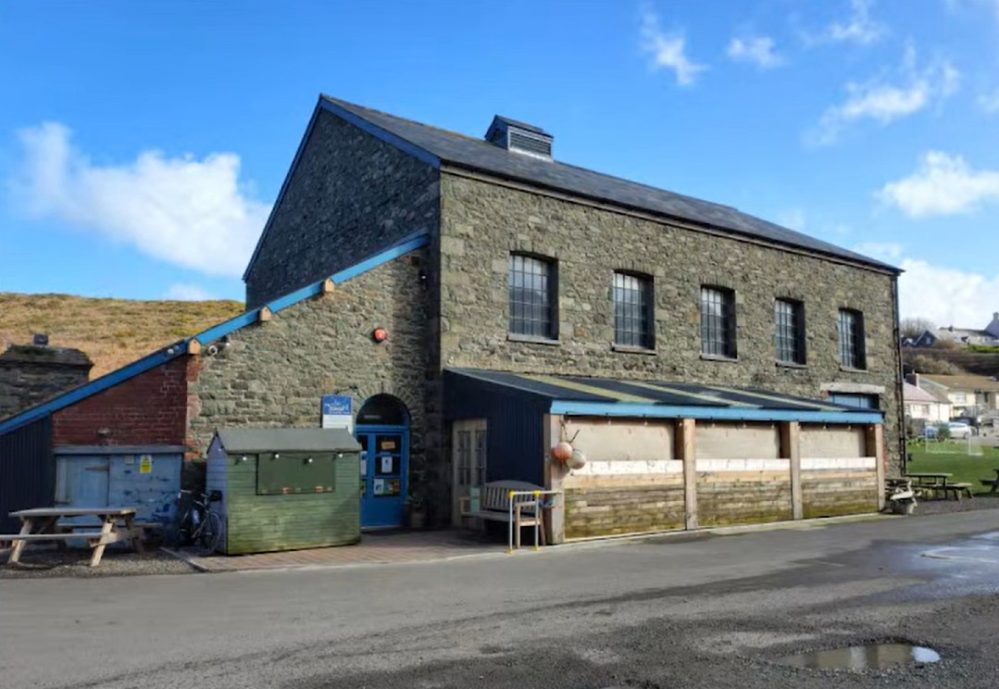
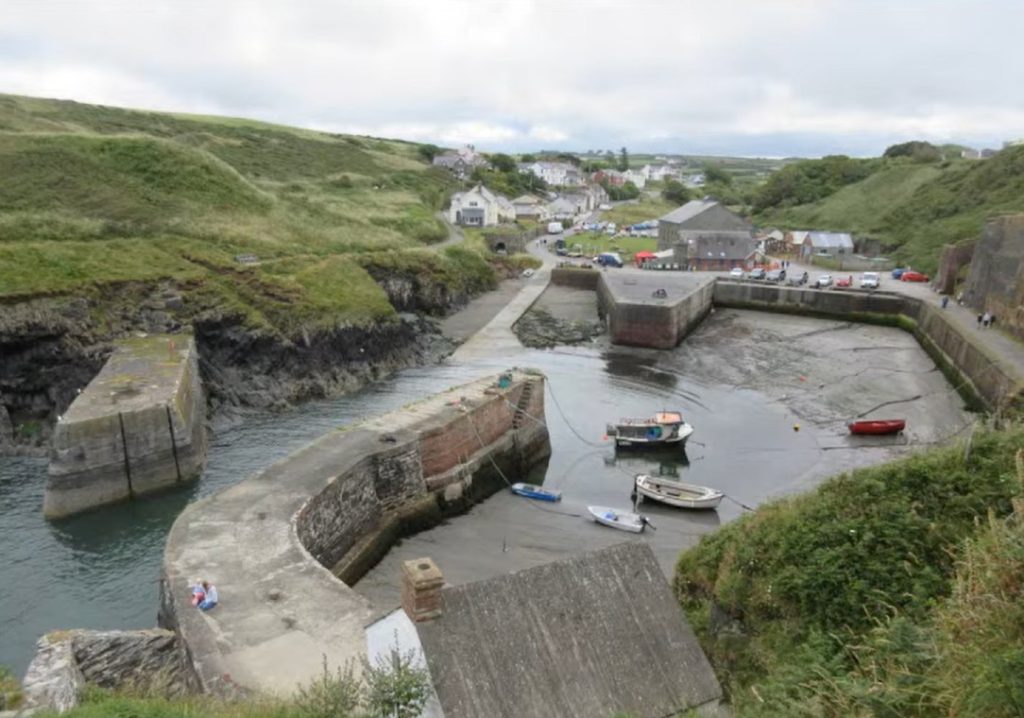
A CALL for works at a Pembrokeshire seaside tearoom, once the site of a Victorian brickworks machinery shed, has been given the go-ahead by national park planners.
In an application recommended for approval at the July meeting of Pembrokeshire Coast National Park’s development management committee, Caroline Jones sought permission to install solar panels to roof over an outside seating area at The Shed Tea Room, Porthgain.
The application, and a related listed building consent call, was for committee consideration as The Shed Tea Room forms part of Ty Mawr, a Grade-II-listed large stone-built former machinery shed owned by the national park itself.
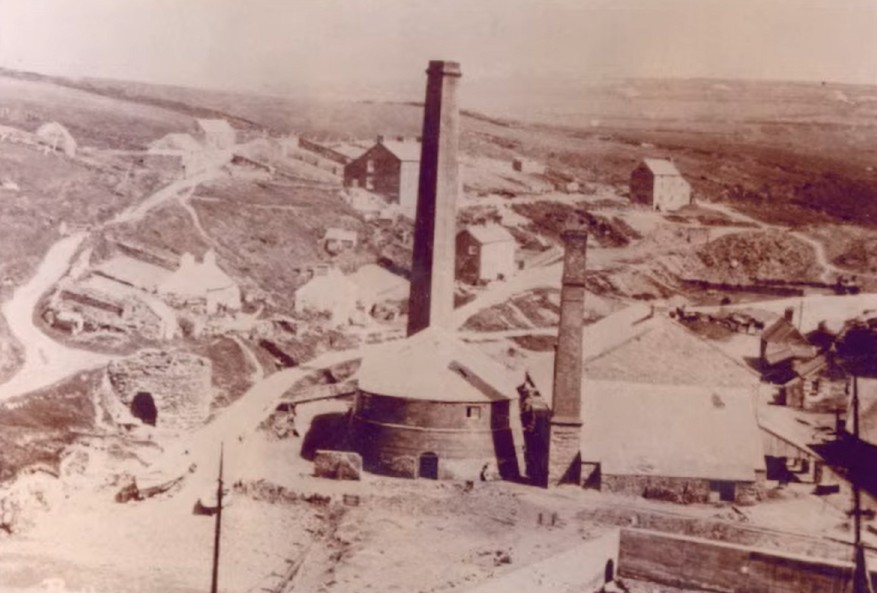
An officer report for members stated: “The Shed Tea Room is a lean-to structure at the west end of Ty-mawr, a Grade-II-listed large stone-built former machinery shed, built c. 1890 to serve Porthgain brickworks. The lean-to itself is built of a mixture of stone and brick, retaining the stump of the brickworks chimney.
“The Shed has been used for retail purposes since 1999, and as a tearoom and restaurant from 2001, after which roof-lights were inserted. The north-western section of the lean-to was incorporated after 2003, when the present timber windows were inserted.
“After 2007, a lean-to scullery was added at the north end, alongside the chimney stump, with a small, fenced compound beyond. The south-western lean-to was added in 2024. The proposal comprises the addition of solar PV panels to the south-western lean-to. The panels – twelve in total – are all-black and frameless. The panels are configurated in a single block covering the majority of the roof, surface mounted on corrugated steel sheeting.
“The scheme is in keeping with the character of the listed building, and its setting in terms of design and form. As such, the application can be supported subject to conditions.”
The recommendation of approval was moved by Cllr Di Clements, and unanimously backed by members; the related listed building consent also moved by Cllr Clements, and again unanimously backed.
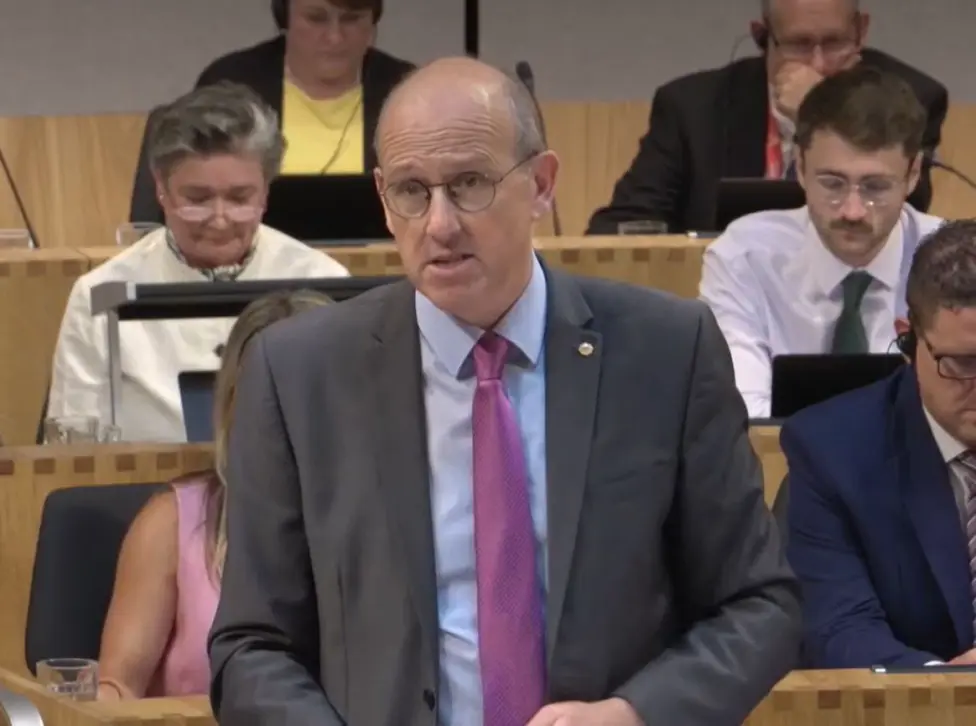
THE WELSH Government has no plans to force a reduction in livestock numbers to meet climate targets, the rural resilience minister has insisted.
Llyr Gruffydd said agriculture remains “central” to Wales’ rural economy following a clash in the Senedd over net-zero policies.
The minister was challenged by Reform’s Laura Anne Jones, who accused the administration of pursuing “left-wing ideological climate targets” at the expense of farmers.
Ms Jones, the shadow rural affairs minister, questioned whether the government would adopt independent recommendations to cut meat and dairy consumption.
The UK Climate Change Committee previously advised that meat consumption should drop by 25% by 2033, alongside a 27% reduction in cattle and sheep numbers by 2040 to hit net-zero goals by 2050.
Ms Jones said the UK Government had accepted the framework and called for clarity on whether Wales would follow suit.

Rejecting the claims, Mr Gruffydd said: “This government is clear that Wales needs a strong, sustainable and productive livestock sector.
“We want to see Welsh farmers producing high-quality food in a way that’s both economically and, yes, environmentally sustainable.”
The minister pointed to the upcoming Sustainable Farming Scheme as the primary vehicle to help farmers improve long-term resilience while maintaining food production standards.
He added that his long-term vision relied on boosting local production, processing, and procurement.
The row escalated when Ms Jones expressed surprise that the minister would not commit to the UK committee’s figures, citing an “obsession” with climate targets.
Responding to what he described as a “quip” about left-wing ideology, Mr Gruffydd said: “Your colleague two questions ago was asking me about heat in schools and the consequences of climate change and the need for air conditioning and improved infrastructure.

“Maybe you should talk to each other about where you stand on this, because I’m hearing very different messages coming from these sides, these benches over here.”

Labour MS, Vikki Howells reminded the Siambr of the work done by the previous Labour administration to protect nature in Wales.
Noting that the Welsh Labour government was the first in the world to formally recognise and declare a nature emergency in 2021, Ms Howells stressed the importance of policies and initiatives to help improve habitats and reverse biodiversity loss.
The Pontypridd Cynon Merthyr MS – who is also the Labour spokesperson for the environment and farming – discussed one of the last initiatives established by her party, Nature Estate Cymru.
She also referenced the Naturfa sites – places for nature recognised under a Welsh Government programme – four of which were announced at the end of the last Senedd term.
Ms Howells asked Mr Gruffydd for his assessment of the two schemes, and if he will commit to continuing them.
Admitting he is not yet “fully versed” on the two initiatives, Mr Gruffydd said he will write to Ms Howells with his reflections.
He added: “We do have an aspiration within our climate and nature action plan, which we’re working at and working on, that will hopefully meet and support some of the aspirations that those groups and herself, I’m sure, will share.”

Andrew RT Davies meanwhile told the Siambr that the Economy, Trade and Rural Affairs Committee has produced a report on governance at Hybu Cig Cymru.
The former Welsh Conservative leader noted one of it’s recommendations was that it should be “returned to the producers and actually be run by the producers and the levy payers”.
Mr Davies, who declared an interest as a levy payer himself, called for HCC to be returned to the levy payers.
He said this would promote “quality Welsh beef, lamb and pork on the world stage rather than paying solicitors and human resources advisers to deal with ludicrous accusations levelled against many individuals within that organisation”.
Mr Gruffydd confirmed he has met with the chief executive and the chair of Hybu Cig Cymru, saying they “know what [his] view is”.
He said: “I want a fully functioning, firing-on-all-cylinders Hybu Cig Cymru. I feel that under the new chief exec and the Vision 2030 strategy that’s been published recently, that they are now on a positive trajectory.
“I will be a critical friend of theirs, but I will support the work that they do, because I honestly think that they are the organisation to move us forward in this space.
“Levy payers’ voices are critical, of course they are, but we need to strike the right balance in terms of making sure that we have an organisation that is functioning, delivering.
“If we rip it up and start again, I fear we’ll do nothing but look at internal structures for time to come. I think we’re beyond the point now where we’re looking back. For me, it’s about looking forward and building Hybu Cig Cymru into what it could and should be.”
But Mr Davies accused the minister of failing to answer his question and pressed for clarification on whether he will allow levy payers to take ownership of HCC.
Mr Gruffydd responded: “Let’s not forget that the Welsh Government brings a lot to the table here as well. So, the Welsh Government has to be represented in the organisation. And I believe that they are on the right trajectory now.
“So, I don’t believe in changing the current structure. I will, of course, keep a watching brief on things as they develop.
“And I’ve spoken with NSA Cymru and others on a myriad of issues around this. But I’ve also spoken to the people running HCC, leading HCC, and they are giving me confidence that they are on the right track and I will support them.”


The Llŷr project could see up to ten floating turbines installed 35km off the coast, with power brought ashore at Freshwater West
A MARINE licence has been granted for a floating offshore wind demonstration project off the Pembrokeshire coast.
Natural Resources Wales has approved the licence for Llŷr Floating Wind Limited, allowing the Llŷr Floating Offshore Wind Farm Project to move forward.
The test and demonstration facility is proposed around 35km off the Pembrokeshire coast, off Linney Head, and is among the first demonstration-scale floating wind projects in Wales.
The scheme could include up to ten turbines, each reaching up to 300 metres above sea level, together with floating platforms, mooring lines and anchors.
Up to two offshore export cables, around 50km in length, are planned to bring electricity ashore at Freshwater West.
Ruth Jenkins, Head of Planning and Permitting Services and Marine Operations at Natural Resources Wales, said the organisation had a role to play in supporting the move towards clean energy while ensuring projects were developed responsibly.
She said: “At Natural Resources Wales, we have a unique opportunity to tackle the climate emergency across a range of sectors and industries. This includes using our licensing powers to support Wales’s transition to clean energy.
“As a regulator and advisor, we ensure energy projects are developed sustainably and with respect for the environment and local communities. At the same time, we play a vital role in enabling innovation in green energy, helping projects move forward safely and responsibly.
“Wales has enormous potential as a leader in renewable energy, and we’re committed to supporting the benefits that can come from these projects as we move towards net-zero targets.”
Natural Resources Wales is the Marine Licensing Authority on behalf of Welsh Ministers.
Full details of the marine licence granted for the Llŷr Floating Offshore Wind Farm Project are available on the NRW public register.



Crime9 hours ago
Murder investigation launched into death of Pembrokeshire man in 1991
A 67-YEAR-OLD man has been arrested on suspicion of murder after new potential evidence emerged in connection with a death...


Community13 hours ago
‘Paying £29 to reach a cashpoint is absurd’: Narberth’s urgent ATM appeal
Residents, businesses and visitors are being urged to provide evidence after two High Street cash machines were removed, leaving the...


Crime1 day ago
Haverfordwest man jailed for seven years for historic rape and sexual assault of girl
A HAVERFORDWEST man has been jailed for seven years after being convicted of raping and indecently assaulting a girl during...


News1 day ago
Burnham more willing to listen on Welsh devolution, says First Minister
Rhun ap Iorwerth says he will press the new Prime Minister for powers over policing, railways and Wales’ natural resources...


Crime2 days ago
Women jailed after man chased through Milford home and attacked with knives
Kelly Rees receives further 27-month sentence while already serving prison term for notorious taxi robbery TWO women have been jailed...


Crime2 days ago
Mother headbutted and clawed police officers after threatening social worker
Court shown body-worn footage of violent confrontation at Goodwick property A COURT has been shown police body-worn footage capturing the...


Crime2 days ago
Man, 37, found dead following major police response in Pembroke Dock
Death not being treated as suspicious as police make statutory referral to IOPC following active investigation A 37-YEAR-OLD man has...


Community3 days ago
Household Cavalry drum horse returns home to Pembrokeshire for final farewell
Dyfed Willa Rose, who became Major Juno and the first mare to serve as a Household Cavalry Drum Horse, was...

News3 days ago
Jo Stevens out as Welsh Secretary as Burnham reshapes government
Cardiff East MP repeatedly visited Pembrokeshire to champion clean energy jobs, but her successor inherits unresolved questions over Milford Haven’s...


Crime3 days ago
Teen cleared of attempted murder but guilty of GBH after Milford teacher stabbed
Jury returns 11-1 majority verdict on charge of causing grievous bodily harm with intent, with sentencing set for September 3...
-

 Crime2 days ago
Drunken rail passenger tried to headbutt police after being refused travel
-
Crime2 days ago
Women jailed after man chased through Milford home and attacked with knives
-
News1 day ago
Burnham more willing to listen on Welsh devolution, says First Minister
-
Crime1 day ago
Haverfordwest man jailed for seven years for historic rape and sexual assault of girl
-
Crime2 days ago
Mother headbutted and clawed police officers after threatening social worker
-

 Community2 days ago
Senior councillors to consider call for ‘impartial investigation’ into Manorbier school closure
-

 Entertainment2 days ago
Aerial circus show exploring identity and belonging comes to Torch Theatre
-
 Community1 day ago
£447,000 investment to train next generation of planners in Wales