


Health
Calls for ‘Owain’s law’ to aid brain tumour treatment


SENEDD Members called for Owain’s law, in memory of a young father, to ensure a gold-standard approach to preserving human tissue for other cancer patients in future.
Hefin David led a debate on a cross-party motion on July 2 calling for a law named after his Caerphilly constituent Owain James, who sadly died last year.
He said: “Owain was only 34 years old when he was diagnosed with a 14cm, malignant, grade-four brain tumour in his right frontal lobe. His neurosurgeon said it was one of the biggest tumours she’d ever come across in her professional career.
“It was an absolutely devastating blow to Owain, his wife Ellie, who is in the public gallery today, and his daughter Amelia, who at the time was only 18 months old. Until then, Owain had always been a fit and healthy young man.”
Dr David said the family turned to private treatment and found a personalised vaccine that used a patient’s tumour tissue to educate the immune system to recognise cancerous cells.

He told the Senedd: “The problem here, however, was that Owain needed fresh frozen tumour tissue to develop a sufficient dose of the vaccine. Owain had had 7cm of tissue surgically removed but, unfortunately, only 1cm of this was fresh frozen and could be used.”
The Caerphilly Senedd Member explained Owain only had three doses of vaccine when it should have been more like 30 doses, but he initially made a remarkable recovery.
“Unfortunately, metastasis caused his tumour to recur elsewhere,” he said. “This time, the tumour was too aggressive and Owain sadly passed away in June 2024.

“Ellie, 35 years of age, now lives with the regret that they were only able to develop and obtain enough doses for those three vaccines.

“Had there been more, we feel that Owain would still be alive today.”
Dr David said fresh frozen tissue is regarded as the gold-standard approach and can be used for vaccines, therapies, research and genome sequencing.
He explained: “This kind of use, though, can only be done when the tumour is fresh frozen, which it wasn’t in Owain’s case. Owain’s law seeks to address this. It seeks to make this the default process for storing surgically removed tissue in Wales.”


Plaid Cymru’s Peredur Owen Griffiths, who represents South Wales East, said: “My mother also died from a brain tumour, so it’s an issue that is deeply personal for me.
“Brain tumours remain the biggest cancer killer of children and adults under 40, yet they receive just one per cent of national cancer research funding.
“Families like mine and Owain’s are let down not only by research but also by how precious tumour tissue is managed. Owain’s law will enshrine a vital principle that patients and families must be fully informed and able to consent.”

Mr Owen Griffiths added: “This is more than a technical protocol. This is a matter of dignity, respect and hope for families facing devastating diagnoses.”
The Conservatives’ Altaf Hussain, a former surgeon, supported Owain’s law but emphasised the importance of accommodations for religious preferences.
Mabon ap Gwynfor, Plaid Cymru’s shadow health secretary, expressed concerns about long waits before receiving a diagnosis and a lack of diagnostic machines such as scanners.
Mr ap Gwynfor told the Senedd: “Even after receiving a diagnosis, we have a lack of specialist treatment centres – with far too many of our patients having to travel very long distances at times of weakness to receive their treatment.”
Backing Owain’s law, he said: “This proposal does reflect two core principles at the heart of our NHS. The first is that the NHS belongs to the public…. Second, it’s the voice of the patient, their concerns, their views, that should be at the heart of every decision made.”
Jeremy Miles, for the Welsh Government, stressed the need to proceed with care and warned a legal requirement to freeze all brain tumour tissue risks unintended consequences.
Wales’ health secretary said: “Clinical teams already use their expert judgment to balance diagnostic needs with the potential for research and novel therapies.
“Overriding that clinical discretion through legislation could compromise timely diagnosis or create conflict where tissue volume is limited, which is why the government does not believe that the case is made for legislation.”

While the non-binding motion was agreed unanimously, Owain’s law is unlikely to proceed without Welsh ministers’ full support. But Dr David argued the UK and other countries will eventually introduce such a law as the availability of tissue becomes key to treatment.
Closing the debate, he said: “Let’s remember Owain for everything he’s done today. Even in his passing, he’s contributed to the debate on keeping patients alive for longer.”



Welsh businesses, universities and NHS organisations will be able to develop new technologies and partnerships through the Horizon Europe programme
WALES has secured more than £700,000 in European funding to support the development of new digital healthcare technologies.
The Welsh Government has joined the UNITE European Digital Health Valleys project, marking what ministers say is Wales’ first European Union grant agreement since Brexit.
The funding has been awarded through Horizon Europe, the EU’s main research and innovation programme, which the UK formally rejoined as an associated country in 2024.
Welsh businesses, universities, health boards and innovation organisations will be encouraged to work with partners across Europe to design, test and introduce new digital healthcare products and services.
The programme will focus on major challenges facing health services across Europe, including ageing populations, staff shortages and increasing pressure on frontline services.
Organisations in Wales are now being urged to begin developing potential projects and establishing international partnerships ahead of future funding opportunities.
Cabinet Minister for Enterprise, Connectivity and Energy Adam Price said the agreement would support economic growth while helping NHS Wales adopt new technologies.
He said innovation-led growth, stronger international relationships and improvements to public services were central to the Welsh Government’s economic productivity plans.
Mr Price said: “This major initiative will deliver on all those fronts, with a focus on addressing shared healthcare challenges such as the needs of ageing populations and workforce pressures by connecting industry, healthcare providers, academia and the public sector.”
UNITE brings together regions from across Europe with the aim of creating a connected digital health ecosystem.
The network will allow technology companies, healthcare providers, universities and public bodies to collaborate on the development and deployment of new systems.
As a partner region, Wales will gain access to digital health organisations and potential research partners across Europe.

Ministers believe this could help Welsh organisations compete for further research and development funding while strengthening the country’s position within the international digital health market.
Mr Price added: “As a UNITE partner region, Wales will play a central role in shaping a new digital health innovation ecosystem and gain access to a network of European digital health regions.
“This will open up new opportunities for our most innovative sector organisations to collaborate internationally and access funding.
“Crucially, this will support the adoption of innovative solutions for NHS Wales while strengthening Wales’ position in the global digital health market.”
A free webinar explaining the programme and future opportunities will be held on Thursday, September 3.
Businesses and organisations can also seek further advice through Business Wales.

Annual report, finances and patient experiences will be discussed during online meetings on July 30
THE WELSH AMBULANCE SERVICE is inviting members of the public to attend its Annual General Meeting and bi-monthly Board meeting later this month.
The AGM will be held online via Microsoft Teams on Thursday, July 30, from 9.30am until 10.45am.
Members of the Board will provide updates on the Trust’s performance and financial position, as well as discussing its annual report and accounts for 2025/26.
There will also be an opportunity for stakeholders and members of the public to submit questions.
Colin Dennis, Chair of the Welsh Ambulance Service, said: “Our AGM is an important opportunity to reflect on the achievements and progress of the past year and the impact these have had on our services.
“This includes transforming the way we deliver services to provide patients with the right advice and care, in the right place, every time.
“It also gives us the chance to look ahead, share our vision for the future and explain the actions we are taking to achieve it.”
Questions can be submitted during the AGM using the Microsoft Teams Q&A function.
Alternatively, questions can be sent in advance by emailing [email protected] before Wednesday, July 29.
The Trust’s bi-monthly Board meeting will take place immediately after the AGM, beginning at 11am.
During the meeting, Board members will hear the findings of the Good Governance Institute’s recent external review of the Trust Board’s effectiveness.
They will also hear from Lucy Burrows, whose young son lives with a range of physical and neurodiverse conditions.
Ms Burrows will speak about her family’s experience of the patient-centred care provided by an attending Emergency Medical Service crew.
An agenda for the Board meeting is expected to be published on the Welsh Ambulance Service’s website shortly.
Questions for the Board can also be submitted in advance by emailing [email protected] by Wednesday, July 29.
The Microsoft Teams links for both meetings will become active around ten minutes before each meeting begins.
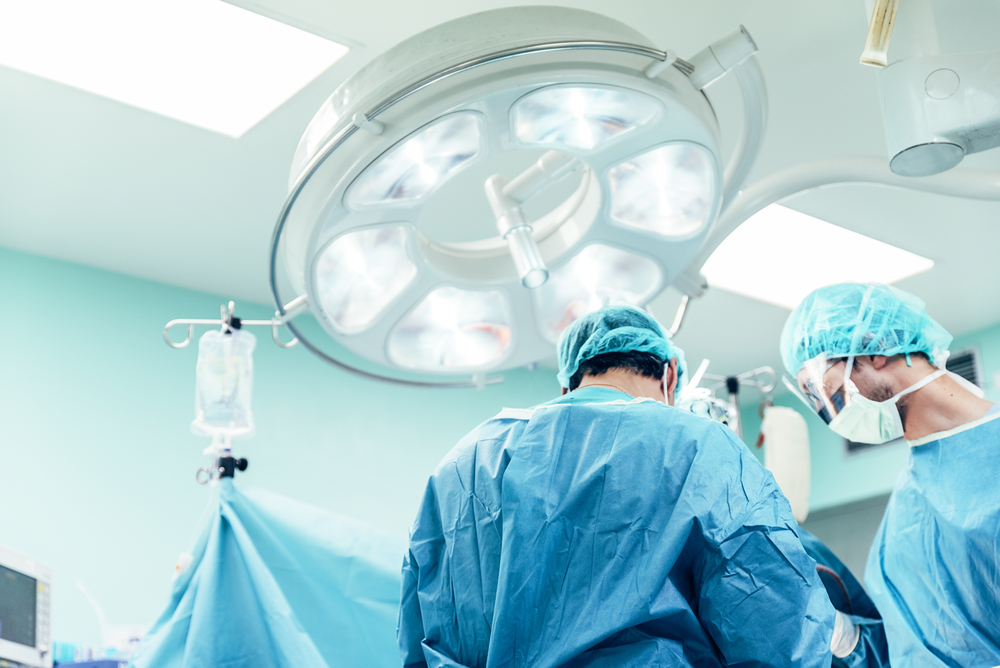
Health board says it is increasing capacity after figures revealed hip replacement patients waited an average of 64 weeks
HYWEL DDA UNIVERSITY HEALTH BOARD has appointed two additional surgeons as part of efforts to reduce lengthy waits for orthopaedic treatment across west Wales.
The health board confirmed the appointments after figures revealed that patients undergoing elective hip replacement surgery waited an average of 450 days during the 2025/26 financial year.
That is equivalent to more than 64 weeks from referral to treatment.
As of May 28, 2026, a total of 1,608 patients were on Hywel Dda’s waiting list for hip replacement surgery.
Sixteen patients were also removed from the list during the financial year after deciding to undergo private treatment.
Responding to questions from The Herald, Gareth Cottrell, Deputy Chief Operating Officer at Hywel Dda University Health Board, acknowledged the effect prolonged waits were having on patients.
He said: “The current national delivery expectation for health boards in Wales is to treat orthopaedic patients within a maximum of 104 weeks from the point of referral to treatment.
“In recent years, waiting times for orthopaedic treatment in Hywel Dda have been among the lowest of any health board in Wales, but we recognise that waiting times remain too long and the impact these have on our patients while awaiting the treatment they need.”
The health board said it continued to maintain dedicated ward and theatre capacity for elective orthopaedic procedures at Prince Philip Hospital in Llanelli and Bronglais Hospital in Aberystwyth.
Day-case surgery is also being carried out at units across Hywel Dda’s hospital sites.
Mr Cottrell said: “We remain committed to improving waiting times and are working closely with our regional health board partners to maximise the treatment capacity we can offer patients across the wider South West Wales area.
“During the past year, we have appointed two additional surgeons to support our continuing efforts to reduce waiting times.”

The health board did not provide details of where the new surgeons would be based, how many additional operations they were expected to carry out or when patients would begin to see a significant reduction in waiting times.
Plans to expand orthopaedic capacity also formed part of Hywel Dda’s Clinical Services Plan consultation.
Mr Cottrell added: “Improving our orthopaedic services has also been a key part of our Clinical Services Plan that we consulted upon last year, with plans being developed to increase capacity and help more patients access the care they need.”
Hip replacements are commonly offered to patients suffering severe pain, stiffness and loss of mobility after other treatments, including physiotherapy, medication and injections, have failed to provide sufficient relief.
Lengthy waits can leave patients struggling with worsening pain, disturbed sleep and a loss of independence, while some may be forced to reduce their working hours or leave employment.
The waiting-time figures were obtained through a Freedom of Information request submitted by healthcare marketplace My Medical Gateway.
The company said the health board returned its response on June 8, 2026.


Crime13 hours ago
Haverfordwest man jailed for seven years for historic rape and sexual assault of girl
A HAVERFORDWEST man has been jailed for seven years after being convicted of raping and indecently assaulting a girl during...


News18 hours ago
Burnham more willing to listen on Welsh devolution, says First Minister
Rhun ap Iorwerth says he will press the new Prime Minister for powers over policing, railways and Wales’ natural resources...


Crime22 hours ago
Women jailed after man chased through Milford home and attacked with knives
Kelly Rees receives further 27-month sentence while already serving prison term for notorious taxi robbery TWO women have been jailed...


Crime23 hours ago
Mother headbutted and clawed police officers after threatening social worker
Court shown body-worn footage of violent confrontation at Goodwick property A COURT has been shown police body-worn footage capturing the...


Crime2 days ago
Man, 37, found dead following major police response in Pembroke Dock
Death not being treated as suspicious as police make statutory referral to IOPC following active investigation A 37-YEAR-OLD man has...


Community2 days ago
Household Cavalry drum horse returns home to Pembrokeshire for final farewell
Dyfed Willa Rose, who became Major Juno and the first mare to serve as a Household Cavalry Drum Horse, was...


News3 days ago
Jo Stevens out as Welsh Secretary as Burnham reshapes government
Cardiff East MP repeatedly visited Pembrokeshire to champion clean energy jobs, but her successor inherits unresolved questions over Milford Haven’s...


Crime3 days ago
Teen cleared of attempted murder but guilty of GBH after Milford teacher stabbed
Jury returns 11-1 majority verdict on charge of causing grievous bodily harm with intent, with sentencing set for September 3...


Community3 days ago
French troops march through Fishguard as Britain’s last invasion returns to life
Battle scenes, cavalry displays and a surrender procession brought one of Pembrokeshire’s most extraordinary stories back to the streets MUSKET...
News3 days ago
Andy Burnham promises new politics as he enters Downing Street
New Prime Minister admits politicians have “not been good enough” as he sets out a ten-year plan for Britain and...
-

 Crime23 hours ago
Drunken rail passenger tried to headbutt police after being refused travel
-

 featured2 days ago
From a father-and-son project to an award-winning campervan business
-
Crime22 hours ago
Women jailed after man chased through Milford home and attacked with knives
-
Community2 days ago
Household Cavalry drum horse returns home to Pembrokeshire for final farewell
-
News18 hours ago
Burnham more willing to listen on Welsh devolution, says First Minister
-

 Entertainment2 days ago
Robin Hood: A magical show by young talent at The Torch Theatre
-
Crime13 hours ago
Haverfordwest man jailed for seven years for historic rape and sexual assault of girl
-
Crime23 hours ago
Mother headbutted and clawed police officers after threatening social worker