


Local Government
Council to promote career opportunities at Pembrokeshire County Show


PEMBROKESHIRE COUNTY COUNCIL will be using this year’s Pembrokeshire County Show to highlight the wide range of career opportunities within the Authority.
The two-day event, taking place on Wednesday 20 and Thursday 21 August, will see the Council take a fresh approach – using the show as a platform to showcase hard-to-fill roles, promote the support available to staff, and highlight the opportunities for career progression.
Visitors to the Council’s marquee will be able to meet Cabinet Members and the Chief Executive, as well as learn about key projects across the county. These include the redevelopment of Haverfordwest Castle and a consultation event with Town and Community Councils.
The Council’s stand will be located in Zone A (pitch 9), opposite the show jumping and equestrian rings.
Assistant Chief Executive Richard Brown said: “Our teams are excited about meeting visitors and having the opportunity to demonstrate what they do – and to highlight the wide range of career opportunities we have to offer.

“The County Show is the perfect place to celebrate our local produce, meet new and old friends, and showcase the transformational projects which will improve the lives of our communities and visitors.”
Cllr Paul Miller, Deputy Leader, added: “The County Show is a well-loved and important celebration of rural life in Pembrokeshire, and we are delighted to be part of it once again. Our staff and members will be chatting to people from across the county – please drop into our stand and say hello.”
For more information on the Council’s presence at the show, visit: www.facebook.com/PembrokeshireCountyCouncil

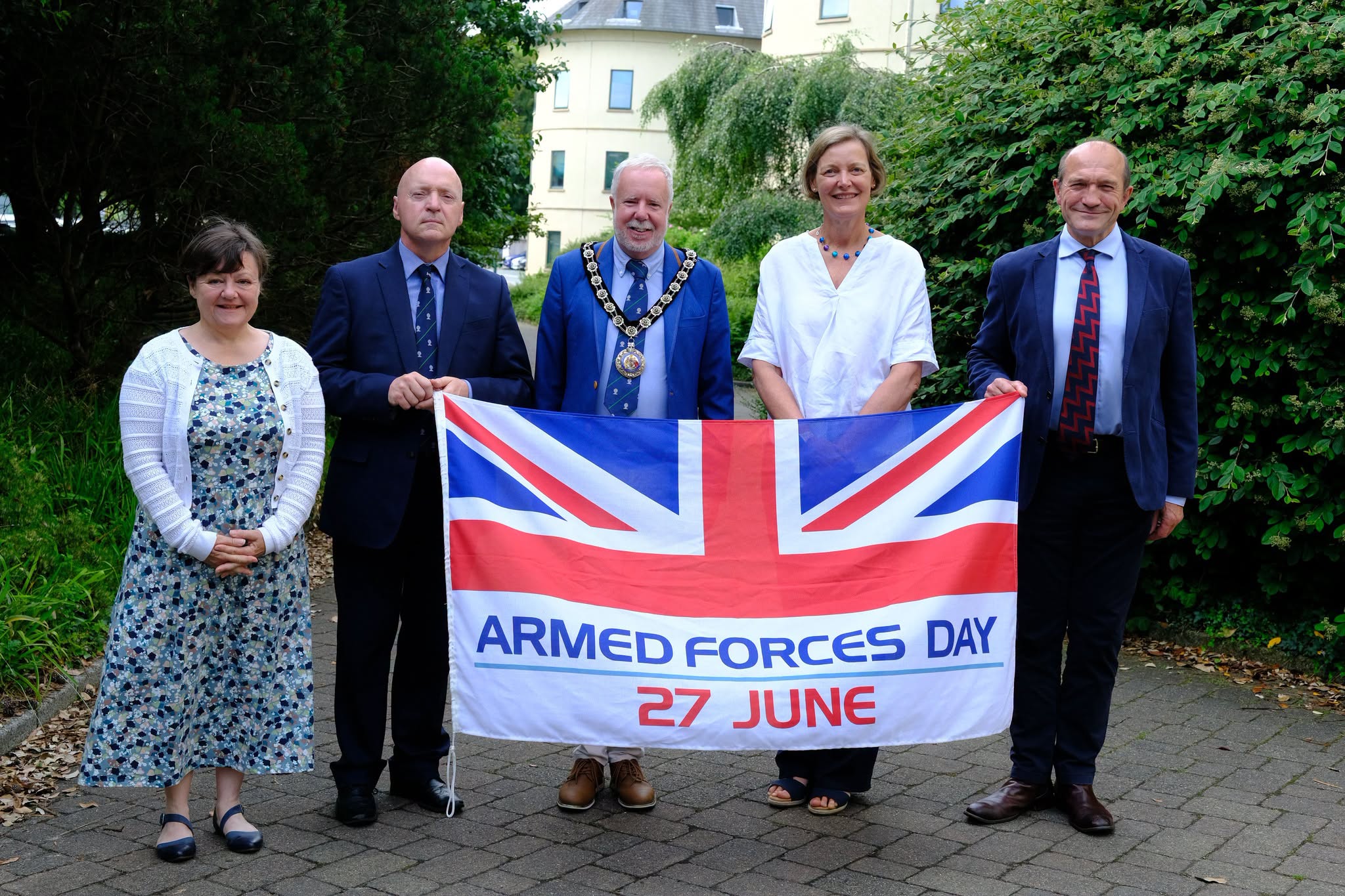
THE ARMED FORCES flag is flying proudly at County Hall this week ahead of Armed Forces Day on Saturday, June 27.
Leader of Pembrokeshire County Council, Cllr Tessa Hodgson, and the Council’s Armed Forces Champion, Cllr Simon Hancock were among those who marked the flag raising on Monday morning (June 22).
Also present were the Chairman of Council, Cllr Delme Harries, the Chief Executive, Will Bramble and the Regional Armed Forces Covenant Liaison Officer, Hayley Edwards.
Cllr Hancock said: “It is always a very proud moment to see the Armed Forces Flag flying over County Hall.
“Armed Forces Day is a chance to show our deep appreciation for the men and women who serve, as well as the families and communities who support them.
“Our county has a rich history of connection with the Armed Forces, and we are proud to uphold and strengthen that bond.
“As a Council we are committed to ensuring that members of the Armed Forces community in Pembrokeshire receive the recognition and support they truly deserve and we are proud to be a Defence Employer Recognition Scheme Gold Award holder.”
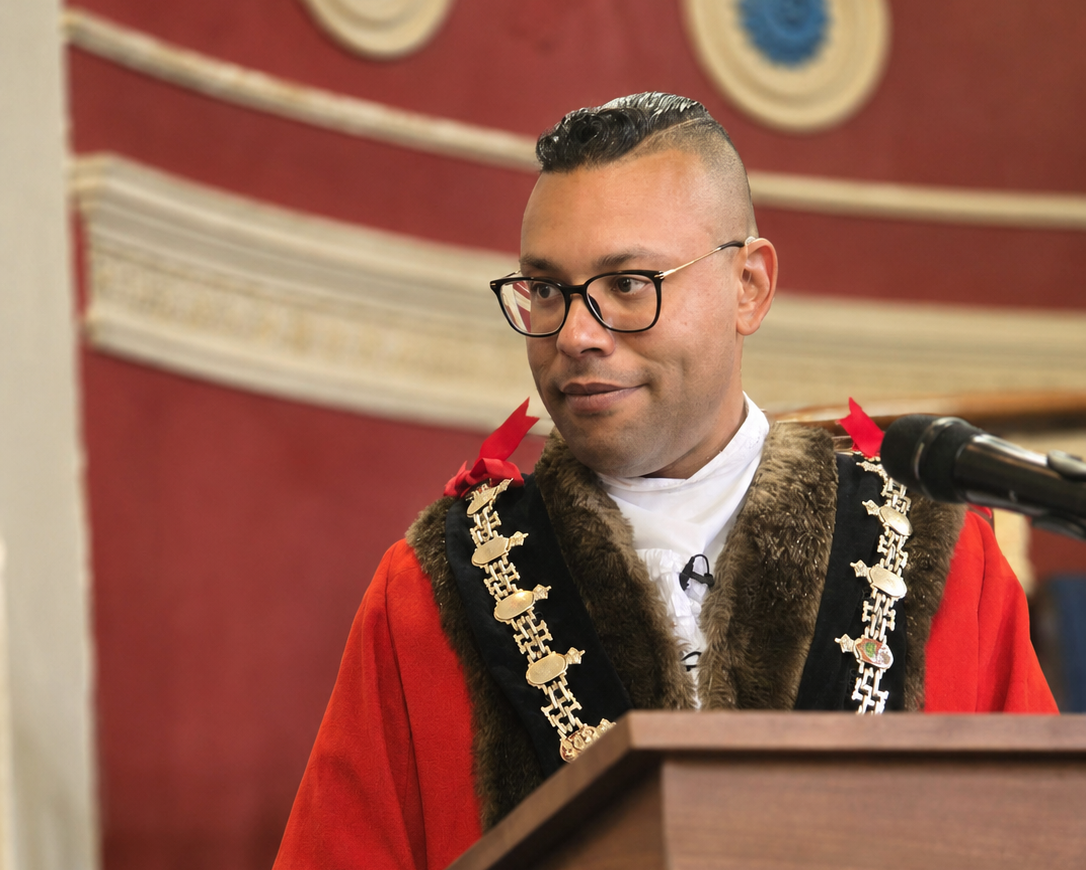
HAVERFORDWEST residents will have the chance to raise ideas, concerns and local issues directly with the town’s mayor this week.
Cllr Randell Izaiah Thomas-Turner will hold a Talk to Your Mayor session on Thursday, from 12:00pm until 2:00pm.
The initiative is aimed at giving residents an opportunity to speak directly with the mayor about matters affecting the town and wider community.
Cllr Thomas-Turner said communication and engagement were “vital”, adding that the session was about listening to local people, working together, and ensuring every voice had the opportunity to be heard.
Anyone wishing to book an appointment is asked to contact the Haverfordwest Town Council town clerk.
The mayor said: “Together, we can continue building a stronger and more connected community. Together we can make Haverfordwest the best in the west.”

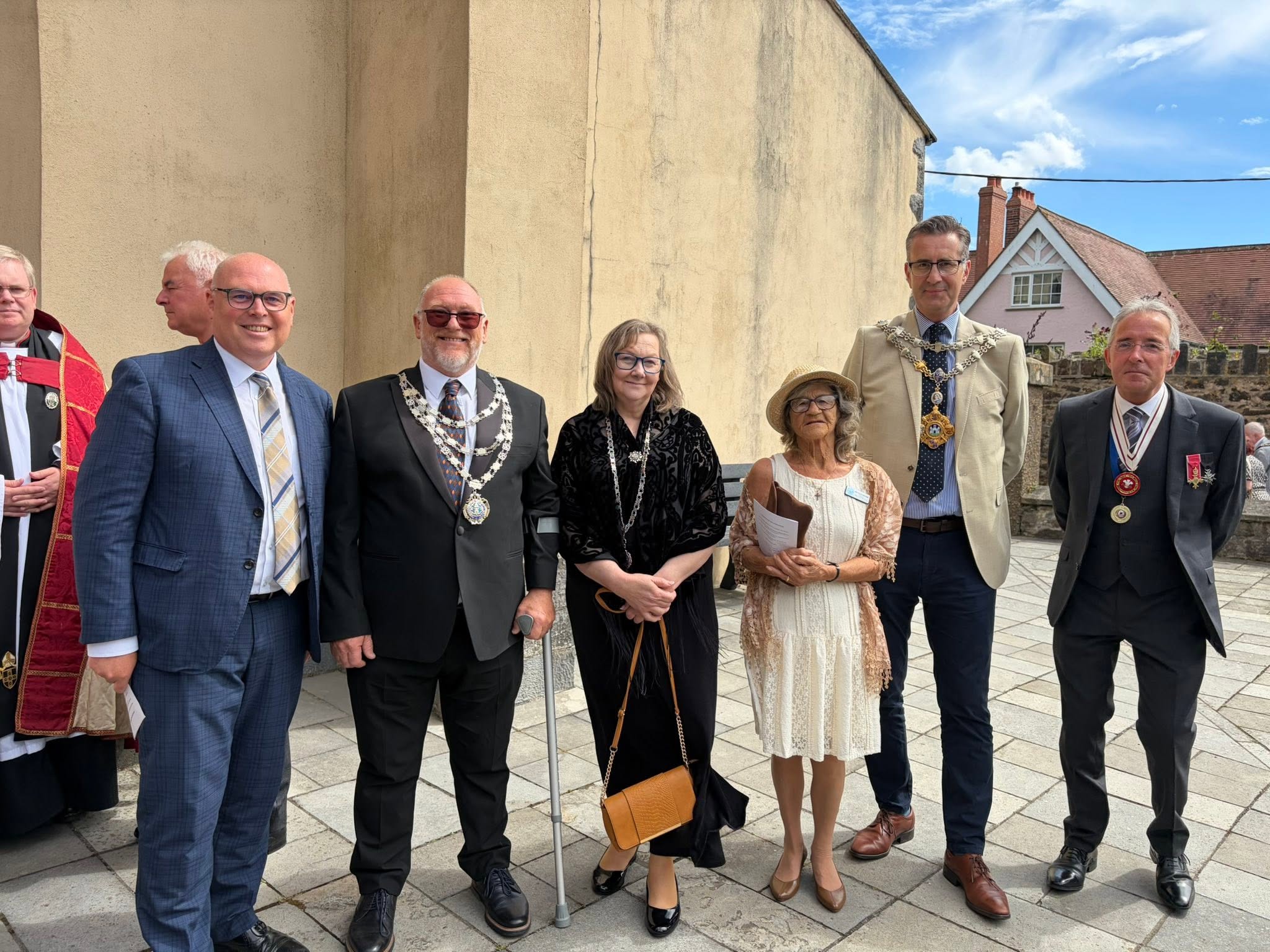
Mayor’s charities named as civic leaders gather at St Katharine and St Peter’s Church
THE CIVIC SERVICE of the Mayor of Milford Haven, Cllr Mark Woodward, took place at St Katharine and St Peter’s Church on Saturday (June 20).
The service marked Cllr Woodward’s election as Mayor and First Citizen of Milford Haven.
It was conducted by Rev Dr Adrian Furse and Canon John Cecil, with music from church organist Richard Stephens, Gelliswick Community Choir and Milford Haven Town Band.
Guides and Brownies, Milford Haven Sea Cadets and Royal Marines Cadets were also among those taking part, with councillors Colin Sharp and Yvonne Southwell acting as ushers.
Refreshments followed at Milford Haven Bowling Club.
Local MS Paul Davies was among those attending the service and wished the new mayor all the best for his term in office.
Cllr Woodward’s chosen charities for the year are Patch Charity and Greenacres Rescue.
Photo caption:
Civic guests attended the Mayor of Milford Haven’s service at St Katharine and St Peter’s Church on Saturday (Pic: Supplied)



News6 hours ago
Bus overturns in major incident near Kidwelly
All passengers rescued as emergency services remain at scene A BUS overturned on the A484 between Kidwelly and Ferryside on...


Community1 day ago
Tenby Summer Spectacular cancelled amid council row over harbour access
Organisers say popular charity events cannot safely go ahead without clear powers to control crowds TENBY ROUND TABLE has announced...


News1 day ago
Motorcyclist dies after four-vehicle crash on A40 in Carmarthenshire
A MOTORCYCLIST has died following a four-vehicle collision on the A40 between St Clears and Whitland. Dyfed-Powys Police said the...


News1 day ago
Rhun ap Iorwerth urges new deal for Wales after Starmer quits
First Minister says next Prime Minister must focus on greater powers, fair funding and respect for Wales’ democratic mandate FIRST...


News1 day ago
How Labour’s landslide victory unravelled in just two years
Prime Minister announces resignation after losing support within his own party as Andy Burnham emerges as overwhelming favourite to take...


News2 days ago
Long Course Weekend set to bring thousands to Pembrokeshire
Three days of swimming, cycling and running will once again transform Tenby into one of the UK’s biggest endurance sporting...


Community2 days ago
The gentle giant behind the tattoos
Pembrokeshire security worker Josh Davies praised for professionalism, kindness and proving first impressions can be wrong JOSH Davies is hard...


Charity3 days ago
Toy Story fans fill charity toy box at Haverfordwest cinema
Donations pour in for SNAP Specialist Play as families embrace Toy Story 5 launch A TOY STORY-themed charity appeal at...


Community3 days ago
Lord Rhys emerges from the mist in St Davids
Giant puppet begins historic journey marking 850 years since the first Eisteddfod MIST swirled around St Davids Cathedral on Friday...


News4 days ago
Tragic tribute paid to Haverfordwest man after A4075 collision
FAMILY REMEMBERS “KIND AND LOVING” CALLUM HANSON THE FAMILY of a 22-year-old man from Haverfordwest who died following a road...
-

 Crime5 days ago
Milford Haven man jailed for breaching domestic violence protection order
-

 News5 days ago
Crash on Freeman’s Way causes school-run chaos across Haverfordwest
-

 Crime7 days ago
Man wanted by court after failing to attend hearing over alleged shop thefts
-
 Crime7 days ago
Man banned from roads after drink-driving offence
-

 Crime7 days ago
Man jailed after admitting strangulation and assaults
-

 Crime7 days ago
Drug trafficker must repay £33,000 after court rules he made nearly £500,000
-

 Crime7 days ago
Man sentenced over stalking campaign and lock knife offence
-

 Health3 days ago
Woman jailed assaults on police, harassment and XL Bully possession