


Health
Air quality scheme in Pembroke and Haverfordwest areas could be ended


A PUBLIC consultation which could lead to the ending of an air quality management scheme in Pembroke and Haverfordwest, brought in after high levels of pollution were recorded back in 2012, has been backed.
At the Pembrokeshire County Council Cabinet meeting of January 12, members were recommended to support a six-week public consultation on the proposal to revoke the Haverfordwest and Pembroke Air Quality Management Areas (AQMAs).
A report for members ahead of the meeting, presented by Cabinet Member for Planning & Regulatory Services Cllr Jacob Williams said: “In 2012, Pembrokeshire County Council identified that concentrations of nitrogen dioxide (NO₂) were exceeding the national annual mean objective within certain areas of Pembroke (specifically along Main Street) and within sections of Haverfordwest’s main commercial streets.
“The elevated concentrations were attributed primarily to road traffic emissions, particularly in narrow streets where vehicle emissions were less effectively dispersed. Although the number of exceedances was limited, the council had a statutory duty under Part IV of the Environment Act 1995 to take action to achieve and maintain compliance with national air quality objectives.
“Consequently, as a precautionary measure, Pembrokeshire County Council formally designated these areas as Air Quality Management Areas (AQMAs).”

It added: “To support the AQMA designations, a comprehensive local monitoring network was established, comprising 48 diffusion tube monitoring stations across both Haverfordwest and Pembroke. Each diffusion tube is tested and replaced on a monthly basis, providing a continuous dataset on ambient nitrogen dioxide (NO₂) concentrations to track progress and assess the effectiveness of implemented measures.
“Over several years, measured NO₂ levels have shown a consistent downward trend, reflecting the effectiveness of local emission reduction measures and broader improvements in vehicle technology and fleet composition.”
It says monitoring over the last three years has shown levels to be below national objective and precautionary threshold levels, adding: “On the basis of this sustained compliance and the clear evidence of air quality improvement, Pembrokeshire County Council proposes to revoke both the Haverfordwest and Pembroke AQMAs.”
It stressed: “Although the statutory Air Quality Management Area (AQMA) designations for Haverfordwest and Pembroke have been proposed for revocation; Pembrokeshire County Council will continue to undertake air quality monitoring to ensure that standards are consistently maintained and that public health remains protected.”

Cllr Alistair Cameron said: “This is a good news story, it’s so important for people to breathe good quality air in Pembroke and Haverfordwest.”
He was joined by Leader Cllr Jon Harvey, who represents Pembroke St Mary North, who said: “Modern vehicles are less pollutive than previous ones, it’s a good news story.”



ALMOST 50,000 people in Wales are living with dementia, but new research suggests the condition is placing a heavy emotional, financial and practical strain on families and unpaid carers.
Alzheimer’s Society Cymru said the impact of dementia stretches far beyond those diagnosed, with many relatives carrying the burden quietly behind closed doors.
A UK-wide survey of more than 2,000 people, carried out for the charity’s annual Forget Me Not Appeal, found that 61 per cent of people in Wales say dementia affects their day-to-day life.
The research also found that 48 per cent of carers in Wales said supporting someone with dementia had negatively affected their mental health.
Across the UK, 56 per cent of carers said caring had damaged their mental health, while 70 per cent feared the stress was affecting their own health and wellbeing.
Many also said they were hiding the emotional strain from others, with nearly two-thirds saying they concealed how they felt from friends and family to avoid being a burden.
‘Like grieving’
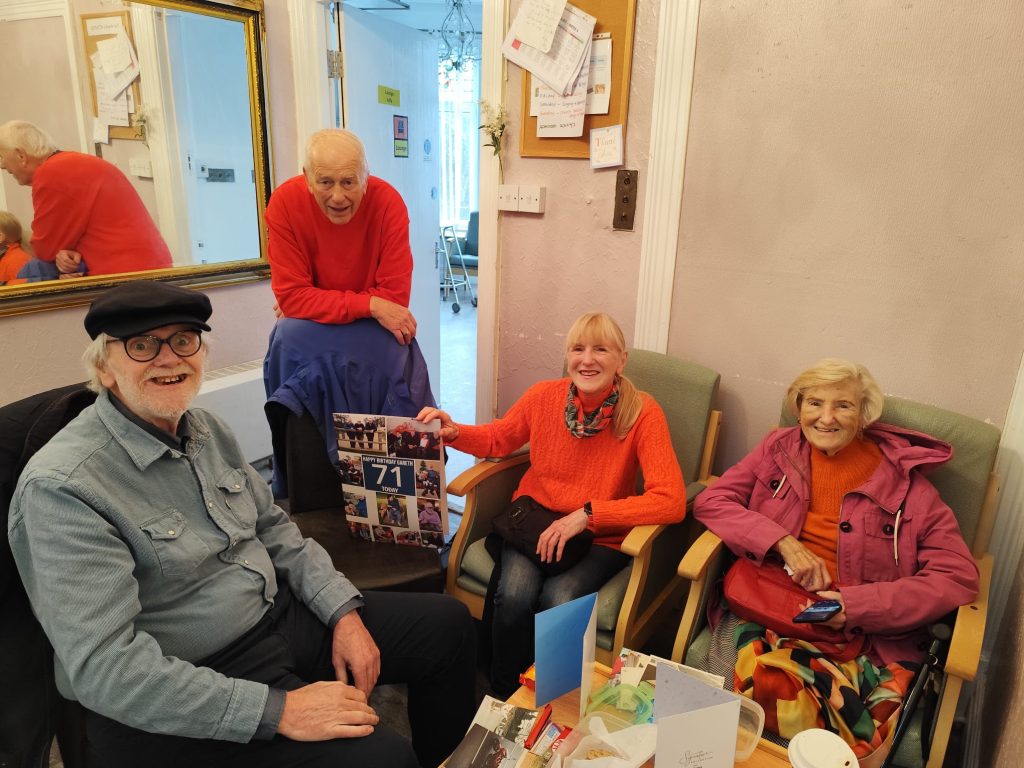
Stephanie Marks, from Llanelli, cares for her brother Gareth, who has dementia and is now living in a care home in Swansea.
She said: “The impacts on us were constant worry, tiredness, financial cost and restriction of our own lives. But we cared for Gareth willingly and gladly. We love him and it was painful to see him slipping away while the system took its time. Like grieving.
“One of the hardest things was clearing his home once he was in care. It was a dismantling of our shared lives. I felt guilty that I couldn’t put it all right.
“I love visiting my brother but I worry constantly about his declining physical and mental health. I feel a huge weight of responsibility for ensuring his care needs are met. He can’t fight for himself so I have to do it for him.
“I wish I’d been more assertive in the very early stages and insisted on better attention when the system failed him. Carers shouldn’t have to struggle for attention and action. Vulnerable people like Gareth deserve far better.”
Fundraising at 100

Stephanie and Gareth’s mother, Peggy Hoare-Davies, who lives in Port Talbot, recently marked her 100th birthday by raising money for Alzheimer’s Society.
Stephanie said: “Mum visits him in the care home. They have activities like Halloween and Christmas parties. When mum was approaching her 100th birthday people asked what she wanted and she wanted to raise money for Alzheimer’s Society.
“Her church put on a party for her and people donated. She ended up raising £1,000.”
Call for support
Rachel Nelson, Alzheimer’s Society Country Manager for Wales, said families affected by dementia often face overwhelming pressures.
She said: “Every day, we see the reality of dementia across Wales. Behind every diagnosis are families navigating emotional, financial and practical pressures that can quickly become overwhelming.
“Too often people feel they’re facing this alone, which is why local support is so vital. At Alzheimer’s Society, we’re here to make sure no one has to go through dementia without help, guidance and someone to turn to.
“Through local services like Singing for the Brain groups, Alzheimer’s Society helps people affected by dementia feel supported, connected and understood.”
The charity is encouraging people in Wales to support its Forget Me Not Appeal during June by wearing a Forget Me Not badge.
The badge is intended as a symbol of the ongoing and often unseen weight carried by families affected by dementia.
Alzheimer’s Society said money raised through the appeal will help fund support services and dementia research.
More information is available at alzheimers.org.uk/forgetmenot
Cover photo: Stephanie and her brother Gareth.

WELSH CONSERVATIVES have called on the Welsh Government to set out what action it will take to tackle antisemitism in the Welsh NHS.
Natasha Asghar MS, the Welsh Conservative Shadow Minister for Health and Social Care, has written to Health Minister Mabon ap Gwynfor following recommendations made by Lord Mann, the UK Government’s independent adviser on antisemitism.
The letter follows Lord Mann’s UK-wide review and asks what steps, if any, the Welsh Government intends to take in NHS Wales.
Lord Mann’s review recommended banning NHS staff from wearing political badges on uniforms, strengthening accountability for NHS managers, and improving the recording and monitoring of racist incidents.
In her letter, Ms Asghar said the NHS should be “an apolitical organisation, where everyone feels safe”.
She said: “It is incredibly alarming that Lord Mann’s report revealed evidence of routine ostracism of Jewish staff in the NHS, with some leaving, and highlighted that Jewish people are avoiding seeking care due to fear of being subjected to antisemitism.
“With increased attacks and threats against Jewish communities, now is the time to act and the Welsh Government has a responsibility to do just that.
“The Cabinet Minister for Health must urgently outline what action the government will be taking within the Welsh NHS to combat antisemitism.”
Ms Asghar has asked whether the Welsh Government will commit to bringing forward a ban on NHS staff wearing political badges on uniforms.
The Herald has approached the Welsh Government for comment.
PATIENTS must be given clear answers over when two-year NHS waits will be eliminated in Wales, opposition parties have said.
The row followed a statement in the Senedd by the Welsh Government’s Cabinet Minister for Health and Care, with questions raised over whether Plaid Cymru can maintain recent progress on waiting lists while delivering its own health pledges.
Welsh Labour said NHS waiting lists had fallen for ten consecutive months before the change of government, but warned that the new administration must not allow that progress to stall.
Ken Skates MS, Welsh Labour’s interim leader and spokesperson for health and care, said: “NHS waiting lists have now fallen for ten consecutive months and it’s now Plaid Cymru’s responsibility to ensure this progress doesn’t falter.
“We’re already hearing conflicting timelines from the Plaid Cymru First Minister and Health Minister on when two-year waits will be eliminated, with neither willing to answer the question. Patients deserve answers, not confusion.”
The Welsh Conservatives have also criticised the new government, claiming patients were being left with uncertainty after different messages were given about how quickly the longest waits could be cleared.
During the election campaign, the First Minister said two-year waits would be eliminated within months. However, the new Health Minister has since suggested the task could take longer.
The Welsh Government says reducing long waits remains a priority and that ministers are working with health boards to improve access to treatment, diagnostics and urgent care.
Plaid Cymru has argued that the NHS in Wales cannot be turned around overnight and says the new administration has inherited deep pressures across the health service, including demand on hospitals, delayed transfers of care, workforce shortages and financial constraints.
Health remains one of the most politically sensitive issues in Wales, with patients across the country continuing to face long waits for operations, appointments and diagnosis.
For families waiting for treatment, the political arguments in Cardiff Bay will matter less than whether appointments come through and whether the longest delays are finally brought down.



Business5 hours ago
Turkish Kitchen reaches Welsh restaurant award semi-finals
Haverfordwest café praised as small independent business flies flag for Pembrokeshire A HAVERFORDWEST café has been named as a semi-finalist...


News6 hours ago
Person taken to hospital after major emergency response on Tenby Esplanade
A PERSON has been taken to hospital following a major multi-agency emergency response on The Esplanade in Tenby. Dyfed-Powys Police...


News6 hours ago
St Davids lifeboat crews rescue damaged yacht and stranded kayaker
TWO St Davids RNLI lifeboats were launched within hours of each other after a yacht was left disabled in a...

Community1 day ago
D-Day 82: Milford Haven remembers sacrifice of Normandy landings
COMMUNITIES gathered in Milford Haven on Saturday (Jun 6) to mark the 82nd anniversary of D-Day. The service, held at...


News1 day ago
D-Day at 82: The secret Pembrokeshire invasion that helped prepare for Normandy
Forgotten wartime operation saw thousands of troops storm Pembrokeshire beaches in rehearsal for D-Day LONG before Allied troops landed on...


News1 day ago
Welsh Water hit with £44.7m enforcement package over sewage failures
Pembrokeshire campaigners say regulator’s action vindicates years of concern over pollution in rivers and coastal waters DŴR Cymru Welsh Water...


News2 days ago
Council tax shake-up in doubt as Welsh Government reviews reform plans
Questions over 2028 revaluation as ministers reconsider next steps THE FUTURE of council tax reform in Wales has been thrown...

Crime2 days ago
Paddleboard company owner loses bid to cut sentence over Haverfordwest tragedy
A FORMER paddleboard company owner jailed over the deaths of four people on the Western Cleddau has failed in a...

Community3 days ago
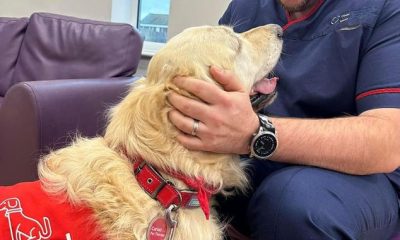
Crisis response dogs launched to support people through trauma and distress
A NEW project using specially trained dogs to support people during moments of trauma, grief and crisis has been launched...


News3 days ago
Major fire breaks out at Tata Steel site in Port Talbot
TATA STEEL has confirmed that a major fire broke out at its Port Talbot steelworks on Wednesday night, with emergency...
-
Crime2 days ago
Paddleboard company owner loses bid to cut sentence over Haverfordwest tragedy
-

 Crime1 day ago
Milford Haven man admits harassment and assault
-

 Crime4 days ago
Milford Haven man bit neighbour’s neck near cashpoint
-

 Crime5 days ago
Milford Haven man jailed for illegal Premier League streaming service
-

 News1 day ago
Community appeal for privacy after serious emergency in Pendine
-

 Crime5 days ago
Haverfordwest man admits cocaine offence as Crown disputes basis of plea
-

 Crime4 days ago
Pembroke Dock driver avoided jail after drug-drive crash
-

 Local Government5 days ago
National Express use of new Haverfordwest interchange still subject to risk checks