


Local Government
Tenby ‘Japanese courtyard’ home given 2030 go-ahead

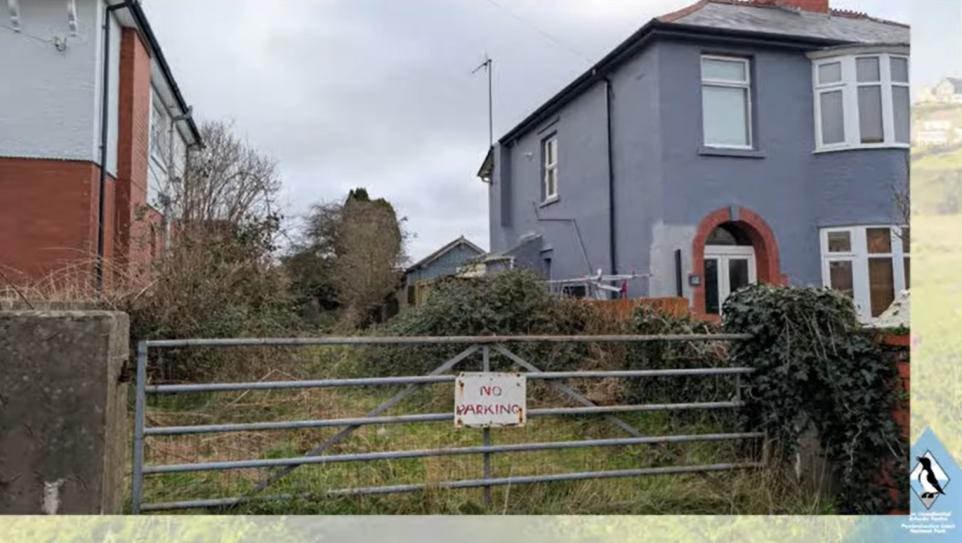
PLANS for a small ‘Japanese courtyard’-style home on the outskirts of Tenby have been given the go-ahead, but the applicant won’t be able to move in until the end of 2029.
In an application recommended for conditional approval at the January meeting of Pembrokeshire Coast National Park’s development management committee, Mr J Beynon sought permission for a one-bedroomed property with provision for home working on a plot adjacent to Delfryn, Serpentine Road.
The scheme was before the committee rather than being delegated to officers as Tenby Town Council had objected to the proposal on the grounds of over-development and the site being very constrained.
An officer report said: “The application site consists of an empty plot on Serpentine Road, within Tenby’s Centre boundary. It is flanked by two, two storey dwellings, one of which is detached. The site is currently overgrown, and there is a garage towards the eastern portion of the plot, although this currently has no roof.”
The scheme includes the need for an affordable housing contribution of £17,500; members hearing final confirmation of which was awaited, with a request for delegated approval by officers on its completion.

The report added: “The design of the dwelling has been carefully chosen to minimise overlooking and provide adequate levels of privacy to the new occupants. A single storey dwelling has been proposed with one bedroom at the western end of the site and a single storey courtyard linked office at the eastern end of the site.
“The design and access statement refers to the type of design being common in Japan and how such a design will enable privacy for both neighbouring properties and for the occupants of the dwelling.”
It went on to say: “The design offers a contemporary approach to a small infill site which will not have a significant impact on the street scene due to its limited height and being set back behind the frontages of both adjacent dwellings.”
An issue complicating the application was a lack of foul water drainage capacity in the area’s sewage network.
It said statutory consultee, Dwr Cymru/Welsh Water “[has] confirmed that there is insufficient capacity in terms of flow passed forward (wet weather capacity) and that this capacity will not be provided until December [31] 2029, and that as such, a condition restricting occupation until the necessary upgrades have been delivered to Tenby and Saundersfoot’s capacity should be imposed to ensure environmental protection”.
Officers recommended delegated approval with such a ‘Grampian Condition,’ along with signing of the affordable housing contribution, be included in any permission.



PEMBROKESHIRE COUNTY COUNCIL has accepted an insurance settlement which leaves it with just £63,777.07 after the catastrophic fire which destroyed Manorbier School.
The figure, confirmed in a director’s decision notice dated Tuesday (Jun 23), is likely to appal parents, taxpayers and campaigners who have fought to save the village school.
The council accepted the insurer’s full and final settlement offer of £263,777.07.
But after a £200,000 excess was deducted, the net payment to the authority was only £63,777.07.

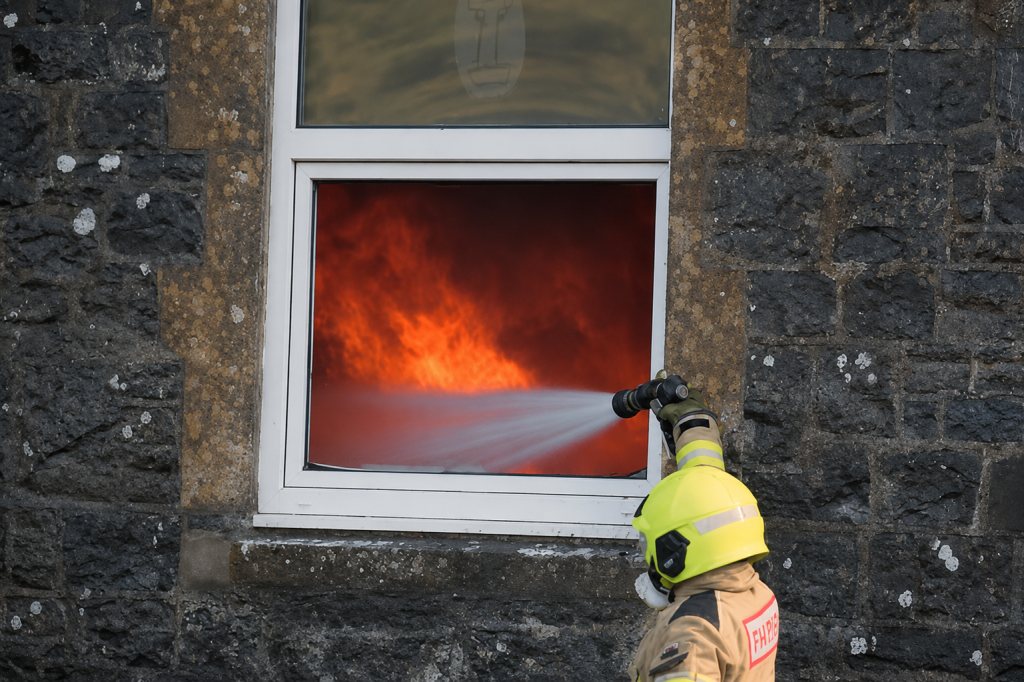
The fire broke out on October 10, 2022, during roofing works at the school. The council’s own document states that the blaze followed the use of flame torches and caused extensive damage to the original school building and adjoining schoolhouse, destroying the pitched roof structures.
Nearly four years later, the school has been discontinued, the building has not been rebuilt, and the insurance payout left to the council is less than the price of many family homes in Pembrokeshire.
The revelation raises devastating questions about how a public building used by young children could be left so exposed.
It also raises wider concerns about whether other schools and council-owned public buildings in Pembrokeshire are properly insured against catastrophic loss.

Council leader calls for review
Council leader Cllr Tessa Hodgson has now written to Dr Norma Barry, chair of the Governance and Audit Committee, formally requesting a wider review of the authority’s insurance arrangements.

In her letter, Cllr Hodgson said it was “difficult to explain and to understand” how there could be such a wide gap between the value of the damage to the asset and the value of the settlement figure.
She asked the committee to undertake a “formal, thorough and more general review” to provide assurance that insurance arrangements across the authority are “fit for purpose and robust”.
That request will now place the council’s insurance policies, risk management and decision-making under intense scrutiny.


Church dispute
The issue is made even more explosive by the fact that Manorbier School is a Church in Wales voluntary controlled school.
The Church has previously made clear that it expects the building to be reinstated, and solicitors acting for the Diocese have already accused the council of using the school closure process to avoid responsibility for rebuilding the fire-damaged premises.
The Diocese has demanded full structural reinstatement and has warned that legal action, including judicial review, could follow.
If the Church continues to insist that the school must be returned to its pre-fire condition, the council could yet face a much larger bill than the £63,777.07 it will receive from the insurer.
Contractor questions

There are also unanswered questions about the roofing contractor working at the site when the fire broke out.
The council document states that the fire occurred during roofing works following the use of flame torches.
Former Schools Overview and Scrutiny Committee chair Cllr Huw Murphy has questioned where the contractor’s public liability insurance was, and why the consequences of the fire appear to have fallen back on the council.
He said there were “serious concerns” over the lack of insurance cover in place for such a catastrophic incident.
Cllr Murphy said the fire not only rendered the school unusable, but also destroyed an attached schoolhouse, leaving a tenant requiring rehousing by the local authority.
He said: “If there was a template on how not to deal with a catastrophic incident then Pembrokeshire wrote it for Manorbier.”
Wider public concern
The Manorbier case now raises a stark question for every parent in Pembrokeshire: if another school suffered a major fire tomorrow, would the council be able to rebuild it?
A large insurance excess may not be unusual for a local authority, but residents will want to know whether the council had the right cover, the right reserves, and the right legal protections in place.
Had Manorbier School been rebuilt, Pembrokeshire would at least have retained a valuable public asset capable of serving future generations.
Instead, the community has lost its school, the building remains unrestored, and the council is left with a net insurance payment of just £63,777.07.
The Herald has asked Pembrokeshire County Council whether all school buildings are insured for full reinstatement value, what excesses apply, whether any claim has been pursued against the contractor or its insurers, and what legal advice has been received in relation to the Church in Wales’ position.
UPDATE 24.06.2026:
Pembrokeshire County Council has confirmed that the Governance and Audit Committee review will examine whether the authority’s insurance arrangements are “robust, fit for purpose and provide value for money”.
The council said the review follows the acceptance of the Manorbier School insurance settlement and will assess whether current insurance arrangements ensure public assets are “appropriately valued, insured, and restored in the event of loss or damage”.
Council leader Cllr Tessa Hodgson said: “We have a duty to ensure that all public assets are properly protected and insured. This review will provide assurance to residents and stakeholders that our insurance arrangements are effective and that public money is being safeguarded.”
The statement does not address why the Manorbier settlement left the authority with a net payment of just £63,777.07 after a £200,000 excess, nor whether the council is pursuing any claim against the contractor or its insurers.

THE ARMED FORCES flag is flying proudly at County Hall this week ahead of Armed Forces Day on Saturday, June 27.
Leader of Pembrokeshire County Council, Cllr Tessa Hodgson, and the Council’s Armed Forces Champion, Cllr Simon Hancock were among those who marked the flag raising on Monday morning (June 22).
Also present were the Chairman of Council, Cllr Delme Harries, the Chief Executive, Will Bramble and the Regional Armed Forces Covenant Liaison Officer, Hayley Edwards.
Cllr Hancock said: “It is always a very proud moment to see the Armed Forces Flag flying over County Hall.
“Armed Forces Day is a chance to show our deep appreciation for the men and women who serve, as well as the families and communities who support them.
“Our county has a rich history of connection with the Armed Forces, and we are proud to uphold and strengthen that bond.
“As a Council we are committed to ensuring that members of the Armed Forces community in Pembrokeshire receive the recognition and support they truly deserve and we are proud to be a Defence Employer Recognition Scheme Gold Award holder.”

HAVERFORDWEST residents will have the chance to raise ideas, concerns and local issues directly with the town’s mayor this week.
Cllr Randell Izaiah Thomas-Turner will hold a Talk to Your Mayor session on Thursday, from 12:00pm until 2:00pm.
The initiative is aimed at giving residents an opportunity to speak directly with the mayor about matters affecting the town and wider community.
Cllr Thomas-Turner said communication and engagement were “vital”, adding that the session was about listening to local people, working together, and ensuring every voice had the opportunity to be heard.
Anyone wishing to book an appointment is asked to contact the Haverfordwest Town Council town clerk.
The mayor said: “Together, we can continue building a stronger and more connected community. Together we can make Haverfordwest the best in the west.”




Community7 hours ago
Manorbier fire scandal: Council’s payout just £63,777 after school destroyed
PEMBROKESHIRE COUNTY COUNCIL has accepted an insurance settlement which leaves it with just £63,777.07 after the catastrophic fire which destroyed...


News16 hours ago
Bus overturns in major incident near Kidwelly
All passengers rescued as emergency services remain at scene A BUS overturned on the A484 between Kidwelly and Ferryside on...


Community2 days ago
Tenby Summer Spectacular cancelled amid council row over harbour access
Organisers say popular charity events cannot safely go ahead without clear powers to control crowds TENBY ROUND TABLE has announced...


News2 days ago
Motorcyclist dies after four-vehicle crash on A40 in Carmarthenshire
A MOTORCYCLIST has died following a four-vehicle collision on the A40 between St Clears and Whitland. Dyfed-Powys Police said the...


News2 days ago
Rhun ap Iorwerth urges new deal for Wales after Starmer quits
First Minister says next Prime Minister must focus on greater powers, fair funding and respect for Wales’ democratic mandate FIRST...


News2 days ago
How Labour’s landslide victory unravelled in just two years
Prime Minister announces resignation after losing support within his own party as Andy Burnham emerges as overwhelming favourite to take...


News2 days ago
Long Course Weekend set to bring thousands to Pembrokeshire
Three days of swimming, cycling and running will once again transform Tenby into one of the UK’s biggest endurance sporting...


Community3 days ago
The gentle giant behind the tattoos
Pembrokeshire security worker Josh Davies praised for professionalism, kindness and proving first impressions can be wrong JOSH Davies is hard...


Charity4 days ago
Toy Story fans fill charity toy box at Haverfordwest cinema
Donations pour in for SNAP Specialist Play as families embrace Toy Story 5 launch A TOY STORY-themed charity appeal at...


Community4 days ago
Lord Rhys emerges from the mist in St Davids
Giant puppet begins historic journey marking 850 years since the first Eisteddfod MIST swirled around St Davids Cathedral on Friday...
-

 Crime6 days ago
Milford Haven man jailed for breaching domestic violence protection order
-

 News6 days ago
Crash on Freeman’s Way causes school-run chaos across Haverfordwest
-

 Health4 days ago
Woman jailed assaults on police, harassment and XL Bully possession
-

 Crime4 days ago
Milford Haven woman spared jail despite string of shop thefts
-
Community3 days ago
The gentle giant behind the tattoos
-

 Crime6 days ago
Portfield Gate man faces careless driving allegation after Tufton crash
-

 Local Government6 days ago
Pembrokeshire faces accessible housing shortage as 403 people wait for homes
-

 News6 days ago
Brexit at 10: How Britain was sold a dream that cost us dearly