


News
Salmon: No green light for growers


 THE LOCAL Police and Crime Commissioner, Christopher Salmon, has not ruled out a relaxation of the force’s interpretation of cannabis laws. His wait and see approach follows news this week that Durham’s commissioner is to allow cannabis users to grow their own plants. Ron Hogg, says that cannabis users will be able to grow the substance for their own personal use only, after changing the way his force prioritises cannabis related crime. Our commissioner, Christopher Salmon, was asked by The Herald if the same could happen here. He said that he would ‘wait and see what evidence emerges’, adding, ‘the advantage to police and crime commissioners is the flexibility to take a local approach’. Mr Hogg said: “We are not prioritising people who have a small number of cannabis plants for their own use. In low level cases we say it is better to work with them and put them in a position where they can recover.
“In these cases the most likely way of dealing with them would be with a caution and by taking the plants away and disposing of them. It is unlikely that a case like that would be brought before a court. Of course it is up to the government to change the law but I am trying to open up a debate about drugs and drugs policy.”
He went on to say: “Traditionally what would have happened is people would have been arrested for using cannabis, sometimes imprisoned and it just maintained a cycle of reoffending in and out of prison. We want to try and break that cycle whilst also having a sensible debate around cannabis. If they fail to engage then we will prosecute.”
He finished by stating: “By and large we are saying it is not the top of our list to go out and try to pick up people smoking joints on street corners but if it’s blatant or we get complaints, officers will act. Drugs cause immense harm to our communities. The question is how we tackle them. There hasn’t been a change in policy. We are taking an approach which reduces harm – by focusing on stopping people from using drugs, and tackling the organised gangs who are the source of the supply.
“Those who grow or deal in drugs, no matter on what scale, are responsible for causing massive harm to our communities, and will be tackled. The police are working with partners including the fire service to identify and tackle cannabis farms.”

However, the policy in Durham has received some criticism. Simon Stephens, director of casework for Addiction UK, said: “Essentially, I’m coming at this from a health perspective – I think that his comments aren’t particularly helpful. It does send a message that drugs are OK – there can be no doubt that there a significant amount of people with mental health problems brought on by cannabis.”
David Raynes of the National Drug Prevention Alliance, was also critical, saying: “Durham Constabulary are out on their own with this and are trying to lead the law on this issue. If the Chief Constable and Police Crime Commissioner want to indulge in that policy then it is not necessary to make it public, because clearly making this sort of announcement will serve to encourage anyone who so minded.”
In 2013 Durham’s current Chief Constable, Mike Barton, made what some people considered to be controversial comments on his force’s policy on drug prosecution, stating: “If an addict were able to access drugs via the NHS or something similar, then they would not have to go out and buy illegal drugs. Addiction to anything is not a good thing, but outright prohibition hands revenue streams to villains. Not all crime gangs raise income through selling drugs, but most of them do in my experience. So offering an alternative route of supply to users cuts their income stream off. What I am saying is that drugs should be controlled. They should not, of course, be freely available. Have we not learned the lessons of prohibition in history? The Mob’s sinister rise to prominence in the US was pretty much funded through its supply of a prohibited drug, alcohol. That’s arguably what we are doing in the UK.”
Commenting on Dyfed-Powys’ current position, a police spokesperson said: “Dyfed-Powys follows national guidance in the way in which it deals with those people who commit drug offences. There are a number of outcomes possible for those who offend, recognising the circumstances and nature of each individual offence. These outcomes range from cannabis warnings to those who appear at court.”

Mr Salmon did go on to say: “Drugs do great damage to people’s lives. I’m clear we must do everything we can to reduce the harm caused. While we have no plans to follow Durham, I will see what evidence emerges.”


New First Minister says government will focus on waiting lists, jobs, education and child poverty
FIRST MINISTER Rhun ap Iorwerth will chair the first meeting of his new Welsh Government Cabinet today, setting out what he says will be an agenda based on action, openness and results.
The meeting marks the formal start of the new government’s programme, with ministers expected to focus on improving public services, supporting families and growing the Welsh economy.
Ahead of the meeting, Mr ap Iorwerth said his Cabinet would work as “one team” and avoid what he described as unnecessary duplication across government.
The First Minister said: “This is a government of action, a government for all, and a government of new ideas. The hard work has now started.
“Our focus is on the issues that matter most to people in every part of Wales – cutting waiting lists, supporting families with the cost of living, creating good jobs, raising standards in education and tackling child poverty.
“As First Minister, I am determined to end siloed working and unnecessary duplication across government. This Cabinet will work as one team, with ministers focused on delivering together in the interests of the people of Wales.
“We will lead with openness and purpose, building trust through practical action and visible outcomes.
“The people of Wales expect a government that listens, that stands up boldly for Wales, and that works together to get things done. That is exactly what this Cabinet is determined to deliver.”
The first Cabinet meeting will be closely watched as the new administration begins to turn election promises into policy, with pressure already mounting over NHS waiting times, household costs and the state of public services across Wales.

Castle ward councillor thanks residents for patience as long-running issue near St Thomas’ Green finally addressed
ROAD resurfacing works at St Thomas’ Green in Haverfordwest have been welcomed by local county councillor Thomas Tudor, who says a long-standing pothole problem near a bus shelter is finally being resolved.
Cllr Tudor, who represents the Castle Ward, said he was pleased to see progress being made on the improvements, particularly in an area that had required repeated repairs over time.
The works, being carried out by Pembrokeshire County Council and contractors, include resurfacing along part of the road close to the bus shelter near St Thomas’ Green.
Cllr Tudor said the pothole had been reported and repaired on numerous occasions before more permanent resurfacing work was approved.
He said: “As County Councillor for the Castle Ward, which includes St Thomas’ Green, I am pleased to see works progressing very well with the road resurfacing, in particular the area by the bus shelter which had a pothole which I have been reporting and having repaired numerous times.
“Many thanks to Pembrokeshire County Council and the various contractors involved and I would also like to apologise to the residents and thank them for their patience and understanding during these essential works.”
The resurfacing has caused some disruption to local traffic while work is underway, with temporary traffic management measures in place.
Residents have been thanked for their patience as crews complete the improvements, which are aimed at providing a safer and smoother road surface for motorists and pedestrians.
Photo caption:
Improvements underway: Cllr Thomas Tudor pictured at St Thomas’ Green as resurfacing works progress (Pic supplied)

CEFΝ Sidan has retained its place among the world’s best coastal locations after being awarded Blue Flag status in the Wales Coast Awards 2026.
The Carmarthenshire beach, located within Pembrey Country Park near Burry Port, has now received the prestigious award 38 times — more than any other beach in Wales.
Cefn Sidan was also the first beach in Wales to receive a Blue Flag when the awards were introduced in 1988.
The awards, announced by Keep Wales Tidy, recognise beaches that meet high standards for water quality, safety, facilities, environmental education and site management.
A total of 48 beaches across Wales were recognised this year, with 20 receiving Blue Flag status.
Cefn Sidan is an eight-mile sandy beach backed by dunes and forms part of Pembrey Country Park, one of Carmarthenshire’s major visitor attractions. The park also offers woodland walks, mountain bike trails, a dry ski slope, toboggan ride, crazy golf, train rides and a family campsite.
Owen Derbyshire, Chief Executive of Keep Wales Tidy said: “We are delighted to see Cefn Sidan once again retaining its Blue Flag Award status and continuing to hold the title of the Welsh beach which has received the most Blue Flags.
“As Wales’ very first Blue Flag Award winner, we appreciate the ongoing commitment of everyone at Carmarthenshire County Council and Pembrey Country Park in ensuring Cefn Sidan meets the high standards needed to gain the Blue Flag Award.”
He added: “These awards recognise high and consistent standards and we would like to thank staff, volunteers and everyone else at sites across Wales who work so hard to protect and preserve our natural landscape in the face of increasingly challenging circumstances.
“All of these places are beautiful but seeing that flag flying means visitors can be assured that they are clean, safe and well-managed with excellent facilities too.”
Other Blue Flag beaches in west Wales include Llangrannog in Ceredigion, Saundersfoot, Tenby South and Poppit Sands in Pembrokeshire.
Thirteen Welsh beaches also received Green Coast Awards, including Mwnt and Penbryn in Ceredigion, Freshwater East and Manorbier in Pembrokeshire.

A further 15 beaches gained Seaside Awards, including Aberystwyth South and North.



Health18 hours ago
Occupational therapists urge Welsh Government to act before NHS crisis deepens
More than 300 professionals sign open letter calling for prevention-focused care and urgent reform OCCUPATIONAL therapists across Wales are urging...


Community1 day ago
Surfers take sewage protest to Broad Haven beach
CAMPAIGNERS took to the sea at Broad Haven today in a colourful protest demanding urgent action over sewage pollution in...


Health2 days ago
New NHS regional body raises questions over future hospital services in Pembrokeshire
Health bosses promise better joined-up care — but patients will want assurances over Withybush and travel distances PEMBROKESHIRE patients are...

Local Government3 days ago
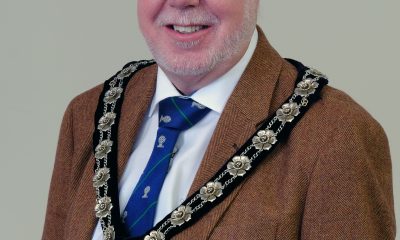
Pembrokeshire County Council welcomes new chairman
CLLR DELME HARRIES has been elected chairman of Pembrokeshire County Council for the coming municipal year. Cllr Harries, who was...


News3 days ago
From Milford Mercury to County Hall for Pembrokeshire’s first female leader
Late councillor Mike Stoddart helped hold power to account for decades — now his daughter Tessa Hodgson leads the council...


Business3 days ago
Port reports record turnover, but debt, emissions and senior pay also rise
Annual report shows strong growth and major investment, but underlying figures reveal a more complex picture THE PORT OF MILFORD...


Community3 days ago
DARC radar: Campaigners ask Welsh Government to call in planning application
PARC AGAINST DARC has submitted an official request asking the new Welsh Government to call in the planning application for...


News5 days ago
State Opening overshadowed by Starmer leadership crisis
KING CHARLES has arrived at Parliament for the State Opening as Sir Keir Starmer faces the most serious crisis of...


News6 days ago
Rhun ap Iorwerth becomes Wales’ new First Minister
PLAID CYMRU TAKES POWER AFTER HISTORIC SENEDD VOTE PLAID CYMRU leader Rhun ap Iorwerth has become Wales’ new First Minister...

News6 days ago
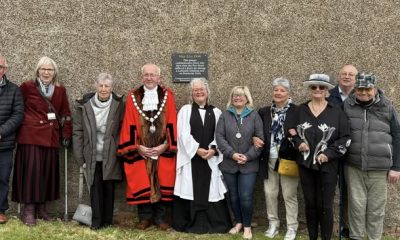
Hotel was hit during a Luftwaffe bombing raid
THE COMMEMORATION, held on Tuesday (May 12), marked the anniversary of the wartime attack, with members of the community gathering...
-

 News3 days ago
Palestine pledge backed by 36 new Senedd Members
-

 Crime5 days ago
Teenager banned from roads after being caught six times over drug-drive limit
-
Community1 day ago
Surfers take sewage protest to Broad Haven beach
-

 Crime5 days ago
Man threatens to torch Silverdale Lodge through ‘demon drink’, court hears
-

 Crime5 days ago
Man sentenced for stalking women and threatening to torch home
-

 Crime5 days ago
Violent man jailed after ‘Banksy’ claims and campaign of domestic abuse
-

 Local Government7 days ago
Council leadership hopeful responds after anti-Tory rally photos surface
-

 Crime5 days ago
Man denies exposure in Pembrokeshire town