


Farming
The badger vaccination programme: Is it working?

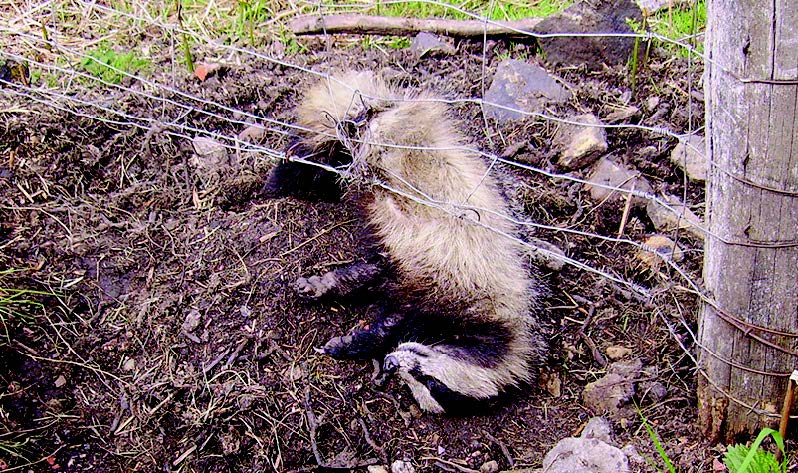

Caught in a trap: An illegally snared badger
THE WELSH GOVERNMENT issued a press release last week hailing its success in delivering 5,000 vaccinations against Bovine TB (bTB) in the Intensive Action Area against the disease in North Pembrokeshire, South Ceredigion, and North-West Carmarthenshire.
The press release read: ‘More than 5,000 doses of badger vaccination have been administered to animals inside the Intensive Action Area (IAA) in West Wales over the past four years. We are now half way through the fourth year of the Welsh Government’s five-year badger vaccination project in parts of Pembrokeshire, Carmarthenshire and Ceredigion, which forms part of a wider programme of work to eradicate TB from cattle in Wales.
‘The Deputy Minister for Farming and Food, Rebecca Evans, said: “Since 2010 we have introduced a number of additional measures in the IAA because it was identified as having some of the highest rates of incidence of TB in Europe.
“We are now half way through 2015’s round of the vaccination project and provisional results indicate we have successfully delivered over 5,000 doses of the vaccine in the IAA across the four years”.’
The statistics accompanying the summary were released at the same time.

The Herald delved into the data to establish what it told us about bTB rates and the effectiveness of the vaccination programme.
The history of bTB control
It is 55 years since the whole of the UK became attested on October 1, 1960. Each cattle herd was certified as being subject to regular tuberculin testing with immediate slaughter of any reactors. Progress was maintained throughout the 1960s and 1970s.
The ‘clean ring strategy’ was a badger culling strategy introduced in 1982. It involved cage trapping badgers on land occupied by affected cattle herds, then on adjoining land, expanding outwards until no further infected animals were captured. It was abandoned in 1986 as being non cost-effective.

Between 1986 and 1997, the UK Government pursued a strategy in which badgers were cage-trapped and shot. However, the strategy was only piecemeal, largely because of pressure from animal charities and single-issue pressure groups that meant that only badgers on land occupied by the affected herd would be culled.
Bearing in mind current claims that culling badgers is ineffective because of the proposition that badgers would simply leave the culling area to go to a neighbouring area, the methodology adopted between 1986 and 1997 in order to prevent wider scale slaughter of badgers appears both flawed and naïve: a strategy doomed to fail, and predictably so.
Culling in other countries

In New Zealand the success of culling the principal vector for the disease, the possum, has been markedly successful.
In 1990 the proportion of TB in cattle was about 7 times greater than it was in Great Britain. However in 1997 the proportions were about equal. By 2011, the proportion in New Zealand is about 40 times less than what it is in Great Britain.
Since the early nineties, control of the principal wildlife vector, the possum has increased whilst in Great Britain since 1986 control of the principal wildlife vector, the badger, has reduced.
The method of culling in Ireland relies on the use of snares and the subsequent shooting of trapped badgers. That method, widely condemned as cruel, is expressly forbidden in the UK. The effectiveness of the range of bTB measures – including culling – adopted in Ireland has driven rates of bTB infection in herds to their lowest ever level.
Bovine TB figures have, however, also fallen in Northern Ireland, were no licensed culling has taken place. That fact has been alighted upon by those opposed to a cull as evidence of the ineffectiveness of shooting badgers in order to control bTB. However, bTB rates are still substantially higher in Northern Ireland than in the Republic of Ireland: in 2013 6.4 per cent of cattle herds tested positive in Northern Ireland compared to 3.8 per cent south of the border.
As might be ruefully observed, the validity of statistical evidence and the science deployed by those on either side of the culling debate is likely to remain subjective and views remain entrenched. Wildlife and animal charities will continue to deride culling, while those who deal with the personal and economic fallout of bTB will favour it.
The Welsh decision
It was against the background of apparent comparative success of culling in other countries that the Welsh Government decided to begin a five year vaccination trial in West Wales and worth recalling that the Welsh Government embarked upon a vaccination programme as very much a second preference.
In 2012, Welsh Labour abandoned a previous policy, formed in coalition with Plaid Cymru, which supported a badger cull and decided to pursue a policy of vaccination. In doing so, it was criticised by the then Chair of the British Veterinary Association for ignoring scientific evidence supporting a cull and accused of ‘cowardice’ in the face of a celebrity-backed campaign against the cull and pressure from animal charities.
The decision not to proceed was described as a betrayal of farmers whose herds remain affected by the reservoir of bTB in the wild badger population.
But what, it is fair to ask, is the Welsh Government’s ‘Plan B’?
What if the data suggests that vaccination is no more effective than doing nothing?
A farmer’s experience
The Herald spoke to one farmer, who provided his observations on life in the IAA on condition of strict anonymity.
The farmer told us: “My dairy herd has suffered from bTB for 12 years. In 2012, badgers began to be vaccinated in the area, along with strict cattle control.
“I, like many farmers find this to be a costly exercise which doesn’t reach the root of the problem, the over population of badgers in the area.
“The stricter cattle controls and improved biosecurity measures also brought in in the IAA looks to move the blame of bTB onto the farmers, which is unfair.
“Because of the desperation I face with losing cattle to slaughter because of bTB and falling milk prices, I am left with no alternative but to shoot badgers which are on my land. “This is a population control measure and I take no pleasure in the culling of an animal. It’s either the badger or my cattle, and for the sake of my family and my income, it’s the badger.”
Data and dates During the vaccination programme the absolute incidence of bTB has fallen markedly, with numbers of affected cattle falling. One key piece of data is not encouraging when it comes to weighing the effectiveness of the vaccination programme. In the period immediately preceding the vaccination programme the incidence bTB had fallen even more sharply.
Bovine TB cases had climbed sharply over the years to 2008/09, topping out at 29% per hundred head of cattle in the IAA that year. The rate of detected infection in the last full year in the most recent Welsh Government report (2014/15) shows that infection rates remain above where they were in 2006/2007, when they were at around 16% and that in the current control area was 8%.
After an initial increase in incidence following the introduction of interventions in the IAA, incidence has been decreasing since 2011/12. Incidence has also decreased in the Control Area (CA) in the last year, halving from 12 % to 6 %. In 2013/14, there were three times as many new bTB incidents per 100 unrestricted herds in the IAA (18 %) than in the CA (6 %,).
That means that the gap in the incidence of positive tests in the control area, where no vaccinations have been trialled, and the Intensive Action Area where they have has widened over the course of the vaccination programme. From the start of the IAA in 2010/11, and historically judging by the Welsh Government’s own data, the ratio had been around two to one. While one would expect the gap to narrow if vaccination were more effective that not vaccinating, the gap between the incidence in the IAA and the control area has widened.
We asked the Welsh Government about the issue the above analysis presented. A Welsh Government spokesperson said, “The downward trend in levels of bovine TB in the Intensive Action Area is encouraging and is broadly in line with the trend seen in other parts of Wales. We know that it may take years to fully see the benefits of some of our additional measures in the area, which includes six monthly testing and badger vaccination. Therefore it is too soon to draw any conclusions on the effectiveness of the measures in the IAA.”



BIRD keepers in Wales are being urged to remain vigilant after the all-Wales Avian Influenza Prevention Zone was lifted today.
Mandatory biosecurity measures for poultry and other captive birds were introduced in January 2025 to help prevent the spread of avian influenza from wild birds and other sources.
The Welsh Government said the decision to lift the remaining measures follows the latest outbreak assessment, which reduced the risk of bird flu transmission from wild birds to kept birds in Great Britain from “medium” to “low”.
Mandatory housing measures had already been removed in April. The lifting of the Welsh zone has been coordinated with similar moves in England and Scotland.
Chief Veterinary Officer for Wales Richard Irvine said: “I am pleased the latest reduction in avian influenza risk means we are now able to lift the all-Wales Avian Influenza Prevention Zone.
“This is good news for our bird keepers, and I would like to thank the sector, who have worked hard and shown great vigilance through a sustained and challenging period.
“I also want to be very clear that low risk does not mean no risk.
“Avian influenza remains a serious disease, and we know that conditions can change. I urge every bird keeper, no matter the size or type of flock, to keep protecting their birds – from bird flu and other diseases.
“Good hygiene practices are your first and most effective line of defence. Vigilance and prompt reporting of any suspicion of disease also remain absolutely vital.”
Bird keepers are being reminded to continue good hygiene and biosecurity practices, including keeping bird areas clean and tidy, controlling access to birds and housing, minimising contact between kept birds and wild birds, regularly disinfecting equipment, clothing and footwear, and reporting signs of disease promptly to the Animal and Plant Health Agency.
The Welsh Government said it would continue to monitor the bird flu situation closely. Further guidance, including biosecurity self-assessment checklists for small flocks, commercial poultry keepers and game bird keepers, is available on the Welsh Government website.
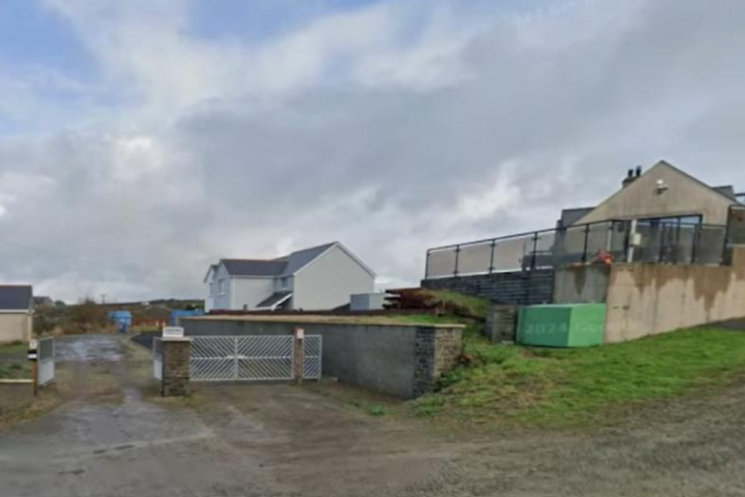
A CALL for a time extension for plans for housing on the site of a former “blot on the national park” seaside turkey farm has been given the go-ahead.
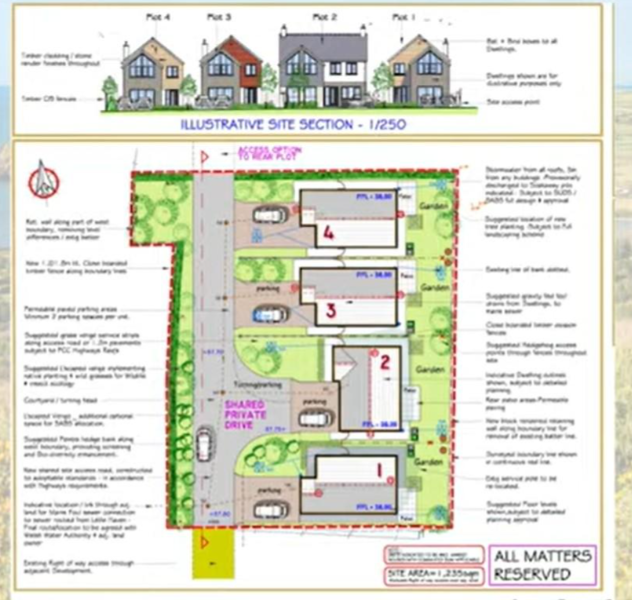
In an application recommended for delegated approval to senior officers at the June meeting of Pembrokeshire Coast National Park’s development management committee, Mark Chapman, through agent Hayston Developments & Planning Ltd sought permission for a further three years’ time extension for a previously-granted scheme to build four homes at the former turkey farm, on land off Blockett Lane, Little Haven.
The application was before the committee as it was recommended for approval despite the local community council, The Havens, objecting to the scheme, and it being a departure from the local development plan.
The Havens had objected to the scheme on the same grounds it objected to the original 2021 application for four dwellings granted in 2022, saying there was a poor access road, very narrow, with no pavement leading to the village for pedestrian use.
An officer report recommending approval said: “The application site comprises a parcel of brownfield land which historically formed part of a turkey farm complex located to the south of Little Haven. The wider site has been subject to extensive residential redevelopment, with several dwellings completed and others under construction on adjacent land. The site is also subject of a current enforcement notice relating to storage of shipping containers.
“The applicant has advised that development has been delayed due to an ongoing civil dispute relating to access rights, which has prevented commencement within the original timeframe but which the applicant believes to be resolvable.
“As the application is in outline form and seeks only a time extension, there are no changes to the scale, layout, or form of development for assessment at this stage with only indicative plans having been received.”
Speaking at the meeting, agent Andrew Vaughan-Harries of Hayston reiterated it was hoped the civil matter could be addressed to “deliver this important development”.
He added: “The old turkey farm and sheds were a real blot on the national park, on a sensitive spot on the clifftop, a real eyesore.”
He said developments on-site so far had seem them cleared, with the “sensitive development” expected to net up to £90,000 in affordable housing contributions to the authority.
On the community council access concerns, he said: “Perhaps they are newer members who don’t remember a busy turkey farm and its traffic; at the end of the day Little Haven is a pretty little village with narrow roads on all sides.”
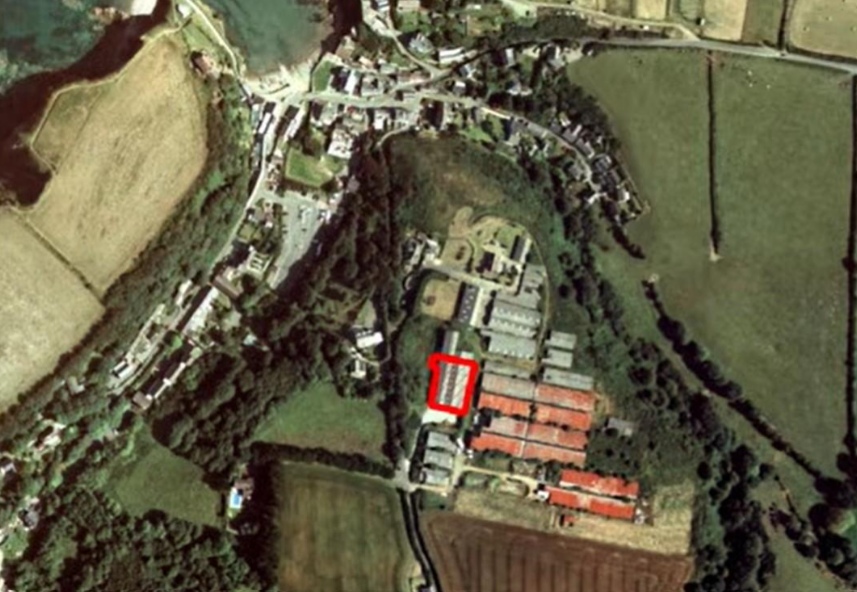
Committee chair Cllr Simon Hancock, said committee-viewed aerial pictures of the turkey farm site were “stark” in comparison with its now-cleared state, moving approval, which included some 16 conditions.

Members backed the recommendation of approval.
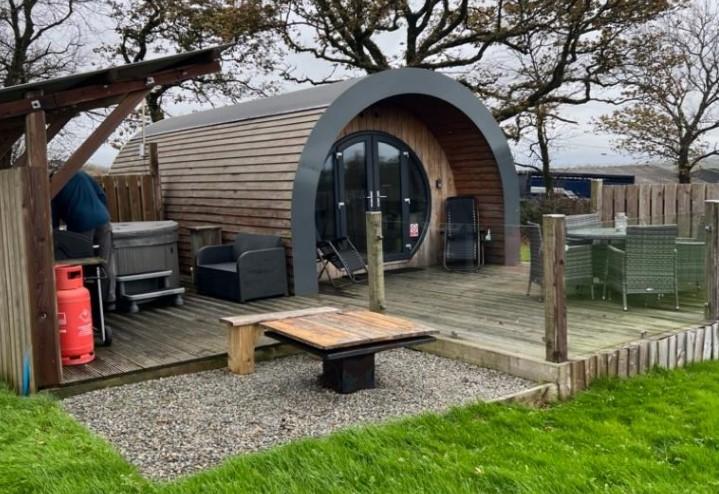
A CALL to keep a holiday pod sited on a Pembrokeshire farm, as part of a wider holiday pod farm diversification over two areas which saw the larger part supported, has been approved by county planners.
In an application given delegated approval at the June meeting of Pembrokeshire County Council’s planning committee, Bill Ridge of Vaynor Farm Ltd, Bethesda, through agent Gerald Blain Associates Limited, sought retrospective permission to keep a self-catering pod at Broomley Farm, Sodston, Narberth, works having been completed in 2022.
The application is part of a wider scheme of holiday pods diversification encompassing two farms.
Back in December 2025, Pembrokeshire County Council’s planning committee granted delegated retrospective permission to Vaynor Farm Ltd for the siting of two self-catering holiday accommodation pods at The Cart House, Vaynor Farm, Bethesda, near Narberth as part of a farm diversification enterprise.
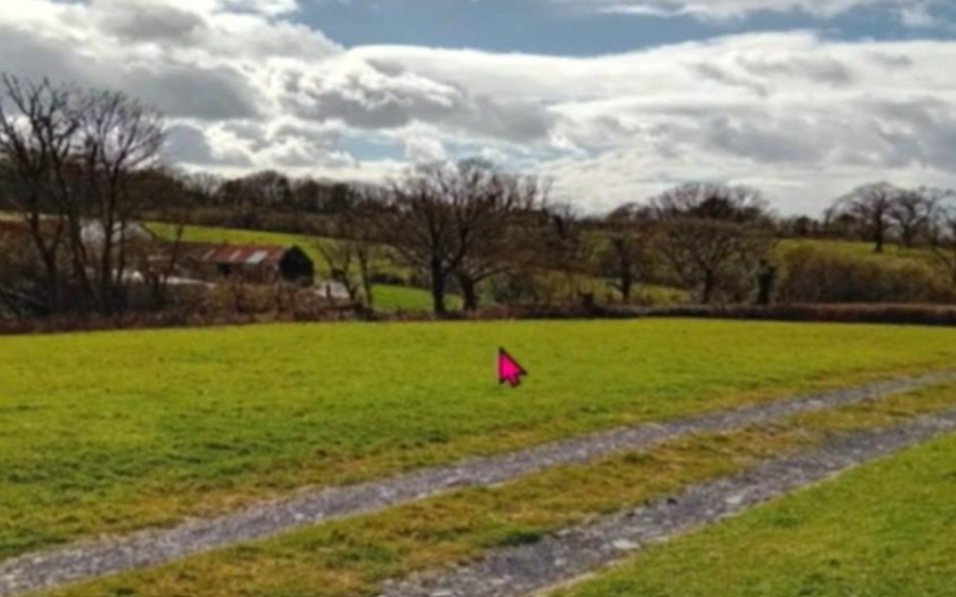
A supporting statement accompanying the latest application said: “Vaynor farm is a 400-acre working dairy farm with a herd of 700 milking cows. The enterprise comprises of three self-catering pods. Two of the pods are situated at the Vaynor homestead and another at the opposite end of the holding at Broomley farm.
“The first unit was sited adjacent to Vaynor farm stead some four years ago and a further two added in subsequent years. The units have enjoyed successful occupancy rates over several years offering a unique secluded tourism offer on a working dairy farm, more detail of which is outlined within the supporting business plan.”
It said the Broomley farm application before committee was a resubmission of a previously refused scheme, adding: “It should be noted that this application was originally part of [the application] which was recommended approval at planning committee in December 2025. This element however was separated due to its location on another part of Vaynor farm deeming it not possible to be considered under the same application.”
At the December meeting, an officer report said: “A business plan has been submitted with [that] application, which explains that due to uncertainties associated with dairy farming, the applicant has sought to diversify the farm enterprise to incorporate tourism accommodation.”
An officer report accompanying the latest application for members said: “The development of the accommodation pod has led to positive economic and social impacts, evidence has clearly demonstrated how income from the accommodation pods is used to support the overall combined Broomley Farm and Vaynor Farm enterprise.
“The proposed location of the accommodation pod is not considered to have led to an unacceptable impact on the character and appearance of the area given their siting adjacent to the Broomley Farm farmstead complex.”
Members backed the head of planning being given delegated powers to approve the scheme subject to a Section 106 legal agreement and conditions including the pod be limited to short-term holiday use only.


Community10 hours ago
Crisis response dogs launched to support people through trauma and distress
A NEW project using specially trained dogs to support people during moments of trauma, grief and crisis has been launched...

News14 hours ago
Major fire breaks out at Tata Steel site in Port Talbot
TATA STEEL has confirmed that a major fire broke out at its Port Talbot steelworks on Wednesday night, with emergency...


Community1 day ago
HMS Erebus tragedy links Pembroke Dock ship to Templeton family
DNA breakthrough identifies cabin boy David Young as exhibition marks 200 years since ship’s launch ON MAY 19, 1845, a...


Community2 days ago
Narberth cash machine closures spark urgent access review
CALLS have been made for an urgent review of access to cash in Narberth after two town centre ATMs were...


Health2 days ago
First Minister quizzed on Welsh NHS pressures in his first-ever FMQs
SENEDD Members pressed the First Minister over the state of the health service in Wales, as the Plaid Cymru leader...


Community2 days ago
Historic paddle steamer Waverley to return to Fishguard this month
THE WORLD’S last seagoing paddle steamer will return to Fishguard this month as part of her annual visit to South...


Local Government3 days ago
National Express use of new Haverfordwest interchange still subject to risk checks
A RUMOUR that National Express coaches may struggle to use Haverfordwest’s new transport interchange has been denied by Pembrokeshire County...


Crime3 days ago
Milford Haven man jailed for illegal Premier League streaming service
A MILFORD HAVEN man who supplied illegal Premier League streams and loaded Firesticks to almost 2,000 customers has been jailed...


Community4 days ago
RNLI lifeguards rescue beachgoers during busy heatwave weekend
FOUR PEOPLE RESCUED AS RIP CURRENTS AND OFFSHORE WINDS HIT PEMBROKESHIRE BEACHES RNLI lifeguards in Pembrokeshire rescued four people and...

Local Government4 days ago
Council and school staff pay row could hit Pembrokeshire services
COUNCIL workers, carers and school support staff in Pembrokeshire could be drawn into a growing UK-wide pay dispute after GMB...
-

 Crime1 day ago
Milford Haven man bit neighbour’s neck near cashpoint
-
Crime3 days ago
Milford Haven man jailed for illegal Premier League streaming service
-

 Crime3 days ago
Haverfordwest man admits cocaine offence as Crown disputes basis of plea
-

 Crime1 day ago
Pembroke Dock driver avoided jail after drug-drive crash
-

 Crime1 day ago
Dinas Cross man jailed over shop thefts
-
Local Government3 days ago
National Express use of new Haverfordwest interchange still subject to risk checks
-

 Business7 days ago
Historic Pembrokeshire courthouse set to be redeveloped with new lease of life
-
 Community5 days ago
Charles Street to come alive for Milford Haven Founders Day
this site
December 29, 2025 at 10:48 pm
Thanks for sharing your knowledge on this topic. It’s much appreciated.