


News
Campaigners urger public to lobby charity until Crabb quits Mencap patronage


Protesters outside Stephen Crabb MP’s office (Pic: M Hillen/Herald)
A CAMPAIGN group calling itself the Pembrokeshire Peoples’ Assembly Against Austerity (PPAAA) has called on the public to lobby MENCAP Pembs directly to force Secretary of State for Work and Pensions Stephen Crabb out of his post as patron of the charity.
Mr Crabb’s appointment to the DWP post followed the high-profile resignation of former minister Iain Duncan-Smith, who accused his own party of following policies that targeted the vulnerable ‘because they do not vote for us’ (the Conservatives).
In his first Commons performance after his appointment, Mr Crabb said that the proposed clampdown on mobility assessments for PIP, which triggered Mr Duncan-Smith’s walkout, would not now proceed. However, Mr Crabb has stoutly defended the decision to cut ESA for sick people looking for work to the same level as Job Seekers’ Allowance. That move has been roundly criticised by disability and health charities as ignoring the fact that the ESA premium for ill claimants seeking work was intended to take account of the particular difficulties such people encounter in finding work.
Jim Scott of PPAAA said: “Out of respect for the local charity, we initially aimed all of our campaign efforts at Stephen Crabb, rather than at the charity itself, in the belief that they would recognise the deep disparity in having Crabb as a disability patron and quietly give him the boot!
“Sadly, Pembs MENCAP have still not made any such announcement, now over four weeks on from when the petition was raised, so as a campaign group we now feel that we have no choice but to turn our lobbying and campaign efforts on to Pembs MENCAP themselves.”

MENCAP’s national office has previously made it clear that Pembs MENCAP is a separate organisation and that it cannot interfere in the running of the local charity.
Jim Scott concluded: “We need people to continue to lobby Pembs MENCAP until Stephen Crabb is removed. His removal will be a small victory in some respects, but will send a resounding message to his Government that we will stand together in the face of injustice and that we will not accept this ideological assault upon our most vulnerable citizens while ministers cosy up to the tax dodging corporations and individuals who bankroll them.”

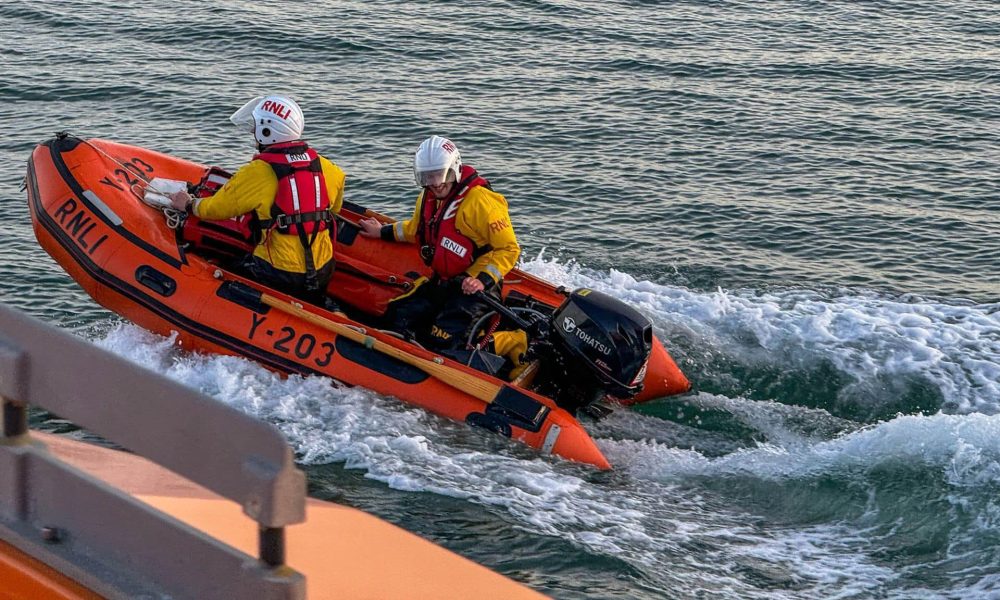
A WOMAN has died following an emergency response at West Angle Beach on Sunday afternoon.
Angle RNLI was launched at 3:09pm on Sunday, May 30, following an urgent request to assist with an incident at the beach.
Once on scene, the lifeboat’s Y boat was deployed ashore with three crew members on board.
The RNLI crew worked alongside St Govan’s and Tenby Coastguard Rescue Teams, Welsh Ambulance Service paramedics, the Wales Air Ambulance and Dyfed-Powys Police.
The crew remained at the scene for around two hours.
A spokesperson for Angle RNLI said: “No further details will be released.
“Our thoughts are with the family and friends of the casualty at this difficult time.”
Busy week for lifeboat crew
The callout was one of four attended by Angle RNLI during a busy few days for the volunteer crew.
At 4:27pm on Monday, the lifeboat was requested to launch following reports that two people had been caught in a rip current at Freshwater West Beach.

The launch was later cancelled after it was confirmed that the two people had been brought safely ashore by a surfer.
Later the same evening, at 6:32pm, the crew was paged again to assist a four-metre speedboat with two people on board which had broken down and was drifting near Angle Buoy.
The vessel was taken under tow to the Cleddau Reach slipway and safely recovered by 9:00pm.

Mayday call from yacht
On Wednesday, at 6:05pm, Angle RNLI was launched following a mayday call from the lone skipper of a 10-metre yacht, around 25 miles south-west of St Ann’s Head.
The yacht had suffered engine failure and, because of a lack of wind, the skipper was unable to sail.
Fatigue and seasickness led the skipper to issue the distress call.
An Angle RNLI spokesperson said: “With the skipper now severely seasick and unable to leave the cockpit, two crew members from the lifeboat were transferred onboard to assist.
“With the vessel adrift and without a means of power, and taking into consideration the effects this was having on the skipper, the safest course of action was to take the vessel under tow.
“With a tow passed and set, the crew began the five-hour journey back to Milford Haven.”
The yacht was safely brought into the marina with help from marina staff.
The lifeboat crew returned to station and made the vessel ready for further service by 2:00am.

PEMBROKESHIRE has reached a major digital milestone, with 75% of the county now able to access gigabit-capable broadband.
The figure marks a dramatic rise from just over 5% coverage in 2019, with year-on-year growth driven by public and private investment, community engagement, and support from the Swansea Bay City Deal’s Digital Infrastructure Programme.
Early commercial interest in rural Pembrokeshire was limited, so a strong focus was placed on working with communities to demonstrate demand and remove barriers to deployment. That approach helped create the conditions for competitive investment and has since transformed the local market.
Today, 43.7% of gigabit coverage in Pembrokeshire is delivered by alternative network suppliers, including Ogi, Voneus and local provider Dragon WiFi. Openreach also remains a major network developer in the county and is expected to continue playing a key role.
Cllr Paul Miller, Deputy Leader and Cabinet Member for Place, the Region and Climate Change at Pembrokeshire County Council, who has had portfolio responsibility for digital infrastructure since 2017, said: “Reaching over 75% gigabit-capable coverage is a major milestone for Pembrokeshire and demonstrates what can be achieved through partnership working.
“In 2019, large parts of the county were being overlooked for investment and just 5% could get gigabit speeds. Since then, working with partners across the sector, approximately 50,000 homes and businesses in Pembrokeshire have been connected.
“While we recognise there is more to do before we reach 100%, the progress so far, particularly given the rural nature of our county, has been incredible.”
Delivery across the county has been supported by a combination of public and private investment, including the Local Full Fibre Networks programme, which connected around 70 public sector sites, the UK Government’s Gigabit Broadband Voucher Scheme, Openreach’s Fibre Community Partnerships, Welsh Government’s Access Broadband Cymru grants, planned commercial builds and the Digital Infrastructure Programme’s Better Broadband Infill Project.
Martin Williams, Partnership Director for Wales and the West of England at Openreach, said: “We’re proud to be supporting Pembrokeshire’s digital future, with our full fibre network now reaching 43,000 premises, backed by £12.9m of investment.
“This milestone means faster, more reliable connectivity for homes and businesses across the county, especially in rural areas. Working closely with Pembrokeshire County Council and the UK Government, we’re continuing to bring full fibre to even more communities.”
Pembrokeshire County Council said its Digital Champions have played a key role in increasing connectivity. Through a proactive “barrier-busting” approach, the team has helped streamline internal processes and provide coordination to support suppliers and speed up deployment.
Work will now continue to extend coverage further, particularly in harder-to-reach rural areas, as Pembrokeshire builds the digital foundations needed to support economic growth, public services and resilient local communities.

For more information about connectivity in your area, email [email protected]

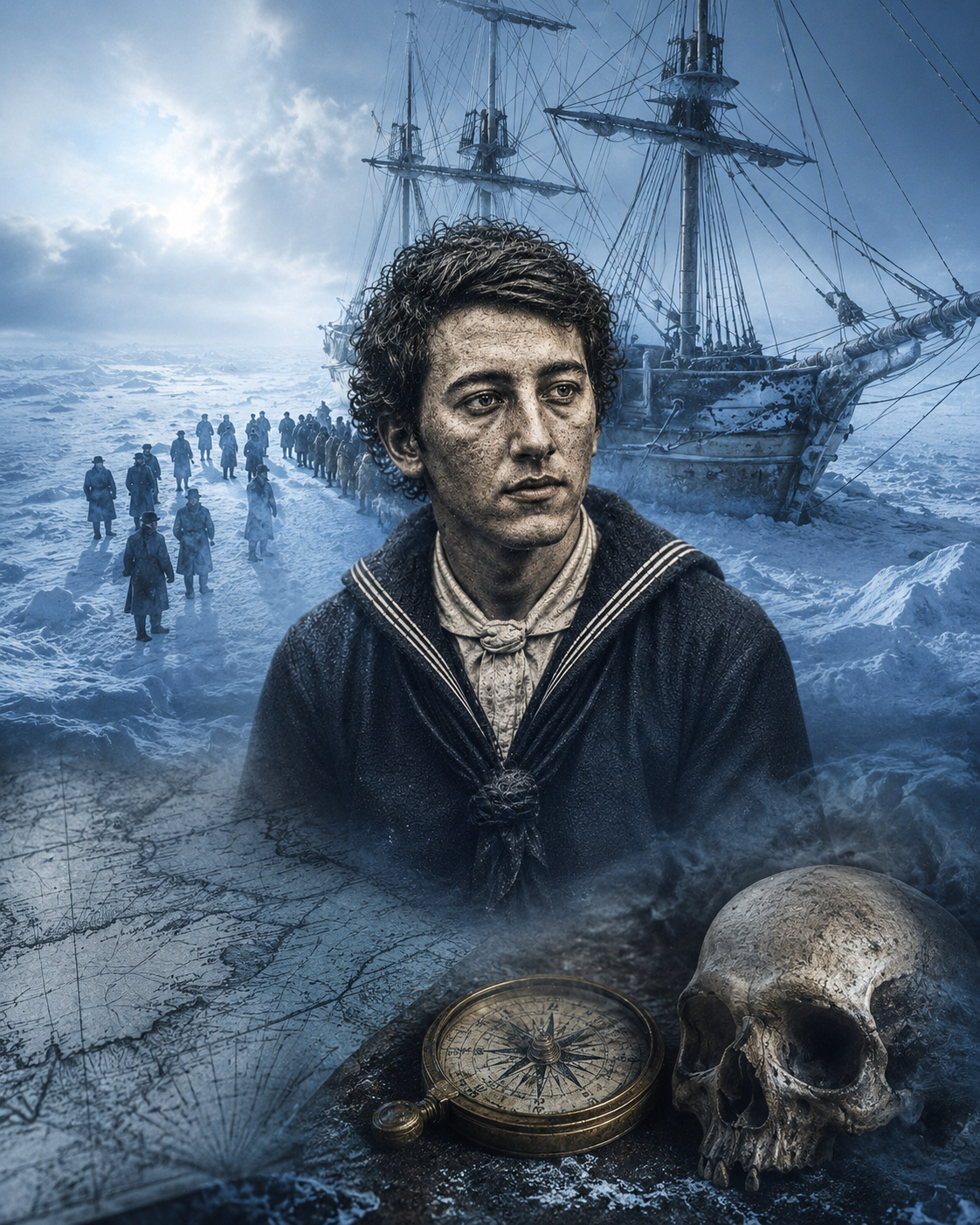
DNA breakthrough identifies cabin boy David Young as exhibition marks 200 years since ship’s launch
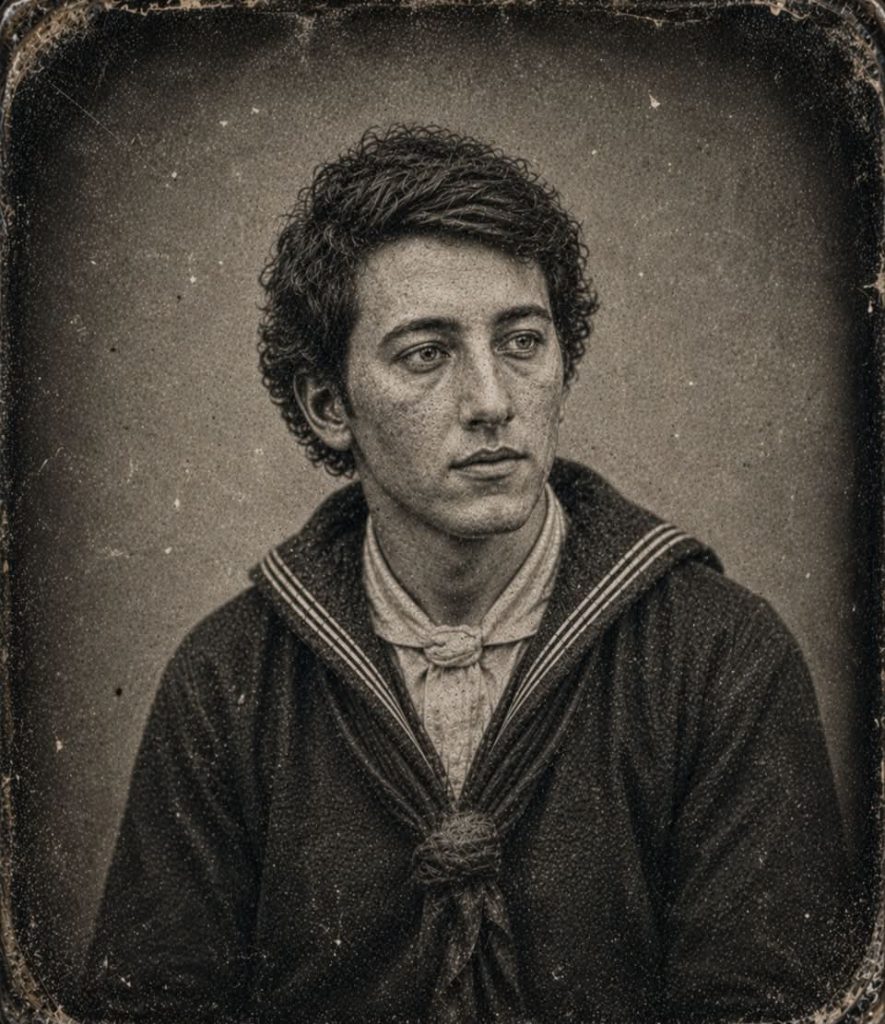
ON MAY 19, 1845, a handsome 17-year-old boy boarded the Pembroke Dock-built ship HMS Erebus to begin one of the most tortuous and tragic voyages in modern history.
David Young, like all the other crew members around him, was full of excitement and an unquenchable determination that their Arctic expedition would be equally as successful as Erebus’s previous voyage to Antarctica. There, under the leadership of Royal Navy Captain Sir James Clark Ross, the ship smashed through approximately 134 miles of ice to discover the South Magnetic Pole.
This time, led by seasoned polar explorer Sir John Franklin, Erebus’s 69-strong crew was convinced their expedition to the Arctic would uncover that vital sea trading route between the Atlantic and the Pacific Oceans — the Northwest Passage. But what they did not know was that this would turn into one of the most gruesome voyages known to mankind.
So extreme was the crew’s final desperation, the men were forced to resort to cannibalism in temperatures which dropped as low as minus 48C. HMS Erebus, together with her crew, would never return to UK waters.
But now, following the discovery of 14 sets of human remains near King William Island, DNA tests have traced David Young to his great-great-grandnephew, former professional diver Adrian Young, who lives in Templeton, near Narberth.

“David was one of 14 human remains that were found at the site, and finally being able to find out just that little bit more about him means so much to me,” Adrian told The Pembrokeshire Herald.
“In my early 20s, when I was doing some archaeological dives on treasure ships in the Scilly Isles, my aunt told me as much as she knew about David Young. And ever since then, I’ve wanted to find out whether there was a family connection.
“David was obviously a very adventurous young man, and I guess this runs in the family. I worked as a professional diver, I was the chief engineer of tugs, and I also once drove a Land Rover all the way to Turkey!”
David, who served as an Erebus cabin boy, was identified by DNA carried out on his skull and, so far, only five crew members have been identified. These include Captain James Fitzjames, whose jawline showed signs of cannibalism.
Built in Pembroke Dock over 200 years ago, Erebus was a Hecla-class bomb ketch measuring 104 feet long, which was less than half the length of a standard man o’ war ship. She took 20 months to build at a cost of £14,603, which equates to £1.25m in today’s money.
Launched from Pembroke Dock in 1826, she embarked on her successful Antarctic expedition and then, on May 19, 1845, sailed from Greenhithe in Kent on Franklin’s quest for the Northwest Passage.
HMS Erebus was both a powerful and luxurious ship, boasting a steam engine and a propeller capable of thrusting the boat at four knots and 25hp. The crew benefited from a heating system and vast supplies of provisions to see them through their expected three-year voyage. These included cattle, sheep, pigs and hens, which were transported on two accompanying supply ships. Erebus also had three pets on board — a monkey given by Lady Franklin, a Newfoundland dog called Neptune, and a cat.

Despite their luxuries, the sailors’ lives, under the zealous eye of Sir John Franklin, were undoubtedly tough. Franklin was an exceptionally focused individual whose aim was to succeed at everything he did. As a result, he pushed his men so hard he earned himself the moniker “the man who ate his boots”. At the age of 59, he was by far the oldest crew member on board HMS Erebus.
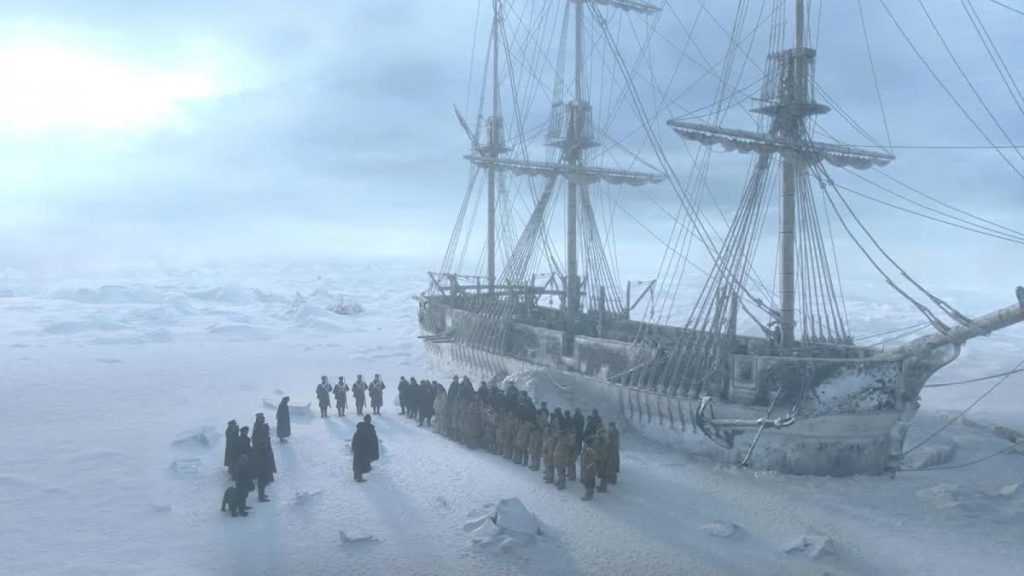
The intention was for the ship to overwinter in the ice before continuing to voyage in the spring. But the extreme weather conditions meant there was no thaw, and Erebus was forced to remain in the ice for 19 months. The sailors now found themselves at the mercy of the immense pressure of the sea ice and unpredictable icebergs before HMS Erebus became trapped in the desolate area around Beechey Island. The Inuit rarely visited this region, with the result that the crew could no longer rely on locals for meat, clothing and oil. Temperatures dropped to minus 48C at night and minus 35C by day; even taking off a balaclava could rip the skin and beard from the sailors’ chins.
In a desperate attempt to find water to enable them to move forward, in April 1848, David Young and 13 other crewmen left Erebus, pulling a whaling boat over the frozen sea for approximately 19 miles. This would have been an exceptionally arduous effort for the men, as they had little food and water to retain their energy levels. And despite the freezing temperatures, the men would still have sweated heavily given the weight of the whaling boat; whenever they stopped, the sweat would turn to ice, so it was possible that gangrene may have set in.
Nobody will ever know what finally took David’s life, however, it is likely to have been a combination of starvation, exhaustion and possibly scurvy.
When Erebus went missing, Franklin’s wife put up a hefty £10,000 reward for information, while the Royal Navy offered a £3,000 reward. A total of 36 searches were carried out between 1847 and 1859, with the total number of searches eventually amounting to 52. Erebus was finally located in 2014 by Parks Canada.
“This was massive news, as searches had been going on for so long,” said Adrian.
“And when they dived down, they found the ship was in exceptionally good condition, with most of the artefacts undamaged. This means Erebus is the only surviving ship launched from Pembroke Dock 200 years ago that still survives. So for me, living just a few miles away, it means so very much, particularly knowing that David Young was my great-great uncle.”
Now, to mark the 200th anniversary of the launch of HMS Erebus from Pembroke Dock, the town’s Heritage Centre is hosting a major exhibition celebrating the ship’s extraordinary history. It brings this remarkable international story back to its birthplace, featuring rare artefacts recovered from the wreck, many of which are being shown to the public for the first time, as well as immersive displays, digital interactives, an Arctic diorama and underwater footage from the wreck site.
The exhibition will run from Monday, June 8, until the end of October.



Community2 hours ago
HMS Erebus tragedy links Pembroke Dock ship to Templeton family
DNA breakthrough identifies cabin boy David Young as exhibition marks 200 years since ship’s launch ON MAY 19, 1845, a...


Community5 hours ago
Narberth cash machine closures spark urgent access review
CALLS have been made for an urgent review of access to cash in Narberth after two town centre ATMs were...


Health19 hours ago
First Minister quizzed on Welsh NHS pressures in his first-ever FMQs
SENEDD Members pressed the First Minister over the state of the health service in Wales, as the Plaid Cymru leader...

Community1 day ago
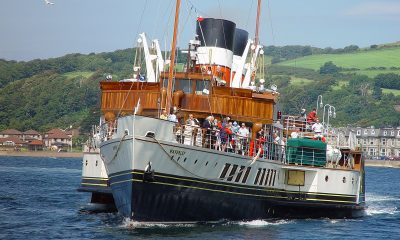
Historic paddle steamer Waverley to return to Fishguard this month
THE WORLD’S last seagoing paddle steamer will return to Fishguard this month as part of her annual visit to South...


Local Government1 day ago
National Express use of new Haverfordwest interchange still subject to risk checks
A RUMOUR that National Express coaches may struggle to use Haverfordwest’s new transport interchange has been denied by Pembrokeshire County...


Crime1 day ago
Milford Haven man jailed for illegal Premier League streaming service
A MILFORD HAVEN man who supplied illegal Premier League streams and loaded Firesticks to almost 2,000 customers has been jailed...


Community2 days ago
RNLI lifeguards rescue beachgoers during busy heatwave weekend
FOUR PEOPLE RESCUED AS RIP CURRENTS AND OFFSHORE WINDS HIT PEMBROKESHIRE BEACHES RNLI lifeguards in Pembrokeshire rescued four people and...

Local Government2 days ago
Council and school staff pay row could hit Pembrokeshire services
COUNCIL workers, carers and school support staff in Pembrokeshire could be drawn into a growing UK-wide pay dispute after GMB...


Health3 days ago
Hywel Dda to hold second consultation on future of stroke services
A SECOND phase of public consultation is to be held on the future of stroke services across Hywel Dda University...


Community3 days ago
Warning as algal blooms mistaken for sewage on Welsh coast
Beachgoers urged to avoid contact with suspicious foam and report pollution concerns NATURAL RESOURCES WALES has issued summer advice to...
-

 Health6 days ago
Paul Davies warns health board over Withybush and Bronglais services
-

 Crime6 days ago
Carmarthenshire man sent to Crown accused of 33 historic sexual offences
-
Crime1 day ago
Milford Haven man jailed for illegal Premier League streaming service
-
Crime1 day ago
Haverfordwest man admits cocaine offence as Crown disputes basis of plea
-

 Crime6 days ago
Suspended prison sentence for man who left dogs without vet care
-

 News6 days ago
Vehicle destroyed in early morning fire in Pembroke
-

 News6 days ago
Davies calls for NHS foreign language interpreters to be scrapped
-

 Crime6 days ago
Man accused of police station bomb hoax remanded in custody
sian morris
April 14, 2016 at 1:44 pm
from the Guardian
thatotherbloke 13m ago
There are a small number of places where people of very modest means can holiday. Amongst them is Pembrokeshire – perhaps it is time for people to boycott Pembrokeshire – the voters of Pembrokeshire elected Steven Crabb let them feel the benefit of their choice first hand.