


News
Cilgerran Festival Week makes a splash

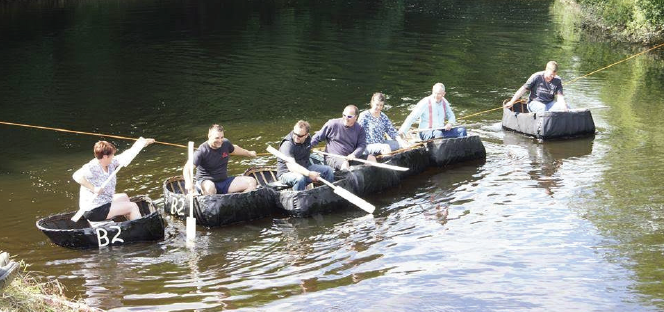
 CILGERRAN Festival Week has begun this week with a large variety of activities for the whole family.
The festival begun on Friday (Aug 12) and will be continuing on throughout the week until Sunday (Aug 21) during which a grand carnival procession will take place through the streets of the small rural Welsh town.
The annual Festival Week is a much anticipated event within the town and celebrates a variety of cultural traditions that are cherished within the area such as the popular coracle race held on the Dolbadau River.
Cilgerran Festival Week begun on Friday (Aug 12) with a performance by Elvis Preseli, the popular Pembrokeshire-based Elvis impersonator, who was supported by local acoustic act Samuel Walters. Hosted in The Cardiff Arms, the event was a fantastic start to the week’s festivities as a BBQ in the pub’s beer garden appeared to be popular with attendees.
Saturday (Aug 13) then followed with a Horticultural Show, in which entrants presented their best horticultural goods to be judged. There were a ‘great number of quality entries this year’ a spokesperson stated, as the veg was judged at the Village Hall at 2.30pm.

This was followed by the crowning of this year’s Carnival Queen, Jamie Catharine Low, and her female attendants, Seraphina Slack and Ffion Dellar, and her male attendants, Osian Jones and Alfie Bellars. During the evening, an exciting new edition to the Festival Week took place in The Masons Arms, where a game of ‘Family Fortunes’ took place. During this, there was a BBQ available as well as drinks at the bar.
Sunday’s (Aug 14) festivities were also a great hit with the people of Cilgerran as the ever popular junior games was held at the MUGA. Hotdogs, snacks, drinks and sweets were available to all the contestants who participated in the wide range of sports activities. Cilgerran Rovers then continued the day’s sport-filled itinerary with a football tournament played on the town’s football field. A wide variety of players, both young and old, participated in the tournament whilst spectators enjoyed the game. A concert was then held at the Village Church from 6pm onwards.
A Tea Party was hosted on Monday (Aug 15) in the Village Hall and a fantastic array of entertainment was arranged by the Cilgerran Players. Following the Village Hall’s activities was the popular Car Treasure Hunt, in which contestants followed a stream of clues by car that brought them back to a secret location in Cilgerran where they all enjoyed pork rolls and beverages.
A kayak and canoe session took place on Tuesday (Aug 16) on the river banks of Dolbadau and was met with fantastic summer weather. Everyone involved had a brilliant time enjoying the water-based activities, which were followed by a picnics of hot dogs and burgers. Children then enjoyed a pavement painting competition whilst adults gathered for bingo in the Village Hall.

Wednesday (Aug 17) welcomed the Village Walk with Eufron Bowen from 1pm onwards, as everyone gathered at the Millennium Stone to enjoy a walk in beautiful sunshine. A Donkey Derby Race was then held in the town’s field at 6pm. Contestants raced their donkeys across the field and then settled down to enjoy a BBQ. In the evening, an Open Mic Night was held at the Pendre Inn, in which participants were able to exhibit their vocal prowess in lieu of ‘Cilgerran’s Got Talent’ the following night.
Prior to Cilgerran’s Got Talent, hosted in the Villa ge Hall at 8pm, there were a variety of activities to get involved with at The Wildlife Park for all the family – including a popular pond dip that helped cool everyone down from the summer heat. Cilgerran’s Got Talent followed this, with everyone participating having a great time. The event achieved a brilliant turn out, and the night then progressed onwards to a ‘Stars In Your Eyes’ talent show, also held in the Village Hall.
Friday will welcome the 100 year Roald Dahl Celebration Family Treasure Hunt held throughout the town from 11am onwards. Contestants will have the opportunity to earn a ‘Golden Ticket’ that will allow entry into ‘The Chocolate Factory’ situated in the Village Hall at 12.30pm, where there will be a chocolate workshop and family picnic. Prizes for the treasure hunt will include a first prize of £10, second prize of £5 and third prize of £3. There will then be a Western Rodeo Night at The Pendre Inn from 7pm onwards, where there will be prizes for the best dressed and longest rodeo rider.

Homemade cakes, coffee and tea will be available on Saturday from 10am onwards at the Millennium Stone with a coffee morning. The much anticipated Coracle Race will follow at 1.30pm on the Dolbadau River.
The Coracle Race is a unique sport to Wales in which participants will race small round boats made out of wickerwork and covered in a water tight membrane across the Dolbadau River with a small paddle. Bystanders will watch the exciting race play out and will then enjoy a BBQ and refreshments.
The famous traditional Coracle Night will then be held at The Cardiff Arms at 6pm, where a visiting male voice choir will perform as part of a night that is promised to include music, singing and laughter. The pub will be open until late and a BBQ will be held.
On Sunday, the jam-packed week of activities will then be concluded with the pièce de résistance – a Grand Carnival Procession, held at 1.30pm.
Participants will parade through the streets of Cilgerran in a haze of colourful costumes. Carnival winners will be then announced and the Inter-Pup Tug of War, sumo wrestling, laser tag and archery will then take place on the town’s field. Even more fun day activities will also be available on the field, including a bouncy castle, kids quad bikes and classic cars, bikes and tractors. A BBQ, bar and refreshments will also be available.
Commenting on the events so far, Nia Morris, a spokesperson for Cilgerran Festival Week, stated: “We’ve had a successful week so far and the weather has drawn a crowd to the river today for some kayaking.
“The Coracle Race is in its 66th year and has become popular once again.
“The competition is on between the Teifi and Towy coracles. All the families are enjoying themselves and we hope the weather persists for everyone to gather and have fun this weekend.”



LABOUR SAYS MINISTERS MUST EXPLAIN COST AND TIMETABLE FOR PYLON PLANS
PLAID CYMRU’S approach to energy infrastructure has come under scrutiny after Energy Minister Adam Price was challenged over plans to reduce the use of overhead pylons in Wales.
Mr Price defended the Welsh Government’s position during an appearance on BBC Radio Wales’ Sunday Supplement, arguing that communities must have greater confidence in how major grid projects are handled.
Plaid Cymru has pledged to give communities a stronger voice over energy developments and to look more closely at alternatives to overhead transmission lines, including underground cabling where possible.
The issue has become increasingly sensitive in rural parts of Wales, where proposed pylon routes linked to renewable energy schemes have raised concerns about landscape impact, tourism and local consultation.
However, Welsh Labour said the minister had failed to explain when any restriction on pylons would take effect, or who would pay the additional cost of placing cables underground.
A Welsh Labour spokesperson said: “Adam Price keeps saying how clear their manifesto was and yet he won’t say when they’re banning pylons. They won’t say who is paying for the extra cost of undergrounding cables.
“Without certainty, companies won’t invest. That’s thousands of clean, green energy jobs at risk. Plaid need more than a plan to have a plan.”
Labour said the Welsh Government must now set out how its policy would work in practice, including whether it amounts to an outright ban, what exemptions would apply, and how any extra costs would be funded.
The debate highlights the challenge facing ministers as Wales seeks to expand renewable energy generation while addressing public opposition to large-scale grid infrastructure.

HORSES, STALLS AND FAMILY CROWDS RETURN TO MONKTON
FAMILIES, horse owners and visitors turned out in force for Pembroke Fair on Saturday (May 23), with many praising the event as one of the best organised in recent years.
Held at the Community Centre Field in Monkton, the annual fair brought together horse owners, traders and local families for a traditional day centred around horses, ponies, stalls and socialising.
Coloured cobs, heavy horses, ponies and horse-drawn traps attracted attention throughout the day, with many visitors gathering around the field to watch the animals being shown and led around the site.


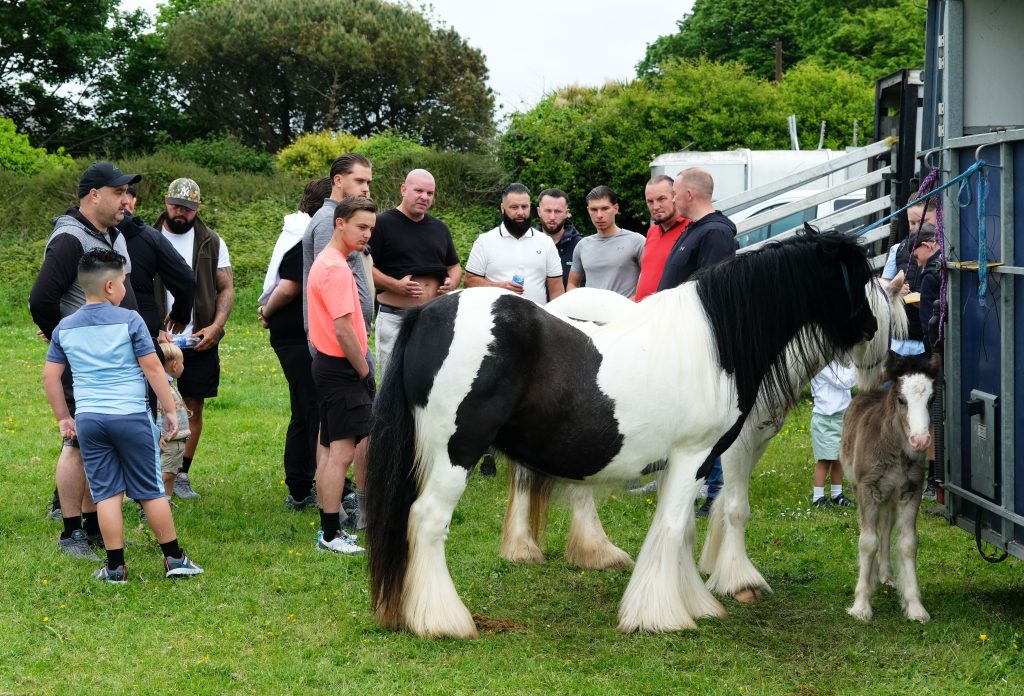
A variety of stalls selling everything from clothing and ornaments to tack and second-hand goods helped create a lively market atmosphere, while food vendors kept visitors fed throughout the day.
Despite overcast conditions at times, the event remained busy, with many attendees staying for several hours to enjoy the traditional fair atmosphere.
Community members later took to social media to praise the smooth running of the event, with several publicly thanking organiser Charlie Price for his efforts in bringing the fair together.
Comments described the day as “well organised” and praised the welcoming atmosphere, with many saying it was encouraging to see a long-standing local tradition continuing to thrive.
The fair once again brought together members of the travelling community, local residents and horse enthusiasts from across west Wales.






A horse drive was also due to take place on Sunday (May 24), continuing the weekend’s celebrations.
Photo captions:
Traditional gathering: Horses, ponies, horse-drawn carts and market stalls drew crowds to Pembroke Fair in Monkton on Saturday (Pic: Herald).

A HEALTH board has been criticised by Audit Wales after GP contracts worth more than £10m were awarded without sufficient due diligence checks.
Aneurin Bevan University Health Board allowed a GP partnership associated with eHarley Street Primary Care Solutions to take on eight GP contracts in south-east Wales, with a combined annual value of around £10.1m.
Audit Wales said the board should have carried out greater scrutiny before approving the arrangements, including checks on financial resilience, workforce plans, business risks and the partnership’s ability to manage several practices at once.
However, the watchdog found no evidence of fraud and noted the board was dealing with significant pressure in general practice, including vacant contracts and limited interest from other bidders.
The report said weaknesses in governance and scrutiny contributed to later disruption and uncertainty for patients and staff when problems emerged.
Concerns included financial and workforce pressures, unpaid invoices, and issues relating to tax and pension payments. Some contracts were later handed back, requiring the health board to step in to protect services.
Natasha Asghar MS, Welsh Conservative Shadow Cabinet Minister for Health and Social Care, said the findings were “deeply concerning”.
She said: “Patients and staff were left facing disruption and uncertainty because proper scrutiny was not carried out before these contracts were awarded.
“The Welsh Conservatives believe lessons must be learned to ensure robust checks are in place, protect frontline services and restore confidence in primary care across Wales.”
Aneurin Bevan University Health Board accepted the recommendations and said it had already strengthened its processes.
Audit Wales said the case highlighted the need for stronger checks before GP contracts are transferred, particularly when a single partnership is taking on multiple practices in a short period.



Business1 day ago
Plaid energy policy challenged by Labour after Adam Price interview
LABOUR SAYS MINISTERS MUST EXPLAIN COST AND TIMETABLE FOR PYLON PLANS PLAID CYMRU’S approach to energy infrastructure has come under...


Community1 day ago
Pembroke Fair praised as well-organised community event
HORSES, STALLS AND FAMILY CROWDS RETURN TO MONKTON FAMILIES, horse owners and visitors turned out in force for Pembroke Fair...

Local Government4 days ago
Youngest mayor in century takes office in Haverfordwest
Randell Izaiah Thomas-Turner makes history as town’s first millennial mayor and first from a diverse background HAVERFORDWEST has welcomed a...


Community4 days ago
Pembroke Fair set to return after last year’s success
STALL HOLDERS INVITED AS HORSE DRIVE PLANNED PEMBROKE Fair is set to return this weekend following the success of last...


Crime4 days ago
Neyland man accused of running over traffic worker’s foot
Jury hears conflicting accounts over roadworks incident in Milford Haven A NEYLAND man has appeared before Swansea Crown Court accused...


Community4 days ago
New pilot boat Llanion dedicated at emotional Milford Haven ceremony
Vessel dedicated at Mackerel Quay as Port marks major investment in safety and resilience MILFORD HAVEN’S new state-of-the-art pilot vessel...


Local Government4 days ago
Police and GoSafe to target speeding in Newport and Dinas
RESIDENTS’ concerns over speeding and anti-social driving have prompted planned enforcement action in the Newport and Dinas areas. Dyfed-Powys Police...


Community5 days ago
Safety first as Milford Haven’s new pilot boat marks end of troubled chapter
Gary Solomon, who was aboard St Davids during the 2016 collision, helped shape new self-righting vessel Llanion from conception to...


Crime5 days ago
Cocaine courier caught with £15,000 haul in Pembroke Dock
Defendant transported high-purity drugs from Cardiff to Pembrokeshire for £210 A PEMBROKESHIRE man caught transporting more than £15,000 of high-purity...


News6 days ago
Car bursts into flames near Redberth Croft as road closed after incident
Nobody injured after vehicle fire near A477 prompts emergency response A CAR was destroyed by fire near the entrance to...
-

 News3 days ago
Watchdog criticises health board over £10m GP contract checks
-

 Crime5 days ago
Farm owner in court after 26 dogs removed over welfare concerns
-

 News4 days ago
Paul Davies meets Openreach Cymru at the Senedd to discuss Full Fibre rollout
-

 Crime5 days ago
Tree surgeon sentenced for failing to provide breath test
-

 Crime5 days ago
Pembrokeshire teenager admits driving almost four times over drug-drive limit
-

 News5 days ago
Milford man admits handling stolen goods from three local properties
-

 Crime7 days ago
Builder jailed for £82,000 fraud affecting 18 victims
-

 Crime4 days ago
Milford Haven man admits affray after alleged pub incident
private jet charter Palm Beach
April 10, 2026 at 9:13 pm
Great read! I appreciate the effort you put into researching this.