

News
First meeting of the new Cabinet

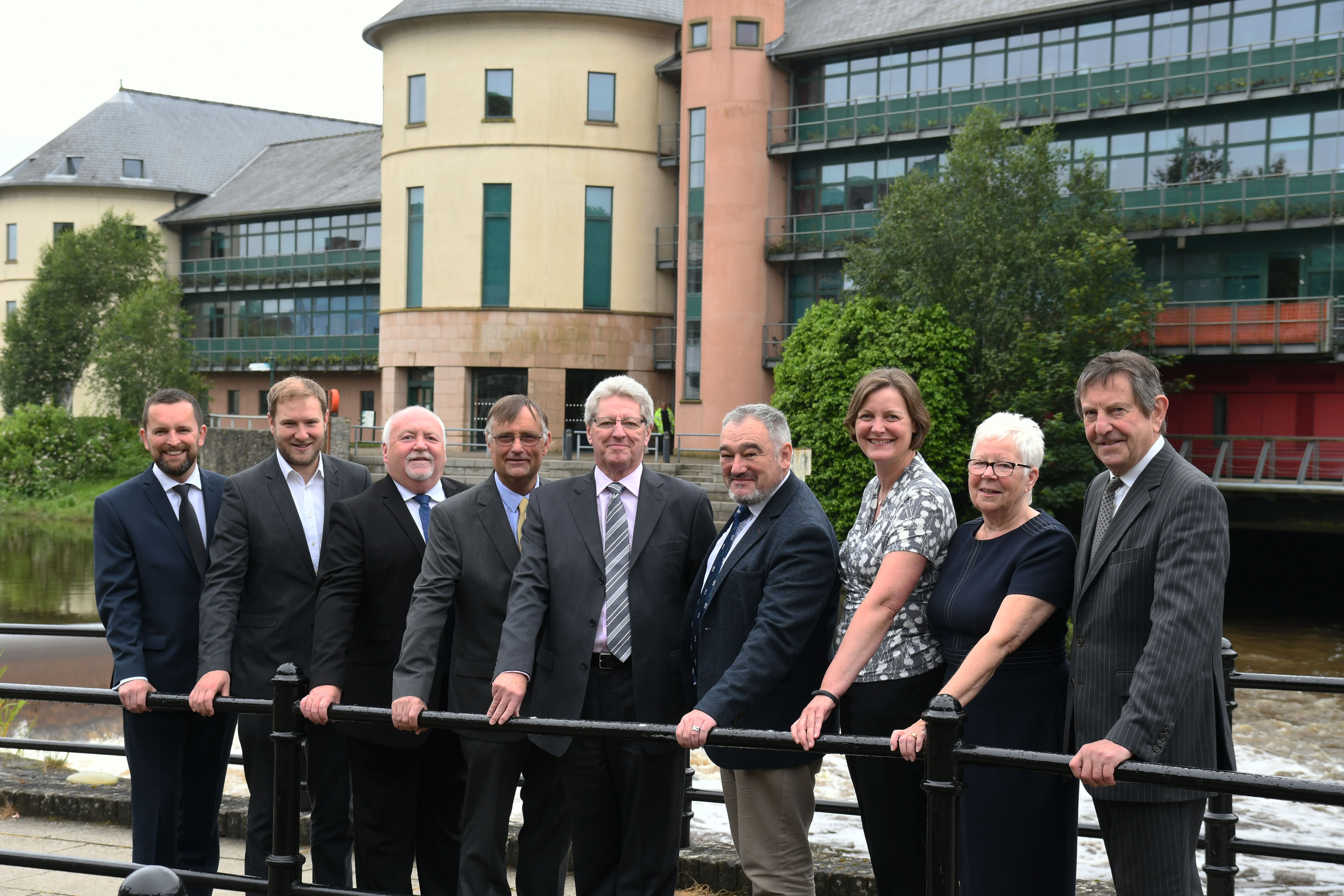

Left to right: Cllr Neil Prior, Cllr Paul Miller, Cllr Phil Baker, Cllr Bob Kilmister, Cllr David Simpson, Cllr Cris Tomos, Cllr Tessa Hodgson, Cllr Pat Davies, and Cllr David Lloyd.
THE FIRST meeting of Pembrokeshire County Council’s new Cabinet takes place today (Jun 12).
Councillor David Simpson, the new Leader of the Authority, has appointed eight Cabinet members to direct policy and make decisions on key issues.
They are all new faces to the Cabinet apart from Councillor David Lloyd, who served as Cabinet Member for Education under the previous administration.
Councillor Simpson said he was excited about the combination of knowledge and breadth of experience possessed by the Members.
“I’m very happy with the Cabinet because I have picked them on their ability and nothing else” he said.

“I’m especially pleased about the new cabinet role of Transformation and IT, which I’ve introduced because of the impact that I feel Transformation will make to the Authority.”
He has not appointed a Deputy Leader, as all Cabinet Members will be expected to deputise for Councillor Simpson if necessary.
The Cabinet Members are as follows:
Councillor David Simpson, Lampeter Velfrey (Unaffiliated)
Cabinet Member for Corporate Matters
David has been a magistrate for 20 years and a County Councillor since 2004. He retired from business in 2000. David moved to Pembrokeshire in the early 90s, after having a holiday home in Neyland.
A Duke of Edinburgh Gold award holder and a staunch supporter of the scheme, he lives in Clynderwen and is married with four children and seven grandchildren.
Councillor Neil Prior, Llanrhian (Unaffiliated)
Cabinet Member for Transformation and IT

Neil’s family moved to Pembrokeshire over 30 years ago and he himself returned home two and a half years ago having worked for blue chip companies including O2 and Microsoft.
During his career he has worked with over 100 local authorities across the UK, helping them to make the most of technology to provide services more efficiently and effectively. He is looking forward to bringing this experience to help the County Council respond and adapt to the challenges it faces.
Councillor Paul Miller, Neyland West (Labour)
Cabinet Member for Economy, Tourism, Leisure, and Culture
First elected in 2012 representing the Neyland West Ward, Cllr Miller has led the Council’s Labour Group for the past five years.
Paul’s professional work has seen him lead major capital development and regeneration projects across the UK and this experience will be key as the new administration takes a more proactive approach to regeneration and development across Pembrokeshire.
Councillor Phil Baker, Saundersfoot (Unaffiliated)
Cabinet Member for Infrastructure and Assets
Since 1982, Phil has worked both for Civil Engineering Consultants and Civil Engineering Contractors in Pembrokeshire and across the UK. Projects have included reclamation schemes, Local Authority and Private Development infrastructure installations, Water Utilities Asset Management Capital investment Programmes and for the last 12 years Welsh Government Highway Improvements.
Phil has represented Saundersfoot as County Councillor since 2008 and has been a Saundersfoot Community Councillor since 1998. He is the County Council appointee on Saundersfoot Harbour Commission and Governor at Saundersfoot C.P. and Greenhill School.
Councillor Bob Kilmister, Dinas Cross (Liberal Democrat)
Cabinet Member for Finance
Bob lives on a smallholding near Llanychaer with his wife of 40 years Nikki. He worked for J Sainsbury Plc for 30 years mainly running large supermarkets in the West Midlands. These had an annual turnover of up to £18 million and employed over 300 staff. He finished his career working as the link between the Distribution and Retail arms of the business.
He has always been interested in politics, and was a District Councillor in Worcestershire for eight years being elected first at the age of 25.
Councillor Cris Tomos, Crymych (Plaid Cymru)
Cabinet Member for Environment and Welsh Language
Cris has over 25 years’ experience of working with social enterprises and charities to develop sustainable non-grant dependent income. He has developed and helped set up several community benefit cooperatives in West Wales. The majority of the new cooperatives are community asset based, where redundant buildings are bought by the community to allow new social enterprises to trial their services.
Cris was named Wales Co-operator of the year in 2012, and Wales Social Enterprise Champion in 2013.
Councillor Tessa Hodgson, Lamphey (Unaffiliated)
Cabinet Member for Social Services
Councillor Tessa Hodgson grew up in Milford Haven where she attended the grammar school. She has a background in business and marketing and currently owns and runs a B&B and holiday cottage complex near Lamphey.
She is a mum of three teenagers who are all educated locally. Since being elected in 2012 she has served on the Older Persons Health and Wellbeing Overview and Scrutiny Committee and the Senior Staff Committee.
Councillor Pat Davies, Fishguard North West (Unaffiliated)
Cabinet Member for Regulatory Services and Housing
Pat has for many years been involved and had concern around social issues and she intends to bring her experiences into her new role. She says she is delighted to have the opportunity to work with a new team of Cabinet Members under the new and vibrant Leadership of David Simpson.
“We start, I feel, with fresh innovative ways of working in a professional manner to bring about a progressive and inclusive County Council,” she said.
Councillor David Lloyd, St Davids (Unaffiliated)
Cabinet Member for Education and Lifelong Learning
David is a Pembrokeshire man who has been involved in community action for the past 50 years. He was a Dyfed County Councillor in the eighties during which time he moved the creation of the Economic Development Committee. In the nineties, he campaigned for the National Eisteddfod to visit St. Davids for the first time in 2002.
He has been a County Councillor and Chair of Governors at Ysgol Dewi Sant since 2012, leading the campaign to save the school from closure in January 2016.

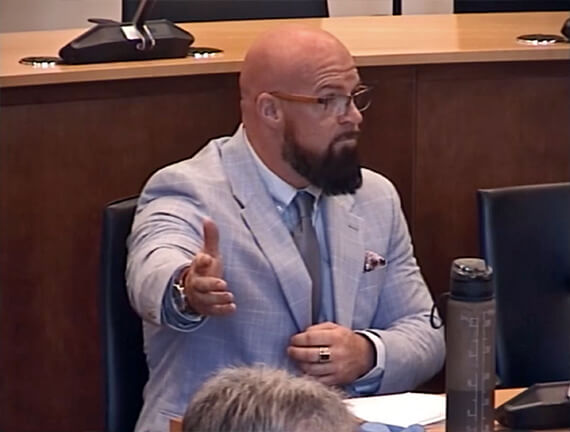
Lee Bridges says senior vacancy should prompt a review of management costs as frontline services face financial pressure
A MILFORD HAVEN town councillor has questioned whether Pembrokeshire County Council needs to appoint a new deputy chief executive at a time when local services are under growing financial pressure.
Councillor Lee Bridges spoke out after the authority advertised for a Deputy Chief Executive and Director of Place, with a salary of between £132,063 and £145,050.
The successful candidate would also receive a £9,576 annual lease car allowance and a relocation package, taking the potential overall package above £154,000.
Cllr Bridges stressed that his concerns related to the position itself and were not intended as criticism of the person currently holding, or previously holding, the role.
He said: “At a time when local authorities across Wales are facing significant financial pressures and frontline services are under increasing strain, I do question whether this role is really necessary.
“The council already has a chief executive, directors responsible for each service area, together with multiple layers of senior managers, middle managers and team leaders.
“When opportunities arise through senior vacancies, they should also be seen as opportunities to review and streamline management structures rather than simply replacing like-for-like.”
The senior post carries responsibility for areas including regeneration, economic development, planning, transport, environmental services, climate change and major capital projects.
The successful applicant would also support major investment opportunities linked to the Celtic Freeport.
Cllr Bridges said strong leadership remained important, but argued that the cost of senior management needed to be balanced against the pressure on council services.
He said: “Every pound spent on senior management is a pound that cannot be invested in frontline services that residents rely upon every day.
“Over recent years, we have repeatedly heard that difficult financial decisions have had to be made, with services being reduced or placed under increasing pressure because budgets are stretched.

“If that is genuinely the case, then it seems entirely reasonable that senior management structures should be reviewed with the same level of scrutiny as every other area of council spending.”
He said the vacancy should have prompted the authority to consider whether the responsibilities could be divided among existing senior officers.
Cllr Bridges added: “I would have welcomed a strategic review of whether this post is genuinely essential, or whether its responsibilities could be absorbed within the existing leadership team.
“Any savings could then be redirected towards protecting services for Pembrokeshire residents, whether that is highways, social care, education, environmental services or other frontline functions.”
He said his comments were intended to encourage debate about council priorities rather than criticise individuals.
“This is not about personalities,” he said. “It is about ensuring that, when opportunities arise through natural vacancies, the council asks whether there is a better way of structuring itself for the future.
“At a time when every public pound counts, I think residents would expect those questions to be asked before another senior appointment is made.”
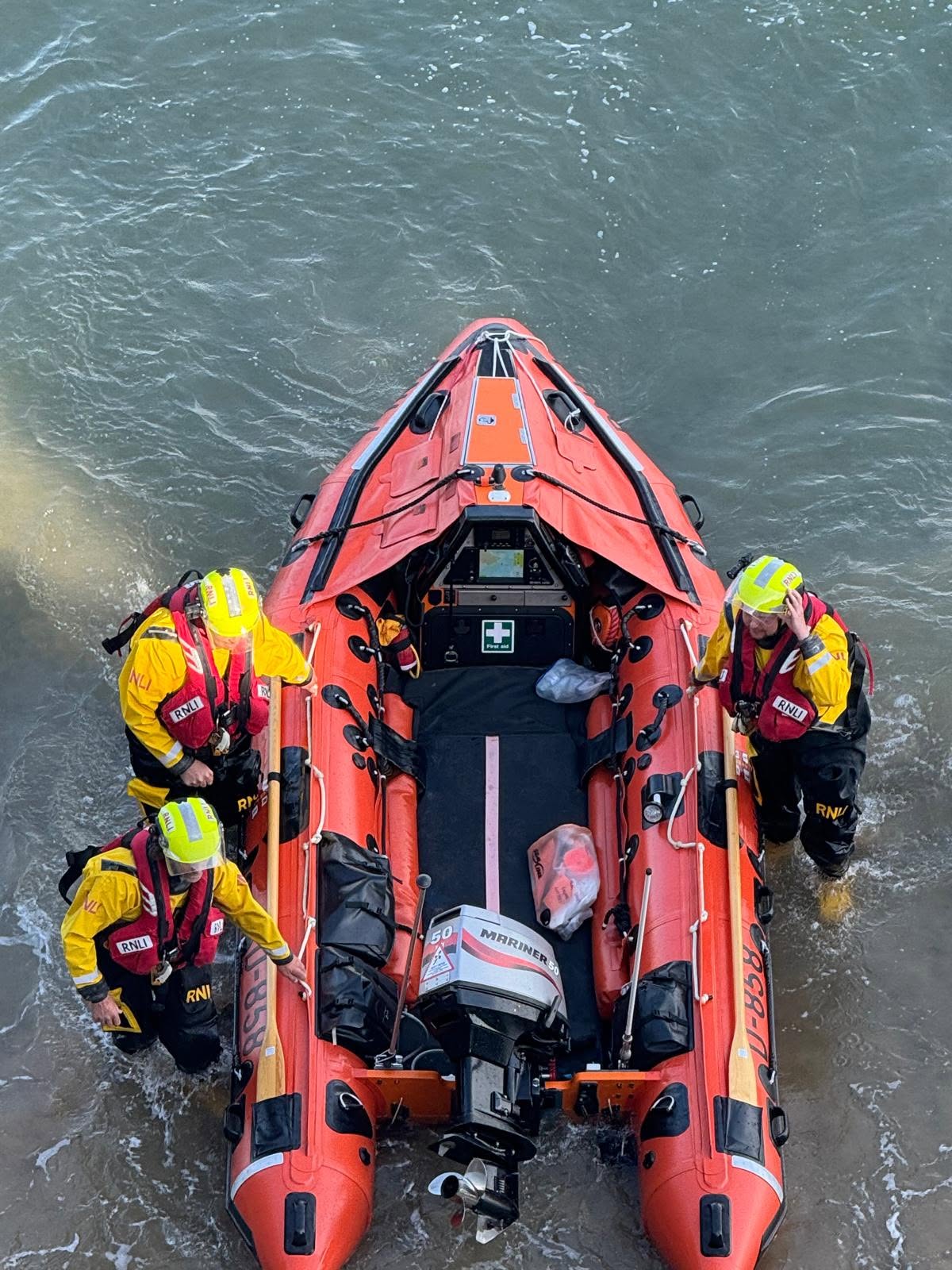
Four adults and two children were taken to safety after the sea rapidly surrounded them below the Imperial Hotel
TENBY’S inshore lifeboat was launched on Tuesday evening after four adults and two children became cut off by the incoming tide.

The alarm was raised at around 5.50pm when the coastguard received several 999 calls reporting that the group was trapped on the beach below the Imperial Hotel, with the water rising quickly around them.
Tenby RNLI’s volunteer crew reached the scene within a minute and found the six casualties with an RNLI beach lifeguard, who had heard they were in difficulty and paddled around to assist them.
All six were taken aboard the lifeboat and brought safely to Castle Beach.
They were reported to be unharmed following the incident and were able to make their own way home.

Broadcaster warns its current funding model is becoming unsustainable as viewers move away from live television and BBC iPlayer
THE NUMBER of television licences in force across the UK has fallen by almost 540,000 in just one year, according to the BBC’s latest annual report.
A total of 23.3 million licences were active at the end of the 2025/26 financial year, compared with 23.8 million 12 months earlier.
The reduction of 539,000 was considerably larger than the fall recorded during the previous year and reflects the growing number of households which say they no longer watch programmes requiring a television licence.
Households need a licence to watch or record television programmes as they are being broadcast on any channel, or to use BBC iPlayer. Those who only use other streaming services to watch programmes on demand do not generally require one.
The number of households declaring that they did not need a licence rose by 62,000 during the year, reaching approximately 3.7 million.
Licence numbers have now fallen by more than 2.5 million since the beginning of the decade, when around 25.9 million were in force.
BBC chief financial officer Berangere Michel said the majority of the decline appeared to be caused by people no longer consuming content covered by the licence.
She warned that the trend was unlikely to reverse and was instead expected to accelerate, strengthening the BBC’s argument that the way it is funded must be reformed.
The corporation’s annual report said its financial outlook had worsened during the second half of 2025, with licence sales falling more quickly than previously forecast.
Inflation, rising production costs and difficult trading conditions across the wider media industry have also increased the gap between the BBC’s income and its expenditure.
Although licence fee income stood at around £3.87 billion in 2025/26, the value of that income has fallen sharply when inflation is taken into account.
In today’s prices, the corporation received approximately £1.34 billion less than the equivalent amount raised in 2016/17, representing a real-terms reduction of around 26 per cent.

The BBC reported an operating loss of £121 million for 2025/26 despite an increase in the price of the television licence during the year.
Director-general Matt Brittin described the situation as a “moment of real jeopardy” for both the BBC and public service broadcasting in the UK.
He said the corporation continued to play an important role in public life, the economy and Britain’s cultural influence, but acknowledged that it would have to change substantially to remain relevant in a rapidly evolving media market.
The report shows that 94 per cent of adults use at least one BBC service each month, but fewer than 80 per cent of households now contribute through the licence fee.
BBC chairman Samir Shah said the difference between the number of people using BBC services and those paying for them demonstrated that the existing system could no longer support the corporation’s public service responsibilities.
The BBC is preparing for negotiations over its next Royal Charter, with the current arrangements due to expire at the end of 2027.
Options being discussed include retaining a reformed licence fee, extending payments to some households using commercial streaming services, or developing a different funding system. The Government has not yet made a final decision.
The future of the licence fee also has implications for broadcasting in Wales. S4C receives its public funding through the television licence, with £97.6 million allocated to the Welsh-language broadcaster during 2025/26.
The BBC has already announced plans to reduce spending across its news, nations and content divisions.
The first phase is expected to save around £160 million, contributing towards a wider target of £500 million by 2028/29. The programme is expected to result in between 1,800 and 2,000 job losses over three years.
BBC executives maintain that substantial reform will be needed alongside those savings if the organisation is to continue providing television, radio, news, online and regional services on their current scale.

Local Government20 hours ago
Catapult attacks suspected after wildlife deaths at Pembroke Mill Pond
Wildlife Crime Officers are investigating after the town council said around five animals showed signs of deliberate injury WILDLIFE found...

Crime22 hours ago
Narberth retailer speaks of shoplifting toll after ‘collectable bear’ stolen
Independent shop owner said rising costs meant businesses could not afford to absorb losses caused by theft A NARBERTH retailer...


Crime23 hours ago
Teen accused of attempting to murder teacher says she lied about stabbing
Defendant accepts teacher was terrified and that a knife wound to the head could kill, but denies deliberately attacking her...


Local Government3 days ago
Calls grow for independent investigation into Manorbier school closure
Councillor alleges misleading figures, inadequate insurance and poor treatment of staff CALLS for an independent investigation into the controversial closure...

Community3 days ago
Neyland Carnival hailed a huge success after streets fill with colour and crowds
NEYLAND CARNIVAL organisers have thanked the community, volunteers and local businesses who helped make this year’s event a memorable success....

Community3 days ago
Tenby Summer Spectacular: Anger grows over ‘disaster waiting to happen’ warning
A growing backlash has followed police calls for the event’s licence to be revoked, with supporters questioning why authorities failed...

Charity4 days ago
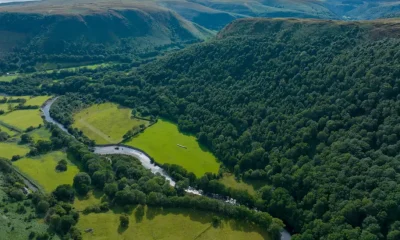
RSPB secures ‘missing link’ to reconnect wildlife habitats in Carmarthenshire
RSPB CYMRU has purchased a 96-hectare upland site in Carmarthenshire, describing it as a vital step towards reconnecting one of...


Crime5 days ago
Ann Widdecombe: Welsh politicians pay tribute as murder probe launched
Prime Minister Sir Keir Starmer has praised the former minister’s “conviction and dedication”, while political figures in Wales remembered her...


News5 days ago
Solardo pulls out of Haverfordwest show as organisers offer full refunds
Headline act confirms non-appearance as Park House Series announces major event changes DANCE music duo Solardo will no longer perform...


Local Government5 days ago
Conservatives win Pembroke Dock seat as Reform stalls and Dowson polls just 11
Jamie Street takes Market ward with a 43-vote majority as Reform finishes fourth despite its major Senedd breakthrough two months...
-
 Farming6 days ago
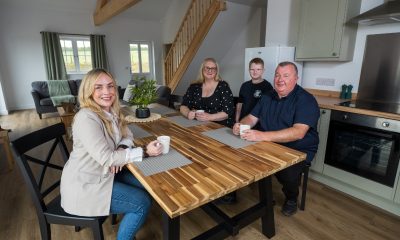
Working Carmarthenshire farm opens gates to visitors with new holiday cottages
-

 Sport6 days ago
Rising rally star claims maiden Mini Rally Challenge victory
-
 Farming6 days ago
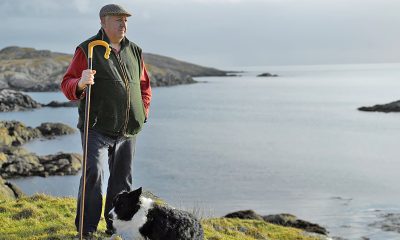
Outer Hebrides stickmaker to make final Royal Welsh Show appearance
-

 Crime6 days ago
Greenacres confirms seized dogs are safe as investigation continues
-

 Crime7 days ago
Welsh-born woman Ruth Ellis granted pardon 71 years after execution
-
 Sport6 days ago
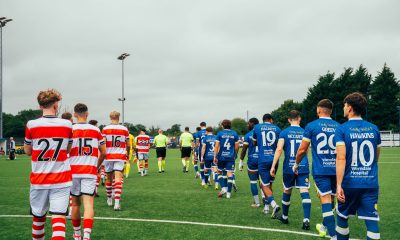
Bluebirds give new home strip first run-out
-
 Health5 days ago
Hospital ward closed after highly contagious scabies outbreak
-
Crime6 days ago
Teacher stabbing trial: The first week of evidence