


Sport
Pembroke go top with derby success

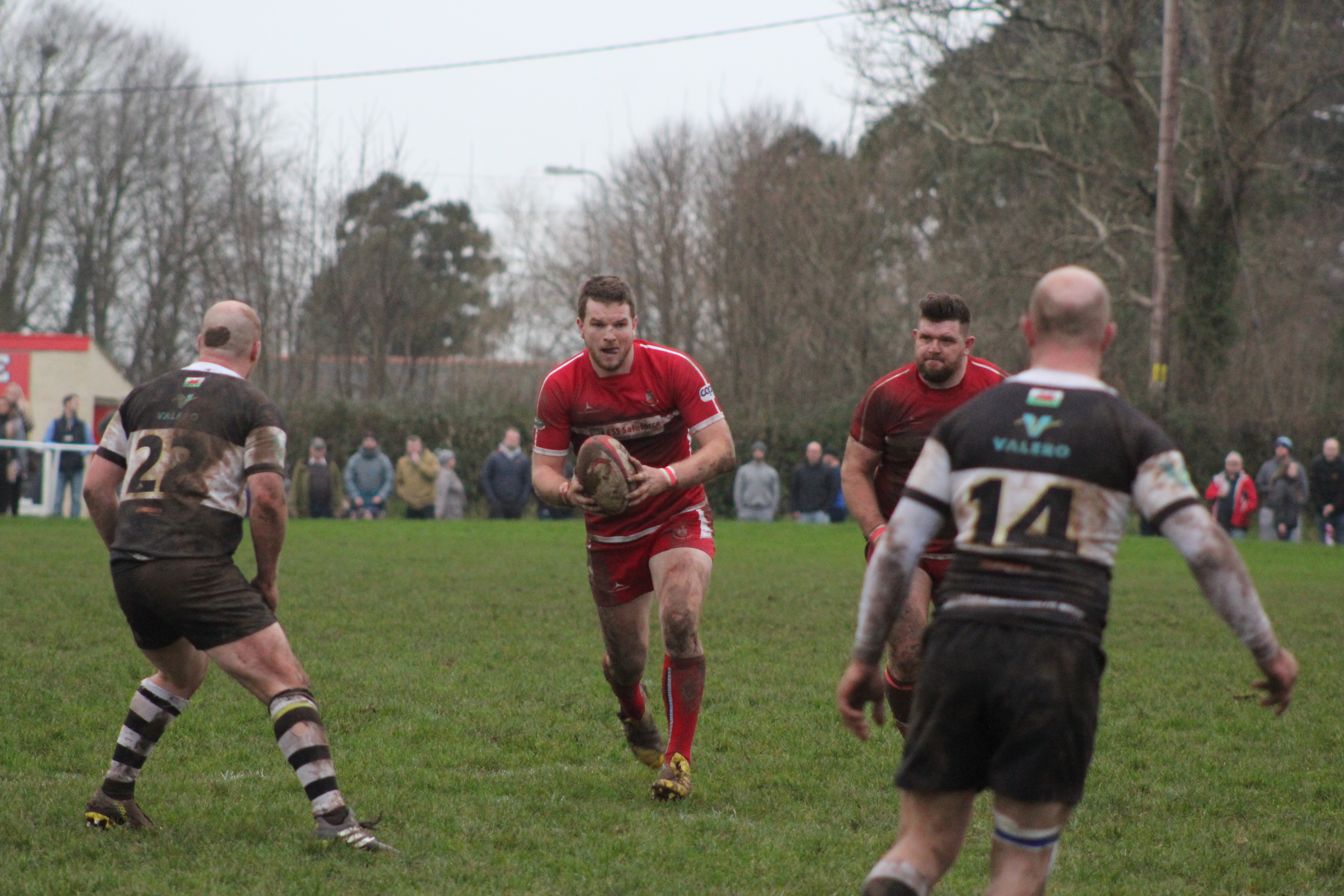
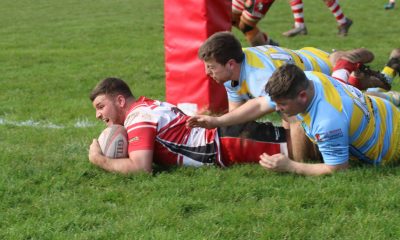
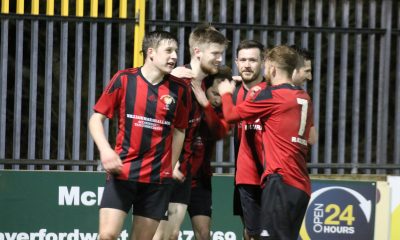
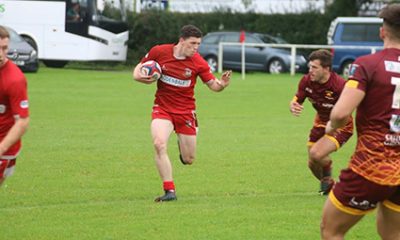
PEMBROKE moved to the top of League 3 West A with a comfortable 40-0 win over rivals Pembroke Dock Quins on Saturday (Dec 30) in front of one of the biggest crowds seen at Crickmarren for many years.
The Quins fielded a young side that has grown in confidence and experience as the season has progressed, whilst the home side, with a full squad available, came to this match brimming with confidence having only lost one League fixture during the season and being in the middle of an excellent Cup run.
However, as all regular supporters appreciate, form in these local derbies is not always the best indicator of the potential outcome. So the large, partisan, holiday crowd assembled with huge expectations of their respective squads.
The home side started well and were camped in the Quins half for most of the first ten minutes, testing their defensive resolve. The Quins forwards battled hard in the loose and managed a number of early defensive turn overs to deny the home side opportunities to press home their territorial advantage.
Then at the end of the first quarter, Pembroke were awarded a penalty for an infringement in the loose; from the ensuing scrum the ball was moved and after a number of phases, quick ball was fed to Sam Smith on the charge and he pierced a crowded defence to score near the posts, to a crescendo of noise form the home supporters. The try was converted by Sean Dalling.

Both sides then lost a player a piece, after Dom Coleman and Quins hooker Neil Brace had a brief altercation mid field and were yellow carded by referee David Emmanuel.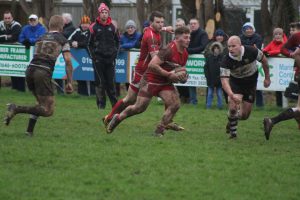
Over the next ten minutes the Quins pressed into Pembroke territory, but could not pierce an equally aggressive and determined home defence.
With only five minutes to go in this half, Pembroke pushed forward through a number of well-constructed phases, which saw prop Lloyd Davies link and make good ground in mid field before passing to the backs to move it wide; from a ruck close to the Quins line, quick ball was scooped up by Sam Smith, who fed a hungry Lloyd Davies on the charge to crash over for an unconverted, team try.
With their tails up in the last seconds of the half, Pembroke then created another opportunity, after counter attacking from deep in their half, winger Simon Stanford was put into space and he nimbly, swerved and sped past a number of defenders to score a superb individual effort from 35 metres out, which was ably converted by Toby Smith; leaving the score at half time deservedly at 19-0 to the home side.

The third quarter started much the same as the first, with Pembroke pushing the Quins into rear guard action and missing a golden opportunity to increase their score only minutes in, when Pembroke’s winger Barry John dropped the ball crossing the line, after a superb counter attacking drive from their own half.
After fifteen minutes both sides made a number of changes to put on fresh legs as the heavy ground took its toll.
Then right at the end of the third quarter, after a sustained attacking period, Pembroke’s dominant pack released quick ball from a ruck in the Quins twenty two, this was scooped up by replacement flanker Rhodri Walters, who made ground and fed scrum half Tom Lewis, who burst through a flat footed defence to go in under the posts for a well taken, unconverted try.

Minutes later Quins denied the hosts another try opportunity, when after No 10 Smith had kicked a Pembroke penalty deep into Quins territory, the visitors stole Pembroke’s lineout five metres out.
Pembroke maintained the pressure and minutes later were awarded a scrum five metres from the visitors line; scrum half Tom Lewis picked up the quick ball, broke wide and flat, fed Toby Smith running an acute angle and he ran through a bewildered defence to score from this training pitch move, which he duly converted himself.
The teams then lost another player each to yellow cards, as Cyle Weatherall and Hywel Baker were dismissed for their part in a short brawl.
Then with five or so minutes to go, Pembroke’s adventure was rewarded with another excellently constructed final try; from broken play in the middle of the field, the home side gathered possession, moved it wide, then back into mid field and finally wide again to replacement full back Ryan Wilkins, who gleefully crossed wide right for a converted try to cap a dominant, bonus point home performance.
Given the heavy ground, which had taken its toll on all of the players, both sides had served up a very entertaining spectacle for the large festive crowd, who showed their appreciation for both teams at the end of the game, which saw the home side victorious.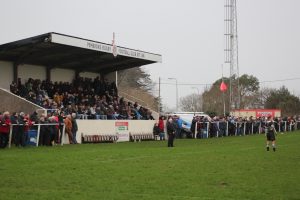









Harbourside town to host new triathlon and family-friendly sporting events with live music and celebrations
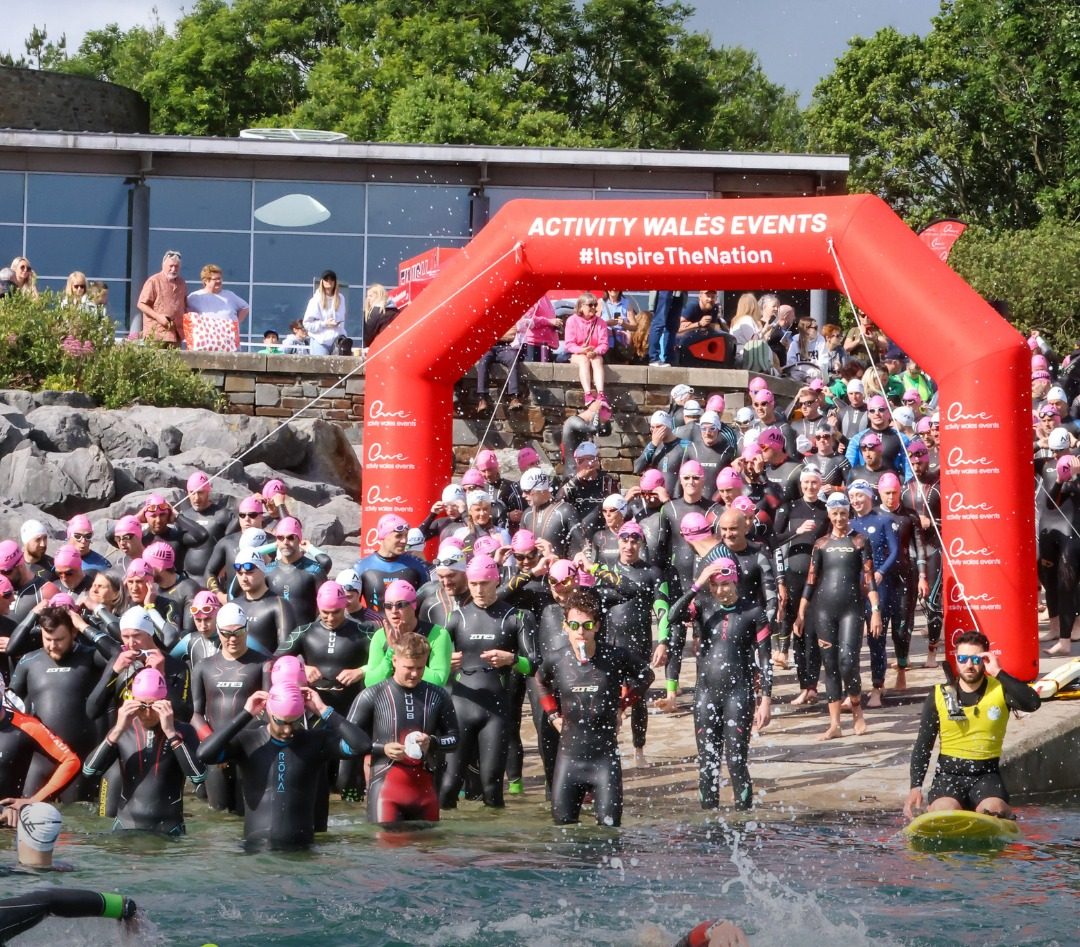
FISHGUARD is preparing to welcome athletes, families and spectators next weekend as a brand-new Festival of Sports comes to town, bringing races, live entertainment and a post-event celebration to the historic harbour.
Organised by Activity Wales Events, the inaugural Fishguard Festival of Sports will see competitors take part in a series of endurance events set against the backdrop of Pembrokeshire’s dramatic coastline.
The festival promises scenic race routes, historic surroundings and what organisers describe as “incredible spectator support,” with participants encouraged to make a weekend of the occasion.
Among the attractions are commemorative finisher medals, family-focused participation opportunities and live music taking place across the town throughout the weekend.
One of the more unusual features of the event allows runners to cross the finish line with their children or loved ones, giving families the chance to celebrate together.
Camping will also be available for visitors travelling to the area, while race registration and number collection will take place from 2:00pm on Friday, June 5, at the Phoenix Centre in Fishguard.
Organisers say entries for the sporting events close on Monday, meaning anyone hoping to take part is being urged to sign up quickly.
The festival is expected to provide a welcome boost for local businesses, with competitors and supporters likely to visit pubs, restaurants and shops across Fishguard and Goodwick during the weekend.
A post-race celebration is planned at The Farmers Arms in Fishguard, where participants and supporters will be able to enjoy live entertainment after the events.
Further details and event registration are available through Activity Wales Events.

Letterston racing family at centre of BHA ruling as two winners are disqualified
TWO Pembrokeshire horse trainers from Letterston have been fined £5,000 after two racehorses failed post-race drug tests, leading to both animals being stripped of race victories.
Peter and Mickey Bowen, father and brother of champion jockey Sean Bowen, appeared before a British Horseracing Authority disciplinary panel on Thursday (May 28).
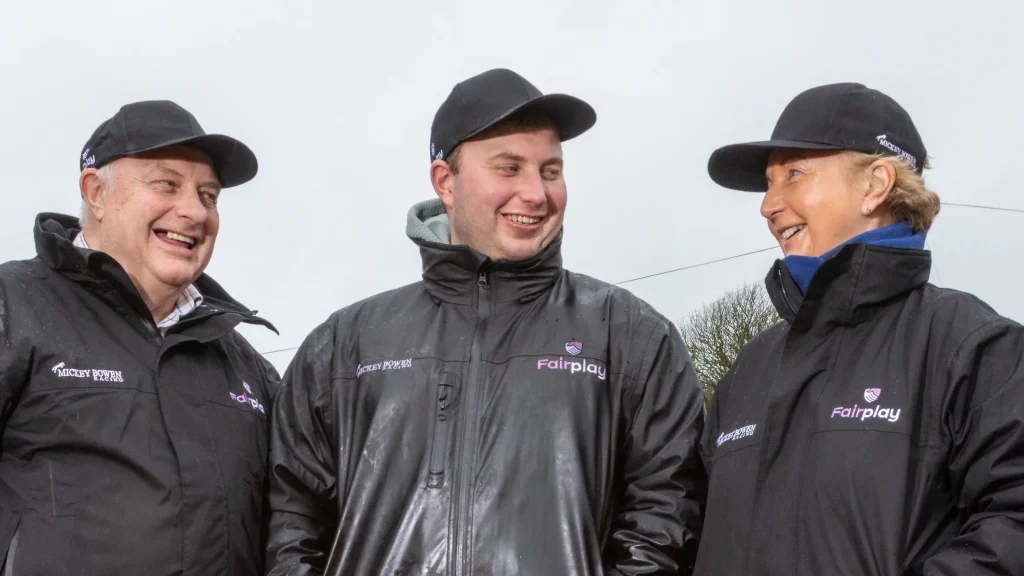
The father-and-son training partnership was operating under the same licence at the time of the positive tests, although Mickey Bowen has been the sole licence holder since May 2025.
The pair were fined £4,000 for breaching Rule (K)2.2, which states that no category B substance may be present in a horse’s system on the day it is engaged to run.
They were also fined a further £1,000 for breaching Rule (D)24, which requires trainers to keep clear and accurate records of medication given to horses in their care within 48 hours of treatment.
Two horses disqualified
The disciplinary action relates to Flying Fortune and Olivers Travels, both of which have now been disqualified from wins in 2024.
Flying Fortune has been stripped of victory in the Grade 2 Persian War Novices’ Hurdle at Chepstow on Friday (Oct 11, 2024).
The race is regarded as one of the key early contests of the National Hunt season, and the win had been a major success for the Bowen yard.
Racing reports at the time described it as a family affair, with Flying Fortune trained by Peter and Mickey Bowen and ridden by James Bowen. The mare was sent off 2/1 favourite and won by seven-and-a-half lengths.
However, a post-race urine sample later revealed the presence of procaine, a local anaesthetic.
The race has now been awarded to Intense Approach, trained by John McConnell.
Second winner loses race
Olivers Travels has also been disqualified from a 2m7f handicap chase at Worcester on Wednesday (Aug 21, 2024).

A post-race urine sample revealed the presence of dexamethasone, a corticosteroid commonly used to treat inflammation or allergic reactions.
That race has now been awarded to Galloping Pride, trained by Emma Lavelle.
The BHA said the case was dealt with by way of a plea agreement approved by the independent disciplinary panel.
A BHA statement said: “Following this morning’s hearing before the independent Disciplinary Panel, the Panel has approved a Plea Agreement.
“The penalty for breaching Rule (K)2.2 is a £4,000 fine and (D)24 a £1,000 fine.
“The two horses involved, Olivers Travels (IRE) and Flying Fortune (IRE), will be disqualified from their respective races at Worcester on 21 August 2024 and Chepstow on 11 October 2024.”
The ruling does not suggest any wrongdoing by the jockeys involved. The disciplinary action was directed at the trainers over the presence of prohibited substances on race day and failures in medication record keeping.

Welsh drivers Meirion Evans and Osian Pryce strengthen British Rally Championship title challenge
CASTROL MEM Rally Team secured its second double podium finish in as many rounds of the 2026 British Rally Championship, with Welsh crews Meirion Evans/Dale Furniss and Osian Pryce/James Morgan finishing second and third on the Jim Clark Rally.
The Borders event, held on Friday and Saturday (May 22 and 23), covered 100 stage miles and proved another strong outing for the Toyota GR Yaris Rally2 team.

Lampeter driver Meirion Evans delivered a fast and consistent performance, setting the quickest time on stage two and recording six second-fastest stage times. He was third overnight, just 18.7 seconds off the lead, despite starting one night-time stage with his Toyota’s lamp pod disconnected.
Evans moved into second place after Saturday’s opening daylight stage and held the position to the finish, collecting another valuable haul of championship points.
Osian Pryce, from Machynlleth, made a flying start by setting the fastest time on the opening stage and led the rally early on. He was second at the overnight halt, but his hopes of victory were hit on stage five after a delay at the start left him launching into the Polwarth test on cold Michelin tyres.
The 2022 British Rally Champion overshot, then lost around 25 seconds when he was unable to select reverse, leaving him stranded up an escape road.
Pryce then focused on securing third place and ended the event on a high by setting the fastest time on the tenth and final stage.
A win and a third place from the opening two rounds keeps Pryce at the top of the BRC drivers’ standings, while Evans is just four points behind after two second-place finishes.
Evans said: “We were really strong on the Jim Clark Rally last year, so we came here with hopes that we could fight for the win. We were close, but no cigar.
“Two second place finishes in the BRC so far this year is good. I just need to start winning now.”
Pryce said: “We were fighting for the win but ended up having to consolidate the points available, and I’m not too disappointed with third given how things unfolded.
“We’re still leading the championship, so now the focus shifts to the next round and coming back fighting on the Grampian.”




Crime1 day ago
Haverfordwest sex offender jailed over child abuse material
Registered offender used library computers to hide social media accounts A HAVERFORDWEST sex offender who used public library computers to...


Local Government1 day ago
Milford Haven school redevelopment moves a major step closer
£141.6m scheme could transform education in the town A MAJOR step forward has been taken in the long-awaited Milford Haven...

Crime1 day ago
Castlemorris man spared jail after knife confrontation over council tax debt
A CASTLEMORRIS man has avoided immediate custody after threatening enforcement officers with a knife during an early-morning visit over unpaid...


News2 days ago
Lifeboats and helicopter join search for missing person off Broad Haven
SEARCH teams carried out a major operation at Broad Haven after reports of a missing person. Little and Broad Haven...


News3 days ago
Multi-agency rescue after child falls on rocks while coasteering
Child airlift requested after four-metre fall near Lydstep A CHILD was rescued from rocks near Lydstep after falling around four...


News3 days ago
Police investigate ‘arson’ after vehicle fire spreads to property in Pembroke
A VEHICLE is believed to have been deliberately set alight during an alleged arson in Pembroke in the early hours...

News3 days ago
Four rescued after dinghy deflates off Pendine
FOUR people were rescued off Pendine on Wednesday evening after Tenby’s all-weather lifeboat was launched to reports of an inflatable...

News3 days ago
Hundreds attend major Diocese of St Davids gathering
Churches across West Wales urged to take message of faith back into their communities HUNDREDS of people gathered at Carmarthenshire...


News3 days ago
Vehicle destroyed in early morning fire in Pembroke
POLICE are investigating after a vehicle was destroyed in an early morning fire in Pembroke. The incident happened in the...


Climate4 days ago
Pembrokeshire named among Wales’ green economy hotspots
New analysis says the county’s net zero sector supports 1,600 jobs and accounts for 5.3% of local economic output PEMBROKESHIRE...
-

 Health3 days ago
Paul Davies warns health board over Withybush and Bronglais services
-
 Crime4 days ago
Police tip-off leads to drink-drive ban for Pembrokeshire pensioner
-

 Crime4 days ago
Steynton motorist banned after drink-drive collision
-
Crime3 days ago
Carmarthenshire man sent to Crown accused of 33 historic sexual offences
-

 Crime4 days ago
Warrant issued for man accused of taking wild goldfinches
-
 Crime4 days ago
Dock man given suspended prison sentence for third drink-drive offence
-

 Crime4 days ago
Dock motorist fined £1,600 after four speeding offences
-

 Business7 days ago
Plaid energy policy challenged by Labour after Adam Price interview