


Farming
WG’s access proposals concern farmers


FARMERS ‘remain concerned’ over the access proposals contained within Welsh Government’s Taking Forward Wales’ Sustainable Management of Natural Resources consultation, says NFU Cymru.
A written statement by Deputy Minister for Housing & Local Government, Hannah Blythyn AM, provides the government’s response to the chapter four access proposals outlined in the 2017 Sustainable Management of Natural Resources (SMNR) consultation, with a ‘commitment to access reform’.
The Minister has indicated that she will progress significant changes to access rights and facilitate an assumption of non-motorised multi-use on access land and the public rights of way network. This will provide users, such as cyclists and horse riders, with many more opportunities to access the outdoors.
The Minister has also confirmed that minor technical reforms that were widely supported will be progressed as soon as a suitable legislative vehicle can be identified, including enforcing placing dogs on a short fixed lead in the vicinity of livestock at all times of year and amending the technical provisions around creating, diverting and extinguishing rights of way.
The Minister has announced an independent Access Reform Group will be established to consider in detail how the more significant changes to access rights should be implemented including multiuse paths and reducing restrictions on open access land.

NFU Cymru Rural Affairs Board Chairman Hedd Pugh said: “Following the closure of the SMNR consultation in autumn 2017, farmers have been waiting with bated breath to see how Welsh Government would consider the responses and move forward.
“The Minister’s written statement includes a number of non-controversial elements that we look forward to working on with the government, not least the proposals around enforcing short fixed-length leads on dogs in the vicinity of livestock all year round which will go some way to assist with concerns over increasing levels of worrying of livestock in Wales.
“There do, however, remain a number of areas of concerns for our members. Near the top of this list are changes to multi-user access rights on public rights of way and access land, in particular. These changes could see ‘thrill-seekers’, as the Minister has described them, being granted increased rights on farmland across Wales. It is important to recognise that access is not always responsible and it is farm businesses across Wales who bear a disproportionate burden of this.
“The proposals also do little to address farmers’ fears that they could end up incurring increased costs and liabilities as a result of extended access. Most farmers will be able to tell you of cases where anti-social behaviour and dog worrying, for example, has had an emotional and financial impact on their farm and yet they are the ones left holding the bill.

“We are pleased that the Minister confirmed to the National Access Forum meeting in Bangor yesterday that changes will be subject to a full regulatory impact assessment which will be necessary if full costs and impacts are to be understood.
“Farmers understand better than most the positive benefits of time spent outdoors in our wonderful Welsh countryside. Farmers manage over 80% of the land area of Wales, providing the backdrop for the Welsh tourism industry, and Wales is already home to more public rights of way per square km than any other UK nation. We want the public to enjoy access to the great outdoors, but this must be managed in a manner that is safe for the custodians of the land and access users.”

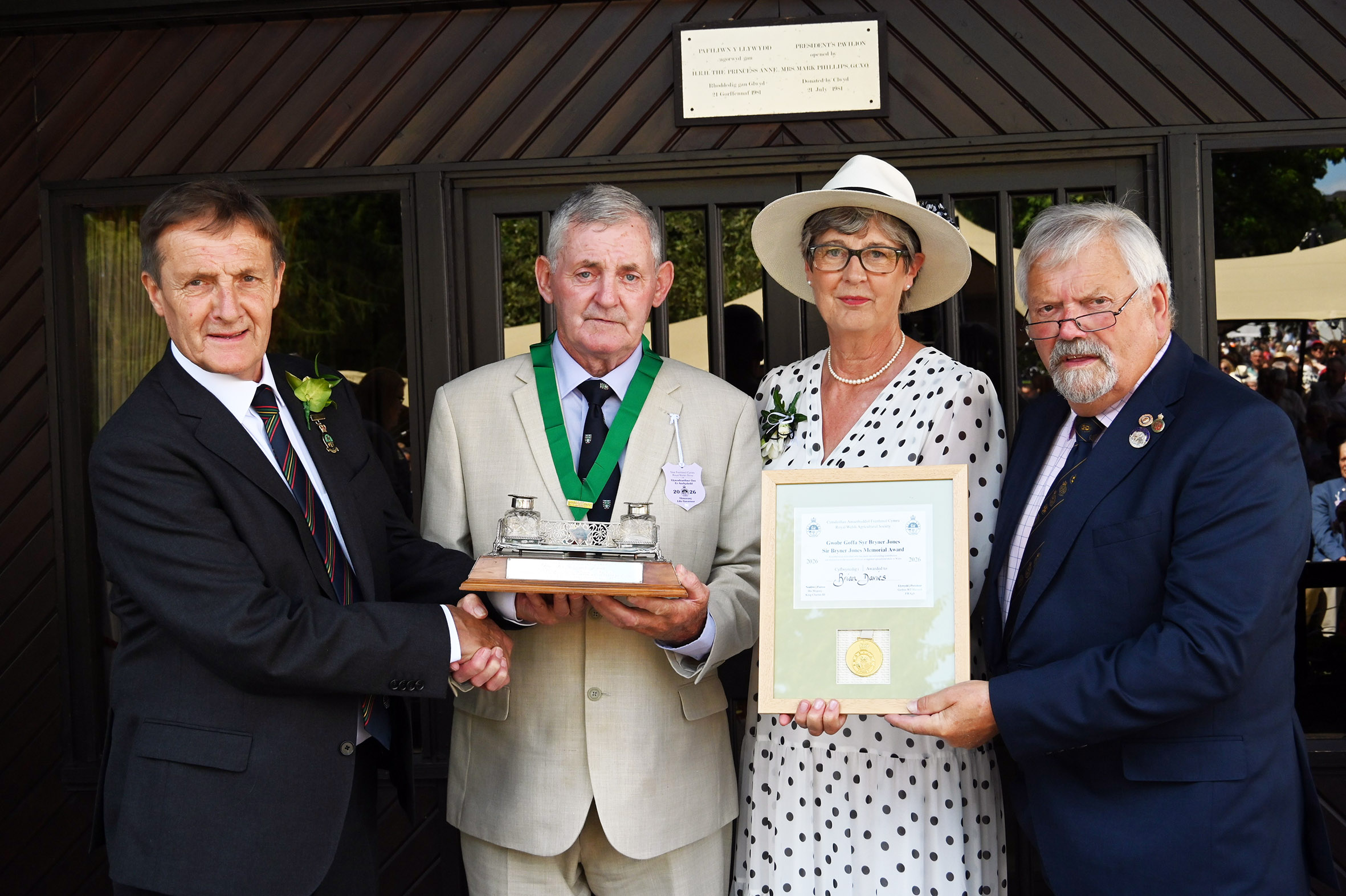
BRIAN DAVIES has received the Royal Welsh Agricultural Society’s highest honour after dedicating almost six decades to supporting one of the UK’s oldest agricultural shows
Mr Davies, from Garthbrengy in Brecknock, was named the winner of the 2026 Sir Bryner Jones Memorial Award during the Royal Welsh Show awards ceremony on Monday, July 20.
The prestigious annual award recognises individuals who have achieved the highest standards within their chosen area of the agricultural industry.
This year, the award focused on people who have made an outstanding contribution to the success of a local or regional agricultural show in Wales.
Mr Davies has given 59 years of service to the Brecknock Agricultural Society and has played a major role in sustaining and developing the Brecon County Show.
Having served as chairman, vice-chairman and president, he has worked to encourage young people and local families to become involved in the event, helping to secure its future for generations to come.
Judges Harry Fetherstonhaugh OBE and Susan Jones said the decision had been unanimous.
They said: “The winner exemplifies the very highest standards of leadership, commitment and dedication, leaving a lasting legacy that will benefit the show for years to come. A truly deserving recipient of this award.
“Brian’s contribution ensures Brecon County Show remains relevant, inclusive and capable of evolving in a changing world and changing agricultural landscape.
“His understanding of how the event works, together with his unwavering commitment to its volunteers and his ability to inspire the next generation, is most impressive and will help ensure the long-term future of the show.”
Mr Davies received the Sir Bryner Jones Memorial Trophy, medal and certificate from RWAS president Gethin Havard.
Gareth Roberts, a member of the RWAS board of directors, sponsored the winner’s medal.
The other shortlisted finalists were Edward Morris, from Pembrokeshire, and Enid Williams, from Anglesey.

The award commemorates Sir Bryner Jones, one of the most influential figures in the history of Welsh agriculture and the Royal Welsh Agricultural Society.
He helped shape the direction of the society for more than 50 years, serving as honorary show director from 1908 to 1910, chairman of the council from 1944 to 1953 and president during the society’s 50th anniversary year in 1954.
Sir Bryner was head of the Department of Agriculture at Aberystwyth College and became one of Wales’ leading figures in agricultural education.
He later served as commissioner and chairman of the Agricultural Council for Wales before becoming Welsh Secretary at the Ministry of Agriculture.
He was knighted in 1947, with the memorial award first presented in 1957.
Picture caption: Brian Davies, second from left, receives the Sir Bryner Jones Memorial Trophy, medal and certificate from RWAS president Gethin Havard, watched by Ann Davies and award sponsor Gareth Roberts.

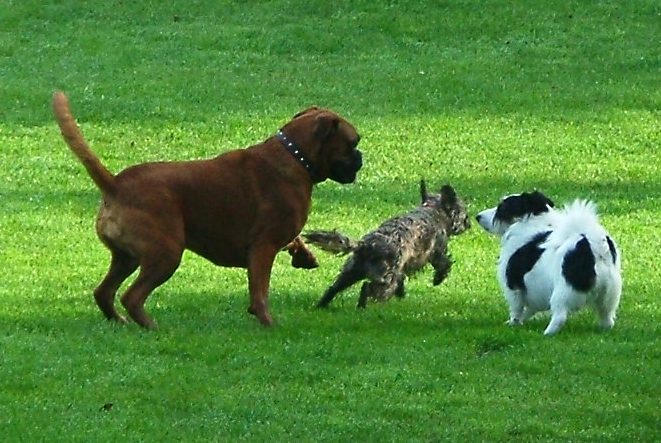
A CALL for a two-year period of grace to test a previously-refused Pembrokeshire dog exercise area has again been turned down by planners.
In a resubmitted application to Pembrokeshire Coast National Park after a 2025 refusal, Lawson and Penny Owen, through agent Hayston Developments & Planning Ltd, sought retrospective permission for a farm diversification scheme for a dog exercise area with a small hardstanding area for parking on land near Williamston Farm, Long Lane, Broad Haven, near Haverfordwest.
The previously-refused scheme sought a permanent seasonal exercise area, the latest application seeking a temporary two-year year-round option so that the impact of dog exercise on agricultural land could be fully assessed.
That application was refused on the grounds it was not considered to be sited in a sustainable location which will assist in removing the need for private motor vehicle trip generation, and the potential impact on neighbours.
Local community council The Havens again objected to the latest application, objections including it too close to neighbouring residential properties resulting in unacceptable noise impacts, is incompatible with the adjoining agricultural use, and is located adjacent to a cycle route.
A supporting statement said: “It is clear that, whilst the whole of the field has been operating as a dog exercise area for the past two years, staff in Public Protection have not received any complaints in respect of noise or any other form of objection. As a result of additional information gained from [the previous application], this re-submission sets out to explore a suggested temporary two-year option so that the impact of dog exercise on agricultural land can be fully assessed.”
It said the applicants, who have some 400 acres spread across four farms in the Broad Haven/Nolton area have had a need to diversify, with previous activities including holiday lets, a weddings/summer cinema show venue, and a submitted planning application for nine holiday units.
It said the non-framing activities amounted to under a third of the applicants’ income, the dog exercise operation now foreseen to be some five per cent of income, at up to £20,000 per year.
An officer report recommending refusal said that, as with previous application, objections had been received; concerns including it being in an unsustainable countryside location, noise and disturbance to neighbouring residential properties, disturbance to grazing livestock, and concerns the proposal relies entirely on private motor vehicle journeys and conflicts with sustainable transport objectives.
The report said that while many planning matters could be addressed, they didn’t outweigh the principal policy objections that it had not been demonstrated the particular location was needed or it accords with the sustainable transport objectives [of planning policy], representing “an unsustainable form of development within the open countryside”.
It also said officers were of the view “that the proximity of the commercial dog exercise area to neighbouring residential properties would give rise to an unacceptable impact upon residential amenity through noise and associated activity”.
It concluded: “The proposed temporary two-year permission does not overcome these fundamental planning objections. The use has already operated for a significant period, enabling the Authority to assess the proposal on its planning merits, and a temporary consent would not resolve the inherent conflict with the adopted Development Plan.”

The resubmitted application was refused on the grounds highlighted in the officer report.
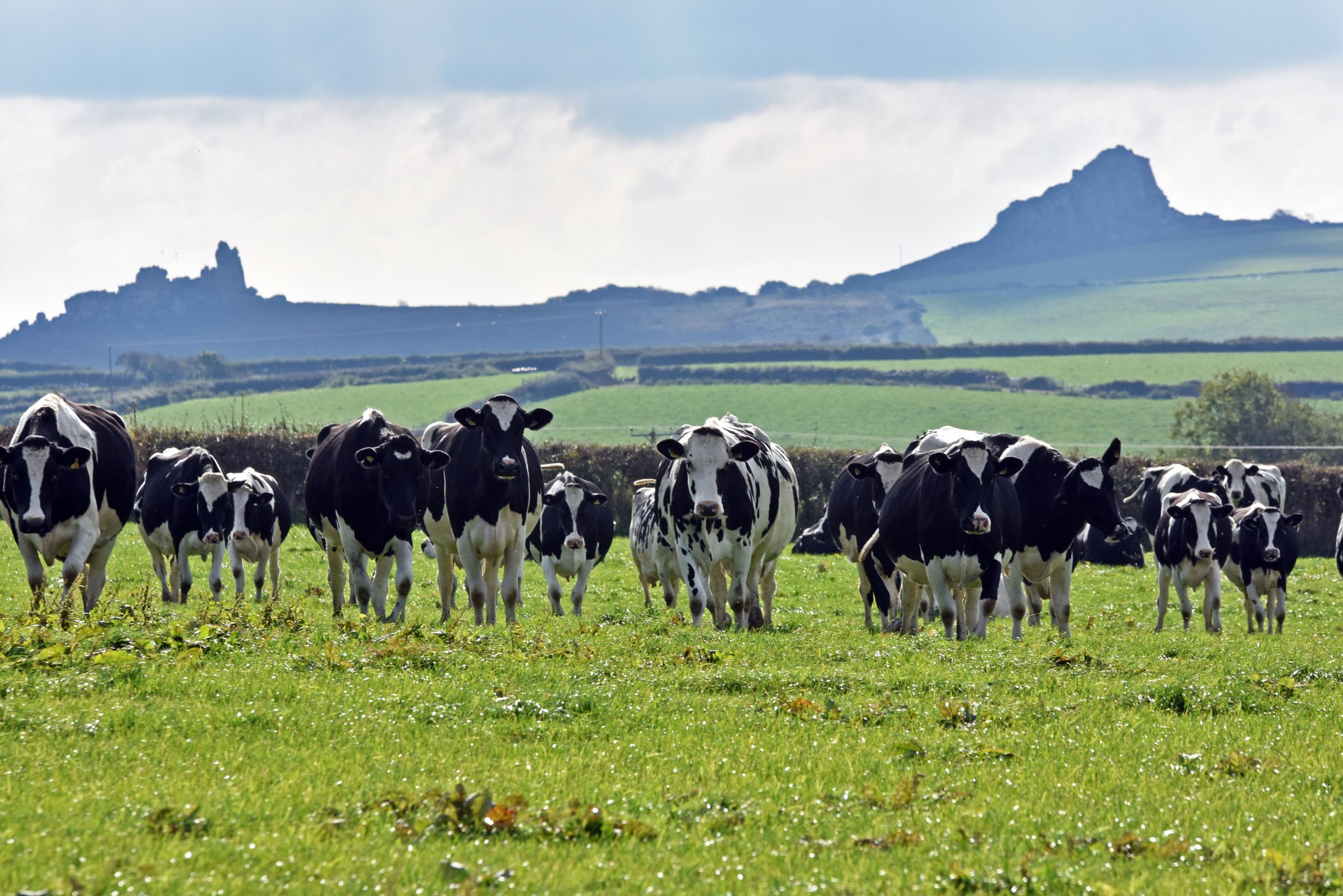
Average pasture and arable land prices fell slightly during the second quarter, although demand remains strong for high-quality farms and land with development potential.
FARMLAND values across Wales softened slightly during the second quarter of 2026 as higher costs and economic uncertainty continued to weigh on the agricultural sector.
The latest Farmland Market Update from property consultancy Carter Jonas found that average pasture land values fell by 0.4% during the quarter to £7,750 an acre.
Average arable land values declined by 0.3% to £9,467 an acre.
Compared with the same period last year, arable land values were down 2.4%, while pasture land values had fallen by 1.9%.
The figures suggest a gradual cooling of the market following the sustained growth recorded between 2021 and 2024.
However, Carter Jonas said the headline figures did not tell the full story because a significant number of farmland transactions continued to take place privately and away from the open market.
Demand also remains strong for high-quality, well-located farms, larger commercial units and land offering investment or development potential.
Hugh O’Donnell, rural partner at Carter Jonas, said: “The volume of farmland brought to market has been lower in the first half of the year, but acreage alone only tells part of the story.
“We continue to see a significant number of transactions taking place, underlining the ongoing appeal of well-located, high-quality farmland as a long-term investment.
“Buyer demand remains resilient, but understanding local market conditions and having access to off-market opportunities is increasingly important in a more selective market.”
The modest decline in values comes during a challenging period for farming businesses, with elevated input costs and volatile commodity prices continuing to squeeze profit margins.
These pressures have reduced the purchasing power of farmers seeking to expand their holdings.
Carter Jonas said there had nevertheless been some positive economic and policy developments during recent months.
Inflation fell from 3.3% in March to 2.8% in April and May, while the reopening of SFI26, the relaunch of Capital Grants and publication of the Farming Roadmap had provided greater clarity for parts of the sector.
Uncertainty remains, however, over the longer-term direction of agricultural support and future government spending and taxation policies.
Sophie Davidson, research associate at Carter Jonas, said the arrival of a new Prime Minister had introduced another element of uncertainty.
She said: “While it is unlikely to trigger significant short-term changes to agricultural policy, the potential for shifts in spending priorities, taxation and rural policy direction may encourage a ‘wait and see’ approach among some vendors and purchasers.”
Ms Davidson added that the strongest parts of the market continued to perform well despite a smaller and increasingly selective pool of buyers.
“Larger commercial farming units and investment opportunities remain scarce and continue to attract strong interest, while strategically located land with development potential is also seeing robust demand,” she said.
“What we’re seeing is a selective market where targeted demand continues to support values despite a thinner buyer pool.”


Health11 hours ago
More than 3,000 people have their say as Hywel Dda stroke consultation closes
Final decision on proposals, including a central 24-hour stroke unit at Glangwili and treat-and-transfer services at Withybush, is expected in...


Crime14 hours ago
James McKenna guilty of attempted murder after Carmarthen Park knife attack
Jury rejects defendant’s claim he only intended to cause serious injury after ambush attack on former partner SPECIAL REPORT FROM...

Community1 day ago
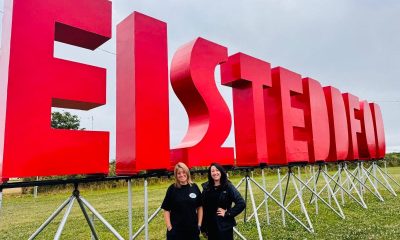
New creative team transforms the Maes ahead of Eisteddfod y Garreg Las
Festival site in Llantwd is taking shape ahead of the National Eisteddfod’s arrival in Pembrokeshire from August 1 to 8...


Community1 day ago
From Tenby to Llandudno: Wales’ seaside towns face the same signal crisis
Businesses in two of Wales’s busiest resorts say unreliable mobile coverage is disrupting payments, bookings and everyday life TWO of...


Crime1 day ago
Judge orders Dyfed-Powys Police review after £3,912 fraud error
Force responsible for policing Pembrokeshire criticised after an officer understated the amount stolen from a vulnerable care-home resident A JUDGE...


Community2 days ago
Narberth bursts into colour as carnival brings Civic Week to spectacular close
Crowds lined the streets for an afternoon of floats, fancy dress, music and family entertainment at one of Pembrokeshire’s longest-running...


Community2 days ago
More than 100 racers take to Castle Pond for Paddle West’s inaugural regatta
Successful community event raised money for Forever11 and launched three consecutive weekends of waterside activity in Pembroke MORE than 100...


News2 days ago
NASA chief meets west Wales scientist helping search for life on Mars
Aberystwyth-led technology will guide Europe’s first Mars rover as it drills beneath the planet’s surface, while the proposed DARC radar...

News4 days ago
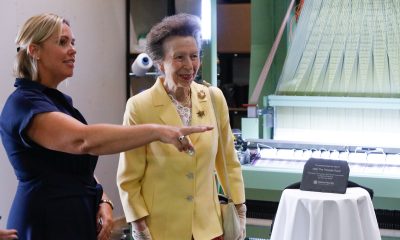
Princess Royal celebrates Pembrokeshire craftsmanship at family-run weaving mill
A Pembrokeshire business that began after a mother grew tired of waiting three weeks for her children’s name tapes has...


Local Government4 days ago
Burger King could be coming to Haverfordwest as plans submitted
Plans have been lodged for a Burger King outlet at the Morrisons petrol station on Bridge Meadow Lane BURGER KING...
-

 Community11 hours ago
Huge water main burst sends geyser over Fishguard town centre
-
 Crime1 day ago
Steynton man fined after breaching dog mess and anti-social behaviour notice
-

 Crime8 hours ago
Man in custody accused of intentionally strangling woman in Haverfordwest
-

 Health6 hours ago
Welsh A&E performance hits record low as parties clash over NHS pressures
-
Community1 day ago
New creative team transforms the Maes ahead of Eisteddfod y Garreg Las
-

 Health1 day ago
Welsh NHS executive pay revealed as patients face lengthy waits
-

 News1 day ago
Landmark rural law could reshape public services across west Wales
-
 Business1 day ago
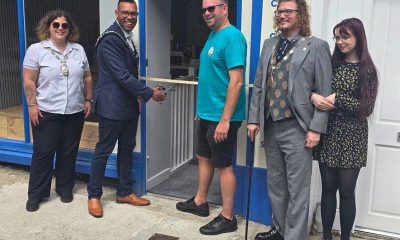
Pure West Parlour opens in the heart of Haverfordwest