


News
Farmer in court after cows put down


A DISTRICT JUDGE has given a Pembrokeshire farmer a 200-hour community service order after he pleaded guilty to multiple animal welfare offences.
The court in Llanelli heard that four cows belonging to Mark Mathias of Chapel Hill Farm, Camrose, near Haverfordwest, had to be put down to prevent further suffering.
The court also disqualified Mathias from keeping, owning, participating in, or influencing the keeping of bovine animals for a period of 12 months.
The ruling follows a prosecution by Pembrokeshire County Council on Friday (3 rd May).
Mathias was charged with four offences under Section 4 of the Animal Welfare Act 2006, of causing unnecessary suffering to bovine animals, and one offence under Section 9 of the Animal Welfare Act 2006, of failing to ensure the needs of bovines were met to the extent
required by good practice, including providing a suitable diet and Environment.

He also admitted an animal by-product offence whereby bovine carcasses were not stored in the correct manner or disposed of correctly, posing a health risk to the herd via contamination of Feedstuffs.
Guilty pleas were also entered for cattle identification offences for failure to record deaths as required, as well as failing to register cattle within the prescribed time scale.
The court heard that between 20 March and 12 July last year, 14 visits were made to the farm by animal health and welfare inspectors from the Council’s Public Protection Division. On a number of those visits they were accompanied by Animal Plant Health Agency vets. The first visit followed a report of a calf being on its side in the farm yard which was thought to be suffering with no bedding or care Provided.
A substantial quantity of bovine carcasses were also discovered by officers on a yard near baled feed for the herd and inside a large Trailer.
Other welfare concerns were noted within the herd at the time and advice and notices were issued to dispose of the carcasses correctly; to address listed welfare concerns and to improve conditions on the holding to which the herd had access.
The court was told that throughout the ensuing visits, additional notices and further advice was given to Mathias by officers and vets.
These related to conditions on the farm in which the cattle were being kept, welfare concerns, including for specific animals which required veterinary attention and for removal of animal by-products.

The court was told that four animals had suffered unnecessarily which resulted in them being destroyed.
It was also discovered that a large number of cattle had been moved onto the site whilst an active restriction notice was in place under the Tuberculosis (Wales) Order 2010 prohibiting moves on or off site without a licence. Mathias pleaded guilty to failing to observe the terms of the notice.
As part of mitigation for Mathias, reference was made to the mental, physical and financial issues involved in the farming business.
The Bench also ordered Mathias to pay £500 costs and a victim surcharge fee of £85.
After the case, Pat Davies, the County Council’s Cabinet Member for Regulatory Services and Housing, said the case had presented significant challenges to both Council officers and the farmer with no quick fix solutions available.
Councillor Davies explained: “While officers were mindful of the difficulties faced by the business and sought to offer advice and guidance where they could, the serious and persistent nature of certain offences meant that that the Council was duty-bound to bring
the matter before the court.
“While the herd was almost entirely disposed of following the Council’s involvement, it is critical that where a business model becomes unsustainable that proactive action is taken to ensure that the welfare of animals and disease control measures are not Compromised.”
On behalf of the Council she also thanked the organisations and charities that worked alongside the Authority during the proceedings to help identify and facilitate effective solutions.


Samuel Kurtz says public frustration has grown after two years of Labour controversies and policy decisions
FORMER West Wales MS Samuel Kurtz has said Sir Keir Starmer’s resignation felt “increasingly inevitable” after months of controversy and public frustration.
The Welsh Conservative said he watched the Prime Minister’s Downing Street statement with “genuine frustration”, adding that he wanted the UK to be respected regardless of which party was in government.
Starmer announced on Monday (Jun 22) that he would resign as Prime Minister and Labour leader, just 12 days before the second anniversary of Labour’s 2024 general election victory.
Mr Kurtz said: “As a British citizen, I sighed genuine frustration while watching this morning. Whatever the political colour of the Government, I want our country to be respected at home and on the international stage.
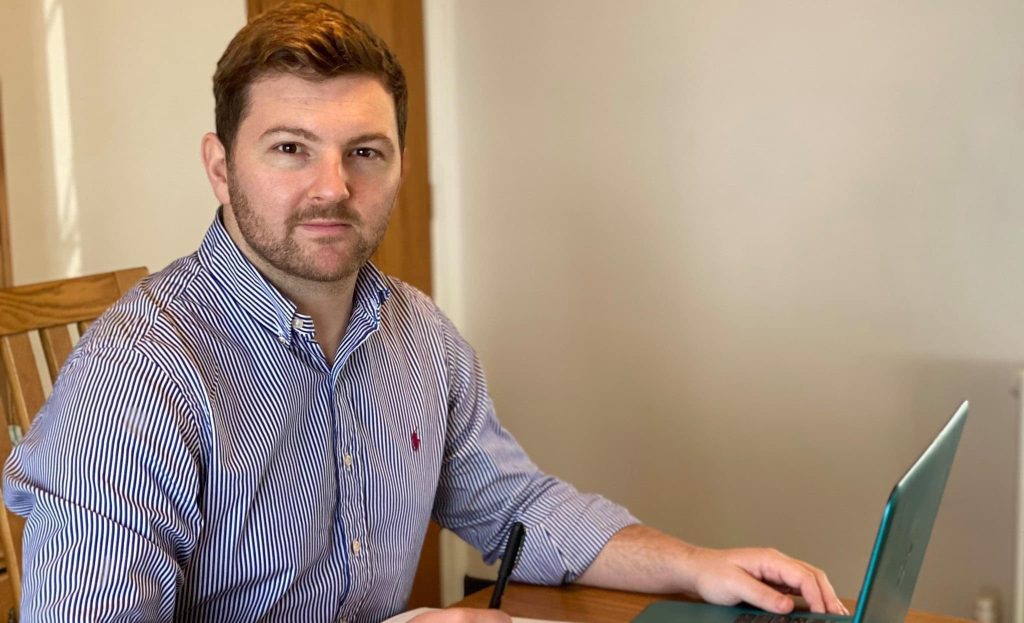
“But, in truth, this moment has felt increasingly inevitable as the weeks turned into months.”
He pointed to a series of controversies and policy decisions, including the Lord Alli gifts row, winter fuel allowance cuts, the Family Farm Tax, rising National Insurance, defence spending and domestic energy production.
Mr Kurtz said people “simply feel worse off”, adding that confidence in the economy remained low.
He said: “A Government should ultimately be judged on whether life is getting better for the people it serves.
“After two years marked by the controversies and a series of damaging policy decisions mentioned above, it’s difficult to argue this Government has passed that test.”
Mr Kurtz also questioned what would happen next, asking whether Labour would see an “Andy Burnham coronation”, whether Wes Streeting could build enough support, or whether an outsider could emerge.
He added that he would be watching the leadership contest “from the sidelines with interest”.
Labour is expected to open nominations for a new leader on July 9, with Starmer remaining in office until his successor is chosen.

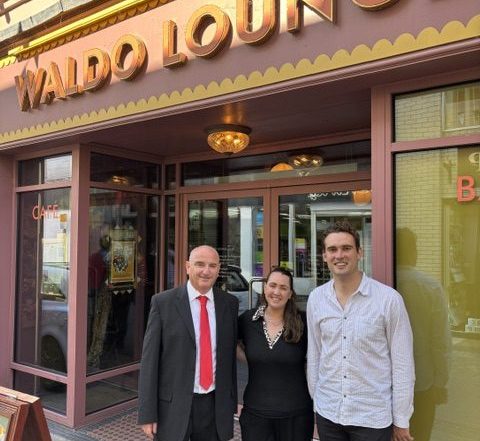
A HAVERFORDWEST venue has been praised for raising more than £2,600 for local charities through a series of community events.
Castle Ward county councillor Thomas Tudor visited The Waldo Lounge in Haverfordwest with Henry Tufnell MP, where they met manager Stephanie Davies.
Cllr Tudor said Stephanie had “truly embraced” her role in the community, organising events including a duck race, sports quiz, Mad Hatter’s tea party for Little Loungers, a bake sale and a drag night show.
Together, the events have raised £2,637 for local good causes.
Charities to benefit include The VC Gallery, Tŷ Hafan and Adam’s Bucketful of Hope Cancer Support Centre.
Cllr Tudor said: “It was lovely to introduce Henry Tufnell MP to Stephanie Davies, manager of The Waldo Lounge in Haverfordwest.
“Stephanie has truly embraced her role in the community of Haverfordwest, running many exciting initiatives and raising a staggering £2,637 for local charities.”
The fundraising continues this week, with Rock ’n’ Roll Bingo and a Wild West country and western night featuring a rodeo bull.
Caption: Community support: Thomas Tudor, Stephanie Davies and Henry Tufnell MP outside The Waldo Lounge in Haverfordwest.

A MOTORCYCLIST has died following a four-vehicle collision on the A40 between St Clears and Whitland.
Dyfed-Powys Police said the crash happened at around 12:00pm on Sunday (Jun 21) and involved a grey Audi, a blue Seat, a grey Vauxhall and an orange KTM motorbike.
Sadly, the rider of the KTM died from their injuries and was pronounced dead at the scene. Their next of kin have been informed and are being supported by specialist officers.
A 38-year-old man has been arrested on suspicion of causing death by careless driving. He has since been released on conditional bail while further enquiries continue.
The road was closed while collision investigators examined the scene and reopened at around 8:30pm.
The latest tragedy follows two other serious motorcycle crashes in west Wales.
On Sunday afternoon, another motorcyclist was injured in a separate collision and is recovering in hospital.
Last week, a 22-year-old rider sadly died in a crash near Narberth, while his female pillion passenger was taken to hospital.
Anyone with information, or dashcam footage which could assist the investigation, is asked to contact Dyfed-Powys Police online, by emailing [email protected], by direct message on social media, or by calling 101.
Alternatively, contact Crimestoppers anonymously on 0800 555111 or visit crimestoppers-uk.org.
Quote reference: DP-20260621-177.



News3 hours ago
Motorcyclist dies after four-vehicle crash on A40 in Carmarthenshire
A MOTORCYCLIST has died following a four-vehicle collision on the A40 between St Clears and Whitland. Dyfed-Powys Police said the...


News3 hours ago
Rhun ap Iorwerth urges new deal for Wales after Starmer quits
First Minister says next Prime Minister must focus on greater powers, fair funding and respect for Wales’ democratic mandate FIRST...


News4 hours ago
How Labour’s landslide victory unravelled in just two years
Prime Minister announces resignation after losing support within his own party as Andy Burnham emerges as overwhelming favourite to take...


News16 hours ago
Long Course Weekend set to bring thousands to Pembrokeshire
Three days of swimming, cycling and running will once again transform Tenby into one of the UK’s biggest endurance sporting...


Community23 hours ago
The gentle giant behind the tattoos
Pembrokeshire security worker Josh Davies praised for professionalism, kindness and proving first impressions can be wrong JOSH Davies is hard...


Charity2 days ago
Toy Story fans fill charity toy box at Haverfordwest cinema
Donations pour in for SNAP Specialist Play as families embrace Toy Story 5 launch A TOY STORY-themed charity appeal at...


Community2 days ago
Lord Rhys emerges from the mist in St Davids
Giant puppet begins historic journey marking 850 years since the first Eisteddfod MIST swirled around St Davids Cathedral on Friday...


News3 days ago
Tragic tribute paid to Haverfordwest man after A4075 collision
FAMILY REMEMBERS “KIND AND LOVING” CALLUM HANSON THE FAMILY of a 22-year-old man from Haverfordwest who died following a road...

News4 days ago
Motorcyclist, 22, dies in A4075 crash in Pembrokeshire
A 22-year-old woman remains in hospital after two-vehicle collision A MOTORCYCLIST has died following a serious two-vehicle crash on the...

Community4 days ago
Why police will be visiting every home in Pembrokeshire
New operation aims to knock on more than 257,000 doors across Dyfed-Powys over the next three years DYFED-POWYS POLICE has...
-

 Crime4 days ago
Milford Haven man jailed for breaching domestic violence protection order
-
 Local Government6 days ago
Security privately arranged by Mayor at Beating of the Bounds
-

 News4 days ago
Crash on Freeman’s Way causes school-run chaos across Haverfordwest
-

 Crime6 days ago
Man wanted by court after failing to attend hearing over alleged shop thefts
-
 Crime6 days ago
Man banned from roads after drink-driving offence
-

 Crime6 days ago
Man jailed after admitting strangulation and assaults
-
 Crime6 days ago
Drug trafficker must repay £33,000 after court rules he made nearly £500,000
-
 Crime6 days ago
Man sentenced over stalking campaign and lock knife offence