


News
Judge apologises to Herald journalist, but refuses to revoke press gagging order

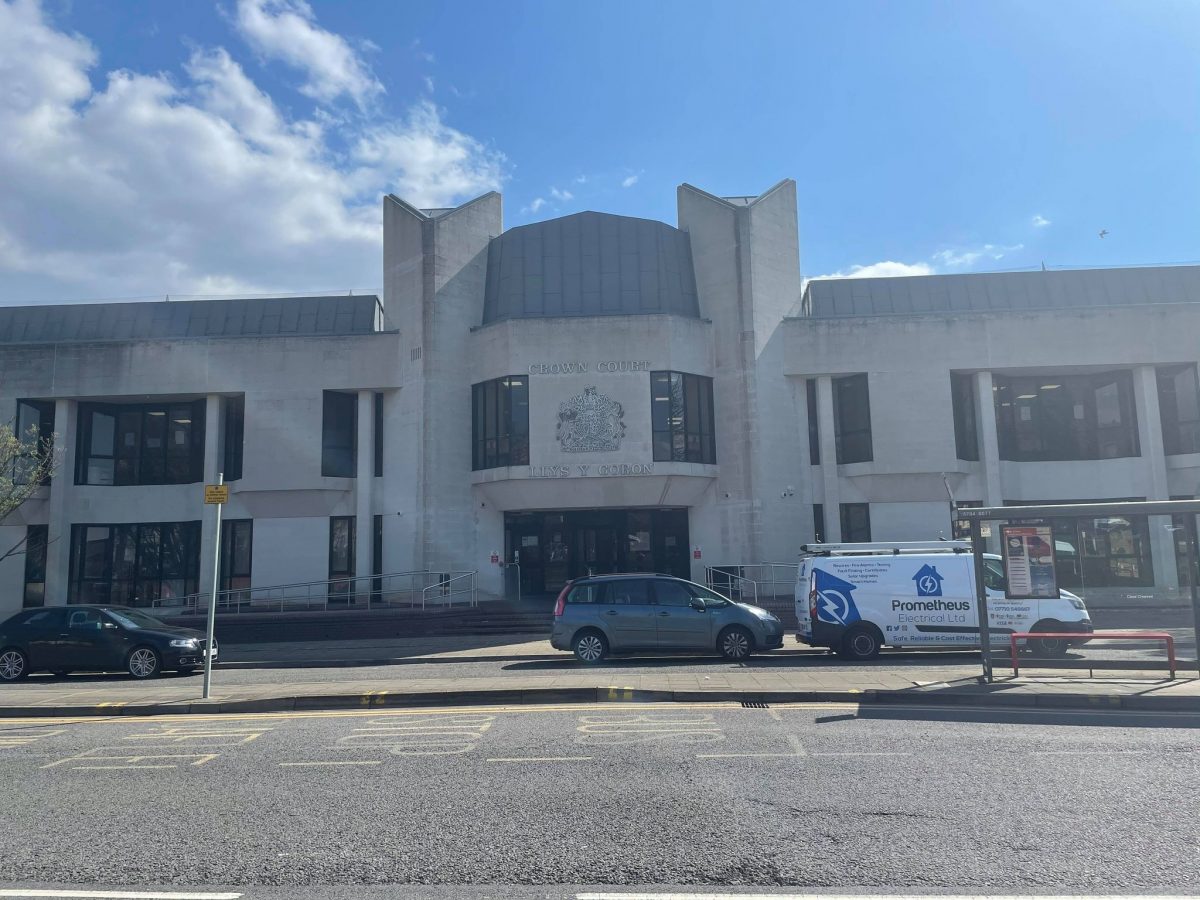
THE PEMBROKESHIRE HERALD sent a barrister to Swansea Crown Court today (Friday, May 21) to make an application that a press gagging order made last month during the James Oulton trial be now lifted.
WHY DID THE HERALD GO TO COURT?
This newspaper argues that the judge was wrong in law to make the order, as it represented an “excessive interference with the principle of open justice, and an unwarranted restriction on the newspaper’s right to free expression.”
Editor Tom Sinclair said: “We feel that it is important that all high-profile court cases are covered by the press, and that this reporting should be fair and impartial.
“This means that the newspaper wanted to report on both the prosecution and defence evidence at the James Oulton trial – but we were unable to do so as a press restriction was made halfway through the trial. This meant we could only present the prosecution evidence to our readers.”

“I believe that the order made by the Swansea Crown Court was wrong, and the court could have secured the participation of defence witnesses without a press gagging order.”
“Despite the request for the press restriction coming from Mr Oulton’s own counsel, we feel that this meant that in the eyes of the public the reporting of the case was unfair to him.”
“Although the case is over, with Mr Oulton being acquitted of all charges, it is important that courts and judges know the right way forward for future trials. There are 77 Crown Courts in England and Wales where trials of this type will crop up in the future – because of this we are asking the Royal Court of Appeal in London to decide the matter.”
WHAT HAPPENED IN COURT TODAY?
Former Haverfordwest primary school teacher James Oulton was cleared of 31 charges of sexual touching of pupils, in a case he described as ‘a witch-hunt’, on May 4.
It was not expected that the trial judge would rescind or amend her own press gagging order today, but the hearing at 10am this morning was seen by the newspaper as a steppingstone, its editor said. The matter is now expected to be heard at the Court of Appeal in London very soon.
The press restriction which The Herald is fighting had been requested by James Oulton’s legal team halfway through the trial because he felt that his defence witnesses would feel “uncomfortable” giving evidence if there was publicity about their attendance in court.

There had already been a hearing earlier in the trial by the defence barrister Christopher Clee QC to have the indictment stayed (Case thrown out for abuse of process) over an issue with witnesses, for reasons unrelated to court reporting.
James Oulton was worried that his witnesses would be reluctant to turn up and give evidence of “a good quality” if everything were being reported openly.
A statement was presented to the court with the names of eight defence witnesses – each one giving reasons why they did not want to be named in the press.
The court also had concerns about public comments on Facebook about the trial, some of which had appeared on the Pembrokeshire Herald’s page. The newspaper swiftly acted during the trial to ban public comments on news stories about the case, after being approached by the CPS.
The trial judge said that the social media posts had not impacted the jury as they were mainly from the Swansea area, whilst the newspaper’s readership was in Pembrokeshire.
HERALD ARGUES FOR PRESS FREEDOM
Barrister Matthew Paul, counsel for The Pembrokeshire Herald newspaper, said in court that “it should not be underestimated the difficult position the newspaper was put in by not being able to report on the defence part of the proceedings.”

He said: “The newspaper, which wanted to report on the whole case, took considerable flak over what has been seen as one-sided reporting.
“The 17,000 readers of The Pembrokeshire Herald would be wondering about the mystifying void in place of the reporting of the second part of the trial.”, he added.
The trial judge, Her Honour Judge Catherine Richards, presiding over the application to rescind or amend her own order, said she knew that “emotions had been running high in Pembrokeshire” – and even mentioned in court that the police had held a Gold Command meeting to discuss possible public disorder as the trial was taking place.
APOLOGY BY JUDGE TO HERALD JOURNALIST
Referring to an incident during the trial when a journalist had to be removed from the public gallery over concerns for her safety, Her Honour Richards said: “I am deeply concerned to hear what happened to the Herald’s reporter Ms Carli Newell.
“If I were aware of it, I would have taken steps to ensure that it would have been dealt with immediately.
“The public gallery, although a separate room [connected by video link], is part of the court room for the purposes of the trial and this was clearly unacceptable.”
“I would like to extend an apology to the reporter, and I will ensure that this never happens again.”
Documents submitted to the court explained that some of those in the public gallery had threatened the journalist with violence, been generally obstructive. It was also in evidence that the newspaper had received threatening phone calls and messages warning the newspaper not to report on the trial.

In relation to the application to lift the gagging order made last month, Matthew Paul, for The Herald, questioned whether such a reporting restriction was necessary. He highlighted that press gagging orders should not be imposed “unless there is an overriding need, and no other solutions than making an order, to ensure open justice in a democratic society.”
He said: “The order was imposed for the comfort of the witnesses rather than because that there was evidence of a physical threat to them.
“Witnesses could have been put at ease, for example, by the use of screens in the court room, or by having discussions with the police about how to handle any potential abuse”.
Her Honour Judge Catherine Richards asked Mr Paul if he understood the difference between a prosecution witnesses and a defence witness and securing their attendance at court – to which Mr Paul replied he did. Mr Paul went on to explain that the court had a “battery of weapons to use against a witness who refused to attend.”
Citing case law, he then explained that the higher courts had always sided with the principle of reporting court cases openly, even when there had been difficulties these had been “got around”, he explained.
He told Swansea Crown Court: “The basis on which the order was made was incomplete and did not balance the rights of open justice, and ensuring witnesses attended court without getting hassle.
“And it IS their comfort we are talking about – there is no threat to their lives or property – we must side with open justice.”
Mr Paul said that in making the press restriction during the trial itself, the court had effectively “promised” the witnesses that their names would be kept out of the press and that they had “attended the court on that promise.”
He therefore suggested to Her Honour Judge Catherine Richards that she may consider the second part of his application. Rather than completely rescinding the press restriction, Her Honour could make an Excepting Direction (an amendment to the original order), as a “reasonable compromise” which would keep the “witnesses names and photographs” out of the paper, he suggested, but would allow for “reporting of the rest of the defence case.”
APPLICATION REFUSED BY JUDGE
Mr Paul’s application was, after all, for “revocation of reporting restrictions OR an excepting direction pursuant to section 46 (10) and (11) of the Youth Justice and Criminal Evidence Act 1999”.
At the end of the hearing Her Honour Judge Catherine Richards said: “I do not revoke the order – it was, on the evidence necessary. On the second part of the application, I do not think that an Excepting Direction would be in the public interest, and therefore the application is refused.
Judge Richards said: when making the original order: “The Herald initially reported proceedings with a link to its Facebook page. Some of the comments added were of concern to the defence.
“Those comments required no formal action, but I am satisfied that the witnesses have expressed concern.
“One has been disciplined due to her support of the defendant. I am satisfied that the quality of their evidence is likely to be diminished, and that a restriction is necessary.”
At a previous hearing Judge Richards, who has been a Crown Court Judge since being appointed by The Queen on 27 April 2020, had said that The Pembrokeshire Herald had “rightly and properly” reported on the case.
STATEMENT FROM EDITOR
Speaking after the hearing, Herald editor Tom Sinclair said: “There are many good reasons why some evidence and some details of some cases are subject to reporting restrictions. The law makes those circumstances clear.
“We do not, however, believe that the evidence given in this case met the criteria for such a sweeping restriction.
“That is why we are taking this matter to the Court of Appeal for a definitive ruling on the issues raised by the Judge’s order.
“Court reporting fulfils a vital function. Justice must be seen to be done and reporting what happens in court makes sure it’s seen by as many people as possible.
“Being able to report only one half of proceedings, the unintended effect of HHJ Richards’ ruling, meant we could not do our job of giving our readers the whole story of a difficult and emotionally charged case.
The timing of the Defence’s application meant we had already reported the Prosecution case but were stopped from doing the same for all the evidence given on Mr Oulton’s behalf.
“It’s one thing to ignore an important case, in fact that’s very easy. That’s cowardice. It raises important questions about what else those who fail to report controversy are keeping from the public because they’re afraid to report the whole story.
“When justice takes place behind closed doors, or if it is not reported by the press, it is never seen to be done.
“And that can never be right.”



Driver was heading home after visiting former girlfriend when police stopped him on the A477
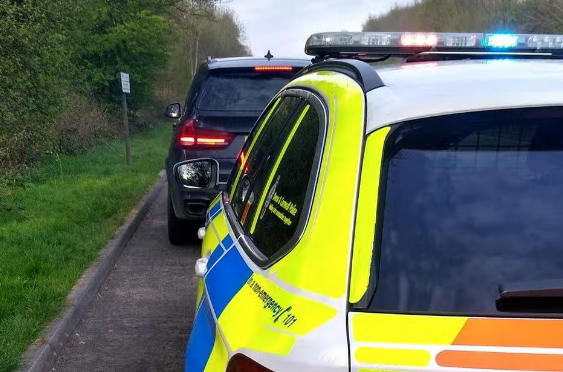
A WEST London motorist has been banned after being caught driving on the A477 in Broadmoor with a cocaine metabolite and cannabis in his system.
Danny Small, 32, was stopped by police carrying out routine checks at around 11:30am on January 28.
After providing a positive roadside drug swipe, Small was taken to a police station, where blood tests showed he had 157mcg of benzoylecgonine in his system. The legal limit is 50mcg.
He also had 2.9mcg of Delta-9 tetrahydrocannabinol in his system. The legal limit is 2mcg.
Small, of Little London Close, Uxbridge, appeared before Haverfordwest Magistrates’ Court this week, where he pleaded guilty to two drug-driving offences.
Probation officer Julie Norman told the bench that Small had been visiting his former girlfriend in Pembrokeshire and was driving home to Uxbridge at the time of the offence.
Ms Norman said Small was a regular cannabis and cocaine user.
“This helps treat his undiagnosed ADHD,” she said.
“He didn’t think the drugs would still have been in his system, as he’d consumed the drugs several days earlier. But drugs can often remain in the system for several weeks.”
Small was sentenced to a 12-month community order, during which he must complete 15 rehabilitation activity requirement days.
He was fined £80 and ordered to pay a £114 court surcharge and £85 costs. He was disqualified from driving for 15 months.
Driver was heading home after visiting former girlfriend when police stopped him on the A477
A WEST London motorist has been banned after being caught driving on the A477 in Broadmoor with a cocaine metabolite and cannabis in his system.
Danny Small, 32, was stopped by police carrying out routine checks at around 11:30am on January 28.
After providing a positive roadside drug swipe, Small was taken to a police station, where blood tests showed he had 157mcg of benzoylecgonine in his system. The legal limit is 50mcg.
He also had 2.9mcg of Delta-9 tetrahydrocannabinol in his system. The legal limit is 2mcg.
Small, of Little London Close, Uxbridge, appeared before Haverfordwest Magistrates’ Court this week, where he pleaded guilty to two drug-driving offences.
Probation officer Julie Norman told the bench that Small had been visiting his former girlfriend in Pembrokeshire and was driving home to Uxbridge at the time of the offence.
Ms Norman said Small was a regular cannabis and cocaine user.
“This helps treat his undiagnosed ADHD,” she said.
“He didn’t think the drugs would still have been in his system, as he’d consumed the drugs several days earlier. But drugs can often remain in the system for several weeks.”
Small was sentenced to a 12-month community order, during which he must complete 15 rehabilitation activity requirement days.
He was fined £80 and ordered to pay a £114 court surcharge and £85 costs. He was disqualified from driving for 15 months.

Pembroke Dock man was five times over the cannabis limit
A PEMBROKESHIRE carpenter has been banned from driving after being caught behind the wheel of his camper van while five times over the drug-drive limit.
James Toulouse, 35, was stopped by police shortly before midnight on December 20, 2025, as he drove his white Mercedes Vito along Buttermilk Lane in Pembroke.
“There was a strong smell of cannabis coming from the vehicle and the driver, who was James Toulouse, appeared glazed, as his eyes were red and bleary,” Crown Prosecutor Sian Vaughan told Haverfordwest Magistrates’ Court.
A roadside drug swipe proved positive. Further tests showed Toulouse had 11mcg of Delta-9 tetrahydrocannabinol in his system. The legal limit is 2mcg.
The court heard this was Toulouse’s second drug-driving offence in ten years.
Toulouse, of Clarence Street, Pembroke Dock, pleaded guilty to drug-driving.
He was represented by solicitor Michael Kelleher, who said the defendant works as a carpenter.
“Obviously it’s not going to be easy for him to carry on with his work, but he’s fully intending to do so,” he said.
Toulouse was disqualified from driving for 36 months. He was fined £350 and ordered to pay £85 court costs and a £140 surcharge.



Community15 hours ago
Manorbier fire scandal: Council’s payout just £63,777 after school destroyed
PEMBROKESHIRE COUNTY COUNCIL has accepted an insurance settlement which leaves it with just £63,777.07 after the catastrophic fire which destroyed...


News23 hours ago
Bus overturns in major incident near Kidwelly
All passengers rescued as emergency services remain at scene A BUS overturned on the A484 between Kidwelly and Ferryside on...


Community2 days ago
Tenby Summer Spectacular cancelled amid council row over harbour access
Organisers say popular charity events cannot safely go ahead without clear powers to control crowds TENBY ROUND TABLE has announced...


News2 days ago
Motorcyclist dies after four-vehicle crash on A40 in Carmarthenshire
A MOTORCYCLIST has died following a four-vehicle collision on the A40 between St Clears and Whitland. Dyfed-Powys Police said the...


News2 days ago
Rhun ap Iorwerth urges new deal for Wales after Starmer quits
First Minister says next Prime Minister must focus on greater powers, fair funding and respect for Wales’ democratic mandate FIRST...


News2 days ago
How Labour’s landslide victory unravelled in just two years
Prime Minister announces resignation after losing support within his own party as Andy Burnham emerges as overwhelming favourite to take...


News3 days ago
Long Course Weekend set to bring thousands to Pembrokeshire
Three days of swimming, cycling and running will once again transform Tenby into one of the UK’s biggest endurance sporting...


Community3 days ago
The gentle giant behind the tattoos
Pembrokeshire security worker Josh Davies praised for professionalism, kindness and proving first impressions can be wrong JOSH Davies is hard...


Charity4 days ago
Toy Story fans fill charity toy box at Haverfordwest cinema
Donations pour in for SNAP Specialist Play as families embrace Toy Story 5 launch A TOY STORY-themed charity appeal at...


Community4 days ago
Lord Rhys emerges from the mist in St Davids
Giant puppet begins historic journey marking 850 years since the first Eisteddfod MIST swirled around St Davids Cathedral on Friday...
-

 Crime6 days ago
Milford Haven man jailed for breaching domestic violence protection order
-

 News6 days ago
Crash on Freeman’s Way causes school-run chaos across Haverfordwest
-

 Health4 days ago
Woman jailed assaults on police, harassment and XL Bully possession
-

 Crime4 days ago
Milford Haven woman spared jail despite string of shop thefts
-

 Crime6 days ago
Portfield Gate man faces careless driving allegation after Tufton crash
-
Community3 days ago
The gentle giant behind the tattoos
-

 Local Government6 days ago
Pembrokeshire faces accessible housing shortage as 403 people wait for homes
-

 News7 days ago
Brexit at 10: How Britain was sold a dream that cost us dearly