


Politics
Plaid representatives discuss tourism opportunities with Bluestone Resort team

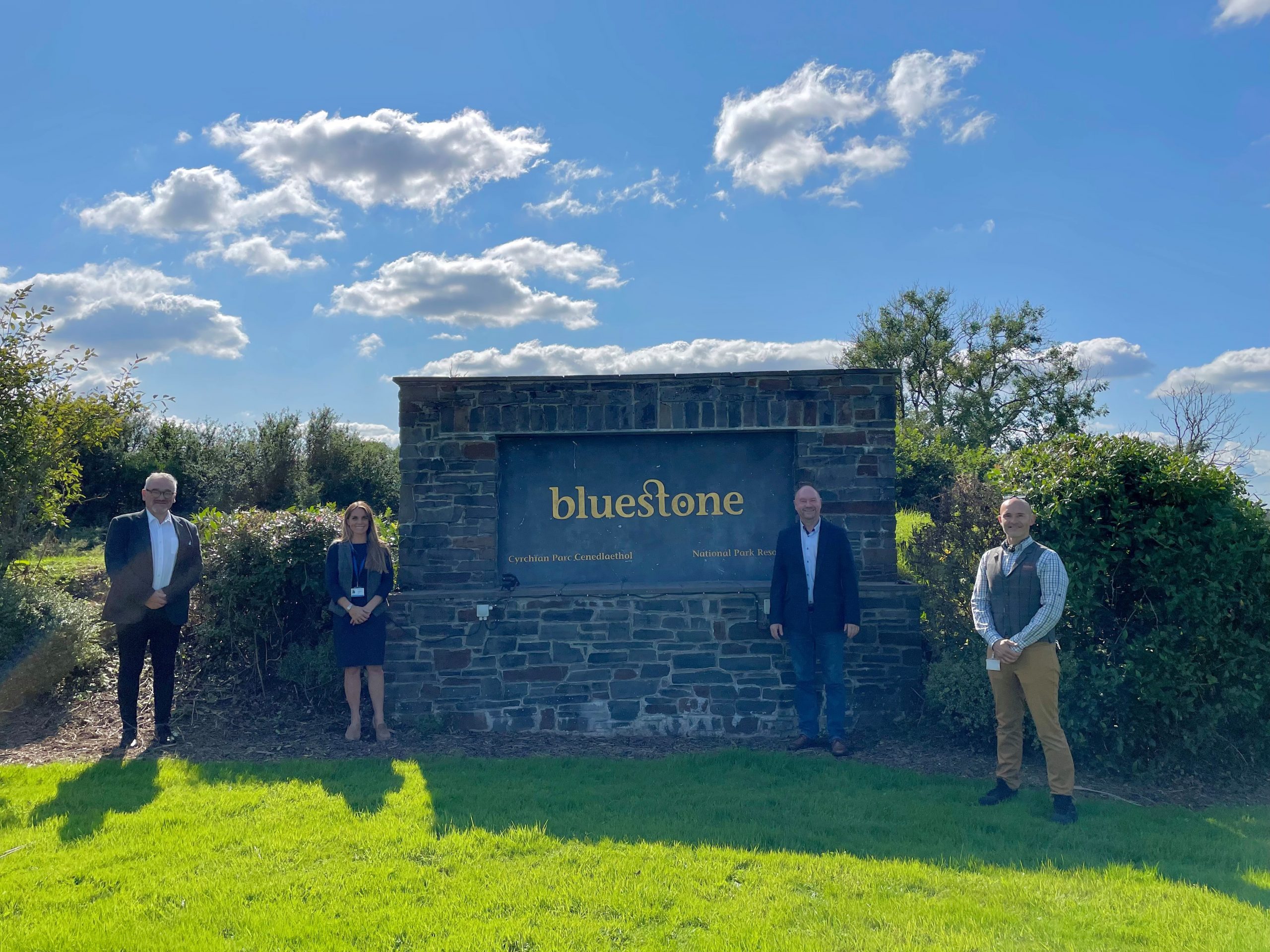
A RECENT visit by Plaid Cymru Senedd Member Cefin Campbell to meet the management team at the 500-acre Bluestone Resort in Pembrokeshire highlighted the challenges and opportunities faced by the tourism industry in West Wales.
Rebecca Rigby, Director of Operations at Bluestone, and Marten Lewis, Head of Corporate Responsibility, outlined the challenges that the COVID 19 lockdown period had placed on Bluestone, who employ around 700 members of staff and contribute in excess of £17m per annum directly into the local community through the supply chain and payroll.
Plaid Cymru Pembrokeshire County Councillor and Cabinet Member for the Environment, Welsh Language and Public Protection, Cris Tomos accompanied Cefin on the visit and was impressed with the environmental achievements of Bluestone.
Marten explained that that over 330,000 trees and shrubs have been planted since the resort opened and that two biomass energy units produce 7,000 mwh of low carbon energy per year for the site, giving a saving of over 1,500 tonnes of carbon emissions per year compared to conventional energy provision. Marten noted that all food waste from the onsite restaurants and 334 lodges is sent to an anaerobic digestion provision near Cardigan.
Cefin Campbell MS was encouraged to hear about future plans for the resort, including an additional 80 new lodges and a medieval church restoration project, as well as the Blackpool Mill heritage restaurant initiative. Cefin and Cris were also updated on the Bluestone Academy, which launched earlier in the year. Bluestone’s vision is that the Academy will help to transform the perception of the industry to enthuse young people to pursue a career in tourism and hospitality; producing a passionate, highly-skilled and experienced workforce.

Cefin Campbell stated: “I was really pleased to visit Bluestone with Cris Tomos recently to discuss the challenges and opportunities facing the company and the wider tourism industry.
“Bluestone is now a major employer in the area with nearly 700 staff, who are part owners of the company.
“I was very impressed with the company’s model, its record on job creation, staff development and with their plans for the future.
“I am committed to working with companies such as Bluestone, Welsh Government and other partners to support and develop the tourism sector locally and drive economic growth.”
Rebecca Rigby, Director of Operations at Bluestone, added: “As one of the largest tourism operators in Wales, we were delighted to welcome Cefin and Cris to the resort. It was a great opportunity to update them on our sustainability initiatives, and our ambitious and exciting plans for the future.
“We look forward to working with Cefin, Cris, and their colleagues across the Senedd and Pembrokeshire County Council, for the benefit of the tourism industry and wider economy across Pembrokeshire and Wales.”



THE SENEDD has rejected a Reform UK motion calling for an end to all Welsh Government international spending, after a heated debate which saw several Members walk out of the chamber.
The motion, tabled by Reform MS Llŷr Powell, was defeated by 48 votes to 37 on Wednesday (Jun 17).

An amended motion, backing Wales’ reputation as an “internationalist, tolerant and outward-looking nation”, was then passed by the same margin.
The debate followed warnings from Hub Cymru Africa and other campaigners that ending international spending would damage Wales’ global reputation and undermine projects linking Welsh communities with partners overseas.
Reform argued that Welsh Government money should be focused on domestic pressures, including the NHS, schools, transport and the cost of living.
Welsh Conservative leader Darren Millar backed the Reform motion, saying foreign relations and international development were matters for the UK Government rather than Cardiff Bay.
But Plaid Cymru and Welsh Government speakers rejected that argument, saying Wales’ international work supported trade, public services, education, health partnerships and the country’s reputation abroad.

The debate became heated after comments by Reform MS Joe Martin, who criticised overseas schemes including beekeeping and tree-planting projects in Uganda.
Several MSs left the Siambr during his contribution, with the Llywydd later urging Members to reflect on the tone of the debate.
Hub Cymru Africa had said before the vote that Wales’ international solidarity budget represented a tiny fraction of overall spending and helped deliver work in public health, climate action, women’s empowerment and sustainable development.
The organisation said the vote was an opportunity for the Senedd to reaffirm Wales’ place in the world.

SCHOOLS across Wales are to receive statutory guidance on restricting pupils’ mobile phone use during the school day, the Welsh Government has announced.
The move follows a consultation and a workforce survey which found strong support for national direction on the issue.
Although most schools already have mobile phone policies, the survey found there was no consistent approach across Wales. It also found that 82% of respondents supported statutory restrictions.
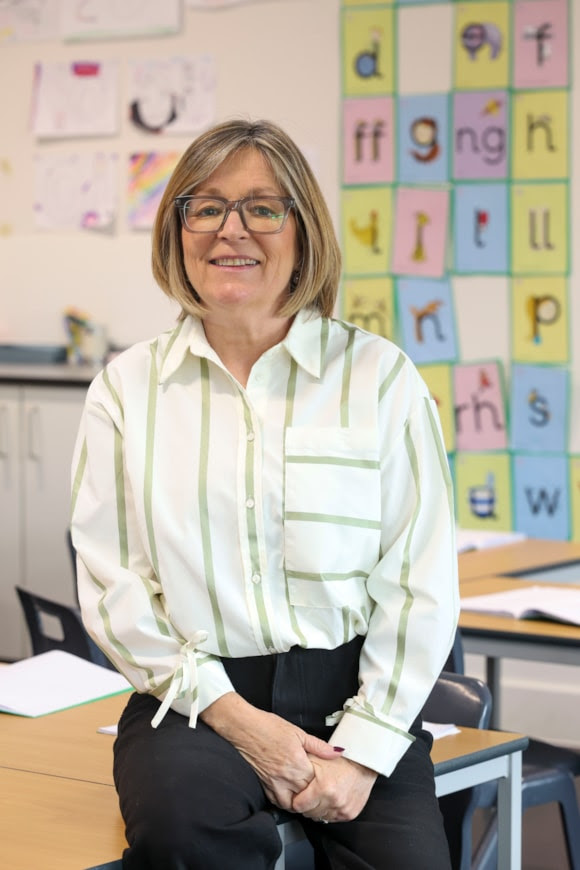
The new guidance for local authorities and schools will set out clearer expectations on how phones should be used during the school day. It will be evaluated over the school year, with ministers leaving open the option of strengthening the rules further if required.
Cabinet Minister for Education and Welsh Language, Anna Brychan said: “Our 100-day plan was clear that we would act, and I have listened to the calls for stronger clarity on this issue.
“This is why the government will publish statutory guidance to provide clear national expectations on how mobile phones are used in schools.
“I want to be clear: as Cabinet Minister, I fully support — and strongly encourage — headteachers to introduce clear and robust restrictions on mobile phone use during the school day, up to and including a full restriction across the school site.
“I am mindful some children will always need exceptions, for medical reasons for example.
“By consulting on guidance at the start of the school year I am giving schools the clarity they want quickly, and creating a safer learning environment by reducing distractions now.”
The Welsh Government said it would also consider the implications of UK Government plans for new restrictions on under-16s’ access to social media.
Ms Brychan said ministers were committed to protecting young people online and would work with school leaders and partners across the education system in Wales as the proposals develop.
The announcement came as the Education Minister set out wider priorities for the sector, including raising standards, strengthening Welsh language provision, improving skills and creating what she described as a system that works for everyone.

The Welsh Government said it would develop a new Foundational Literacy and Numeracy Plan before the end of the summer and review the curriculum.
Other priorities include reducing workload for education staff, expanding Welsh-medium education, ensuring learners have more opportunities to use Welsh beyond the classroom, and reviewing how universities are funded.
Ms Brychan added: “Education is the key to unleashing our nation’s potential and there is no shortage of talent, energy and innovation in Wales.
“If we want to unlock this potential and build a stronger Wales, we need a stronger education system.
“We will raise standards, strengthen the Welsh language, develop skills and build a system that works.
“By working together, we can provide opportunity, ambition and excellence for all learners, in all parts of Wales and support the workforce that makes it possible.
“This Government has made education a priority because the future of Wales depends on it.”
Local Government
Minister questioned on local government funding, rent protections, and asylum seekers

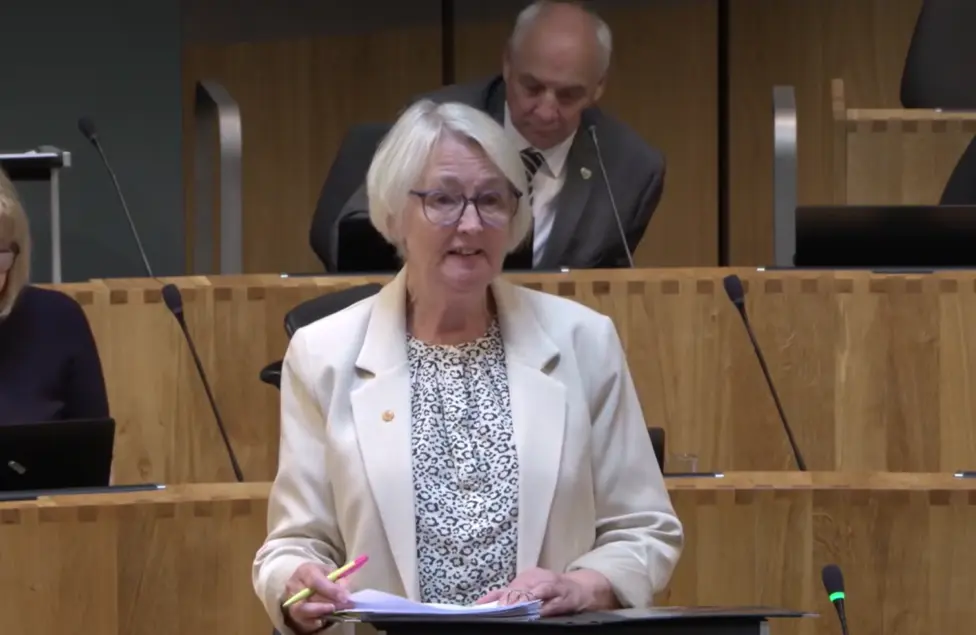
LOCAL government funding, protection for renters, and asylum seekers were all discussed as Wales’ housing minister took questions from Senedd colleagues on Wednesday June 17.
Siân Gwenllian, whose ministerial role includes local government, housing and planning, took her first question from Reform’s Paul Marr.
Pressing the minister on houses in multiple occupation (HMOs) and asylum seekers, Mr Marr asked Ms Gwenllian if she knew the total number of HMOs in Wales, and what proportion are occupied by current and former asylum seekers.
The Ceredigion Penfro MS spoke of meeting a 70-year-old veteran in his constituency who had spent several years living in an abandoned camper van because he was unable to secure accommodation.
Mr Marr called on Ms Gwenllian to provide “assurances” that Welsh people facing homelessness will not be “treated less favourably” in the allocation of housing or housing support than those that have been granted asylum status.

Warning the Reform MS to avoid creating divisions by “trying to point the finger at one specific group in our society”, Ms Gwenllian confirmed that 14,954 homes in Wales were HMOs as of March 31, 2025.
She added that data is not collected on residents, and as such there is no data on what percentage are occupied by asylum seekers.
“Our ambition is that everyone in Wales should have a quality home, for an affordable price and in the area that is right for them, including veterans, and including refugees too”, she said.
Ms Gwenllian referred to the First Minister’s statement on immigration and housing on Tuesday June 16, adding that “it’s not immigration that is causing the housing crisis, [and] it’s not asylum seekers that are causing the housing crisis.”
Fellow Reform MS Steven Rodaway also quizzed the minister on the housing shortage and asylum seekers.
Mr Rodaway asked Ms Gwenllian about the “housing demand arising from the Nation of Sanctuary programme”.

Responding, she clarified accommodation for asylum seekers is not a devolved matter, noting that it is the UK Government making those decisions.

Ms Gwenllian also stressed that social housing is not available to asylum seekers who are awaiting decisions.
She also shared the figure for the number of asylum seekers in Wales, as collected by the Home Office, noting that it is around 3,400 people.
Responding to Mr Rodaway, Ms Gwenllian said: “These are people who are fleeing atrocities and war, things that we in this chamber can only imagine in terms of the kinds of lives and the kinds of trauma that these people have experienced and are fleeing.
“So, please don’t try and create divisions by discussing housing problems in the same breath as asylum seekers.
“The housing crisis has nothing to do with asylum seekers. I hope that that message is being heard by those who need to hear that message.
“The housing crisis in Wales has nothing to do with asylum seekers, it has nothing to do with refugees.”

Labour’s spokesperson for local government, Mike Hedges, told the Siambr the Welsh Local Government Association (WLGA) estimated £1.6 billion of additional funding would be needed to meet budget pressures for local authorities over the next three years.
Mr Hedges added that the auditor general for Wales had said some councils in Wales were at the very edge of financial stability.
He said: “Education and social services account for the majority of local government spending. The WLGA estimates schools and social services alone make up around 60% of financial pressures this year.
“Local authorities have a statutory duty to provide these services and, with ever-increasing demand in these areas, there’s little flexibility in other budgets.”
Mr Hedges questioned if Ms Gwenllian would argue for the supplementary budget to have additional money included for local government.
Describing the current financial situation as an “extremely challenging period”, Ms Gwenllian said her government understands the pressures of schools and local authorities, including the pressures on families and supporting ALN learners.
She said: “The education system and the budgetary arrangements aren’t the same in Wales as they are in England, of course, and it’s clear that there are significant financial pressures in local education authorities in this country as well as in England – and I know that they’ve had to make very difficult decisions to manage this situation.
“We must now progress in working with our partners to develop a long-term, clear transformation plan for ALN – one that is specific, clear and timely – to ensure that the sector can support the needs of learners as well as being operationally sustainable.”
Peter Fox, Conservative spokesperson for finance, local government, and communities, called on Ms Gwenllian to clarify if the government will be looking to restructure local authorities, noting a manifesto pledge to keep the structures of government in Wales, including town and community councils, under “continuous review”.
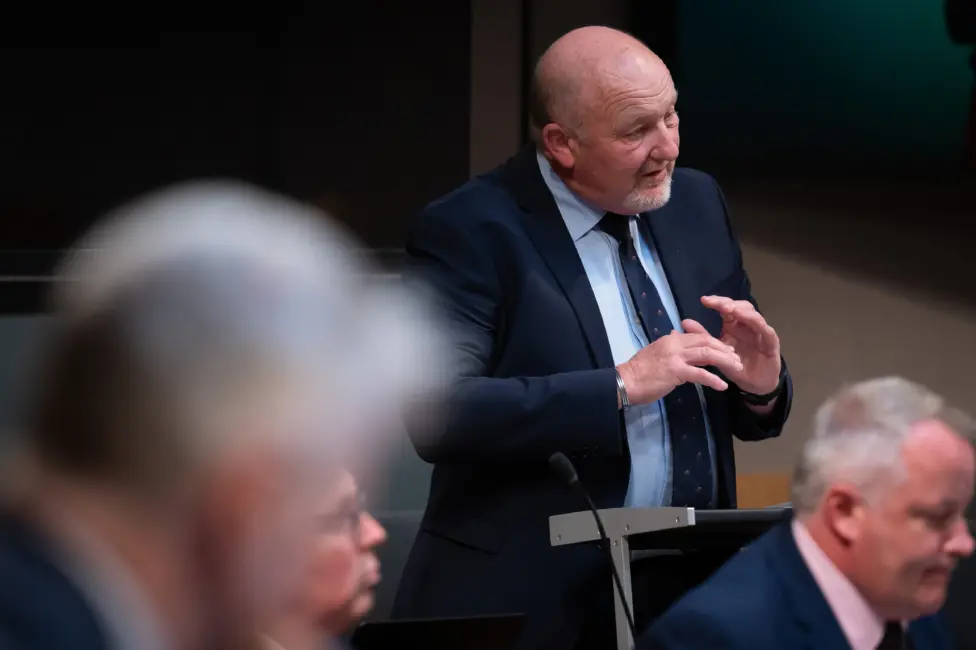
Mr Fox said this has caused “quite a lot of confusion and concern” amongst local authorities.
In response, Ms Gwenllian confirmed restructuring local government is “not a priority for this government”.
However, she added: “There are a number of things that we could be working on collaboratively with local government to reduce bureaucracy and processes and focus on delivery.
“That’s where the partnership agreement that the Welsh Government has with local government is extremely valuable, so that we can discuss jointly our priorities and look to the future.”

Plaid Cymru’s Leticia Gonzalez asked the minister for an update on work to make renting fairer for tenants.
Ms Gonzalez, who represents the Caerdydd Penarth constituency, said: “Rents in Wales are rising well ahead of wages, with private rents increasing by 8.7% across the country, and even higher in Cardiff, leaving many households vulnerable to debt and poverty.
“At the same time, UK Government policies, such as the Warm Homes programme, include the mandatory move towards energy performance certificate C requirements for all private rented homes by 2030.
“This will inevitably add further cost pressures on landlords, costs that tenants are already worried will simply be passed on through higher rents.
“This is compounded by the reduction in the cost cap available to landlords to carry out necessary upgrades, raising serious questions about how deliverable these standards are in practice within the Welsh private rented sector.”
Ms Gonzalez asked how the Welsh Government would work with the UK Government to seek clarity on how landlords can be expected to fund these improvements without driving up rents.
Ms Gwenllian noted the importance of improving energy efficiency of privately rented accommodation but said she recognises the concern about costs for landlords and for tenants.
Ms Gwenllian, who met with UK Government ministers to discuss the issue, said she made it clear that a number of landlords in Wales are not professional landlords, and the importance of supporting them to understand their obligations under the new standard.
Discussing fair rents, the minister described the situation as “deteriorating”.
She said: “There is a need for us to tackle this issue, and I will be bringing more information forward about how exactly we intend to look at managing rents, and we’ll be looking at work in different countries around the world that have succeeded in doing this successfully.”



News9 hours ago
Long Course Weekend set to bring thousands to Pembrokeshire
Three days of swimming, cycling and running will once again transform Tenby into one of the UK’s biggest endurance sporting...


Community15 hours ago
The gentle giant behind the tattoos
Pembrokeshire security worker Josh Davies praised for professionalism, kindness and proving first impressions can be wrong JOSH Davies is hard...


Charity2 days ago
Toy Story fans fill charity toy box at Haverfordwest cinema
Donations pour in for SNAP Specialist Play as families embrace Toy Story 5 launch A TOY STORY-themed charity appeal at...


Community2 days ago
Lord Rhys emerges from the mist in St Davids
Giant puppet begins historic journey marking 850 years since the first Eisteddfod MIST swirled around St Davids Cathedral on Friday...


News3 days ago
Tragic tribute paid to Haverfordwest man after A4075 collision
FAMILY REMEMBERS “KIND AND LOVING” CALLUM HANSON THE FAMILY of a 22-year-old man from Haverfordwest who died following a road...


News4 days ago
Motorcyclist, 22, dies in A4075 crash in Pembrokeshire
A 22-year-old woman remains in hospital after two-vehicle collision A MOTORCYCLIST has died following a serious two-vehicle crash on the...


Community4 days ago
Why police will be visiting every home in Pembrokeshire
New operation aims to knock on more than 257,000 doors across Dyfed-Powys over the next three years DYFED-POWYS POLICE has...


Crime4 days ago
Prisons at breaking point: MPs warn Wales is paying the price of a failing system
Frozen healthcare budgets, overcrowded jails, homelessness on release and mounting pressure on staff are undermining rehabilitation across Wales, according to...


News4 days ago
Brexit at 10: How Britain was sold a dream that cost us dearly
A decade after the referendum, the promised benefits remain hard to find while the economic costs are increasingly difficult to...


Crime5 days ago
Worcestershire man jailed after violent attack on woman in Tenby
Defendant was already serving a suspended sentence when serious assault took place A WORCESTERSHIRE man has been jailed for more...
-

 Crime4 days ago
Milford Haven man jailed for breaching domestic violence protection order
-

 Local Government6 days ago
Security privately arranged by Mayor at Beating of the Bounds
-

 News4 days ago
Crash on Freeman’s Way causes school-run chaos across Haverfordwest
-

 Crime5 days ago
Man wanted by court after failing to attend hearing over alleged shop thefts
-
 Crime5 days ago
Man banned from roads after drink-driving offence
-

 Crime5 days ago
Man jailed after admitting strangulation and assaults
-

 Crime5 days ago
Drug trafficker must repay £33,000 after court rules he made nearly £500,000
-

 Crime5 days ago
Man sentenced over stalking campaign and lock knife offence