

Community
Charities warn older people about insulating lofts with spray foam


THE WALES Against Scams Partnership (WASP) is urging older and other vulnerable people to seek advice before agreeing to insulate their lofts with spray foam following a spate of rogue traders misleading older people worried about soaring energy bills.
The Partnership warns that while spray foam is legal, it is only appropriate in specific and limited circumstances and should only be applied by specialists. It should never be marketed as a quick fix solution to loft insulation problems as improper use can cause structural damage and make it very difficult to sell a property, as mortgage lenders are becoming increasingly cautious about spray foam.
Age Cymru’s policy officer Sam Young, who heads WASP, says “We understand that many older people are worried about how they are going to pay their fuel bills this winter and as a result may be even more vulnerable to rogue traders.
“Previous studies have shown that older people are the most likely age group to be targeted by scammers, with data from National Trading Standards showing that 85% of victims of doorstep scams are over 65.
“In all situations we would urge older people to seek expert advice first and then make sure they’re claiming all their entitlements.

“However, millions of pounds worth of support, including £200m worth of Pension Credit, go unclaimed in Wales each year.
“Age Cymru publishes a free guide called More Money in Your Pocket that offers information about a range of benefits and how to go about claiming them.”
Care & Repair Cymru, also a WASP member, provides home safety improvements for their clients. From their work in the community, they found:
One client paid more than £4,000 for spray foam loft insulation that was sold by a doorstep trader. The clients were older people with various health problems, including sight and hearing loss and would have appeared vulnerable to the rogue trader.
- Another older client was persuaded to pay a £2,000 deposit for spray foam. Their family stopped the work from going ahead.
- One rogue trader claimed that a UK Government grant would cover most of the work, and that the client would ‘only’ have to pay £2,500 for installation.
- An older client bought spray foam loft insulation for £3,500 and found they were unable to sell their house as a result. It cost £2,000 to remove the foam before the house could be put back on the market. However, the house was off the market for two months and during that time property value had dropped by £15,000.
Care & Repair Cymru’s chief executive Chris Jones says “Making your home more energy efficient is still important for your health, your finances, and the climate. However, we would urge people to be cautious and to do lots of research before going ahead with spray foam insulation work.
“Some local authorities have trusted trader lists, while they all should be able to advise on housing and environmental health queries.
“Trading Standards will have lists of approved traders under their ‘Buy with Confidence’ service while local Care & Repair Cymru branches will be able to offer advice on reliable contractors working in their areas.”

Tony Neate, chief executive officer at Get Safe Online added “Although traditionally you think of rogue builders approaching you on your doorstep, it’s also important not to be conned by online adverts. “Before you commit, make sure you do your homework. Check that the builder is reputable by looking at reviews and ensure your mortgage provider agrees with any alterations you’re thinking of doing.”
If you want to talk to someone directly about benefits and entitlements, and any of the issues raised in this news release call Age Cymru on 0300 303 44 98 (charged at a local rate) Monday to Friday between 9am and 4pm. You may also email [email protected] or visit www.agecymru.org.uk/cost-of-living.


Four adults and two children were taken to safety after the sea rapidly surrounded them below the Imperial Hotel
TENBY’S inshore lifeboat was launched on Tuesday evening after four adults and two children became cut off by the incoming tide.

The alarm was raised at around 5.50pm when the coastguard received several 999 calls reporting that the group was trapped on the beach below the Imperial Hotel, with the water rising quickly around them.
Tenby RNLI’s volunteer crew reached the scene within a minute and found the six casualties with an RNLI beach lifeguard, who had heard they were in difficulty and paddled around to assist them.
All six were taken aboard the lifeboat and brought safely to Castle Beach.
They were reported to be unharmed following the incident and were able to make their own way home.

Classic and vintage vehicles will gather at Hancock’s Yard this Saturday for a free family event
A RARE steam-powered car will be among the star attractions when classic and vintage vehicles gather in Pembroke Dock this weekend.
The Classic and Vintage Car Show takes place at the West Wales Maritime Heritage Society’s historic boatyard at Hancock’s Yard, Front Street, on Saturday, July 18.
Running from 11:00am until 4:00pm, the event will give visitors the chance to admire a varied collection of carefully preserved vehicles and speak to the owners who keep them on the road.
Organiser Peter Kraus said there was particular excitement surrounding one highly unusual exhibit.
“We even have a steam car coming,” he said.
Steam cars were among the earliest mechanically powered road vehicles, using a boiler and steam engine rather than the petrol or diesel engines found in most classic cars.
The show will offer motoring enthusiasts a chance to take a closer look at vehicles from different periods of road transport history, while providing an enjoyable day out for families and visitors to Pembroke Dock.
The event is being held within the West Wales Maritime Heritage Society’s working boatyard, where volunteers preserve the area’s maritime history.
Visitors will also be able to explore the society’s museum, restoration workshops and collection of historic vessels and maritime artefacts.
Admission and parking are free, although donations to support the work of the volunteer-run society are welcomed.
The Classic and Vintage Car Show takes place at Hancock’s Yard, Front Street, Pembroke Dock, SA72 6JY, from 11:00am until 4:00pm on Saturday, July 18.

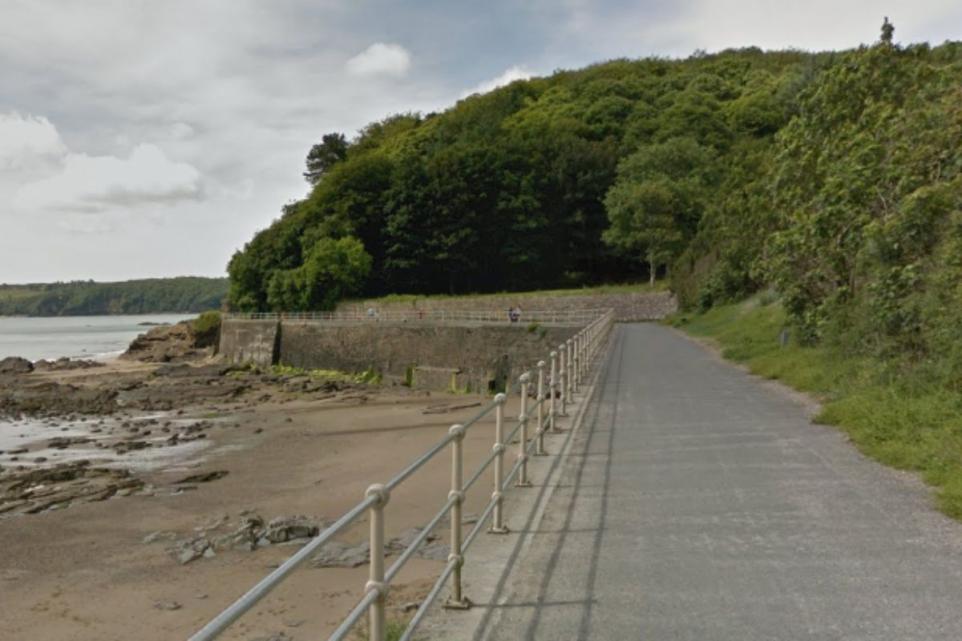
A SECTION of a south Pembrokeshire seaside coastal path, closed once again after a landslide at the weekend, has now reopened.
After a landslide on July 12, Dyfed-Powys Police reported delays on the footpath between Coppet Hall and Wiseman’s Bridge, advising people to use alternative routes where possible or allow extra time for their journey.
The section of the south Pembrokeshire beach-side coastal path has been closed several times since late 2023 after it experienced ‘substantial rock falls’.
The footpath was last closed in January 2025, following a number of landslips in the space of one week.
The path, known as the Tramway, which connects Wiseman’s Bridge to Coppet Hall in Saundersfoot is a popular and accessible stretch of the Wales Coast Path.
Following Sunday’s rock fall, Pembrokeshire County Council has said: “The footpath between Coppet Hall and Wiseman’s Bridge has re-opened following a rock fall at the weekend.
“The rock fall has been assessed as localised and from a low level. The path has therefore re-opened and work to remove the fallen material will be carried out in due course.”
The path was previously closed after it experienced ‘substantial rock falls’ in late 2023 and early 2024, with substantial investment made by the council to reopen the route.
In January 2025 a further fall happened towards the western end of the Wisemans Bridge to Coppet Hall cycleway, between the Coppet Hall and Wisemans Bridge tunnels, affecting access between Wisemans Bridge and Coppet Hall beach.
Costs of the works for the multiple incidents had, back in March 2025, amounted to nearly £700,000.
During 2024’s works, local councillor Chris Williams hit out at “selfish” path users putting others at risk by repeatedly cutting open safety barriers and fencing while the repair works were being undertaken.


Local Government3 hours ago
Catapult attacks suspected after wildlife deaths at Pembroke Mill Pond
Wildlife Crime Officers are investigating after the town council said around five animals showed signs of deliberate injury WILDLIFE found...


Crime6 hours ago
Narberth retailer speaks of shoplifting toll after ‘collectable bear’ stolen
Independent shop owner said rising costs meant businesses could not afford to absorb losses caused by theft A NARBERTH retailer...


Crime6 hours ago
Teen accused of attempting to murder teacher says she lied about stabbing
Defendant accepts teacher was terrified and that a knife wound to the head could kill, but denies deliberately attacking her...


Local Government2 days ago
Calls grow for independent investigation into Manorbier school closure
Councillor alleges misleading figures, inadequate insurance and poor treatment of staff CALLS for an independent investigation into the controversial closure...


Community2 days ago
Neyland Carnival hailed a huge success after streets fill with colour and crowds
NEYLAND CARNIVAL organisers have thanked the community, volunteers and local businesses who helped make this year’s event a memorable success....


Community2 days ago
Tenby Summer Spectacular: Anger grows over ‘disaster waiting to happen’ warning
A growing backlash has followed police calls for the event’s licence to be revoked, with supporters questioning why authorities failed...


Charity3 days ago
RSPB secures ‘missing link’ to reconnect wildlife habitats in Carmarthenshire
RSPB CYMRU has purchased a 96-hectare upland site in Carmarthenshire, describing it as a vital step towards reconnecting one of...


Crime4 days ago
Ann Widdecombe: Welsh politicians pay tribute as murder probe launched
Prime Minister Sir Keir Starmer has praised the former minister’s “conviction and dedication”, while political figures in Wales remembered her...


News4 days ago
Solardo pulls out of Haverfordwest show as organisers offer full refunds
Headline act confirms non-appearance as Park House Series announces major event changes DANCE music duo Solardo will no longer perform...


Local Government4 days ago
Conservatives win Pembroke Dock seat as Reform stalls and Dowson polls just 11
Jamie Street takes Market ward with a 43-vote majority as Reform finishes fourth despite its major Senedd breakthrough two months...
-

 Farming5 days ago
Working Carmarthenshire farm opens gates to visitors with new holiday cottages
-

 Entertainment6 days ago
Swing and big band classics heading to Torch Theatre
-

 Sport5 days ago
Rising rally star claims maiden Mini Rally Challenge victory
-

 Farming5 days ago
Outer Hebrides stickmaker to make final Royal Welsh Show appearance
-

 Crime5 days ago
Greenacres confirms seized dogs are safe as investigation continues
-

 Sport5 days ago
Bluebirds give new home strip first run-out
-

 Health4 days ago
Hospital ward closed after highly contagious scabies outbreak
-

 Crime6 days ago
Welsh-born woman Ruth Ellis granted pardon 71 years after execution