

Health
Junior doctors secure strike extension in pay negotiations with WG

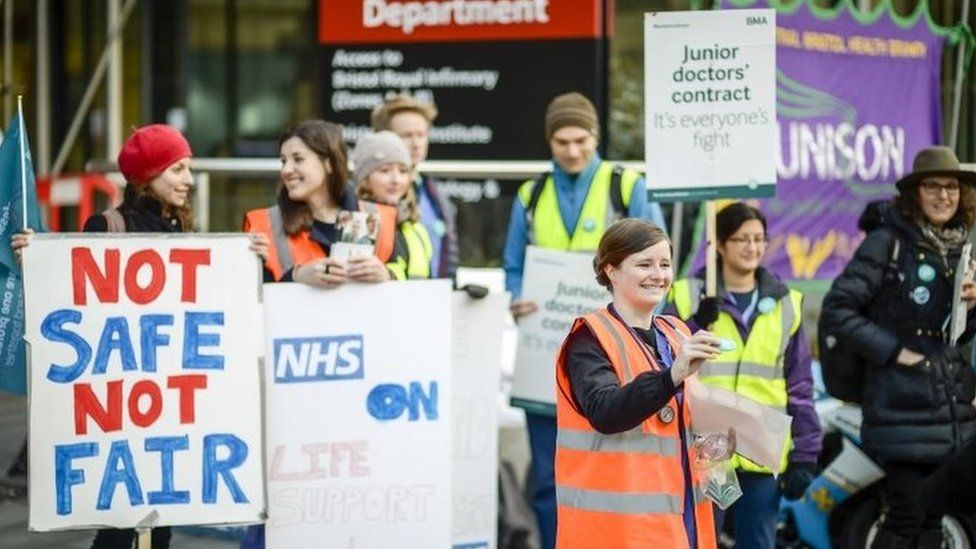
BMA Cymru Wales has confirmed a positive development in its pay negotiations announcing that Junior doctors have secured a three-month extension to their overwhelming strike mandate.
This means that junior doctors in Wales now have the right to enact industrial action over their pay until 17 September 2024 instead of 17 June when the mandate was due to run out.
Recognising the strength of feeling amongst junior doctors and the overwhelming 98% vote by members in favour of industrial action back in December 2023, employers have agreed to honour this extension to allow talks with the Welsh Government to continue.
Co-chairs of the Welsh Junior Doctor Committee Dr Oba Babs-Osibodu and Dr Peter Fahey said of this development:
“We are pleased to be able to secure an extension to our overwhelming strike mandate. Whilst we hope to put an end to our pay dispute through pay negotiations by reaching a credible deal and restoring our pay, it was important to secure more time for our mandate.

“The extension allows us to focus on talks but also provides us with the scope to get organised and enact our legal right to strike should we need to. This is about honouring the emphatic mandate of our members.
“Doctors have experienced real terms pay cut of almost a third since 2008. They voted overwhelmingly to put an end to the devaluing of their service, they know they are not worth a third less than their predecessors and they know the time is now to stick up for the profession and turn the tide of the continued erosion of their pay once and for all”.
The Welsh Government and NHS employers have agreed to the extension as part of ongoing pay negotiations where all parties hope to reach an end to the pay dispute with junior doctors, SAS doctors and Consultants in Wales.
Last month, BMA Cymru Wales announced it was suspending forthcoming industrial action for Consultants and SAS doctors and putting plans on hold to announce more strike dates for junior doctors to allow pay negotiations to take place*.
The decision to enter pay negotiations was based on a significant proposal from the Welsh Government to form the basis of talks to end the pay disputes with all secondary care doctors including Consultants, SAS, and Junior doctors, with the aim of reaching deals which can be taken separately to their respective members.
In August last year, the BMA’s committees representing secondary care doctors in Wales voted to enter separate trade disputes with the Welsh Government after being offered another below inflation pay uplift of just 5% for the 23/24 financial year. SAS doctors on some contracts were offered as little as 1.5%. This was the lowest pay offer any government in the UK offered and less than the DDRB, the pay review body for doctors and dentists, recommended last year.
As part of their disputes, SAS doctors, consultants and junior doctors carried out successful ballots for industrial action. Since then, junior doctors have taken part in 10 days of industrial action since January this year.



Freedom of Information figures show more than 1,600 patients remained on the health board’s hip replacement waiting list in May
PATIENTS awaiting elective hip replacement surgery under Hywel Dda University Health Board waited an average of 450 days during the 2025/26 financial year, according to newly released figures.
The average wait was equivalent to just over 64 weeks, significantly longer than the treatment times set out under Welsh NHS targets.
The figures were obtained through a Freedom of Information request submitted to the health board by private healthcare marketplace My Medical Gateway.
In Wales, the stated aim is for 95% of patients to begin treatment within 26 weeks of referral, with no patient waiting longer than 36 weeks.
Hywel Dda confirmed that 1,608 patients were on its waiting list for hip replacement surgery as of May 28, 2026.
The health board also said 16 patients had been removed from the waiting list during the 2025/26 financial year after choosing to undergo treatment privately.
Hip replacement surgery is most commonly offered to people experiencing severe pain, stiffness and reduced mobility, often after other treatments such as physiotherapy, pain relief, injections and lifestyle changes have failed to provide sufficient relief.
Sara Gezdari, Head of Investor Relations at My Medical Gateway, said prolonged waits could have a serious effect on patients’ physical and emotional wellbeing.
She said: “Many people join NHS waiting lists after already spending months or years attempting to manage their condition through physiotherapy, pain relief medication, injections and lifestyle modifications.
“By the time surgery is recommended, they are often already struggling. The true impact of waiting is measured not in weeks but in declining quality of life.”
She said patients waiting for surgery could experience increasing pain, disrupted sleep, reduced mobility, loss of independence, social isolation and worsening mental health.
Long waits could also have financial consequences, particularly for people whose employment relies on physical mobility.

Ms Gezdari added: “Many patients continue working despite severe symptoms. As pain worsens, productivity often falls. Some reduce their hours. Others leave work entirely.
“The consequences can be particularly significant for self-employed individuals who depend upon physical mobility to earn a living.”
My Medical Gateway said private hip replacement surgery in the UK typically costs between £12,549 and £14,950.
The company, which connects UK patients with private hospitals in the European Union, said the average price offered by many European providers was approximately £9,088.
However, travelling abroad for medical treatment can involve additional considerations, including travel costs, insurance, post-operative care and arrangements if complications arise.
The Freedom of Information response was returned by Hywel Dda University Health Board on June 8, 2026.
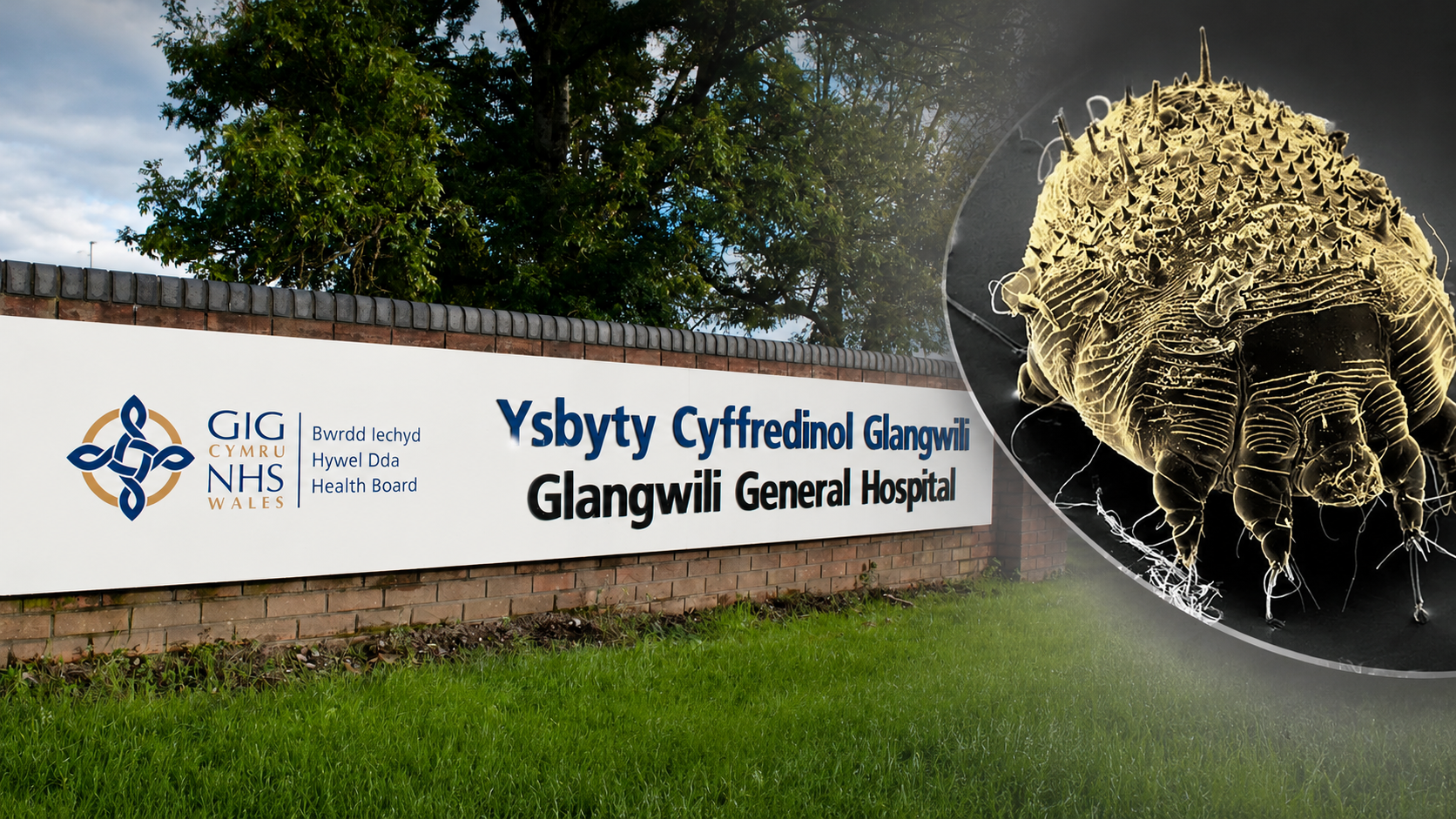
Hywel Dda confirms wider rise in cases across Carmarthenshire, Pembrokeshire and Ceredigion as patients and staff are offered treatment
A HOSPITAL ward in Carmarthen has been temporarily closed following an outbreak of crusted scabies, a rare and highly contagious form of the condition.
Hywel Dda University Health Board confirmed that Steffan Ward at Glangwili Hospital has been closed while the outbreak is managed under established infection prevention and control procedures.
All patients and members of staff identified as contacts have been informed and offered treatment, including those who are not currently showing symptoms.
Additional measures have been introduced on the ward, including enhanced monitoring, treatment of identified contacts and continued support from specialist infection control teams.
The health board said the situation would remain under review and that the ward would reopen when it was considered safe to do so.
Of wider concern is the health board’s confirmation that scabies cases are increasing across Carmarthenshire, Pembrokeshire and Ceredigion, with the regional rise contributing to outbreaks within hospitals.
The reference to hospital outbreaks in the plural has prompted questions about whether other wards or hospital sites are currently affected.
The Herald has asked Hywel Dda to confirm the number of patients and staff involved, when the first case was identified and whether any other wards, hospitals, care homes or community healthcare settings are dealing with linked cases.
We have also asked what effect the closure is having on admissions, patient transfers and bed availability at Glangwili.
Hywel Dda University Health Board said on Friday (Jul 10): “We can confirm that Steffan Ward at Glangwili Hospital has been temporarily closed to admissions following the identification of a case of crusted (Norwegian) scabies.
“As scabies is primarily a clinical diagnosis, there are limitations in confirming all cases through diagnostic testing. Due to the highly infectious nature of crusted scabies and in line with infection prevention and control guidance, a precautionary contact tracing and treatment programme has been implemented.
“Patients and staff who may have been exposed have been identified and are being offered treatment as a precaution.

“The decision to temporarily close Steffan Ward was taken as a precautionary measure to enable appropriate infection prevention and control measures, environmental cleaning, and treatment of contacts to be undertaken. Patient safety remains our priority and patients who have been recently discharged and are thought to have possibly been exposed will be contacted.
“The reference to an increased prevalence of scabies across Carmarthenshire, Ceredigion and Pembrokeshire reflects observations from healthcare services across the region. Scabies is currently being seen more frequently in community and healthcare settings than in previous years. However, because most scabies cases are diagnosed clinically and managed in primary care or other community settings, comprehensive population-wide figures are not available.
“There are no other ward closures relating to scabies at Withybush Hospital, Prince Philip Hospital or Bronglais Hospital.
“Hywel Dda University Health Board’s Infection Prevention and Control Team is working closely with relevant partners, including Public Health Wales, to ensure appropriate management of the incident.
“The ward will re-open once infection prevention and control measures have been completed and it is considered safe to do so.
“For patients, visitors and members of the public, the risk remains low. Anyone who has concerns about symptoms of scabies should seek advice from their GP or community pharmacist.”
Previous outbreaks reported
This is not the first time scabies has caused disruption within the Hywel Dda area.
Health board papers considered in October 2025 referred to an earlier scabies outbreak on Steffan Ward which required a multidisciplinary response.
It is not currently known whether that incident and the latest outbreak are connected.
The closure also follows earlier reporting by The Herald about scabies circulating in Pembrokeshire care homes.
In November 2025, care providers said several residential settings were managing outbreaks with clinical support and guidance from Hywel Dda University Health Board.
Pharmacies in Milford Haven and Haverfordwest had also reported increased demand for scabies treatments.
The Herald has asked the health board whether the current regional increase is connected to the pattern of outbreaks reported last year and what action has since been taken to monitor and contain the spread.
UK outbreak caused months of disruption
A previous outbreak at a major UK hospital demonstrates how difficult scabies can be to control in a healthcare environment.
Raigmore Hospital in Inverness was affected by a series of scabies incidents during 2023.
One ward was closed in March and did not reopen until May, while another ward was closed to new admissions in July after further cases were identified.
The outbreak caused disruption over several months and showed that restrictions can return even after previously affected areas have reopened.
Raigmore is the largest hospital in the Scottish Highlands, meaning prolonged ward closures had consequences for capacity and the wider community it serves.
It is too early to say whether the disruption at Glangwili will reach a similar scale.
However, the situation carries an added concern because Hywel Dda has specifically identified the condition as crusted scabies.
What is crusted scabies?
Scabies is caused by tiny mites which burrow into the skin and is most commonly spread through prolonged, close skin-to-skin contact.
Symptoms can include intense itching, particularly at night, and a raised rash which often appears between the fingers, around the wrists, under the arms and near the waist or groin.
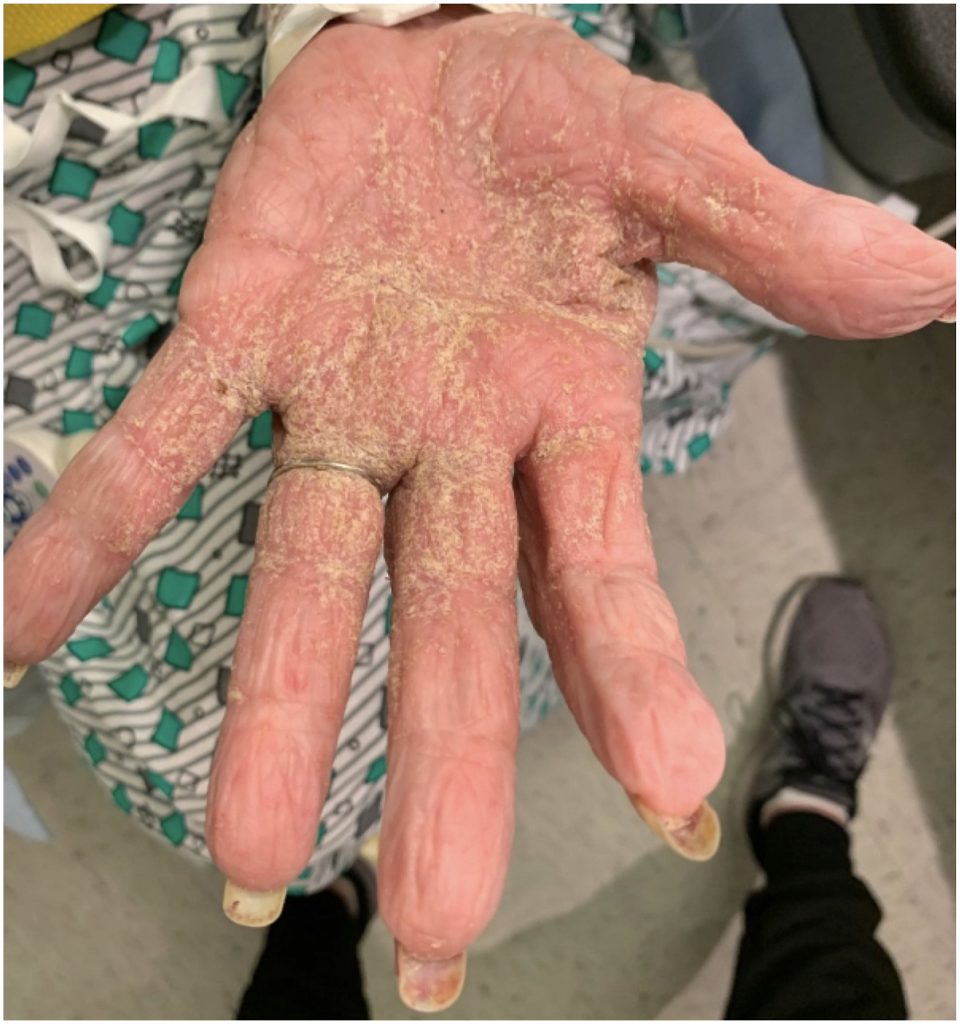
Crusted scabies is a rare and more severe form of the infestation in which exceptionally large numbers of mites can be present.
It is substantially more contagious than ordinary scabies and may spread through shorter periods of direct contact or through contaminated bedding, clothing, towels and furniture.
The condition can require more intensive treatment and extensive environmental cleaning, making outbreaks in hospitals and care settings particularly challenging to control.
Scabies is treatable, but symptoms can take several weeks to appear. Close contacts may therefore be offered treatment even when they have no symptoms, helping to reduce the risk of further transmission or reinfection.
Hywel Dda has not yet disclosed the number of confirmed cases, how many patients and staff have been treated or when Steffan Ward is expected to reopen.
The Herald will update this report when further information is received from the health board.
Additional reporting by James Sinclair

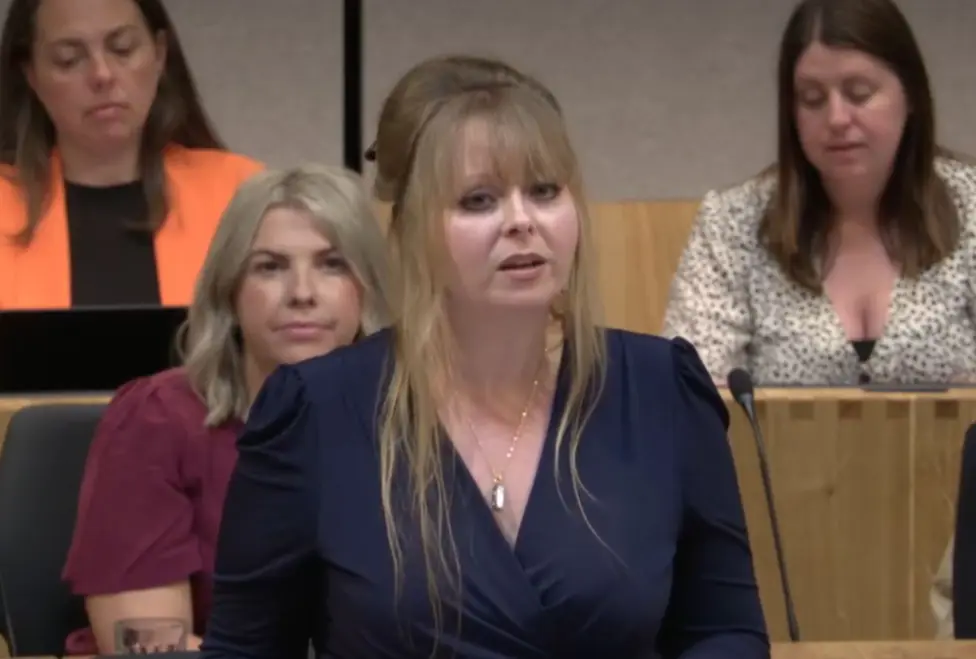
WALES’ first-ever dedicated women’s health minister has promised a major overhaul of endometriosis and abortion services.
Addressing Senedd colleagues on July 7, Blaenau Gwent Caerffili Rhymni MS Delyth Jewell vowed to tackle the “invisibility” of women’s pain in the healthcare system
Ms Jewell, who was appointed deputy minister for social care, mental health, and women’s health in May, said these areas have lacked “sufficient attention” for too long.
The Plaid Cymru MS said she would champion carers, and said she would work to ensure more carers receive the real living wage and “parity of esteem”,
She said: “Why is it that social care receives less prominence in debate than the NHS? Why shouldn’t care workers hold the same space in our psyche as nurses and doctors?”
Speaking on the importance of mental health care, Ms Jewell highlighted the need for “a fundamental change” in how services are delivered, moving towards “open-access, same-day mental health support”.
The deputy minister revealed she had met with Professor Ann John, national adviser for suicide prevention and self-harm, and pledged to provide a written statement setting out the government’s priorities – with a focus on male suicide.
Ms Jewell also said: “For too long, women’s health has been treated as an afterthought” – and pledged to tackle women’s pain in healthcare.
“How many women have been told, ‘this might hurt’, and have been afraid to speak up and say that they are in pain?” Ms Jewell asked.
“Women’s voices should be heard. Their pain should not simply be endured. I am determined to change this.”
Ms Jewell continued: “We will be refreshing elements of the NHS Wales women’s health plan, with action this year focused on improving endometriosis and abortion services.
“I will want to hear from women directly. We’ll be commissioning work to gather women’s feedback, and we’re also carefully considering the women’s health hub model to improve consistency.”
Ms Jewell confirmed plans to host a ministerial summit on the matter on July 16, and pledged to help those struggling to get appointments, families waiting too long for diagnoses, and women who have not been believed.
She said: “I want to bring hope, to bring change, and, most of all, to be a voice for those who have not been heard. I promise I am listening.”
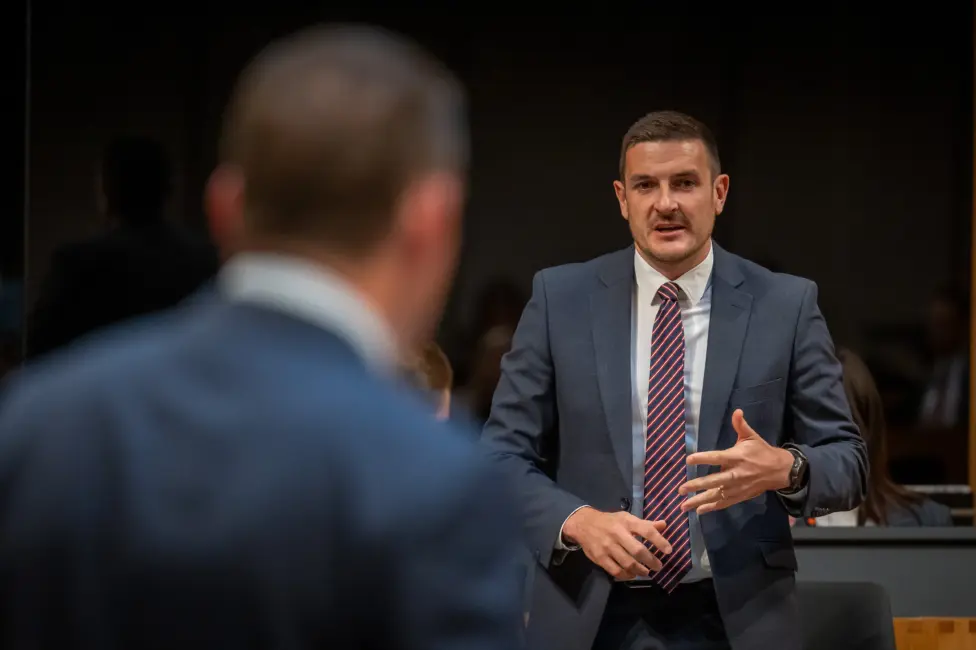
James Evans, Reform’s shadow minister for health and prevention, congratulated Ms Jewell on her appointment but reminded her that “warm words […] need to be matched by delivery, deadlines and accountability”.
Mr Evans quizzed his opposite number on her plans for a national care service, something Ms Jewell pledged would be created this Senedd term alongside a new national care academy.
But Mr Evans said he has “long opposed” its creation, describing it as an “unnecessary additional level of bureaucracy and a drain on vital public money”.
He added: “A national care academy, fair pay and conditions, better support for unpaid carers – there’s something we all want – and those significant commitments that you’ve made also need to be matched by funding.”
Mr Evans called for a “practical timetable” on this, asking when the national care academy will be online, and how the Welsh Government will ensure the national care service does not become “another layer of bureaucracy”.
In response, Ms Jewell said: “We want to make sure that what we have for people is greater than the sum of those parts, that actually there is parity of esteem for people in the workforce.
“[…] It’s bizarre, isn’t it, that there’s never been a founding moment for the care service in the way that we’ve had with the NHS. We celebrated the NHS’s birthday a few days ago; when I was talking about the same space in our psyche, we should be celebrating this work.
“Most people will come into contact with the NHS and with other areas of public service throughout the course of our lives.”
Ms Jewell spoke of the importance of increasing the status of the sector and said: “Most people only come into contact with the care service when something has either gone wrong with them or someone else they love.”
Answering Mr Evans’ questions on timescale, Ms Jewell admitted a lot of the work will take the course of the Senedd term but that some elements, such as the academy, she wants to bring forward “far earlier”.
Mr Evans also pressed Ms Jewell on her plans for suicide prevention, and welcomed the focus on male suicide.
He said: “One of the biggest groups that does suffer from suicide is young white men, and young men in general. They are the people who suffer the most and they do need to be supported.”
Mr Evans called for a dedicated men’s health plan, adding that it should not be limited solely to suicide prevention but also other issues such as cardiovascular disease and fathers struggling with newborns.
In response, Ms Jewell said: “I am prepared to engage with you and other members on this as a concept, because, of course, you’re right that certain health issues are either only apparent in men, or have a disproportionate effect on men.
“And there’s lots of work, including what I’ve said about male suicide. The upcoming cancer plan will look at improving rates of diagnosis in areas like prostate cancer. Whether we need to bring that together in one men’s health plan, I am open to the idea – let’s have further conversations.”

Labour’s spokesperson for public and preventative health, Jayne Bryant, told the Siambr that “for far too long, women’s voices and experiences in the healthcare system have not been given their due weight.”
Ms Bryant, of Casnewydd Islwyn, drew attention to the work of the previous Labour government to support women’s health – from “free period products, to menopause support, to creating women’s health hubs in every health board.”
She told the Senedd it was “disappointing” to see “no dedicated action” for women’s health in Plaid Cymru’s pledges for the first 100 days in government.
She called for the deputy minister to share the government’s plans to address endometriosis – a condition which affects one in ten women in Wales.
Ms Bryant told the Siambr that “advances are being made in diagnosis” and Wales must make sure it’s ready to adapt.
She said: “Rapid endometriosis tests have just been given the go-ahead by the National Institute for Health and Care Excellence, which will help to significantly reduce the time it takes for women to be told whether they have the condition.
“One test, I believe, provides that result in 45 minutes. Currently, getting a diagnosis can take years. So, when does the minister expect women in Wales to be able to access those new tests?”
Ms Jewell paid tribute to the work done by Labour’s Sarah Murphy and Eluned Morgan on women’s health in the last Senedd term.
She said: “It should not be normal for women to have to go for so many appointments before they get the symptom diagnosis that they deserve.
“So, I want to look at this in terms of how it is working in hubs, how it’s working in primary care, all the way through to tertiary services as well. It’s going to be a focus of the women’s health plan.”

Conservative spokesperson for health and social care, Natasha Asghar, questioned the deputy minister on endometriosis and polyendocrine metabolic ovarian syndrome (PMOS), formerly known as polycystic ovary syndrome.
Ms Asghar told colleagues that NICE published draft guidelines on PMOS last week which recommended “faster diagnosis and an annual review of women and girls aged ten and over to include symptoms and signs of PMOS.”
She called on Ms Jewell to consider annual reviews of the condition alongside the training of doctors and health professionals across Wales to ensure they can spot the signs of PMOS.
Ms Jewell acknowledged the draft guidance but noted the final recommendations won’t be available until December.
Ms Asghar, of Casnewydd Islwyn, also highlighted the importance of quality education on menstrual health and menopause.
She said: “All too often, women and girls cope with endometriosis and PMOS because they believe that heavy and painful periods are a normal part of their menstrual journey.”
Ms Asghar said she had asked the previous education minister about “ensuring universal menstrual health education within the curriculum”, and asked Ms Jewell how she will ensure “quality menstrual health education” is available Wales-wide.
She also said she has raised “consistent concerns” about the delivery of advice and support for menopause alongside menstrual health.
Ms Asghar noted that Cardiff and Vale University Health Board has launched a menopause hub in Ely, and asked about their Wales-wide rollout.
In response, Ms Jewell said she is “willing and eager” to work cross-party to ensure the message gets out to women and to “empower them to use their voice”.



Crime16 hours ago
Ann Widdecombe: Welsh politicians pay tribute as murder probe launched
Prime Minister Sir Keir Starmer has praised the former minister’s “conviction and dedication”, while political figures in Wales remembered her...


News20 hours ago
Solardo pulls out of Haverfordwest show as organisers offer full refunds
Headline act confirms non-appearance as Park House Series announces major event changes DANCE music duo Solardo will no longer perform...


Local Government21 hours ago
Conservatives win Pembroke Dock seat as Reform stalls and Dowson polls just 11
Jamie Street takes Market ward with a 43-vote majority as Reform finishes fourth despite its major Senedd breakthrough two months...

Health22 hours ago
Hospital ward closed after highly contagious scabies outbreak
Hywel Dda confirms wider rise in cases across Carmarthenshire, Pembrokeshire and Ceredigion as patients and staff are offered treatment A...


Crime2 days ago
Teacher stabbing trial: The first week of evidence
Jury hears accounts of alleged planned classroom attack, teacher’s fear she was dying, and boy’s words after leaving school A...


Community2 days ago
Haverfordwest Castle refurbishment reaches new heights as roof goes on
Major milestone reached in project to transform historic gaol building into flagship visitor attraction A MAJOR milestone has been reached...


Business3 days ago
Pembrokeshire lands £98m share of Wales marine energy boom
New industry report says county has received the second highest level of marine energy investment in Wales, supporting more than...
Crime3 days ago
First aider tells jury teacher was “crying, shaking” after classroom stabbing
A SCHOOL first aider has told a jury that teacher Vicki Williams was “crying, shaking” and in “complete shock” after...


Crime4 days ago
Teacher feared she was dying after Milford Haven classroom stabbing
A TEACHER allegedly stabbed in the head at Milford Haven Comprehensive School told a jury she feared she was dying...


News4 days ago
Farage to resign as MP and fight Clacton by-election amid finance row
NIGEL FARAGE has announced he will resign as MP for Clacton and stand again in the by-election he intends to...
-

 Farming4 days ago
Pembrokeshire slaughterhouse given urgent improvement rating after audit failure
-

 Entertainment3 days ago
Swing and big band classics heading to Torch Theatre
-

 News4 days ago
From boccia to boxing: ALN multisport events give youngsters chance to try activities
-

 News5 days ago
Large fire breaks out at Impala Terminal in Milford Haven
-

 Education5 days ago
Council failed Welsh language standards over school closure
-

 Community7 days ago
Milford Haven Carnival brings colour, music and crowds to the town
-

 News4 days ago
Questions raised over Hamilton Accies finances after club’s Haverfordwest friendly
-

 Entertainment5 days ago
Crymych Arms to host weekend of local music, food and drink