


News
Aurora Alert: Another chance to see the Northern Lights tonight


THE UK was treated to a spectacular display of the Northern Lights on Friday night, courtesy of one of the most intense geomagnetic storms in recent years. With reports of visible auroras across the nation, many are now hopeful for a repeat performance tonight.
The celestial display was made possible by a G4 geomagnetic storm, the second highest warning level, which the US National Oceanic and Atmospheric Administration (NOAA) issued for the weekend. This is the first such warning since 2005, highlighting the rarity and intensity of the current solar activity. According to The Guardian, the sun unleashed a series of strong solar flares starting Wednesday, leading to multiple plasma outbursts that have the potential to disrupt satellites and power grids.
These solar flares, originating from what are known as coronal mass ejections, were the catalysts for Friday’s stunning aurora borealis. As the charged particles from the sun struck the Earth’s magnetic field, they created the awe-inspiring colours that lit up the night sky.
Looking ahead to tonight, the Met Office’s space weather manager, Krista Hammond, indicated that the Northern Lights might still be visible, though likely on a smaller scale. “Aurora visibility may persist through Saturday night, but as it stands this is likely to be less widespread than on Friday night, with northern parts of the UK most likely to continue to have the best viewing potential,” Hammond stated.
Residents in the south of England, who were fortunate enough to witness the phenomenon last night, may find their chances diminished this evening. Historically, Northern Ireland, Scotland, and the northern regions of England are more favoured for viewing the Northern Lights during such geomagnetic events.

The clear skies on Friday played a crucial role in the visibility of the aurora, as reported by BBC News. Those eager to catch another glimpse of the Northern Lights are advised to seek spots away from city lights and hope for similar weather conditions tonight.
As the solar storm continues to influence our planet, the UK remains on alert for more breathtaking views of one of nature’s most extraordinary displays.

What you need to know about the Northern Lights
Unravelling the Mysteries of the Aurora
Every now and then, the skies above the polar regions are lit up with a dazzling display of colours, creating what is perhaps one of nature’s most splendid spectacles: the aurora. In the northern latitudes, it is known as the Aurora Borealis, or the Northern Lights, while in the southern latitudes, it is referred to as the Aurora Australis, or the Southern Lights. This celestial phenomenon has captivated humans for millennia, inspiring folklore and scientific inquiry alike. But what causes these breathtaking light shows?
A Cosmic Dance of Solar Wind and Earth’s Magnetosphere
The story of the aurora begins with the sun, the life-giving star at the centre of our solar system. The sun is constantly emitting a flow of charged particles known as the solar wind. This stream of particles is mostly composed of electrons and protons ejected from the sun’s atmosphere due to the intense heat at its core.

When these charged particles travel towards Earth, they encounter the Earth’s magnetosphere, an invisible magnetic field that surrounds our planet. This magnetic shield protects us from the solar wind. However, the magnetic field is weaker at the poles, and here, the charged particles can enter the Earth’s atmosphere.
As the particles collide with gases in the Earth’s atmosphere, they transfer their energy to atoms and molecules of oxygen and nitrogen, exciting them into higher energy states. When these atoms and molecules return to their normal energy state, they release light — a process called radiative recombination. The colour of the light depends on the type of gas and the altitude of the interaction. Oxygen typically emits greenish-yellow or red light, while nitrogen can give off blue or purplish-red light.
The Influence of Geomagnetic Activity
The intensity and frequency of auroral displays are significantly affected by the geomagnetic activity around Earth. This activity is often heightened during solar maxima — periods of intense solar activity marked by an increased number of sunspots and solar flares. These events enhance the flow of solar wind, making the auroras more frequent and vivid.

Geomagnetic storms, another key influencer, can dramatically increase the brightness and extent of auroral activity. These storms occur when a large explosion on the sun, such as a coronal mass ejection, sends a huge cloud of magnetic plasma toward Earth, disrupting the magnetosphere and enhancing the flow of charged particles into the upper atmosphere.
Viewing the Aurora
Witnessing an aurora is a bucket-list experience for many. The best times to view the Northern Lights are typically during the winter months in the Arctic regions such as Norway, Sweden, Finland, and Iceland, where the nights are long and dark. Similarly, the Southern Lights can be best observed from high southern latitudes in Antarctica, and more accessible locations like Tasmania and New Zealand, during the Southern Hemisphere’s winter.
The aurora is a reminder of our planet’s dynamic nature and its intimate connection with the cosmic forces of the solar system. As we continue to study this magnificent phenomenon, we not only learn more about our own planet but also gain insights into the workings of our solar system and beyond, illustrating once again the wonders of the universe we inhabit.

A 22-YEAR-OLD man who suffered serious injuries after falling from cliffs overlooking Pendine Beach is recovering well following emergency surgery.
The man was visiting Pendine with friends on a weekend break when the incident happened on Saturday afternoon. Emergency services were called to the scene after he fell from a cliff edge above the beach, sustaining significant chest, facial and pelvic injuries.
A major multi-agency response was launched involving the Welsh Ambulance Service, HM Coastguard, Dyfed-Powys Police and the Wales Air Ambulance. Personnel from Pendine Community Council also assisted at the scene.
After receiving emergency treatment, the casualty was airlifted to Cardiff for specialist hospital care, where he underwent surgery.
An update released with the consent of the injured man and his family confirmed that he is now recovering well.
The young man, his family and friends have expressed their gratitude to everyone involved in the rescue effort, treatment and ongoing care.
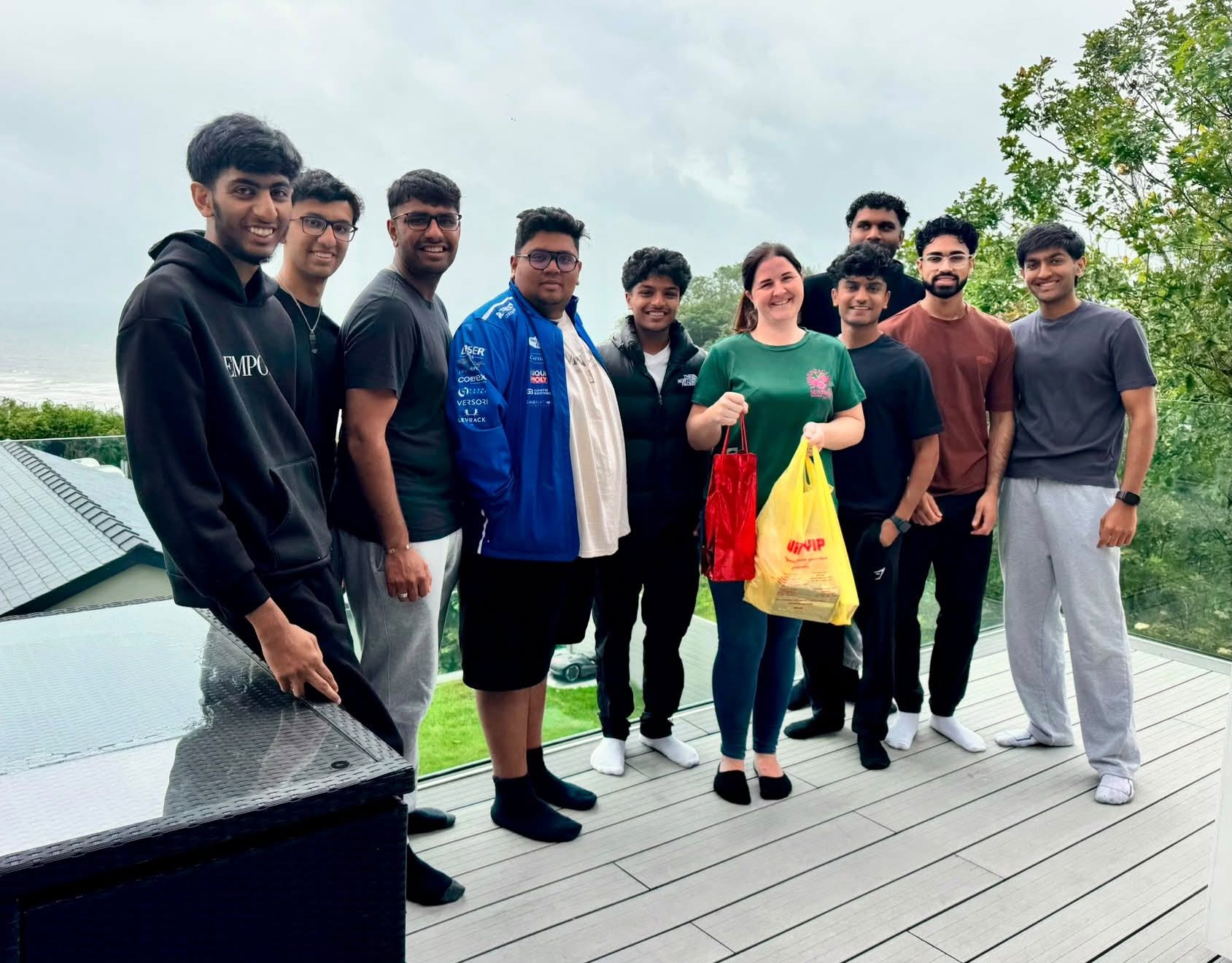
Special thanks were paid to local resident Michaela Dance, an Emergency Nurse Practitioner, who was first on the scene and provided immediate assistance before emergency crews arrived.
The family said they were extremely thankful for the professionalism, skill and compassion shown by all emergency service personnel and those who helped during the incident.
Despite the seriousness of the injuries sustained, the outcome has been positive, with family and friends acknowledging that the situation could have been far worse.
Pictured are the injured man’s friends with Michaela Dance, presenting her with a gift as a token of their appreciation for the assistance she provided following the incident.


A HAKIN motorist has been banned from driving for three years after being caught behind the wheel with cocaine and benzoylecgonine in his system.
Mark Briskham, 53, of Waterloo Square, Wellington Road, Hakin, was stopped by police on January 5 as he drove a Ford Kuga along Steynton Road, near Milford Haven.
Blood tests carried out at the police station showed he had 800mcg of benzoylecgonine in his system. The legal limit is 50mcg.
He also had 64mcg of cocaine in his system. The legal limit is 10mcg.
Briskham pleaded guilty to two drug-driving charges when he appeared before Haverfordwest Magistrates’ Court this week.
Magistrates disqualified him from driving for three years, taking into account a previous drug-drive conviction from 2020.
He was also fined £120 and ordered to pay £85 costs and a £48 surcharge.cr
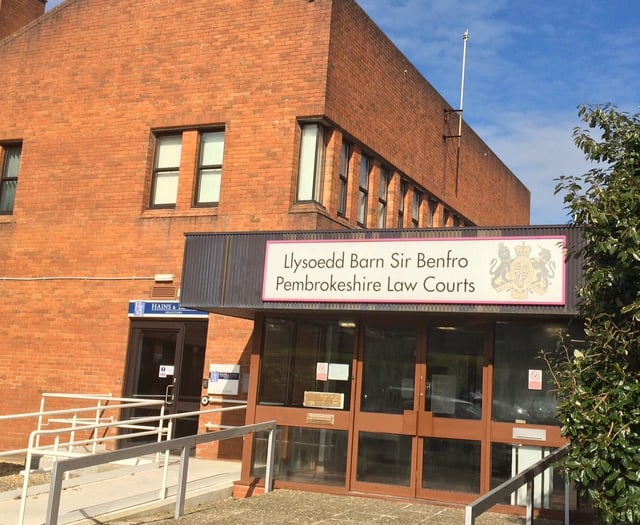
A PEMBROKESHIRE man has been remanded in custody following an alleged May Day assault against a woman in Begelly.
Tomas Baker, 34, of Ty Dee, New Road, Begelly, is accused of assaulting the woman, causing actual bodily harm, at an undisclosed location in Begelly on May 1.
Baker appeared before Haverfordwest Magistrates’ Court this week by video link from Swansea Prison.
He pleaded not guilty to the charge.
His trial will take place at Haverfordwest Magistrates’ Court on June 22.



News14 minutes ago
Pendine cliff fall victim recovering after major emergency response
A 22-YEAR-OLD man who suffered serious injuries after falling from cliffs overlooking Pendine Beach is recovering well following emergency surgery....


News19 hours ago
First Minister challenged over jobs for student nurses
REFORM WALES has accused the First Minister of failing to guarantee jobs for student nurses in Wales, despite continuing pressure...

Crime21 hours ago
Knife blankets call as school staff face rising violence fears
GMB says protective equipment should be considered where risk assessments show staff could face blades SCHOOL staff should be given...


News22 hours ago
Claire Archibald secures review of Milford Haven train times
RURAL TRANSPORT CONCERNS RAISED WITH TFW CLAIRE ARCHIBALD MS has secured a review of train times between Milford Haven and...


Crime22 hours ago
PCC review calls for stronger youth crime prevention work
REPORT MAKES 13 RECOMMENDATIONS A REVIEW into crime and anti-social behaviour services for young adults has called for stronger prevention...

Crime1 day ago
Families condemn failed appeal by paddleboard boss jailed over Haverfordwest tragedy
RELATIVES SAY LATEST COURT BID HAS REOPENED PAIN AFTER FOUR DEATHS ON WESTERN CLEDDAU THE FAMILIES of victims of the...


Community2 days ago
Forgotten wartime archive found in Pembroke Dock attic after 80 years
Remarkable family collection reveals story of father and son who served through two world wars A REMARKABLE untouched family archive...


Crime2 days ago
Milford Haven woman left with facial fractures after drunken attack
A WOMAN in her late fifties suffered facial fractures after being repeatedly punched through the window of her car during...


Crime2 days ago
Sex offender in senior role at Tenby family hotel
CREST HOTEL GROUP says it is investigating safeguarding concerns after staff at the Imperial Hotel in Tenby raised alarm over...


Sport2 days ago
Runners tackle new route in Ras Y Castell 10k
MORE than 90 runners took to the streets and paths around Cardigan on Friday evening (June 5) for the annual...
-
Crime5 days ago
Paddleboard company owner loses bid to cut sentence over Haverfordwest tragedy
-

 Crime4 days ago
Milford Haven man admits harassment and assault
-

 Crime7 days ago
Milford Haven man bit neighbour’s neck near cashpoint
-

 News4 days ago
Community appeal for privacy after serious emergency in Pendine
-
 Crime7 days ago
Pembroke Dock driver avoided jail after drug-drive crash
-

 Crime7 days ago
Dinas Cross man jailed over shop thefts
-
Community2 days ago
Forgotten wartime archive found in Pembroke Dock attic after 80 years
-
Crime2 days ago
Sex offender in senior role at Tenby family hotel