


Health
‘We are not for sale’ – Young people back plan to remove profit from care

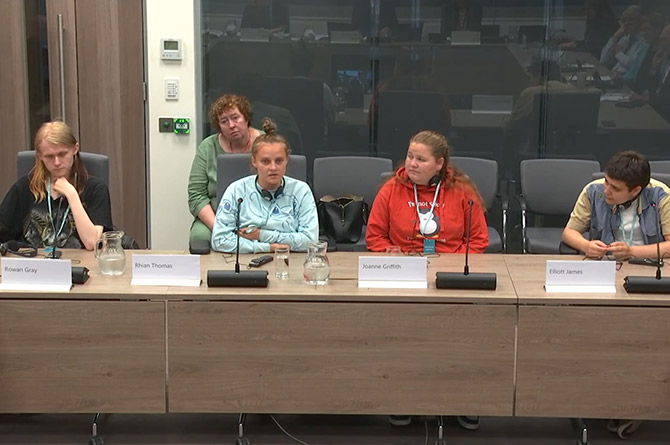
FOUR remarkable young people gave evidence to the Senedd’s health committee about their experiences of Wales’ social care system, supporting plans to stamp out profiteering.
Mark Drakeford asked the witnesses if they agreed with the principle of the health and social care bill, which would remove profit from the care of looked-after children.
Elliott James told the former first minister – who introduced the proposal while leading the Welsh Government – that for every £10 given for a child in care, £3 is taken away in profit.
He said one relatively standard residential placement can cost as much as £5,000 a week, with support workers paid a “shockingly” low amount.
Elliott stressed: “At the moment, companies are profiting off us and we are not for sale.”

Joanne Griffith similarly said: “We are not in the care system for people to profit off us – we don’t choose to go in the system, the system chooses us.
“Why should people be able to gain money … and spend it on whatever they want when in actual fact the money should be going to the young people, so that we can thrive?”
She added: “Put yourselves in our shoes, you probably wouldn’t want to be profited off.”
Rhian Thomas and Rowan Gray wholeheartedly agreed with the principle. But Rowan raised concerns for-profit providers “could end up packing up and going elsewhere”.
Elliott raised concerns about children being placed a long way from home, saying: It’s not just about the profit, it’s about the care of young people as a whole.
“A lot of young people are being let down currently.”
He said: “Moving a child hundreds of miles away isn’t always suitable….

“These placements can’t commit to contact, they can’t commit to free time so that leaves us not being able to see our family, not being able to go and see our friends.”
He warned that placements for children and young people with severe mental health problems are more than likely to break down because carers cannot cope.
Elliott said: “Unfortunately, the system thinks as soon as we enter care, all of our problems have been solved. They haven’t. We are still deeply traumatised young people who need care, love and support.”
While recognising the need for emergency placements, Elliot raised concerns about children moving from one to the next until a suitable placement is found.
He asked: “Why can’t we be placed into a suitable placement the first time around?”
Elliott told the Senedd some young people are “placement hoppers”, going to as many as 10 or 20 different placements in one week.
He said he was given only an hour-and-a-half notice before going into care and nobody was trained to really understand his autism.
“I was always left to suffer by myself because nobody knew how to help me,” he said, warning that symptoms of autism were treated as a behavioural issue.
Rhian stressed the importance of keeping siblings together and support for young people transitioning into care or adulthood.
She told Senedd members: “When you first come into care that’s the hardest part of it all.”
Rowan said it is vital to match the children going into care with the right foster carers.
“My last placement was with some people that were in their 60s,” he said. “When I was younger, I had a lot of energy and I was always wanting to do something.”
He told committee members the foster carers did the best they could but he wanted to build memories and they were sometimes not able to take part in activities he found fun.
Rowan was placed “out in the middle of nowhere” more than 10 miles from home.
“I didn’t have anyone around my own age who I could build friendships with,” he said.
Calling for more accountability, he told the Senedd: “If my local authority had actually done what they said they were going to do, I wouldn’t be sat here.
“I would be currently in Bristol living with my mother. Because there was no accountability … they went back on their word … and I ended up in long-term foster care.”
Joanne raised the importance of stability and continuity of care.
She told the committee: “It’s really important that we have a placement that we know we can stay in permanently and we’re not going to be moved within 24 hours … or a week.”
Joanne added: “We need a placement that we can call home.”
She called for compulsory training around mental health and disability, so “we know if we have an issue we can go to the foster carers and we’re not going to get stigmatised for it”.
Joanne also called for more unannounced visits to build up a more accurate picture.
The health committee is scrutinising the bill, aiming to report back to the Senedd in October, ahead a vote on the general principles with amending stages to follow.



THE WELSH AMBULANCE SERVICE has stood down the critical incident declared on 26 June following three days of sustained pressure linked to the extreme heat.
The service said demand has now begun to reduce, although it remains under significant pressure.
Members of the public are still being urged to call 999 only in serious or life-threatening emergencies.
For less urgent health concerns, people are being asked to use NHS 111 Wales or the online Albot service for advice and support.
The Trust thanked staff, volunteers, partner organisations and the public for their patience, professionalism and support during what it described as an exceptionally challenging period.
THE WELSH AMBULANCE SERVICE has issued a fresh appeal to the public following the declaration of a critical incident on Friday (June 26), as exceptionally high demand continues to place pressure on crews across Wales.
In a social media post published today (Saturday, June 27), the Trust warned that hot weather is contributing to a rise in ambulance call-outs, including incidents involving heat-related illness, falls, breathing difficulties and existing medical conditions worsened by the heat.
The message comes less than 24 hours after the service declared a critical incident amid unprecedented demand, with ambulance resources stretched across Wales.
The Trust is urging people to call 999 only for serious or life-threatening emergencies, contact NHS 111 Wales for urgent health advice, and use local pharmacies for minor illnesses and ailments.
It said choosing the right service can help ambulance crews reach the sickest patients more quickly while pressures remain high.
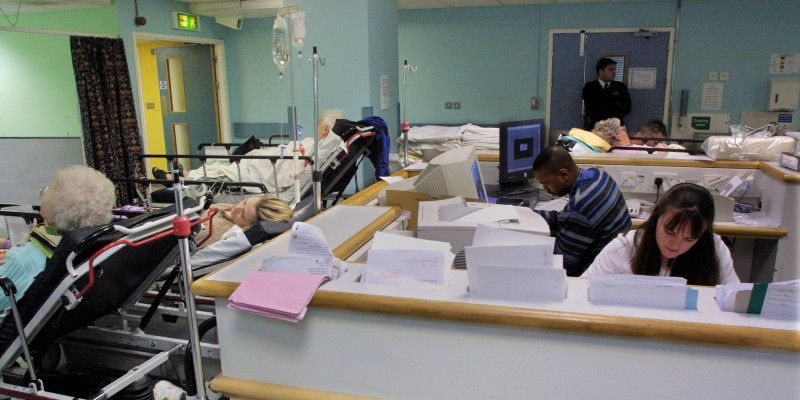
RCN Wales joins doctors, patient groups and charities in call for national reporting before summer recess
NURSING leaders, doctors, patient groups and charities have called on the Welsh Government to take urgent action to end corridor care in Welsh hospitals.
A joint letter signed by Age Cymru, BMA Cymru Wales, Carers Wales, Llais, Marie Curie Cymru, Royal College of Nursing Wales, Royal College of Emergency Medicine Wales, Royal College of Pharmacy and Royal College of Physicians sets out a series of steps ministers are being urged to take immediately.
The organisations want the Welsh Government to publish a formal definition of corridor care, introduce national reporting, monitor the issue as a patient safety indicator, and require health boards to produce local plans focused on the most vulnerable patients.
They have also called for a coordinated approach across health and social care, warning that the problem cannot be tackled properly unless it is measured consistently across Wales.
The groups want a public commitment from the Welsh Government before the Senedd’s final sitting day before the summer recess on July 17.
‘Unsafe and unacceptable’
Corridor care refers to patients being assessed, treated or cared for in inappropriate areas such as corridors, waiting rooms, ambulance bays or other spaces not designed for clinical care.
Health bodies have repeatedly warned that the practice can put patients at risk, reduce privacy and dignity, and leave staff unable to provide the level of care they know patients need.
RCN Wales Executive Director Nicola Williams said corridor care was still happening every day across most hospitals in Wales.
She said: “Earlier this month, we welcomed the Cabinet Minister for Health and Care’s determination to address corridor care following England’s first publication of corridor care statistics.
“I have also been encouraged by the verbal commitments I have received from Welsh Government officials that echo our priorities of a clear, consistent definition of corridor care across Wales, and the development of a data set for use across NHS Wales for public reporting.
“Corridor care continues to happen every day across most hospitals in Wales, putting patients’ wellbeing and lives at risk and affecting the morale of nursing staff who cannot give the care that patients deserve.
“We must be able to quantify this problem if we are to eliminate it.”
Ms Williams added that the RCN must be involved in efforts to eradicate corridor care because nurses are “at the forefront of this crisis and a vital part of the solution.”
Wales behind England
The call comes after NHS England began publishing national corridor care data, giving a clearer picture of how often patients are being treated in inappropriate settings.
In Wales, there is still no formal national definition of corridor care and no routine public reporting.
RCN Wales has argued that without consistent data by health board, it is impossible to know the true scale of the problem, identify trends or hold the system properly accountable.
The issue has been raised repeatedly by nursing and medical bodies in recent months. In January, RCN Wales published a briefing calling for care delivered to a patient in a chair for more than 24 hours to be treated as a “never event.”
The RCN and BMA Cymru Wales have also called for reductions in hospital beds to be paused, for capacity to be reviewed nationally, and for greater investment in community and social care so patients who are medically fit to leave hospital can be discharged safely.
Healthcare Inspectorate Wales has also warned that corridor care should not become normalised, saying care in non-clinical spaces can compromise patient safety, dignity and the quality of care.
West Wales concerns
The issue is particularly relevant in west Wales, where hospital capacity, ambulance handover delays and the future of local services remain politically sensitive.
Hywel Dda University Health Board has faced repeated criticism over pressures at Withybush, Glangwili, Bronglais and Prince Philip hospitals, with patients in rural areas often facing long journeys for emergency treatment.
The call from nursing and medical bodies comes days after the Senedd backed a motion calling on the Welsh Government to rule out hospital closures and service downgrades during the current Senedd term, with patient safety prioritised.
That debate was dominated by concerns over Withybush Hospital, where changes to emergency general surgery mean some patients who need emergency operations will be transferred to Glangwili Hospital in Carmarthen.
Campaigners argue that distance is itself a patient safety issue in rural Wales, particularly when emergency departments and ambulance services are already under pressure.
Wider NHS pressure
Corridor care is widely seen as a symptom of wider problems across the NHS, including delayed discharges, lack of social care capacity, pressure on emergency departments, workforce shortages and too few available beds.
Doctors and nurses say patients can end up stuck in emergency departments because hospital wards are full, while patients on wards cannot leave because care packages or community support are not available.
The result is a system where pressure builds at the hospital front door, leading to long waits, ambulance queues and patients being cared for in unsuitable spaces.
The Welsh Government has previously said it recognises the seriousness of the issue and is committed to improving urgent and emergency care.
But professional bodies say recognition is no longer enough and that Wales now needs clear national data, local health board plans and public accountability.
The joint letter places fresh pressure on ministers to act before the Senedd breaks for summer.
For patients and staff, the message from Wales’ leading health organisations is blunt: corridor care cannot be ended until Wales properly defines it, measures it and treats it as a major patient safety issue.



Community23 hours ago
Thousands line Cardigan streets for Lord Rhys homecoming parade
THOUSANDS of people lined the streets and quayside in Cardigan on Saturday as the town marked 850 years since Lord...


Crime2 days ago
Dyfed-Powys Police rated only ‘Adequate’ in organised crime inspection
A WATCHDOG has rated Dyfed-Powys Police only “Adequate” in its response to serious and organised crime, despite praise for the...


News2 days ago
Two taken to hospital after aircraft ditches in Cardigan Bay
Coastguard helicopter spotted two casualties after light aircraft came down off west Wales coast TWO people were taken to hospital...


Sport3 days ago
Long Course Weekend gets underway in Tenby as thousands head for county
Three days of swimming, cycling and running begin with The Wales Swim at North Beach THOUSANDS of athletes and supporters...


Climate3 days ago
Welsh waters, Westminster profits: Crown Estate row reignited in Wales
PLAID CYMRU has renewed calls for the Crown Estate to be devolved to Wales after figures showed income linked to...


News3 days ago
Reform MS: ‘I felt like shouting get out of the water’
Paul Marr says children playing in streams at Pembrokeshire beaches deserve better protection from pollution risks REFORM UK MS Paul...


Health4 days ago
Senedd backs call to rule out hospital downgrades after heated NHS debate
Reform UK amendment passes as West Wales hospital fears remain central political issue THE SENEDD has backed a call for...

News4 days ago
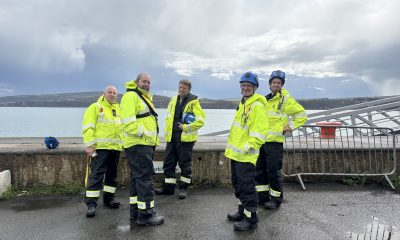
Coastguard callout payments axe sparks fears for coastal communities
VOLUNTEER coastguards across the UK are set to lose callout payments, prompting concern over the future resilience of emergency cover...


Farming4 days ago
Rural Wales ‘left out’ of net zero debate, warns carbon entrepreneur
A WELSH carbon entrepreneur has warned that rural Wales risks being left behind in the national conversation about net zero....


Local Government5 days ago
Tenby Spectacular row continues as organisers say key question remains unanswered
Round Table says legal clarity over pedestrian access is still holding up event plan TENBY ROUND TABLE has welcomed Pembrokeshire...
-

 Crime5 days ago
Milford man threatened to smash parents’ windows, court hears
-

 Crime4 days ago
Police appeal after reported rape at Young Farmers rally
-

 Crime5 days ago
Woman sentenced over neglect of child at Haverfordwest property
-

 Crime5 days ago
Haverfordwest father stole groceries amid cost-of-living struggle
-

 Crime5 days ago
Dock woman given mental health treatment order after supermarket thefts
-

 Crime5 days ago
Grandmother banned after cocaine drug-drive offence
-

 Crime5 days ago
Hakin man stole Tesco goods to fund drink and gambling addictions
-

 Charity7 days ago
Sea shanties and street food bring crowds to Cardigan RNLI festival