


Farming
Single Farm Payment exchange rate set


 THE 2014 exchange rate to be used for the 2014 Single Farm Payment (SFP) Scheme has been provisionally set at €1= £0.77730. This represents a decrease of 7.02% on the 2013 rate. This decrease is a further body blow to Welsh farmers, who before today’s announcement were already facing up to an average reduction in the value of their Single Payment of 14.5%, compared to 2013, as a result of the reduction in the overall CAP budget for 2014 and the decision made by Welsh Government last December to transfer the maximum amount of funds out of Pillar 1 and into Pillar 2 from 2014.
NFU Cymru President Stephen James said: “Market volatility has caused significant damage to the Welsh agricultural industry in 2014 with beef, followed by lamb and now milk prices all cut substantially during the course of the year. These challenging market conditions have highlighted once again the importance of direct payments in providing some level of income stability to allow farmers to continue to produce sufficient levels of food, produced to the highest quality standards, whilst providing some protection against market volatility.
However a combination of our Government’s unique decision to modulate Welsh farmers to the maximum amount possible, alongside the impact of the exchange rate and CAP budgetary cuts, is going to mean despite the favourable weather conditions seen so far in 2014 there is the potential for a long dark winter ahead for the Welsh agricultural industry, with market prices continuing to be seriously depressed and Welsh farmers facing direct payment cuts estimated to be around 21% less compared to 2013.”
He continued to explain: “With Welsh farmers facing significant challenges ahead this winter, we urgently need Welsh Government to come forward with clear proposals for how they intend to use the Wales RDP to enhance the viability of Welsh agriculture. With the combination of factors that we currently face we need projects and schemes up and running to deliver RDP support direct to farm level from the start of the next programme in January 2015.
Welsh farmers cannot afford to see support lost from direct payments in December 2014 without a clear timetable of when they will have the opportunity to recover this support back to their farming businesses.” Stephen James concluded: “The Welsh Government has an excellent record in ensuring that payments are delivered to the majority of farmers on or shortly after the opening of the payment window. We hope that this level of delivery will be maintained when the window opens on Monday (Dec 1).


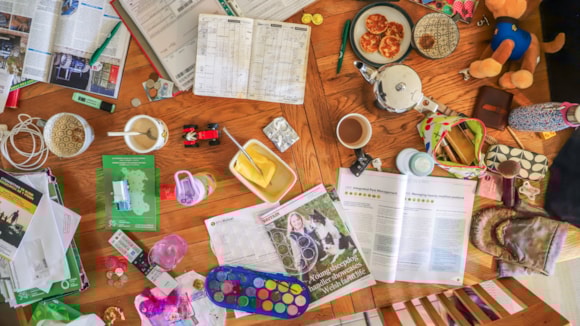
A PROGRAMME designed to support farming families in planning for the future is helping to break down one of agriculture’s most sensitive issues – succession.
Farm inheritance and succession planning returned to the spotlight in 2024 following UK Government reforms to inheritance tax (IHT), prompting renewed concern across the industry.
In response, Agrisgôp leader Elaine Rees Jones brought together farming families in the Welshpool area to take part in a structured programme aimed at addressing the issue head-on.
Agrisgôp, a fully funded management development initiative, encourages farmers to work collaboratively, building confidence and business skills through action learning.
Two distinct groups emerged: one made up of parents seeking to plan the future of their farms, and another of younger family members exploring how to take on responsibility and transfer knowledge from the previous generation.

A key theme identified early on was the importance of communication between generations.
Elaine said: “The meetings have offered the opportunity to gain professional and peer advice, time away from the farm to assess situations, and a safe, confidential space for discussion.
“Group members have shared concerns and apprehensions while getting to grips with the scale of the challenge, and have begun to develop action plans.
“The honesty and openness shown has been incredibly humbling.”

For many participants, the programme has provided the confidence to begin formal discussions with professional advisers.
One farming couple, currently working through the process of passing assets to their two sons, said the experience had been invaluable.
“It has made us tackle things properly. We had already started looking at succession before the Rachel Reeves budget, so this wasn’t a knee-jerk reaction.

“It’s a complicated process with no easy answers, and every farm is different. But Agrisgôp has helped us go into meetings with solicitors and accountants informed, rather than just accepting advice blindly.”
Another participant described succession planning as “mind-blowing” before joining the group, adding that expert input had highlighted the importance of early preparation.
The programme included a recent panel session in Welshpool, where professionals returned to answer questions from participants, alongside one-to-one sessions to clarify individual plans.
Specialist advice was provided on legal, financial, and land valuation matters, with a clear message emerging on the importance of having a valid will in place.
Angharad Hird, of Lanyon Bowdler Solicitors, warned that failing to make a will can have serious consequences, highlighting a case where a young farmer died unexpectedly. Under intestacy rules, his estate was divided between his wife and children in a way that may not have reflected the family’s wishes.
Financial planning was also a major focus. From April 2027, unused pension funds will be included within estates for IHT purposes, potentially attracting tax of up to 40%.
Emma Hall, a chartered financial planner, said some clients are already restructuring their finances to mitigate future liabilities, including placing assets into trusts or converting pension funds into income-generating annuities.
Land and property valuation was another key consideration. Richard Corbett, of Roger Parry & Partners, stressed that valuations must reflect current market conditions at the time of assessment, while also taking into account factors such as shared ownership or rights of way.
Accountant Sion Roberts highlighted the importance of setting emotion aside when making decisions.
“There is no one-size-fits-all solution,” he said. “Each farm is different, so it’s vital to understand your priorities and get the right advice.”
The issue of care fees and asset transfers was also raised, with warnings about the risks of deliberately reducing assets to avoid future costs.
Alongside Agrisgôp, Farming Connect’s Succession Pathway offers structured support for families navigating the process. This includes business reviews, facilitated family meetings, bespoke planning, and access to specialist legal services.
Organisers say early planning is crucial to securing both family relationships and the long-term future of farm businesses.
Farmers interested in accessing support can contact Farming Connect on 03456 000 813 or visit their website for further information.


A CALL to keep a holiday pod sited on a Pembrokeshire farm, as part of a wider holiday pod farm diversification over two areas which saw the larger part supported, has been submitted to county planners.
In an application to Pembrokeshire County Council, Bill Ridge of Vaynor Farm Ltd, Bethesda, through agent Gerald Blain Associates Limited, seeks retrospective permission to keep a self-catering pod at Broomley Farm, Sodston, Narberth, works having been completed in 2022.
The application is part of a wider scheme of holiday pods diversification encompassing two farms.
Back in December, Pembrokeshire County Council’s planning committee granted delegated retrospective permission to Vaynor Farm Ltd for the siting of two self-catering holiday accommodation pods at The Cart House, Vaynor Farm, Bethesda, near Narberth as part of a farm diversification enterprise.
A supporting statement accompanying the latest application says: “Vaynor farm is a 400-acre working dairy farm with a herd of 700 milking cows. The enterprise comprises of three self-catering pods. Two of the pods are situated at the Vaynor homestead and another at the opposite end of the holding at Broomley farm.
“The first unit was sited adjacent to Vaynor farm stead some four years ago and a further two added in subsequent years. The units have enjoyed successful occupancy rates over several years offering a unique secluded tourism offer on a working dairy farm, more detail of which is outlined within the supporting business plan.”
It says the Broomley farm application is a resubmission of a previously refused scheme, adding: “It should be noted that this application was originally part of [the application] which was recommended approval at planning committee in December 2025. This element however was separated due to its location on another part of Vaynor farm deeming it not possible to be considered under the same application.”
At the December meeting, an officer report said: “A business plan has been submitted with [that] application, which explains that due to uncertainties associated with dairy farming, the applicant has sought to diversify the farm enterprise to incorporate tourism accommodation.
“The application makes the case that the proposed development represents farm diversification. It is acknowledged that the development has resulted in the provision of an alternative type of holiday accommodation for which it has been demonstrated there is a demand, contributing to the diversity and quality of accommodation available within the county and supporting an existing farm business, with consequent economic and social benefits.
“Evidence has been provided that demonstrates the extent to which the pods have provided income which has been used to support the farm business.”
That application was conditionally approved; the latest part to be considered by planners at a later date.
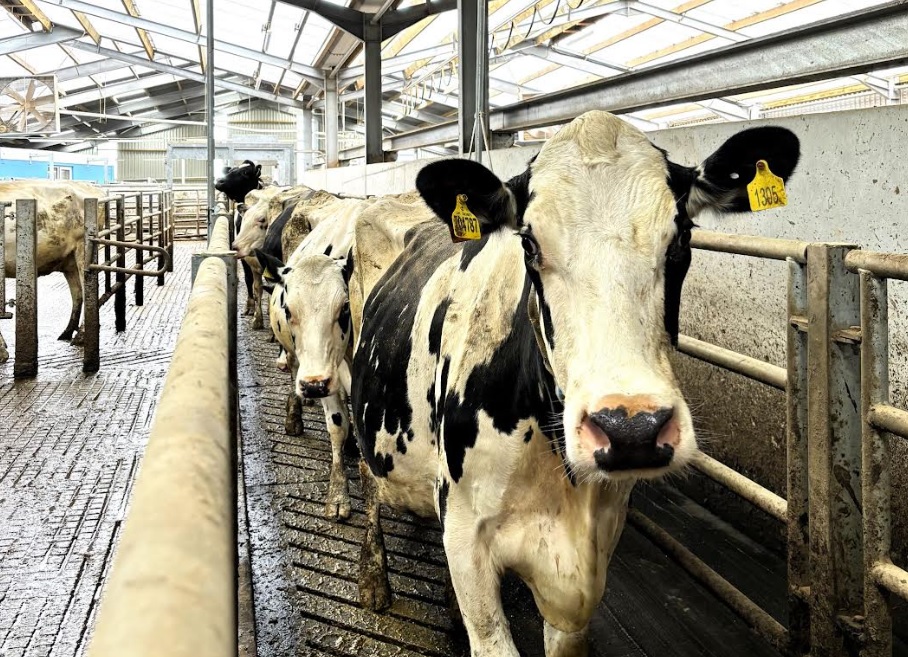
Fewer than five per cent of farms inspected as prosecutions remain rare
LEGAL experts have warned that animal welfare laws in Wales are being routinely ignored due to a “critical failure” in enforcement, with thousands of farms going uninspected and breaches rarely leading to action.
The stark warning came during an event at the Senedd on Tuesday (Mar 25), organised by the Animal Law Foundation and sponsored by Carolyn Thomas MS.
The meeting brought together legal specialists, enforcement bodies and Members of the Senedd to examine what campaigners describe as a growing gap between legislation and real-world enforcement.
Figures presented at the event paint a troubling picture. Just 4.67 per cent of Wales’ 34,777 farms are inspected, with only one inspector responsible for every 657 farms. Even when concerns are raised, only around 65 per cent of complaints result in an inspection.
More strikingly, where breaches are identified, prosecutions are launched in fewer than one per cent of cases.
The Animal Law Foundation described this as part of a wider “Enforcement Problem” — a term used to describe situations where laws exist but are not effectively applied.
Edie Bowles, Executive Director of the foundation, said: “These figures point to a system that is simply not working. When inspections are rare, complaints do not trigger investigations, and breaches do not lead to enforcement action, the legal safeguards risk becoming little more than words on paper.”
She added that meaningful enforcement is essential not only to protect animals, but to maintain public confidence in the law.
Carolyn Thomas MS said ensuring existing laws are properly enforced “should not be a controversial ask,” but acknowledged it remains a significant challenge.
Calls for stronger oversight were echoed by representatives of Animal Licensing Wales, who highlighted the need for greater resources and capacity within enforcement bodies.
The findings are backed by recent undercover investigations, including footage from a Wrexham slaughterhouse and a farm at Tafarn Y Bugail, which allegedly showed serious mistreatment of animals.
Abigail Penny, Executive Director of Animal Equality UK, said: “What we uncovered was an extraordinary failure of the systems meant to protect animals. That such cruelty could persist, undetected and unchallenged, shows the urgent need for stronger oversight and meaningful sanctions.”

Animal welfare on farms in Wales is governed by the Animal Welfare Act 2006 and a range of additional regulations covering farming, transport and slaughter. Enforcement responsibility lies primarily with local authorities, while the Food Standards Agency oversees welfare in slaughterhouses.
Campaigners say that without urgent reform, those protections risk being undermined by a lack of inspections, limited resources, and a reluctance to take enforcement action.



News3 hours ago
Emergency services respond to incident in Haverfordwest town centre
EMERGENCY SERVICES were called to an incident in Haverfordwest town centre on Saturday morning (Apr 4), with police and ambulance...

News3 hours ago
Teenager intervenes after bridge incident
A TEENAGER was left shaken after stepping in to help a young woman in distress on Clay Lanes bridge in...


Crime2 days ago
Driver spared jail after crash killed young couple
A PEMBROKE DOCK driver who caused the deaths of a young couple in a road crash has been given a...


Entertainment2 days ago
BBC unveils major new Welsh dramas with Tenby set for prime-time spotlight
New crime series Old Town Murders and supernatural thriller The Witch Farm will both be filmed and set in Wales...


Health2 days ago
No jobs for new paramedics in Wales as graduates told to apply for technician roles
Students trained at public expense urged to take lower-grade jobs as anger grows over NHS workforce planning NEWLY qualified paramedics...


News3 days ago
Health minister refuses to act on Withybush despite 15,000-signature petition
Senedd pressure grows as Welsh Government declines to intervene over surgery fears THE WELSH GOVERNMENT has refused to step in...


Business4 days ago
Fishguard to Wexford rail tunnel plan backed by Elon Musk firm
Six-hour London to Dublin service proposed in £32bn project ahead of Senedd election PLANS for a rail tunnel linking west...


Charity4 days ago
Milford Haven charity honoured with King’s Award for voluntary service
A PEMBROKESHIRE charity supporting vulnerable young people has received one of the highest honours in the UK for voluntary work....


News5 days ago
Plaid Cymru launches bid to lead next Welsh Government
Party positions itself as ‘government-in-waiting’ ahead of May election PLAID CYMRU has formally launched its campaign for the 2026 Senedd...


Crime5 days ago
Police appeal after attempted child abduction in Haverfordwest
DYFED-POWYS POLICE has launched an appeal for witnesses following a reported attempted abduction of a 12-year-old girl in Haverfordwest. The...
-

 News1 day ago
Accommodation providers in Wales will be required to register under new law
-
Business4 days ago
Fishguard to Wexford rail tunnel plan backed by Elon Musk firm
-
Entertainment2 days ago
BBC unveils major new Welsh dramas with Tenby set for prime-time spotlight
-

 Charity5 days ago
RSPCA calls for stronger animal welfare measures as Welsh Labour launches manifesto
-

 Community7 days ago
Residents return home after major Carmarthenshire fire as probe continues
-

 Entertainment2 days ago
From Milford Haven to the world: The story of The Evolution Experience
-

 Crime6 days ago
Gunshot fired by police during incident in Milford Haven
-
 Tourism6 days ago
Moving to Australia from the UK: What you need to Kknow