


Business
Nearly 100 new homes ‘for local people’ approved in Tenby

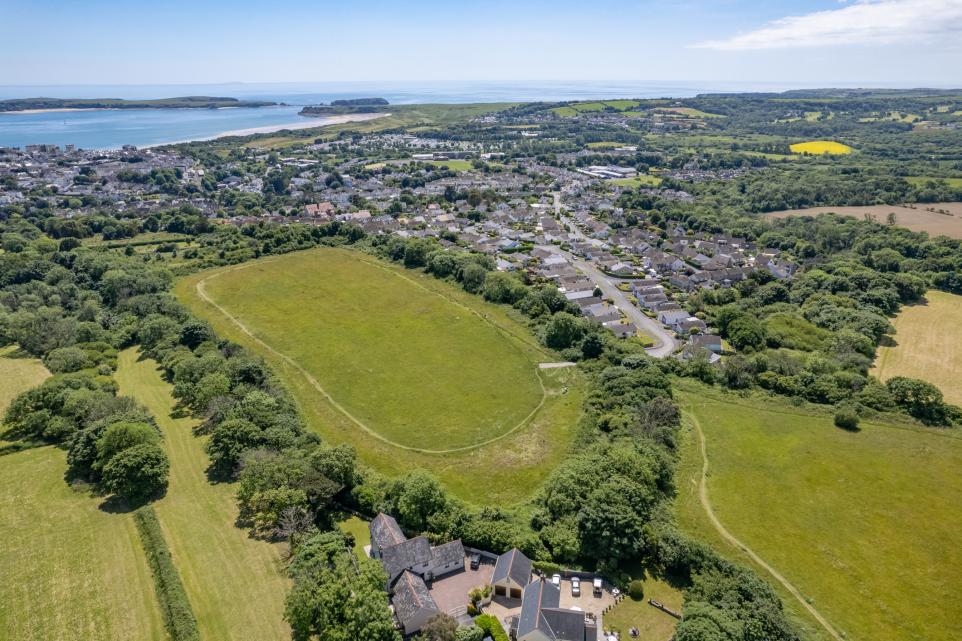
A CONTROVERSIAL Tenby housing scheme with nearly 100 “local houses for local people” which will be visible from the island of Caldey has been approved by national park planners
In 2018, Pembrokeshire County Council, which already owned the 15-acre Brynhir site on the edge of Tenby, ‘bought’ the land for £4million using its Housing Revenue Account.
Campaigners fought a two-year battle against the use of the land for housing, calling for protection for ‘Tenby’s last green space’ and fearing it would become a ‘concrete jungle’.
The county council was granted outline planning permission by the Pembrokeshire Coast National Park Authority for the development of 144 properties – including up to 102 affordable units – in 2020.
It is now proposed that only 125 houses will be built, 93 of them affordable, and, of the 32 Open market dwellings, 16 are shared ownership properties.

Amendments also included the removal of a Multi-Use Games Area (MUGA), one of two Local Equipped Area for Play Spaces (LEAPS) instead providing a multi-use space for ball games.
The reserved matters application, backed in principle by Tenby Town Council, was recommended for conditional approval at the Pembrokeshire Coast National Park development management committee meeting of September 4, despite being contrary to the provisions of the Development Plan.
Tenby Civic Society has raise numerous concerns to the scheme and 20 objections were also received from members of the public, raising concerns including loss of green space, traffic issues, privacy, design, visual impacts and the scale of the development, sewage capacity, the site being no longer allocated for housing, potential antisocial behaviour within the play area, and a limitation on second homes/holiday lets being required.
At the September meeting, concerns about the proposal were raised by Jane Merrony of 1,100-member Tenby Green Space Preservation Society, who said it was inappropriate in its proposed location and “a visual intrusion which will be seen from Caldey Island”.

She told members the scheme would place “extreme pressure” on existing waste water infrastructure and questioned the viability of the development, with fears it could be sold off to a private developer.
The application was passed by park planners after approval was moved by Cllr Di Clements, who expressed her difficulty in weighing the balance between green spaces and housing needs.
Speaking after the meeting, local county councillor, and committee member, Cllr Sam Skyrme-Blackhall said building work was expected to start next year, adding: “These will be let on a local letting policy – they will be local houses for local people. They can’t be sold, they will always be council housing.”

She added: “I believe that this is a hugely important decision for Tenby. We need housing for local people and I am delighted that 93 properties will be council housing. This is good news for our Schools and good news for Tenby. Properties will be let on a strict local letting policy, which means Tenby and the immediate surrounding area only.
“I would like to congratulate the teams from Pembrokeshire County Council on getting to this stage but I also say loudly and clearly that the real hard work starts now and we have to do all that we can to ensure that these properties are built as soon as possible. We have a housing crisis now and need these properties built and let to local people.
“I know that not everyone will be happy. There are people who opposed the scheme for quite legitimate reasons but in the end, for me the balance of the argument was in favour of the scheme and the housing it will provide.”
Fellow Tenby councillor Michael Williams welcomed the scheme but raised concerns about foul water drainage.
“The initial proposal was to run foul water in a North Westerly direction with a new pipeline and despite reassurances from Dwr Cymru I still have major concerns about the capacity of the existing system to deal with such a large development. There are also in my opinion unaddressed concerns regarding storm water runoff and inadequate landscaping on the southern boundary.”

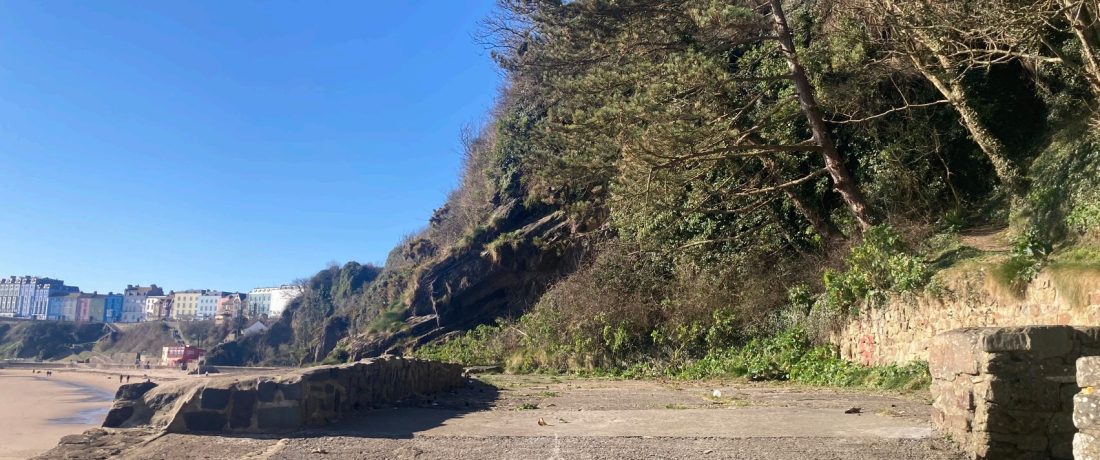
PLANS for an outdoor sauna by Tenby’s North Beach have been submitted to Pembrokeshire’s national park.
In an application to Pembrokeshire Coast National Park, Tenby-based David Jones, seeks permission for the siting of a mobile sauna unit on a raised concrete hard-standing area above the breakwater wall and slipway at the far north end corner of North Beach, Tenby.
It would be situated below the Park Hotel, North Cliff, the site in private ownership as part of the Park Hotel estate.
A supporting statement accompanying the application says the site has most recently been used as the base for a paddleboard tour and rental business, and has also been utilised to store watercraft and recreational beach equipment.
Of the scheme itself, it says: “We aim to provide a close to nature sauna experience and in so doing make sauna culture’s physical, mental, and social health benefits accessible to the local community and its visiting guests.
“We aim to operate a year-round service that offers an immersive and nuanced experience that only nature and the changing seasons can provide. We aim to provide a sauna service set within a natural setting with direct access for sea bathing as an integral part of the sauna experience. We aim to provide an experience with a low environmental impact and high physical, mental and social gains.”
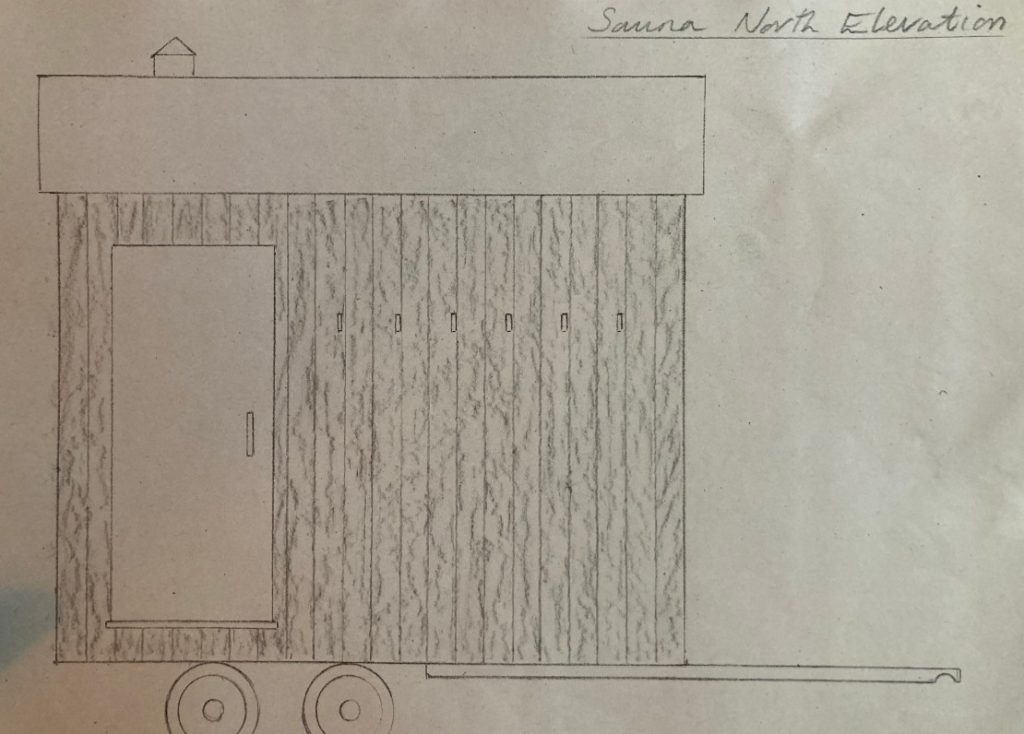
It adds: “The sauna and changing room will be separate mobile units. This provides practical advantages for siting and maintenance but also as a design strategy to provide a sense of impermanence, transience and movement sympathetic to its natural setting and unique location.
“The sauna unit will feature a wood fired sauna stove, a large glazed picture window and low level LED internal mood lighting reinforcing design principles based on creating low environmental impact and an atmosphere that reaches for a sense of the elemental.
“Externally both units will feature black metal profile roofing, black timber cladding and double glazed windows. A glazed picture window to the east elevation of the sauna unit will take in the impressive town and sea vista.”
The application will be considered by Park planners at a later date.
Recently, a previously temporary grant of an outdoor sauna at Saundersfoot’s harbour was refused a permanent location by Park planners.
Back in June 2024, a temporary two-year permission for a mobile wood-fired sauna at overlooking the sea at Saundersfoot harbour was granted by Pembrokeshire Coast National Park’s development management committee.

Since then, a further application by Kerry Evans of Hwyl Outdoor Sauna to make the siting permanent was submitted to national park planners, which was refused following an officer recommendation at the July committee meeting.
While planners expressed their regret at the refusal of that scheme, one of the issues based on location, they hoped a compromise may be reached with another location in the harbour area.
Kerry Evans has previously stated she is considering appealing the decision on that scheme, which had gained huge local support as well as an online appeal calling for the refusal to be overturned, to Planning and Environment Decisions Wales (PEDW).
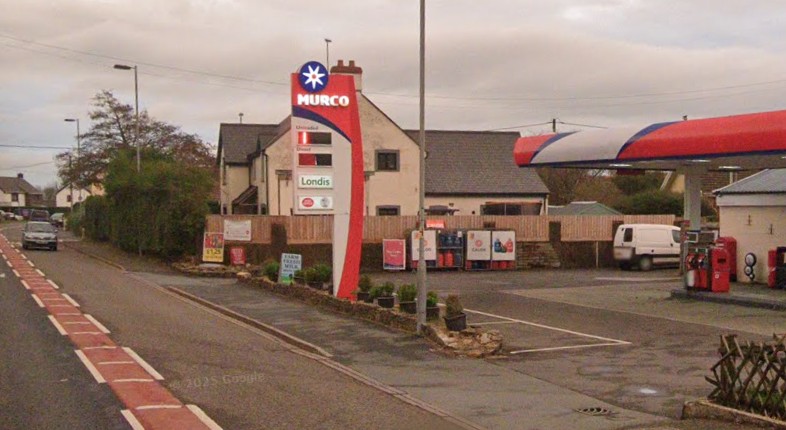
PLANS to build new homes on land behind a Pembrokeshire village’s fuel station have been submitted, but no affordable housing contribution is being offered.
In an application submitted to Pembrokeshire Coast National Park, Cardigan-based CAD Properties, through agent Harries Planning Design Management, seeks permission for a new residential development of four homes and an access road on land to the rear of Dinas Cross Service Station, Dinas Cross.
A supporting statement accompanying the application says: “The application site itself comprises a greenfield parcel of Grade 5 land, not considered best and most versatile. The site slopes gently to the north and is bound by hedgebanks and trees on all sides. The land is currently used for grazing. There are no known environmental or historical designations on site.
“This application seeks full approval for four dormer bungalows. The proposed dwellings will comprise four two-bedroom units. The proposal seeks to create a new access off Spring Hill, set back off the highway to allow for visibility. A simple linear layout is proposed to the northern portion of the land, with the remainder retained for agriculture, a communal area and ecological enhancement. The dwellings with front the access road, with front off-street parking and rear private amenity space.”
It says that, while the density of the development is lower than policy, there are “significant constraints on site,” including overhead electricity wires which require a buffer zone, a gas main and root protection areas for existing trees.
It also says no affordable housing contribution is offered, the application submitted alongside a viability report “which highlights that due to constraints and cost of development, delivering affordable housing within this site is unviable”.
It concludes: “This proposal is considered to offer an acceptable form of residential development, making best use of windfall land within the Centre boundary of Dinas Cross. The siting of the access is deemed acceptable for four dwellings and allows the land to be built upon, securing required open-market housing within PCNPA’s jurisdiction.”
The application will be considered by Park planners at a later date.


A SMALL Pembrokeshire brewing company has been formally wound up after its owners concluded the business could no longer continue.
Black Tar Brewing Co Ltd, which was registered in Llangwm, entered creditors’ voluntary liquidation following a meeting of company members on February 27, 2026.
The meeting was held at the Swansea offices of Stones & Co Insolvency Practitioners, where Gareth Stones was appointed to oversee the closure.
The company’s registered address was at Gail Rise in Llangwm, near Haverfordwest, and official records listed its activities as beer manufacturing.
No public details have yet been released about the size of the business, the value of its assets or the amount owed to creditors.
As liquidator, Mr Stones will now take control of the company’s affairs, identify any remaining assets and determine whether funds are available for those owed money.
Creditors are expected to receive further information as the process develops.
The liquidation was initiated by the company rather than through a court order, meaning its members voted to bring trading to an end and place its finances in the hands of an insolvency practitioner.
A public notice connected to the closure directs creditors and other interested parties to Stones & Co for further information.
The winding-up brings an end to the Llangwm-registered brewery, although the company’s recent level of trading and the number of people connected to the business remain unclear.



Crime14 hours ago
Murder investigation launched into death of Pembrokeshire man in 1991
A 67-YEAR-OLD man has been arrested on suspicion of murder after new potential evidence emerged in connection with a death...


Community18 hours ago
‘Paying £29 to reach a cashpoint is absurd’: Narberth’s urgent ATM appeal
Residents, businesses and visitors are being urged to provide evidence after two High Street cash machines were removed, leaving the...


Crime1 day ago
Haverfordwest man jailed for seven years for historic rape and sexual assault of girl
A HAVERFORDWEST man has been jailed for seven years after being convicted of raping and indecently assaulting a girl during...


News2 days ago
Burnham more willing to listen on Welsh devolution, says First Minister
Rhun ap Iorwerth says he will press the new Prime Minister for powers over policing, railways and Wales’ natural resources...


Crime2 days ago
Women jailed after man chased through Milford home and attacked with knives
Kelly Rees receives further 27-month sentence while already serving prison term for notorious taxi robbery TWO women have been jailed...


Crime2 days ago
Mother headbutted and clawed police officers after threatening social worker
Court shown body-worn footage of violent confrontation at Goodwick property A COURT has been shown police body-worn footage capturing the...


Crime3 days ago
Man, 37, found dead following major police response in Pembroke Dock
Death not being treated as suspicious as police make statutory referral to IOPC following active investigation A 37-YEAR-OLD man has...


Community3 days ago
Household Cavalry drum horse returns home to Pembrokeshire for final farewell
Dyfed Willa Rose, who became Major Juno and the first mare to serve as a Household Cavalry Drum Horse, was...


News3 days ago
Jo Stevens out as Welsh Secretary as Burnham reshapes government
Cardiff East MP repeatedly visited Pembrokeshire to champion clean energy jobs, but her successor inherits unresolved questions over Milford Haven’s...


Crime4 days ago
Teen cleared of attempted murder but guilty of GBH after Milford teacher stabbed
Jury returns 11-1 majority verdict on charge of causing grievous bodily harm with intent, with sentencing set for September 3...
-

 Crime2 days ago
Drunken rail passenger tried to headbutt police after being refused travel
-
Crime2 days ago
Women jailed after man chased through Milford home and attacked with knives
-
News2 days ago
Burnham more willing to listen on Welsh devolution, says First Minister
-
Crime1 day ago
Haverfordwest man jailed for seven years for historic rape and sexual assault of girl
-
Crime2 days ago
Mother headbutted and clawed police officers after threatening social worker
-

 Community2 days ago
£447,000 investment to train next generation of planners in Wales
-

 Entertainment2 days ago
Aerial circus show exploring identity and belonging comes to Torch Theatre
-

 Community1 day ago
Goodwick Sea Scouts spruce up headquarters ahead of Wales in Bloom judging