


Education
Chelbie hammers home for women in construction

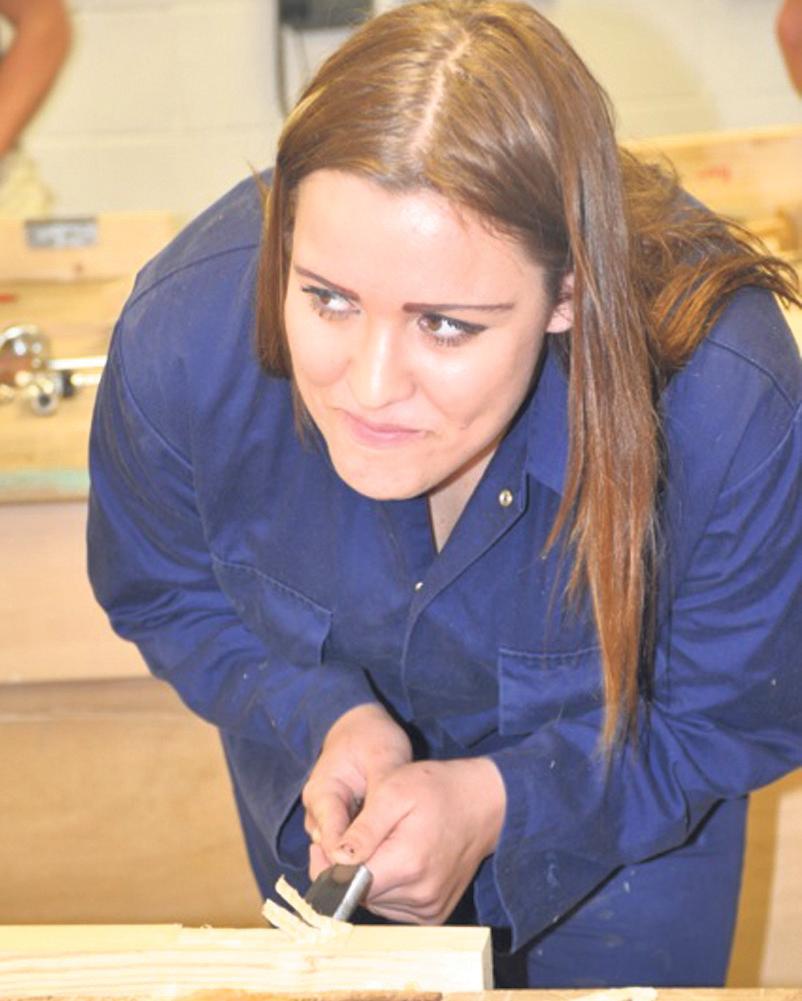
P E M B R O K E S H I R E COLLEGE is building a reputation of attracting females into vocational courses that are traditionally taken by males. Chelbie Jones, 17 from Pembroke, is just one of many helping push females into the forefront of the construction industry. Chelbie is a second year carpentry apprentice who has benefited greatly by the Shared Apprenticeship Scheme that is supported by ‘Cyfle Building Skills’.
Cyfle (which is Welsh for opportunity) Building Skills, aims to provide a service, which supports young adults into sustainable employment within the construction industry. It has been set up to help employers who want to support the development of skills but are not in a position to offer a full term apprenticeship. “Chelbie is benefitting greatly from the work experience that she is gaining through Morganstone, which has a exemplary track record churning out high calibre apprentices,” said Paul Falzon from Cyfle.
Paul encouraged Chelbie to apply to become a CITB Construction Ambassador in Bridgend recently. After several presentations and competing against other apprentices, Chelbie was awarded the task of ambassador. During the next year she will be expected to represent females in construction at local schools, college open days and construction events. The Shared Apprenticeship Scheme consists of a full day of classroom-based teaching at the College and four days with a local employer.
Currently working for Morganstone Construction in Pembroke, Chelbie is already laying floors, hanging joists on roofs and using heavy-duty cutting machinery. “Originally I wanted to study Travel and Tourism, but fortunately I didn’t get one of my grades so I chose Carpentry, and I haven’t looked back since. The boys on site treat me as an equal, there is always plenty of healthy banter!” said Chelbie. The Shared Apprenticeship Scheme offers youngsters the breadth of opportunity of working with different types of construction companies within Pembrokeshire.
Part funded by the Welsh Government and the CITB, apprentices are also given a unique experience of working on international building projects including; a grain store and mill in Uganda and next year a maternity unit. “The future is bright for Chelbie, she is a great role model for those young women who want to learn new skills that are not stereotypical and for those eager to break through barriers,” commented Paul Falzon.



A RECORD number of young musicians from across Pembrokeshire took part in this year’s Valero Primary Music Festival, with nearly 600 pupils showcasing their talents.
The event, organised by Pembrokeshire Music Service, was held at Ysgol Caer Elen on Saturday (March 14), drawing a large and enthusiastic audience.
The festival’s overall winner was Hafan y Môr pupil Carys Meiring, who impressed judges with a standout trombone performance of Let’s Call the Whole Thing Off. She had earlier secured victory in the open brass class.

Young talent shines
The afternoon Spotlight concert opened with an energetic performance from the county’s Second Steps ensembles, bringing together young players from across Pembrokeshire.
Winners from the day’s open classes also took to the stage, highlighting the depth of musical talent across local schools.
Osian Kite, of Roch CP School, won the open woodwind class with a performance of Sentimental Serenade on alto saxophone.
Cadi Marshall-Jones, from Ysgol Bro Preseli, claimed the open piano and harp title with Over the Sea to Skye, while Roch CP School cellist Mari Broomfield won the open strings category with Vamoose.
In percussion, Ysgol Caer Elen’s Aled Hooper secured first place in the open class with a drum kit performance of Are You Gonna Go My Way.
The open ensemble prize went to Tavernspite pupils Finn Hickman and Evelyn James, whose piano duet of Handel’s Passacaglia impressed both judges and audience.
Building confidence through music
Head of Pembrokeshire Music Service, Philippa Roberts said the festival continues to play a vital role in developing young performers.
She said: “Pembrokeshire Music Service is proud to deliver the Valero Music Festival, offering an exciting opportunity to nearly 600 young performers from across the county.
“Providing children with the chance to perform, shine, and receive supportive feedback from professional musicians is incredibly powerful and helps build lasting confidence.

“In line with the Music Plan for Wales, we remain committed to creating meaningful musical experiences for children throughout Pembrokeshire. Our sincere thanks go to Valero for their fantastic support.”
The festival forms part of a wider effort to promote music education across Wales, encouraging participation and nurturing the next generation of performers.
Photo caption:
Talented performers: Overall winner Carys Meiring is pictured with fellow category winners and organisers (Pic: Pembrokeshire Music Service).

Extraordinary council meeting will consider objections before final ruling
THE FUTURE of two Pembrokeshire schools will be decided in June, despite councillors already backing plans in principle to close them.
Pembrokeshire County Council has confirmed that an extraordinary Full Council meeting will take place on Monday (June 15) to consider objection reports relating to the proposed discontinuation of Ysgol Clydau and Manorbier Church in Wales VC School.
The meeting represents the final stage in the statutory process, where councillors will decide whether to proceed with closure after reviewing formal objections.
The Herald understands that the extraordinary session has been called because the timetable for the proposals does not align with regular council meeting dates.
Last chance to overturn decision
Although councillors have already voted in favour of closure in principle, the June meeting is not a formality.

Campaigners still have a narrow window to influence the outcome, with councillors able to change their position after considering objections and any new evidence.
In rare cases, proposals have been halted or reversed at this final stage — particularly where strong community opposition or concerns over the accuracy of data have been raised.
However, the earlier vote means the schools remain at significant risk, with the council having already indicated its preferred direction.
Political pressure building
The confirmation comes amid growing community concern and a mounting campaign to save Ysgol Clydau.

Campaign group Save Ysgol Clydau – Cadw Clydau yn Gadarn has described the situation as a “critical moment,” urging residents to challenge political parties ahead of the upcoming elections.
Supporters argue that the future of the school is closely tied to the survival of rural communities and the Welsh language.
The group has also thanked councillors — particularly members of the Independent group — for their support.

Decision looming
The June 15 meeting is expected to draw significant public attention, with strong attendance likely as councillors prepare to make a final, legally binding decision.
If approved, the proposal would result in the closure of both schools.

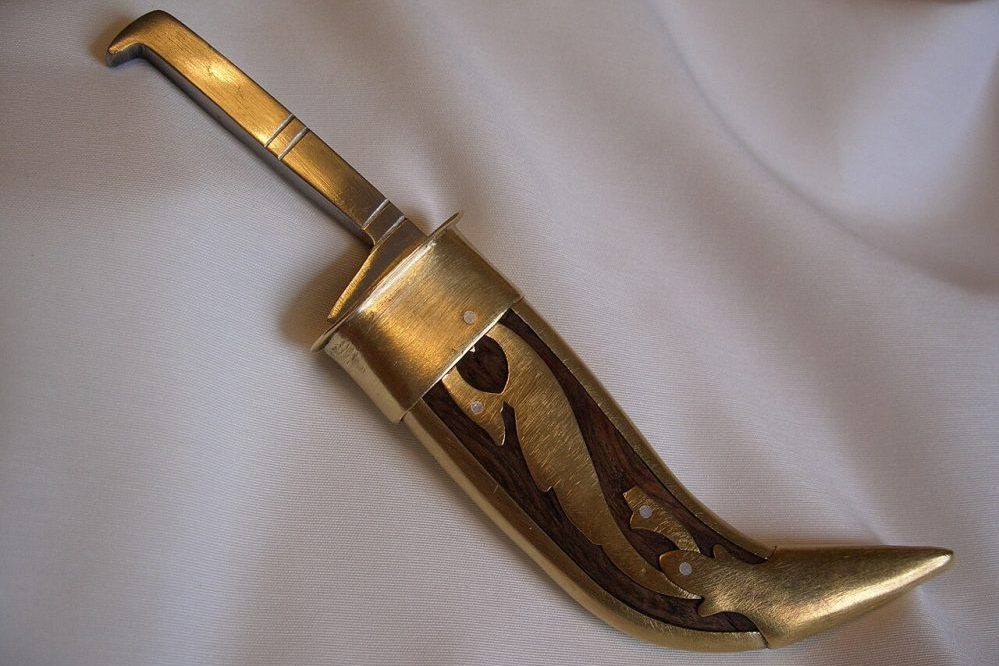
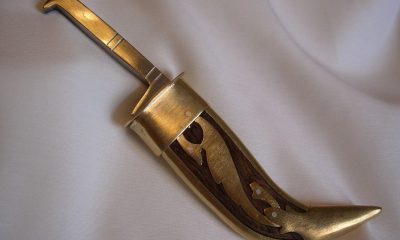
A PEMBROKESHIRE school and the council are providing reassurance after parents raised fears following an announcement that a Sikh pupil would be allowed to wear a ceremonial dagger for religious reasons.
An email sent to parents from the school’s headteacher said: “We have recently welcomed a Sikh family to our school community.
“As part of their faith, practising Amrhitrdhari Sikhs, over the age of 14, are required to wear certain symbolic items, one of which is the kirpan. In this case, the learner is wearing a small, sheathed ceremonial kirpan (that is secured and cannot be unsheathed). It is worn purely as a religious symbol and not as a functional item.
“We have taken appropriate steps to ensure that this is managed safely and in accordance with our safeguarding responsibilities, the laws of the United Kingdom, and our commitment to respecting the religious beliefs of all learners.
“We will continue to monitor this sensitively and appropriately.”
The kirpan is a mandatory article of faith worn by initiated (Amritdhari) Khalsa Sikhs, representing a commitment to spirituality, justice, and defending the innocent. Often a small steel or iron blade, it is one of the five Ks worn at all times by Sikhs.
It has been described as not a weapon of violence but a ‘weapon of grace,’ a symbol of courage, self-defence, and the duty to protect the weak and uphold justice.
Concerns have been raised by parents on social media, with one saying her daughter was made to take off her false nails she had got done for her birthday as the school classed them as “a dangerous weapon,” saying she refused and got sent home.
Another said: “Allowing that in a school? They planning on having a copper follow them everywhere every school day? Surely they cannot walk around with a blade in school, religious or not surely that’s not okay! I have absolutely no issue with any religion at all but that is dangerous for people, they could hurt someone whether accidental or intentional.”

The school’s uniform policy stresses: “Sikhism requires that a baptised Sikh should carry a comb (Khanga); steel bracelets (Kara) and a short sword or dagger (Kirpan). These additions to the jewellery / accessory rules are permitted, but any kirpan must be ceremonial: that is, safe and incapable of being used as a weapon.”
A Pembrokeshire County Council spokesman said: “The council is aware of the issue and provided guidance and advice to [the school].
“The school will follow their safeguarding process as outlined in the letter to parents and the council is satisfied that appropriate measures are in place at the school.”



Health6 hours ago
Crumbling NHS faces £1bn repairs bill in Wales
Senedd election promises collide with the harsh reality of ageing hospitals, fire safety concerns and a maintenance crisis stretching across...


News15 hours ago
Emergency services respond to incident in Haverfordwest town centre
EMERGENCY SERVICES were called to an incident in Haverfordwest town centre on Saturday morning (Apr 4), with police and ambulance...
News15 hours ago
Teenager intervenes after bridge incident
A TEENAGER was left shaken after stepping in to help a young woman in distress on Clay Lanes bridge in...


Crime2 days ago
Driver spared jail after crash killed young couple
A PEMBROKE DOCK driver who caused the deaths of a young couple in a road crash has been given a...


Entertainment3 days ago
BBC unveils major new Welsh dramas with Tenby set for prime-time spotlight
New crime series Old Town Murders and supernatural thriller The Witch Farm will both be filmed and set in Wales...


Health3 days ago
No jobs for new paramedics in Wales as graduates told to apply for technician roles
Students trained at public expense urged to take lower-grade jobs as anger grows over NHS workforce planning NEWLY qualified paramedics...


News4 days ago
Health minister refuses to act on Withybush despite 15,000-signature petition
Senedd pressure grows as Welsh Government declines to intervene over surgery fears THE WELSH GOVERNMENT has refused to step in...


Business4 days ago
Fishguard to Wexford rail tunnel plan backed by Elon Musk firm
Six-hour London to Dublin service proposed in £32bn project ahead of Senedd election PLANS for a rail tunnel linking west...

Charity5 days ago
Milford Haven charity honoured with King’s Award for voluntary service
A PEMBROKESHIRE charity supporting vulnerable young people has received one of the highest honours in the UK for voluntary work....


News6 days ago
Plaid Cymru launches bid to lead next Welsh Government
Party positions itself as ‘government-in-waiting’ ahead of May election PLAID CYMRU has formally launched its campaign for the 2026 Senedd...
-

 News2 days ago
Accommodation providers in Wales will be required to register under new law
-
Business4 days ago
Fishguard to Wexford rail tunnel plan backed by Elon Musk firm
-

 Entertainment2 days ago
From Milford Haven to the world: The story of The Evolution Experience
-
Entertainment3 days ago
BBC unveils major new Welsh dramas with Tenby set for prime-time spotlight
-

 Charity6 days ago
RSPCA calls for stronger animal welfare measures as Welsh Labour launches manifesto
-

 Crime7 days ago
Gunshot fired by police during incident in Milford Haven
-
 Tourism6 days ago
Moving to Australia from the UK: What you need to Kknow
-
 Community6 days ago
Pembrokeshire school allows Sikh pupil to wear Kirpan