


Health
Welsh Liberal Democrats blame social care shortages after Swansea Bay escalation


HOSPITAL PRESSURE IN SWANSEA BAY COULD HIT PATIENTS FROM PEMBROKESHIRE WHO RELY ON SPECIALIST SERVICES
CONCERNS have been raised about pressure on hospitals in Swansea Bay after the health board declared its highest level of escalation for the second time in a week — a move that could have knock-on effects for patients from Pembrokeshire who rely on Swansea hospitals for specialist treatment.
Swansea Bay University Health Board’s escalation, known as a Business Continuity Incident, is triggered when demand and capacity pressures reach a critical level, allowing extra internal measures to be put in place to manage patient flow, staffing pressures and bed availability.
While the health board serves Swansea and Neath Port Talbot, its hospitals also provide specialist services used by patients from across west Wales. Pembrokeshire residents are regularly referred to Morriston Hospital and Singleton Hospital for a range of care, including nuclear medicine and other specialist investigations and treatments not always available locally.
The Welsh Liberal Democrats said the latest escalation underlined what they claim is a deeper system-wide issue: shortages in social care leaving patients unable to leave hospital when medically fit, which in turn blocks beds and adds pressure across emergency and planned services.
The party said: “The crisis declared by Swansea Bay University Health Board is further proof that Wales’ NHS cannot be fixed without urgent action on social care.”

Powys example cited
The party pointed to Powys, where the council is led by the Welsh Liberal Democrats, claiming hospital discharge delays have been cut by a third after additional funding was used to recruit more social care staff.
They said the funding was secured by Welsh Liberal Democrat leader Jane Dodds MS during last year’s budget negotiations and directed into expanding community care capacity.
“Social care failure as much as an NHS one”
Responding to Swansea Bay’s decision to declare its highest escalation level again, Jane Dodds MS said the hospital pressures were being driven in part by the lack of care available in the community.
“When hospitals are full and patients are stuck in beds because the care they need at home isn’t available, that is a social care failure as much as an NHS one,” she said.

“What we are seeing in Swansea Bay is exactly what happens when social care is underfunded and overstretched – hospital backlogs, delayed discharges and staff pushed to breaking point.
“Labour has run social care in Wales into the ground, and the consequences are now being felt in hospitals like Morriston and Singleton.
“The lesson is clear: fixing social care fixes the NHS. Wales needs sustained investment in community and social care, not endless crisis management once hospitals are already full.”

Local candidate: “People see it every day”
Sam Bennett, a Swansea councillor and Senedd candidate for Gŵyr Abertawe, said residents were seeing the impact of care shortages daily.
“People across Swansea are seeing the impact of social care shortages every day, whether that’s loved ones stuck in hospital or pressure on frontline staff,” he said.
“Investing properly in care isn’t optional, it’s essential if we want our local hospitals to cope, and it will be my priority should I be elected to the Senedd this May.”
Wider impact
Escalations of this kind are generally introduced to manage periods of exceptional pressure and can involve steps to prioritise urgent care, support discharge planning and manage demand across services.
For Pembrokeshire, any sustained disruption in Swansea Bay can cause concern because of the region’s reliance on specialist appointments and procedures carried out in Swansea. Patients and families are often already travelling long distances for care, and delays or rescheduling can have significant practical and emotional impact.
Health boards have repeatedly urged the public to use NHS services appropriately during periods of high demand and to support timely discharge where it is safe to do so, as blocked beds can quickly intensify pressure across the system.

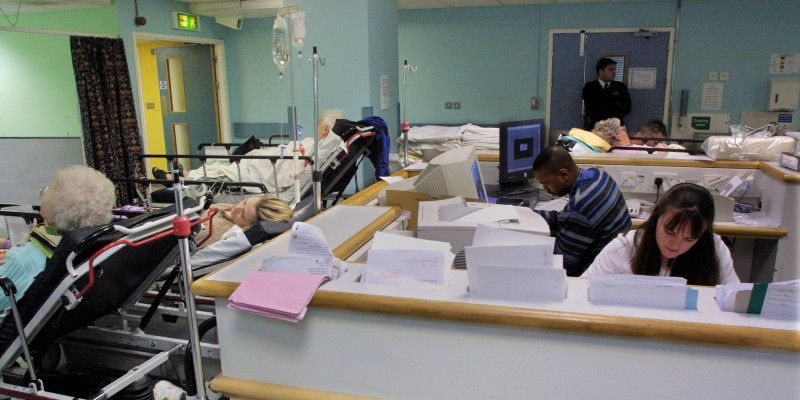
A NEW report has called for every stage of Wales’ health and care system to be better connected in order to improve patient outcomes and reduce waiting times.
The Bevan Commission, Wales’ leading independent health and care think tank, has published Chain Reaction: Managing patient flows across health and care systems and services.
The paper examines the causes of poor patient flow and sets out ways to reduce pressure on services, including earlier intervention, better community support, improved use of digital tools and closer working between health, social care and local services.
It identifies seven key areas affecting how patients move through the system: people and communities, primary and community care, social care and care homes, urgent community support, 111 and transport, emergency and minor injury care, outpatient and diagnostic services, and hospital assessment, treatment and discharge.
The commission warns that simply moving pressure from one part of the system to another will not solve the problem, and says whole-system planning is needed.
Tools such as telehealth, digital medicines, virtual wards, social prescribing and quicker responses to falls are highlighted as ways to improve patient flow and help people manage their own health more effectively.
Bevan Commission Director Dr Helen Howson said: “Health and social care services are facing huge demands and we know that we are only going to face even bigger pressures. The population in Wales is living longer, but more unhealthily. We are seeing a doubling of the over-90s and an increase in dementia.
“We believe that health is a shared responsibility, extending beyond the NHS, to include local government, workplaces, people and communities. Preventing unnecessary admissions into the system and enabling people to better manage their own health and wellbeing will be critical to help reduce demand for clinical services.”
The report says prevention and early intervention will be essential if Wales is to reduce the number of people relying on formal care services.
It also highlights programmes such as Education Programmes for Patients Cymru, which helps people living with long-term conditions and their carers gain the skills and confidence to manage their own health.
Where formal care is needed, the commission says patients must be involved in designing services around their needs. It also calls for better real-time data and digital systems to improve communication between care teams.
Dr Howson added: “This paper highlights the interdependencies of all parts of the system and the impact of one upon the other. It reinforces the urgency for whole system planning and transformation, built around patient needs.

“By connecting every part of care, we can reduce inefficiencies, improve outcomes and better meet the evolving needs of people now and in the future.”

ALMOST 50,000 people in Wales are living with dementia, but new research suggests the condition is placing a heavy emotional, financial and practical strain on families and unpaid carers.
Alzheimer’s Society Cymru said the impact of dementia stretches far beyond those diagnosed, with many relatives carrying the burden quietly behind closed doors.
A UK-wide survey of more than 2,000 people, carried out for the charity’s annual Forget Me Not Appeal, found that 61 per cent of people in Wales say dementia affects their day-to-day life.
The research also found that 48 per cent of carers in Wales said supporting someone with dementia had negatively affected their mental health.
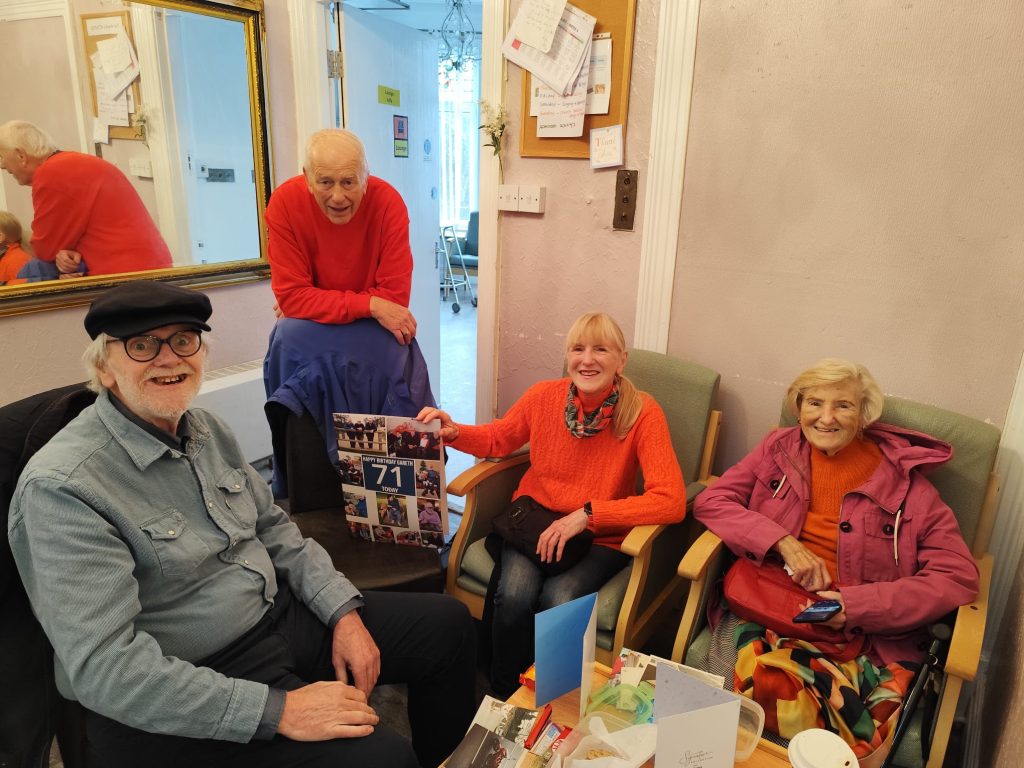
Across the UK, 56 per cent of carers said caring had damaged their mental health, while 70 per cent feared the stress was affecting their own health and wellbeing.
Many also said they were hiding the emotional strain from others, with nearly two-thirds saying they concealed how they felt from friends and family to avoid being a burden.
‘Like grieving’
Stephanie Marks, from Llanelli, cares for her brother Gareth, who has dementia and is now living in a care home in Swansea.
She said: “The impacts on us were constant worry, tiredness, financial cost and restriction of our own lives. But we cared for Gareth willingly and gladly. We love him and it was painful to see him slipping away while the system took its time. Like grieving.
“One of the hardest things was clearing his home once he was in care. It was a dismantling of our shared lives. I felt guilty that I couldn’t put it all right.
“I love visiting my brother but I worry constantly about his declining physical and mental health. I feel a huge weight of responsibility for ensuring his care needs are met. He can’t fight for himself so I have to do it for him.
“I wish I’d been more assertive in the very early stages and insisted on better attention when the system failed him. Carers shouldn’t have to struggle for attention and action. Vulnerable people like Gareth deserve far better.”
Fundraising at 100

Stephanie and Gareth’s mother, Peggy Hoare-Davies, who lives in Port Talbot, recently marked her 100th birthday by raising money for Alzheimer’s Society.
Stephanie said: “Mum visits him in the care home. They have activities like Halloween and Christmas parties. When mum was approaching her 100th birthday people asked what she wanted and she wanted to raise money for Alzheimer’s Society.
“Her church put on a party for her and people donated. She ended up raising £1,000.”
Call for support
Rachel Nelson, Alzheimer’s Society Country Manager for Wales, said families affected by dementia often face overwhelming pressures.
She said: “Every day, we see the reality of dementia across Wales. Behind every diagnosis are families navigating emotional, financial and practical pressures that can quickly become overwhelming.
“Too often people feel they’re facing this alone, which is why local support is so vital. At Alzheimer’s Society, we’re here to make sure no one has to go through dementia without help, guidance and someone to turn to.
“Through local services like Singing for the Brain groups, Alzheimer’s Society helps people affected by dementia feel supported, connected and understood.”
The charity is encouraging people in Wales to support its Forget Me Not Appeal during June by wearing a Forget Me Not badge.
The badge is intended as a symbol of the ongoing and often unseen weight carried by families affected by dementia.
Alzheimer’s Society said money raised through the appeal will help fund support services and dementia research.
More information is available at alzheimers.org.uk/forgetmenot
Cover photo: Stephanie and her brother Gareth.

WELSH CONSERVATIVES have called on the Welsh Government to set out what action it will take to tackle antisemitism in the Welsh NHS.
Natasha Asghar MS, the Welsh Conservative Shadow Minister for Health and Social Care, has written to Health Minister Mabon ap Gwynfor following recommendations made by Lord Mann, the UK Government’s independent adviser on antisemitism.
The letter follows Lord Mann’s UK-wide review and asks what steps, if any, the Welsh Government intends to take in NHS Wales.
Lord Mann’s review recommended banning NHS staff from wearing political badges on uniforms, strengthening accountability for NHS managers, and improving the recording and monitoring of racist incidents.
In her letter, Ms Asghar said the NHS should be “an apolitical organisation, where everyone feels safe”.
She said: “It is incredibly alarming that Lord Mann’s report revealed evidence of routine ostracism of Jewish staff in the NHS, with some leaving, and highlighted that Jewish people are avoiding seeking care due to fear of being subjected to antisemitism.
“With increased attacks and threats against Jewish communities, now is the time to act and the Welsh Government has a responsibility to do just that.
“The Cabinet Minister for Health must urgently outline what action the government will be taking within the Welsh NHS to combat antisemitism.”
Ms Asghar has asked whether the Welsh Government will commit to bringing forward a ban on NHS staff wearing political badges on uniforms.
The Herald has approached the Welsh Government for comment.



Crime2 hours ago
Sex offender in senior role at Tenby family hotel
CREST HOTEL GROUP says it is investigating safeguarding concerns after staff at the Imperial Hotel in Tenby raised alarm over...


Sport14 hours ago
Runners tackle new route in Ras Y Castell 10k
MORE than 90 runners took to the streets and paths around Cardigan on Friday evening (June 5) for the annual...


Business21 hours ago
Turkish Kitchen reaches Welsh restaurant award semi-finals
Haverfordwest café praised as small independent business flies flag for Pembrokeshire A HAVERFORDWEST café has been named as a semi-finalist...


News21 hours ago
Person taken to hospital after major emergency response on Tenby Esplanade
A PERSON has been taken to hospital following a major multi-agency emergency response on The Esplanade in Tenby. Dyfed-Powys Police...


News22 hours ago
St Davids lifeboat crews rescue damaged yacht and stranded kayaker
TWO St Davids RNLI lifeboats were launched within hours of each other after a yacht was left disabled in a...

Community2 days ago
D-Day 82: Milford Haven remembers sacrifice of Normandy landings
COMMUNITIES gathered in Milford Haven on Saturday (Jun 6) to mark the 82nd anniversary of D-Day. The service, held at...


News2 days ago
D-Day at 82: The secret Pembrokeshire invasion that helped prepare for Normandy
Forgotten wartime operation saw thousands of troops storm Pembrokeshire beaches in rehearsal for D-Day LONG before Allied troops landed on...


News2 days ago
Welsh Water hit with £44.7m enforcement package over sewage failures
Pembrokeshire campaigners say regulator’s action vindicates years of concern over pollution in rivers and coastal waters DŴR Cymru Welsh Water...


News3 days ago
Council tax shake-up in doubt as Welsh Government reviews reform plans
Questions over 2028 revaluation as ministers reconsider next steps THE FUTURE of council tax reform in Wales has been thrown...

Crime3 days ago
Paddleboard company owner loses bid to cut sentence over Haverfordwest tragedy
A FORMER paddleboard company owner jailed over the deaths of four people on the Western Cleddau has failed in a...
-
Crime3 days ago
Paddleboard company owner loses bid to cut sentence over Haverfordwest tragedy
-

 Crime2 days ago
Milford Haven man admits harassment and assault
-

 Crime5 days ago
Milford Haven man bit neighbour’s neck near cashpoint
-

 Crime6 days ago
Milford Haven man jailed for illegal Premier League streaming service
-

 News2 days ago
Community appeal for privacy after serious emergency in Pendine
-

 Crime6 days ago
Haverfordwest man admits cocaine offence as Crown disputes basis of plea
-

 Crime5 days ago
Pembroke Dock driver avoided jail after drug-drive crash
-

 Local Government6 days ago
National Express use of new Haverfordwest interchange still subject to risk checks