


News
Child poverty warning as Reform and Conservatives oppose Labour plans to scrap two-child limit


More than 69,000 children in Wales could be affected as parties clash over benefit policy
A sharp political divide has emerged over child poverty, with Reform UK and the Conservatives opposing Labour’s move to scrap the two-child benefit limit – a policy Labour says is pushing working families and children into poverty.
As legislation to remove the two-child limit is introduced to Parliament, Labour has warned that the position taken by Reform UK and the Conservatives risks forcing more than 69,000 children and around 19,000 working families in Wales back into poverty.
The Conservatives have said they would reintroduce the two-child limit in full, while Reform UK has indicated it would restore the policy for more than 99 per cent of households affected, exempting only families where both parents are in full-time work – most of whom are not currently subject to the limit.
The two-child limit prevents families from receiving additional benefits when they have a third or subsequent child. In Wales, just over 19,000 families are affected, many of them in work but struggling on low incomes.
Labour says new analysis shows that scrapping the limit would benefit more than 69,000 children across Wales and forms a central part of its approach to tackling child poverty and the cost-of-living crisis. By contrast, Labour has accused Reform UK and the Conservatives of pursuing policies that would deepen poverty and reverse recent progress.

In Pembrokeshire, hundreds of families are currently affected by the two-child limit, with Labour representatives warning that the policy disproportionately impacts households in rural areas, where wages are often lower and the cost of essentials such as transport, food and energy is higher. Labour argues that removing the limit would provide direct financial support to working families in the county who are already under financial pressure.
Figures show that the majority of families affected by the two-child limit include at least one working parent, a point Labour says undermines claims that the policy targets those who are not in work.
Eluned Morgan, the First Minister of Wales, said: “The cruel and unfair two-child limit imposed by the Tories has hit the incomes of people in some of our most vulnerable communities in Wales. We in Welsh Labour have relentlessly called for it to be scrapped. We now see from today’s figures, the real positive impact of the UK Government’s action and also the benefit of two Labour governments working together to help tackle child poverty.
“While your two Labour governments are putting more money in families’ pockets, Reform and the Tories would plunge 450,000 children across the UK back into poverty by reimplementing the policy, punishing parents for working hard.”

Education Secretary Bridget Phillipson said: “This Labour Government came into office pledging to tackle child poverty and that’s exactly what we’re doing.
“I’m proud that Labour is scrapping the cruel two-child limit. It’s a policy that has imposed hardship on the children of parents who go out to work to provide as much as they can for their families.
“Because of Labour’s action, 19,000 families in Wales will have more money in their pockets, with 69,000 more children growing up in households with the means to meet their needs.

“The Reform-Tory Child Poverty Pact would wipe out this progress. It is a plan to punish parents who work hard and do the right thing, and it would plunge hundreds of thousands back into poverty.”
Labour says its wider Child Poverty Strategy, which includes expanding free school meals, cutting energy bills, extending childcare provision and increasing the national living wage — is expected to lift 550,000 children out of poverty across the UK by 2030, a figure it says represents the largest reduction in a single parliamentary term.



A WEST WALES carers charity has marked Carers Week 2026 by calling for stronger, more inclusive communities for unpaid carers across Carmarthenshire, Pembrokeshire and Ceredigion.
Carers Trust Crossroads West Wales said this year’s Carers Week theme, “building carer-friendly communities”, highlights the need for carers to be better understood, valued and supported.
The charity said small changes could make a major difference, including employers offering greater flexibility to staff with caring responsibilities, and GPs and pharmacies doing more to identify and support unpaid carers.
SUPPORTING LOCAL CARERS
During Carers Week, the organisation has delivered a range of activities across West Wales, including a guided walk at the National Botanic Garden of Wales, a beach barbecue, wellbeing walks at Dinefwr Castle, pamper days, Money MOTs and other support sessions.
The activities were aimed at giving unpaid carers a chance to take a break, meet others in similar circumstances, and find out more about the support available locally.
One local carer support service said: “We need carer-friendly communities to support carers, help them understand that they are cared for themselves, and ensure they feel part of the world around them.”
‘CARERS ARE NOT ALONE’
Andrew Fewtrell Smith, Carer Support Services Manager at Carers Trust Crossroads West Wales, said: “Unpaid carers are at the heart of our communities, often providing vital care and support without recognition or adequate support themselves.
“During Carers Week, we want to celebrate their contribution, raise awareness of the challenges they face, and remind carers that they are not alone.
“At Carers Trust Crossroads West Wales, we are committed to building more carer-friendly communities across West Wales, where carers of all ages feel valued, listened to and able to access the support, understanding and opportunities they need.”
Alexandra Roberts, Director of Network and Innovation at Carers Trust, said local organisations were making a real difference to carers’ lives every day.
She said: “From creating safe spaces to connect, to offering practical advice and essential support, the work of local carer organisations shows what’s possible when communities come together.
“Building carer-friendly communities starts with action and investment at a local level, and it’s inspiring to see our movement of local partners leading the way during this year’s Carers Week.”

Carers Trust Crossroads West Wales is part of a network of more than 130 local support centres for carers across England, Scotland and Wales.
More information is available at www.ctcww.org.uk/events/carers-week/ and www.carers.org/help-for-carers/carer-services-near-you.
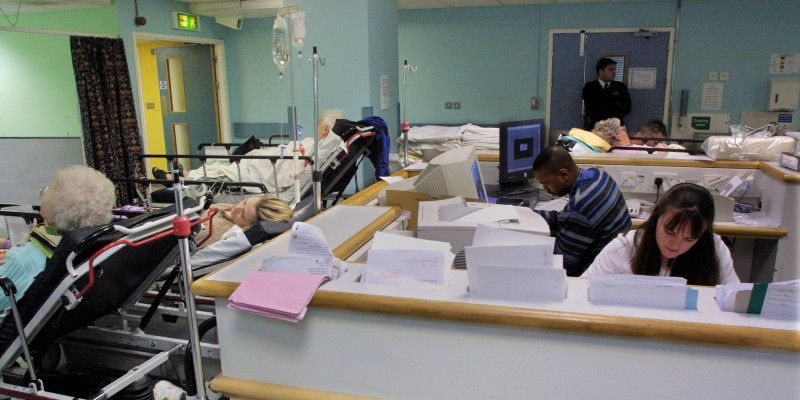
A NEW report has called for every stage of Wales’ health and care system to be better connected in order to improve patient outcomes and reduce waiting times.
The Bevan Commission, Wales’ leading independent health and care think tank, has published Chain Reaction: Managing patient flows across health and care systems and services.
The paper examines the causes of poor patient flow and sets out ways to reduce pressure on services, including earlier intervention, better community support, improved use of digital tools and closer working between health, social care and local services.
It identifies seven key areas affecting how patients move through the system: people and communities, primary and community care, social care and care homes, urgent community support, 111 and transport, emergency and minor injury care, outpatient and diagnostic services, and hospital assessment, treatment and discharge.
The commission warns that simply moving pressure from one part of the system to another will not solve the problem, and says whole-system planning is needed.
Tools such as telehealth, digital medicines, virtual wards, social prescribing and quicker responses to falls are highlighted as ways to improve patient flow and help people manage their own health more effectively.
Bevan Commission Director Dr Helen Howson said: “Health and social care services are facing huge demands and we know that we are only going to face even bigger pressures. The population in Wales is living longer, but more unhealthily. We are seeing a doubling of the over-90s and an increase in dementia.
“We believe that health is a shared responsibility, extending beyond the NHS, to include local government, workplaces, people and communities. Preventing unnecessary admissions into the system and enabling people to better manage their own health and wellbeing will be critical to help reduce demand for clinical services.”
The report says prevention and early intervention will be essential if Wales is to reduce the number of people relying on formal care services.
It also highlights programmes such as Education Programmes for Patients Cymru, which helps people living with long-term conditions and their carers gain the skills and confidence to manage their own health.
Where formal care is needed, the commission says patients must be involved in designing services around their needs. It also calls for better real-time data and digital systems to improve communication between care teams.
Dr Howson added: “This paper highlights the interdependencies of all parts of the system and the impact of one upon the other. It reinforces the urgency for whole system planning and transformation, built around patient needs.

“By connecting every part of care, we can reduce inefficiencies, improve outcomes and better meet the evolving needs of people now and in the future.”

LANDLORDS in Pembrokeshire are being reminded that a Welsh Government-backed leasing scheme remains available for those looking for a secure way to rent out their properties.
Leasing Scheme Wales Pembrokeshire allows landlords to lease properties to Pembrokeshire County Council for between five and 20 years, with guaranteed rental payments throughout the lease period.
The scheme is designed to increase access to affordable private rented homes, provide longer-term security for tenants, and give landlords greater confidence and support.
It also aims to improve housing standards and help reduce homelessness across the county.
Landlords taking part can receive guaranteed rent at Local Housing Allowance rates, support with tenant management, and protection through lease agreements covering tenant-related damage, excluding fair wear and tear.
Financial support may also be available. This includes grants of up to £5,000 to improve property standards or energy efficiency, and up to £25,000 to help bring empty properties back into use. Additional retrofit funding may also be accessible.
Pembrokeshire County Council is encouraging landlords to consider the scheme as a reliable, low-risk way to let their property.
Landlords can express interest through the online form or contact the Private Rented Sector team by emailing [email protected].



Sport13 hours ago
Runners tackle new route in Ras Y Castell 10k
MORE than 90 runners took to the streets and paths around Cardigan on Friday evening (June 5) for the annual...


Business20 hours ago
Turkish Kitchen reaches Welsh restaurant award semi-finals
Haverfordwest café praised as small independent business flies flag for Pembrokeshire A HAVERFORDWEST café has been named as a semi-finalist...


News20 hours ago
Person taken to hospital after major emergency response on Tenby Esplanade
A PERSON has been taken to hospital following a major multi-agency emergency response on The Esplanade in Tenby. Dyfed-Powys Police...


News21 hours ago
St Davids lifeboat crews rescue damaged yacht and stranded kayaker
TWO St Davids RNLI lifeboats were launched within hours of each other after a yacht was left disabled in a...


Community2 days ago
D-Day 82: Milford Haven remembers sacrifice of Normandy landings
COMMUNITIES gathered in Milford Haven on Saturday (Jun 6) to mark the 82nd anniversary of D-Day. The service, held at...


News2 days ago
D-Day at 82: The secret Pembrokeshire invasion that helped prepare for Normandy
Forgotten wartime operation saw thousands of troops storm Pembrokeshire beaches in rehearsal for D-Day LONG before Allied troops landed on...


News2 days ago
Welsh Water hit with £44.7m enforcement package over sewage failures
Pembrokeshire campaigners say regulator’s action vindicates years of concern over pollution in rivers and coastal waters DŴR Cymru Welsh Water...


News3 days ago
Council tax shake-up in doubt as Welsh Government reviews reform plans
Questions over 2028 revaluation as ministers reconsider next steps THE FUTURE of council tax reform in Wales has been thrown...


Crime3 days ago
Paddleboard company owner loses bid to cut sentence over Haverfordwest tragedy
A FORMER paddleboard company owner jailed over the deaths of four people on the Western Cleddau has failed in a...


Community4 days ago
Crisis response dogs launched to support people through trauma and distress
A NEW project using specially trained dogs to support people during moments of trauma, grief and crisis has been launched...
-
Crime3 days ago
Paddleboard company owner loses bid to cut sentence over Haverfordwest tragedy
-

 Crime2 days ago
Milford Haven man admits harassment and assault
-

 Crime5 days ago
Milford Haven man bit neighbour’s neck near cashpoint
-

 Crime6 days ago
Milford Haven man jailed for illegal Premier League streaming service
-

 News2 days ago
Community appeal for privacy after serious emergency in Pendine
-

 Crime6 days ago
Haverfordwest man admits cocaine offence as Crown disputes basis of plea
-

 Crime5 days ago
Pembroke Dock driver avoided jail after drug-drive crash
-

 Local Government6 days ago
National Express use of new Haverfordwest interchange still subject to risk checks