


Business
Pembroke Dock battery box energy scheme is approved


FURTHER micro energy storage facility ‘battery box’ schemes in Pembrokeshire have been considered by county planners, with one backed and one withdrawn by the applicants.
In two separate applications to Pembrokeshire County Council, AMP Clean Energy sought permission for micro energy storage projects on land at Waterloo Industrial Estate, Eastern Avenue, Pembroke Dock, and land between Steynton Road and Sheffield Drive, Milford Haven.
A supporting statement accompanying each application says: “AMP Clean Energy is developing Battery Boxes across the UK to provide a low carbon, flexible and de-centralised store of electricity that benefits local communities, businesses, and homes.”
It says the battery boxes import electricity from the local electricity network when demand for electricity is low or when there are high levels of renewable energy available, exporting it back during periods of high demand to help address grid reliability issues prompted by an increase of intermittent (wind and solar) generation.
AMP Clean Energy says it is developing up to 1,250-plus Battery Boxes in the UK over the next three years and, to date, has received planning consent for more than 80 such schemes.

It says each box, which takes up roughly two car parking spaces, stores 800kWh of electricity, giving the potential to power 200 homes for four hours where there is a supply disruption.
The battery box schemes are part of a raft of applications in the county.
AMP was previously granted approval for schemes on land between King Street and Meyrick Street, Pembroke Dock and land in between Castle Quarry and Haven Court, Pembroke.
AMP Clean Energy was also recently granted permission for micro energy storage projects at on a verge at the Bridge Innovation Centre, Pembroke Dock, and land to the south of Withybush Road, Withybush Industrial Estate, Haverfordwest.

However, a scheme for a micro energy storage project on land at Fishguard Leisure Centre Car Park, near Ysgol Bro Gwaun was refused by the council’s planning committee late last year.
That scheme was refused, against an officer recommendation of approval, after concerns were raised including being in “an unsafe, unsustainable and unnecessary location,” and the “nightmare scenario” of a fire as children were leaving the school, with was disputed by AMP’s agent.
The latest Pembroke Dock application was conditionally approved but the Milford Haven scheme has been withdrawn.


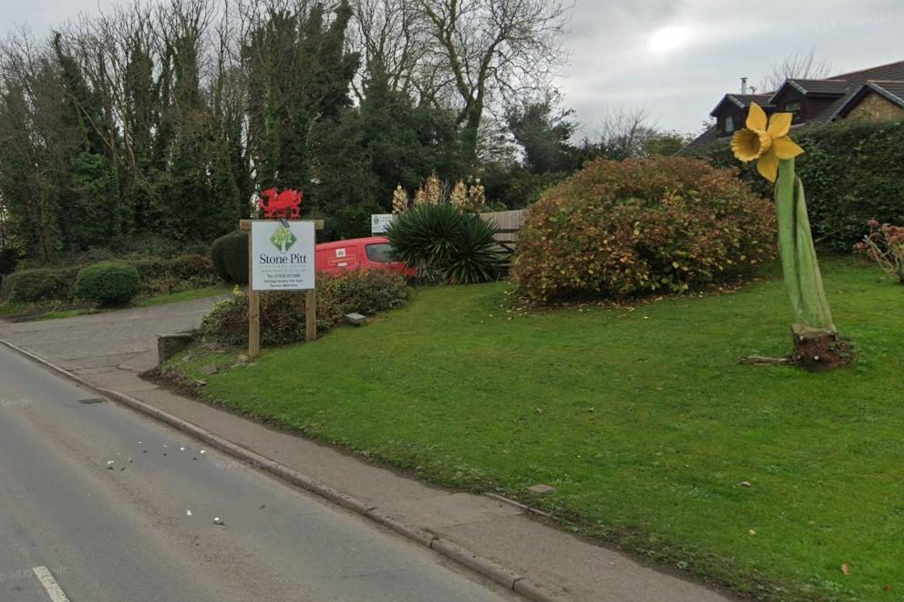
A CALL to change to use of land at Pembrokeshire caravan park from touring to static units has been given the go-ahead by county planners.
In an application recommended for approval at the March 10 meeting of Pembrokeshire County Council’s planning committee, I & J Leisure Ltd, through agent Gerald Blain Associates Limited sought permission for a change of use of land for the relocation of 27 touring caravan to 27 static caravans, with associated works, partly in retrospect, at Stone Pitt Caravan and Camping Site, Begelly.
A supporting statement said the 2025 application follows the granting of a 2021 scheme for a lower number of touring to statics.
It added: “Following approval works had begun on site to implement some of the approved scheme, this work has now ceased. This new application seeks permission for a revised site layout of the approved scheme, regularisation of some works already carried out, and an increase in the number of pitches converted to static units. The increase in static units is facilitated by the removal of twin unit lodges in favour of single static units.
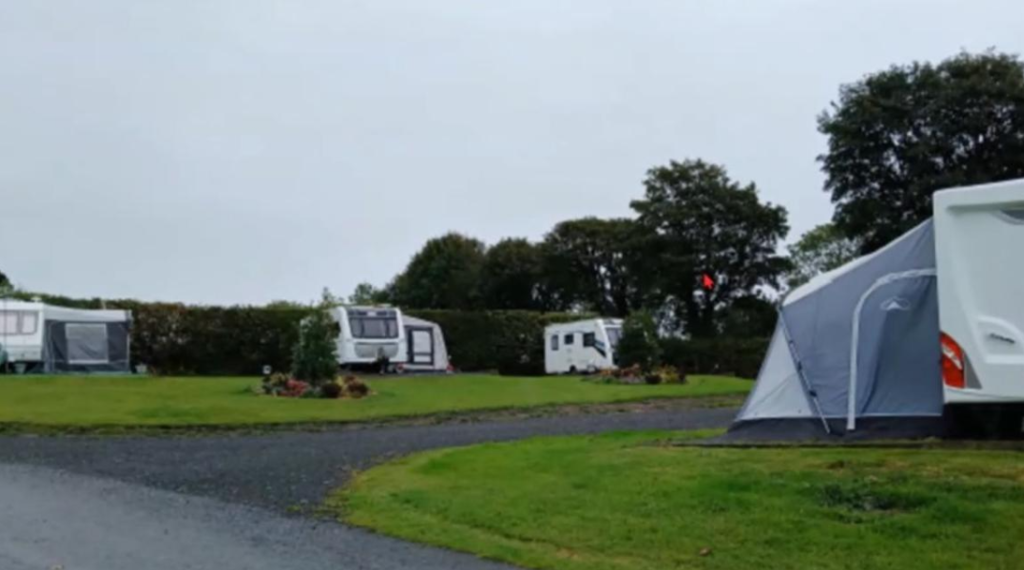
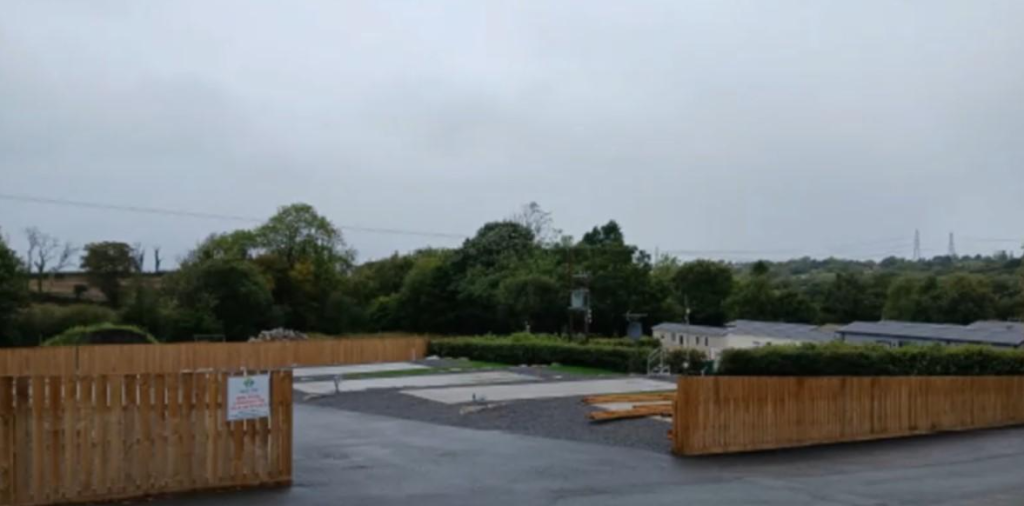
“The proposed development will remain within the same three enclosures as the approved scheme: eastern, central and western. In the western enclosure, eight static caravan bases have already been installed, alongside the construction of a gabion retaining wall between the western and central areas.

“The land has been reprofiled along the southern boundary to create additional space. All units in this enclosure would not be single static units and the number of pitches proposed has been increased from 11 to 13.
“The central enclosure has also undergone works, including the levelling of land and construction of the gabion wall. The size of this enclosure has been increased slightly through the removal of some trees.
“The revised layout proposes seven single units, up from six in the previous scheme. Surrounding the gabion wall, a wildlife garden and replacement tree planting is proposed to enhance biodiversity.
“In the eastern enclosure, the previous proposal for five twin-unit lodges has been replaced with seven single-unit statics. The row of touring pitches to the north of the eastern parcel will be removed and the vacated area will be converted into a landscaped wildlife garden to improve the visual and ecological character of the site.”

An officer report recommending approval said: “Although the planning statement refers to five additional static pitches this appears to be a reference to the difference between the proposal and the previous permission for upgrading of touring pitches to static pitches. There would be no increase in pitch numbers or site area.”
It added: “The proposal would have an acceptable visual impact and would not be detrimental to local amenity or highway safety. The proposal includes biodiversity enhancements and additional landscaping.
“However, it is considered that a further detailed landscaping strategy is required to be submitted for consideration for the western boundary of the site to ensure the proposal complies with the relevant policies of the LDP.”

At the March meeting, approval delegated to the Head of Planning following conditions including the submission of modifications to the landscaping on the west boundary, and an amended plan showing that overall pitch numbers have not been increased, was moved by Cllr Alec Cormack, and was unanimously backed by members.
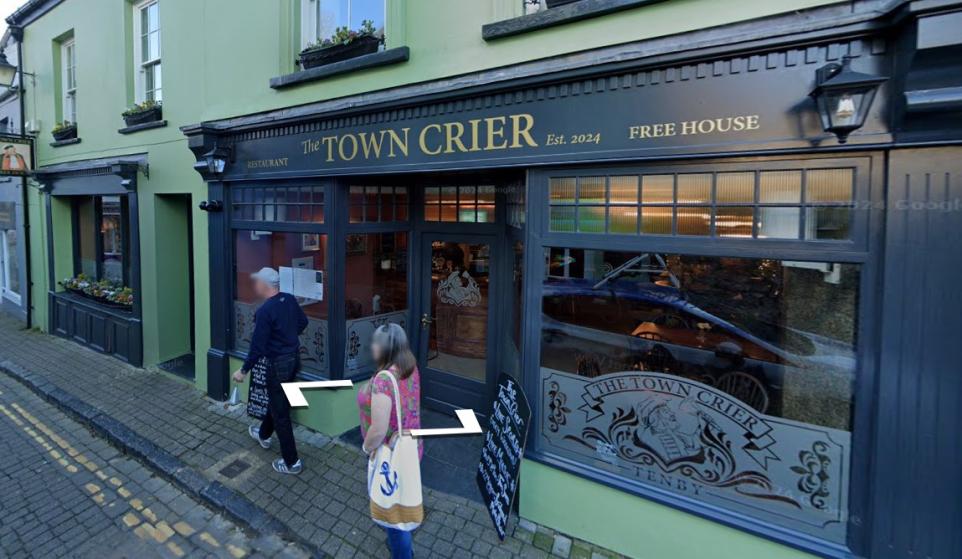
PLANS to expand the facilities offered by a Pembrokeshire seaside town pub, which was once a toyshop, have been approved by the national park despite concerns raised by the local civic society.
In an application to Pembrokeshire Coast National Park, The Old Town Crier Pub Ltd, through agent Argent Architects, sought permission for the installation of a retractable canopy to rear courtyard of The Town Crier Pub, 3-4 Upper Frog Street, Tenby.
A supporting statement said the scheme for the pub, in Tenby town centre, with a rear boundary on the town’s Grade-I-listed 13th century town wall, “makes a positive contribution to the site, adding an elegant structure, which remains sensitive to the host building and the historic town wall”.
The application added: “The proposals are limited to the private realm of the premises’ courtyard, and do not touch the town wall. The experience of the town wall from the public realm will remain unchanged. There is no perceived impact on the historic town wall arising from the proposals.”
The application was supported by Tenby Town Council, but Tenby Civic Society raised concerns about the potential impact on the nearby town walls.
It added: “We regret having to put these views as on balance the modern scheme built on this site has a lot of virtues, one of which has been to open up views and appreciation of the inside of the Town walls to the public as customers.
“The application presents no justification for the impact on the inside of the town walls, and the proposal would in our view diminish the significance and appreciation of the inside of the town walls.”
An officer report recommending approval noted the concerns, pointing out the civic society was not a statutory consultee.
It added: “Whilst in very close proximity to the town walls, the proposed canopy is not readily visible from the public realm, the existing courtyard connecting to the highway only via a pedestrian door, this offering limited views into the site. In terms of overall impact on the special qualities of the National Park, the proposal is considered acceptable.”

The Upper Frog Street site of the Town Crier was formerly the Clarice Toys toy and novelty shop, and is called the Town Crier in tribute to the late John ‘Yobbler’ Thomas, a former proprietor of the shop and a former town crier of Tenby.
John Thomas served as Tenby’s town crier for more than 30 years, and was responsible for bringing four national crier contests to Tenby.
John and wife Caroline, who would become a councillor and serve as mayor in the town, set up Clarice Toys in Tenby’s Upper Frog Street after their marriage in 1961, with the business being later run by their son and daughter, Ian and Kerri.
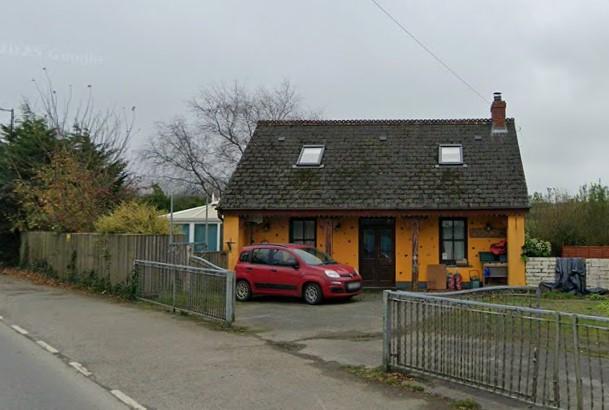
A CALL to convert a financially unviable disused former antiques shop on the edge of Crymych to residential accommodation has been given the go-ahead by county planners.
In an application to Pembrokeshire County Council, Clare Griffiths, through agent Josh Macrae, sought a change of use of a disused shop with ancillary accommodation above, at Ty Ebrill, Clares Shop, on the edge of the village, to an ancillary accommodation unit.
A supporting statement said: “Siop Clare is a mixed-use building in the curtilage of the main dwelling on the site, Ty Ebril, it comprises a small flat above a disused shop below. The flat, constructed in 2007, is comprised of a single modestly sized living space and bedroom area, with a bathroom; the flat is accessed by a set of stairs to the rear of the building. Since its construction the flat has been used as ancillary accommodation for family members of the owners of Ty Ebrill.
“The disused retail premises below is comprised of an open plan shop area with a conservatory attached, the conservatory was previously used as a flower preparation area.
“The shop was in use for a number of decades; it was operated by the current owner since 2003 and was previously an antiques shop, but has been disused since it was closed 2019 as it was no longer financially viable and the owner had changed career. Due to the shop being located within the curtilage of the main dwelling it has not considered suitable for the shop to be leased to another party.”
It added: “The change of use will require a minimal amount of work to covert the disused shop and modestly sized flat into a small dwelling. The dwelling would be suitable for single occupancy, a small household, or as continued ancillary accommodation for the main dwelling, this would create the opportunity for multi-generational living on the site should the owner sell Ty Ebrill.
“As there is a high demand for housing in the Pembrokeshire area it is felt that the proposal would be suitable and would allow the building to become a viable dwelling, creating a potentially low-cost home in the area.”
The application was conditionally approved by county planners.



Crime4 hours ago
‘Knife attack’ at Spittal property leaves man in hospital
POLICE have arrested a woman following what is being described as a ‘knife attack’ at a property in Spittal on...


Community5 hours ago
Pembrokeshire to receive its first banking hub in Pembroke Dock
LINK, the UK’s Cash Access and ATM network, has today announced local people and businesses in Pembroke Dock will benefit from a new banking...


Health1 day ago
Future of Withybush Hospital petition sparks urgent call for Senedd debate
CALLS have been made for an urgent debate in the Senedd over the future of services at Withybush Hospital as...


Crime2 days ago
Man jailed after threatening to chop teen’s ears off in drunken phone call
17-year-old victim said she feared for her life after a series of threats A MAN who threatened a teenage girl...


Sport2 days ago
Sean Bowen set for historic Welsh clash at Cheltenham Gold Cup
PEMBROKESHIRE jockey Sean Bowen could be part of a historic all-Welsh showdown when he lines up in the Cheltenham Gold...


Community2 days ago
Tenby still waiting as Wales hits 50 rural mobile mast upgrades
Seaside town plagued by signal congestion again absent from latest government-backed coverage improvements A NEW milestone in the UK Government’s...


Crime3 days ago
Man raped 15-year-old girl in caravan while she was on family holiday in west Wales
Jury convicts Pendine man after court hears he raped intoxicated teenager in caravan during family holiday A MAN who raped...


Community3 days ago
Crash sparks fresh questions over future of former Haverfordwest library
CONCERNS have been raised about the future of a distinctive Haverfordwest building after a car crashed into it last week,...


Community4 days ago
Councillors vote to close Ysgol Clydau despite community concerns
Petition and protests fail to prevent closure of small rural school near Tegryn PEMBROKESHIRE COUNTY COUNCIL has voted to close...


News4 days ago
Rescue drama at Swanlake Bay as lifeboats race to aid hypothermic casualty
TENBY lifeboat crews were involved in a dramatic multi-agency rescue on Saturday morning (Mar 7) after a person suffering from...
-

 Community6 days ago
Whitland Post Office re-opens under new management
-

 Local Government6 hours ago
Register now to vote in May’s Senedd election
-

 Health3 days ago
Women’s health services ‘expanding’ across mid and west Wales says Health Board
-

 Crime6 days ago
Man who threatened to kill police during Milford Haven standoff avoids jail
-

 Crime6 days ago
Police investigating nightclub assault in Saundersfoot
-

 News6 days ago
Reform energy policy raises questions for Milford Haven and Celtic Freeport ambitions
-

 Education6 days ago
Haverfordwest student turns fitness passion into exciting new career plan
-

 Education6 days ago
Future of Pembrokeshire school destroyed by fire hangs in the balance