


News
Kinnock says Reform is exploiting anger in Wales


FORMER Labour leader brands party a “posh boys’ club”, accuses Nigel Farage of offering fantasy politics, and warns deep-rooted discontent is fuelling protest support across Welsh communities.
Lord Neil Kinnock has launched a blistering attack on Reform UK, accusing the party of feeding off frustration in Welsh communities while offering little in the way of substance.
The former Labour leader said Reform’s appeal was rooted in grievance rather than genuine answers, and dismissed the idea that the party speaks for working-class voters who feel ignored by mainstream politics.
Speaking about the rise of Reform in Wales, Lord Kinnock said the party was built on resentment and slogans rather than practical policies.
He said: “The only argument going for them is grievance and resentment. You can’t represent people on that basis.”

He reserved some of his strongest criticism for the party’s image and leadership, describing Reform as “a posh boys’ club” with no real concern for the lives of ordinary people in Wales.
“They don’t give a damn about the real wellbeing of the communities of Wales,” he said.
Lord Kinnock said Reform had been able to tap into genuine public anger, but argued it had done so without presenting any serious programme for change.
According to him, the party’s message was heavy on noise and light on detail, with promises that fell apart under scrutiny. He cited Brexit as an example, saying the economic rewards once held out to voters had failed to materialise.

He also took aim at Nigel Farage, accusing him of making grand claims about restoring industry in Wales without regard for economic reality.
In Lord Kinnock’s view, such rhetoric was designed to tell disillusioned voters what they wanted to hear, rather than confront the difficult truths facing post-industrial communities.
He said Reform’s politics were driven by fantasy and performance, not by any serious commitment to the future of Wales.

Lord Kinnock was equally dismissive of claims around immigration, which he said had been wildly distorted in public debate.
He argued that many migrants come to Britain to work, contribute to the economy and pay taxes, and said the suggestion that they are simply a drain on public services was untrue.
At the same time, he acknowledged that immigration had created pressures in some areas, particularly in the aftermath of Brexit, but insisted it had been inflated into a much bigger political issue than the facts justified.
He accused Reform of borrowing from a Trump-style playbook, making exaggerated claims, denying them when challenged, and then repeating them more forcefully when cornered.
He pointed to recent shifts in the party’s position on pensions and benefits as evidence of what he sees as an opportunistic and untrustworthy approach.
Lord Kinnock also criticised the role of the media and social media in Reform’s rise, arguing that views which might once have been dismissed as pub talk are now amplified to a national audience within minutes.
He said Reform had often been treated more generously by sections of the media than it deserved, partly because it provided easy headlines and instant controversy.
But while he was scathing about Reform itself, Lord Kinnock said the anger it is feeding on did not appear overnight.
He argued that discontent in Wales has deep roots, stretching back decades to the collapse of coal, steel and manufacturing communities from the 1980s onwards.
Those changes, he said, tore the economic heart out of many parts of Wales and were carried out without proper planning or meaningful replacement.
The result, in his view, was a lasting sense of abandonment that has never fully gone away.
He said communities hit by pit and factory closures were left feeling deserted by the political and economic system, creating conditions in which protest politics could flourish years later.
That same mood, he argued, also played a major part in Wales voting for Brexit.
Lord Kinnock said many Leave voters were not motivated by racism or ignorance, but by hope — hope that something different might finally improve their lives after years of austerity and neglect.
He said Wales had once enjoyed significant financial benefits from EU membership, and suggested that much of that support had still not been properly replaced.
Turning to Labour’s own position, Lord Kinnock admitted the party faces a difficult battle as the Senedd election approaches.
After nearly three decades in power in Cardiff Bay, he said Labour has the burden of office as well as responsibility for defending its record in a country facing deep structural problems.
He pointed to long-term underfunding, mounting pressure on the NHS, GP shortages, waiting lists, poor health outcomes and low incomes as factors driving dissatisfaction among voters.
He said Wales also faced additional challenges because of its geography, scattered population and limited number of major urban centres.
Taken together, he said, those pressures created a deeply difficult political climate.
Even so, Lord Kinnock insisted Labour still had strengths, praising the leadership of First Minister Eluned Morgan and saying there remained a clear desire within the party to deliver practical fairness.
He also warned that Plaid Cymru was benefiting from disenchantment with the status quo, presenting itself as an alternative for voters who want change but are not drawn to Reform.
Although talk of independence may no longer dominate every debate, he suggested the ambition remained at the heart of Plaid’s politics and said he believed that path would damage Wales rather than strengthen it.
In the end, Lord Kinnock’s argument was that the only lasting answer to Reform’s rise is to deal seriously with the conditions that have made voters so angry and disillusioned.
Unless insecurity, poor public services and economic decline are tackled, he suggested, parties built on protest and discontent will continue to find an audience.
He warned that a Welsh Government led by either Reform or Plaid would hold the country back at a time when stability and serious leadership were badly needed.


Spring appeal launched to rehome 180 birds by Friday deadline
AN URGENT appeal has been launched to find homes for 180 ex-commercial laying hens in Boncath before next weekend, with campaigners warning the birds may otherwise face slaughter.
The British Hen Welfare Trust is holding a rehoming event in Boncath on Saturday (Apr 11), but says kind-hearted adopters must register by 2:00pm on Friday (Apr 10) if the hens are to be given a second chance.
The charity says the birds, all around 18 months old, have reached the end of their commercial laying lives, despite still having plenty to offer as pets.
Supporters say hens are friendly, curious and easy to care for, and can continue to provide eggs while enjoying retirement in a garden or smallholding setting.
Andy Hill, of the British Hen Welfare Trust said: “People are often surprised by how much joy hens bring. They’re funny, curious little characters, they love routine, and they’re genuinely a delight to care for. Plus, they’re still more than happy to pop out the occasional egg.

“With spring finally here, this is the ideal time to start. These girls are more than ready for a fresh beginning, and they really do make wonderful pets.”
The trust says anyone willing to adopt must be able to provide food, water, shelter, security and a little care and attention.
The charity, founded in 2005, says it has now found retirement homes for more than one million ex-commercial hens across the UK, all of which would otherwise have been destined for slaughter.
People interested in adopting can visit the British Hen Welfare Trust website and select the Boncath rehoming event, or call the rehoming team on 01884 860084.


Home Office says national target was met early as ministers link extra patrols to arrests and anti-social behaviour crackdown
THE UK GOVERNMENT says there are now 200 more neighbourhood police officers on the beat in Wales than there were a year ago, as ministers push a wider drive to increase visible policing in communities.
The claim was made as the Home Office announced it had met its target of putting more than 3,000 additional police officers and Police Community Support Officers into neighbourhood roles across England and Wales, two months ahead of schedule.
According to figures released on Tuesday (Apr 7), a total of 3,123 extra neighbourhood policing staff have either been recruited or redeployed since April last year, with the government saying they are now focused on tackling local crime and anti-social behaviour.
The Wales Secretary, Jo Stevens said: “There are now 200 more neighbourhood police officers on the beat in Wales than a year ago, fighting the crime and anti-social behaviour that can have a huge impact on communities.
“It is a central mission of the UK Government that people feel safe in their neighbourhoods and the increased police presence is already delivering results and leading to more arrests across the country.”

Ministers say the extra officers form part of a longer-term plan to roll out 13,000 additional neighbourhood policing personnel by the end of this parliament.
The Home Office said a recent Winter of Action campaign, carried out during December and January in more than 600 towns and cities, led to almost 18,000 arrests as police patrols were stepped up.
Of those arrests, the government said more than 5,000 were linked to retail crime, more than 1,000 to sexual offences, almost 1,000 to street crime, and over 10,000 to violent assault.
Crime and Policing Minister Sarah Jones said neighbourhood policing had been “hollowed out” in recent years and that too many officers had been kept in desk-based support roles rather than deployed on the streets.

She said: “We’re delivering the biggest reforms to policing in over 200 years and, crucially, putting 13,000 more neighbourhood officers where they belong – on the beat and fighting crime in our communities.”
The Home Office also pointed to what it described as early successes in several police force areas, including South Wales Police, which it said had reported a 37 per cent drop in home burglaries and a 14 per cent fall in anti-social behaviour.
The announcement also comes as the government launches a new strategy aimed at halving knife crime within a decade.

Under the Neighbourhood Policing Guarantee, ministers say every neighbourhood in England and Wales will have named, contactable officers, with residents promised a meaningful response to local concerns within 72 hours.
All police forces have also now published anti-social behaviour action plans setting out how they intend to tackle persistent local problems.
John Hayward-Cripps, chief executive of the Neighbourhood Watch Network, welcomed the increase and said stronger local relationships would help build confidence and improve the flow of intelligence from communities.
Harvinder Saimbhi, chief executive of ASB Help, said the extra officers should help reassure victims that their concerns are being taken seriously.
The government says the expansion of neighbourhood policing marks a major step towards reversing years of decline in visible local policing, though the longer-term impact on crime levels will be closely watched.
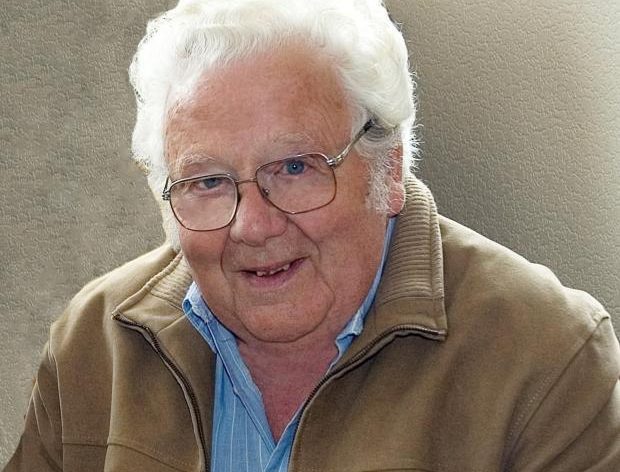
TRIBUTES have been paid to Johnny Morris, a much-loved Fishguard photographer who has died at the age of 91.
For decades, Johnny was a familiar figure across north Pembrokeshire, capturing community life through his camera lens for the local press, as well as for countless local groups, charities and organisations.
He was widely regarded as the go-to photographer for Fishguard and the surrounding area, with an extensive archive of images documenting local people, events and history over many years.
As well as his photography, Johnny was known for his love of gardening, his knowledge of local history and his gift for telling stories. Friends said he was often happiest in his garden, where he won several local trophies for his growing skills.
Johnny died peacefully on Sunday, March 22, at Park House Court in Tenby. He was predeceased by his wife Irene. He is survived by his daughter Joy, son-in-law Dilwyn, and his brother Derek.
Former Western Telegraph reporter Anwen Baldwin paid tribute, describing him as a lovely man and a great photographer.
She said: “He knew so much about the local area, its people, events and history.
“He had a great sense of humour and I loved hearing his stories about Fishguard past and present, although not all of them were for publication.
“He had a huge archive of pictures documenting the area over the years, and if I ever needed an image for a story, he would have it, no matter how obscure the request.
“He took me under his wing when I first started as the Western Telegraph’s north Pembrokeshire reporter and became a good friend who I always looked forward to catching up with.
“He will be greatly missed by the local community and the many reporters and editors who were always pleased to see a picture from Johnny Morris on their pages.”

Fishguard RNLI said Johnny had played an important role in recording the life of the station over many years. In a mark of respect, the flag at the lifeboat station has been lowered to half-mast.

A spokesperson said: “It is with great sadness that we learn of the passing of local photographer and supporter of Fishguard RNLI, Johnny Morris.
“As the station’s photographer Johnny documented a vast array of station life, from crew photos and station fundraising events, to the arrival of our current D-Class inshore lifeboat, as well as countless other community events.
“As a mark of respect, the flag over the station will continue to be flown at half-mast.”
Fishguard and District Round Table also paid tribute, describing Johnny as a local photography legend and a strong supporter of community events and charities.
The group said he had always been on hand to record important milestones in the town.
Long-standing member Gwil Evans added: “He had a brilliant knack of being able to make even the worst of us look like a million bucks.”
Johnny’s funeral will take place on Friday, April 10, at 11:30am at the Chapel of Rest, Feidr Castell, Fishguard, followed by interment at Hermon Cemetery.
Family flowers only are requested. Donations in lieu of flowers may be made payable to Fishguard Lifeboat, care of Paul Jenkins & Sons Funeral Directors, Feidr Castell, Fishguard.



News3 hours ago
Haverfordwest County AFC faces High Court winding-up threat from HMRC
Chairman says issue has been dealt with, but winding-up notice is still listed ahead of High Court hearing HAVERFORDWEST County...


Local Government4 hours ago
Food hygiene checks have not been carried out in parts of a Welsh county since 2019
FOOD hygiene checks have not been carried out in parts of a Welsh county since 2019 due an inspection backlog,...


Local Government4 hours ago
Bridge works on Neyland-Burton road to continue into late April
Council says safety repairs remain on programme but traffic lights will stay in place as major bridge scheme moves into...

Charity23 hours ago
Angle RNLI answers string of call-outs across the Milford Haven Waterway
Volunteer crew launched for searches, police incidents, a medical evacuation and a grounded yacht during a busy spell from mid-February...


Charity1 day ago
St Davids RNLI launches on Easter Monday after drifting kayak spotted off Solva
Missing vessel recovered near shore after coastguard confirms it had been reported lost days earlier ST DAVIDS RNLI launched on...

News1 day ago
Diesel nears £2 a litre in Pembrokeshire as drivers scramble for cheaper fuel
Johnston forecourt hits 194.9p while wide price gaps and rush to fill up pile pressure on motorists across the county...


News2 days ago
St Davids Cathedral marked Easter Sunday with full day of worship
FROM dawn vigil to choral evensong, the cathedral welcomed worshippers for one of the most important days in the Christian...


Crime2 days ago
Neyland man spared immediate jail over aggravated vehicle taking
Defendant given a suspended prison sentence after magistrates heard the offence was serious enough to cross the custody threshold KRISTIAN...


Health3 days ago
Crumbling NHS faces £1bn repairs bill in Wales
Senedd election promises collide with the harsh reality of ageing hospitals, fire safety concerns and a maintenance crisis stretching across...


News3 days ago
Emergency services respond to incident in Haverfordwest town centre
EMERGENCY SERVICES were called to an incident in Haverfordwest town centre on Saturday morning (Apr 4), with police and ambulance...
-

 News4 days ago
Accommodation providers in Wales will be required to register under new law
-

 Business7 days ago
Fishguard to Wexford rail tunnel plan backed by Elon Musk firm
-

 Entertainment5 days ago
From Milford Haven to the world: The story of The Evolution Experience
-

 Entertainment5 days ago
BBC unveils major new Welsh dramas with Tenby set for prime-time spotlight
-
 Business7 days ago
Refusal over Pembrokeshire shepherd hut let goes to appeal
-

 Business5 days ago
Fire damaged Newgale Duke of Edinburgh Inn plans refused
-

 Community5 days ago
Sycamore Gap legacy takes root at Carew Castle
-

 News6 days ago
Health minister refuses to act on Withybush despite 15,000-signature petition