


Community
An interview with Millie Marotta

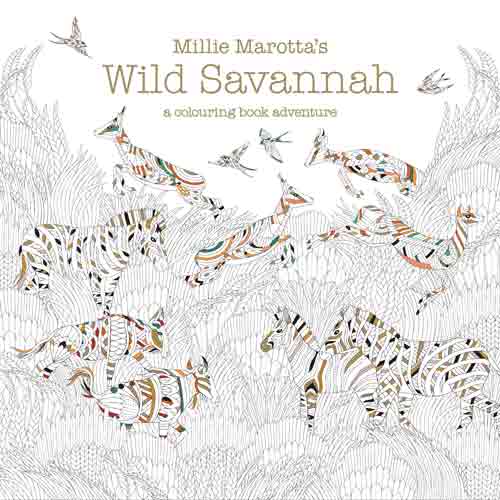

‘Wild Savannah’: Millie Marotta’s brand new colouring book
PIONEER for the adult colouring book craze Millie Marotta spoke with The Herald last week (Feb 17), a few days after she released her latest collection, ‘Wild Savannah’.
Millie Marotta is the UK’s best-selling non-fiction author of 2015, the NY Times Bestselling author and her book, ‘Animal Kingdom’, spent a record 20 weeks as the official paperback non-fiction number one on Amazon.
On February 11, the Pembrokeshire-based artist released her third book, ‘Wild Savannah’, which offers beautiful and intricate illustrations of the Savannah grass lands. The colouring book is already being flagged as one of the biggest releases of 2016.
Speaking with Millie last week, she said that she has adored art for as long as she can remember and that she has always gravitated towards creative activities.
After studying Art and Design in school, she went on to do a degree in Wildlife Illustration and then became a teacher at Bush School, where she taught for a number of years.

In 2008, when the economy was taking a down turn, Millie decided to take the plunge and leave her stable, well paid job to become a freelance illustrator.
“I was really scared,” she told us, “People were like, ‘Oh my gosh, are you a bit mad?’ but I felt like it was the right time.
“I always carried on with my own projects outside of my job and my desire grew and grew. Teaching over time and nurturing other people’s creativity made me miss being more creative myself.
“My plan was to do freelance illustration and I had to make it work. I was deadly serious about it – I made sure it was going to work. It was really scary and it was a bold move, but it worked out.”


Millie Marotta: “Colouring is an easy way to be creative.”
We asked Millie whether she planned to create colouring books from the beginning, or if her art style paved the way for her.
Before creating her colouring books, Millie worked on a variety of different projects; textiles, food packaging, book illustrations, editorial… The list goes on.
Millie told us that her publisher’s had seen her work a year before they got in contact with her. The publisher’s had bought a screen print of the artist’s work to give to a colleague who was leaving their office.

A year later, they contacted Millie proposing the idea for an adult colouring book because her style of art seemed perfect for the craze.
“We met for a chat first of all and it seemed like a great idea – it made sense. I took in some drawings, which I thought would be good for the book and we had similar ideas.
“It all happened so quickly. I came away from the meeting and started drawing for my first colouring book the next day.”
We asked Millie whether she plans her books before starting. She replied: “I plan quite meticulously; I don’t make it up on the spot.
“My books are planned really well so that there is plenty of diversity. There are lots of different types of drawings; when you’re drawing in excess of 80 pieces, it’s important to think abou it carefully so that the whole book is beautiful and engaging.”
Millie told us that she is not one to wander around and she works best when she is in her studio. As her work is so meticulous and accurate, the artist likes to work at home in her usual, relaxed environment, at a desk surrounded by materials she loves to work with.
She draws every day, whether she is planning pieces as little thumbnails or creating a very accurate and precise final piece. Drawing is the largest portion of Millie’s day.
All of Millie’s work is nature based, and the natural world is what inspires her. She said: “I’ve always been fascinated by the natural world, it’s an inherent thing and it seems obvious for me to focus on it. I don’t have to think about it.”
Fellow artists who create nature-based pieces are the people who inspire Millie most. The artist loves Charlie Harper’s flat, clean stylised graphics and the intricate and scientific work of Ernst Haeckel. Millie went on to talk about Pembrokeshire artist John Knapp Fisher, whose monochrome style has always been an inspiration to her.
“Why do you think adult colouring books have become so popular?” we asked.
“Overall, it’s down to the fact that we all lead such busy lives. We cram so much into a day and there comes a time when we need to shut out the outside world.
“People need a simple and accessible way to be calm – to concentrate one thing instead of 100.
“Colouring is something we’ve all done as children, so it isn’t a new hobby, it’s inherent in all of us. There’s an element of nostalgia and familiarity.
“We kind of leave colouring behind – as children we love to be creative, but life takes over and we don’t allow ourselves time to engage in creative activities. Colouring is an easy way to be creative.”
We asked Millie what advise she would give to anyone thinking of pursuing a career in art. She told us that the most important thing is to take time to develop your own style.
“The illustration world is a busy market and it’s easy to look at other people and try to work like them.
“It’s important to do what comes naturally to you because your work is then honest and genuine. This makes you stand out and you will produce better work.”
Millie is already working on book number four, which will be released later this year, and is about to release a homeware range, which she tells us is “new and exciting” for her.
The artist is incredibly busy, but she’s happy to be – she tells us she would be doing this much even if she did not have deadlines to meet.
Millie has also recently become a patron for the Born Free Foundation, a charity whose aim is to keep wildlife in the wild. Funding for the charity goes towards stopping the suffering of wild animals and protecting threatened species in the wild.
By selling a limited edition print of the lion piece in Millie’s new ‘Wild Savannah’ book, the artist will help to raise money for the charity, and raise awareness while doing so. The print will be sold exclusively on the Born Free Foundation’s website.
Millie told us that she cannot wait to do more work with the charity in the future.
You can now buy Millie’s latest book, ‘Wild Savannah’ in most good book stores and online, and we at The Herald suggest you do that right away.





Motorists are being advised to allow extra time as essential gas network upgrades begin on Bush Road
TEMPORARY traffic lights will be introduced in Pembroke while engineers carry out work to upgrade underground gas pipes.
Wales & West Utilities will begin work in the Bush Hill area on Monday, July 20, with the scheme expected to continue until Friday, August 21.
Temporary traffic lights will operate on Bush Road between the junctions with Buttermilk Lane and Whitehall Avenue. The lights will be manually controlled to help keep traffic moving and reduce congestion.
The utility company said the work had been agreed with Pembrokeshire County Council and scheduled during the school holidays to minimise disruption.
Motorists are being advised to allow additional time for their journeys while the restrictions are in place.
Adam Smith, who is managing the project for Wales & West Utilities, said: “We have planned this section of work to coincide with the school holidays to minimise disruption to motorists and the local community.
“We understand our work can cause disruption, but it is essential to maintain a resilient gas network that households and businesses can rely on every day.
“While much of the gas network is out of sight, it plays a vital role in daily life, from heating homes to cooking meals, and we know how important it is that gas is there when people need it.”
Wales & West Utilities transports gas to more than 7.5 million people across Wales and the south west of England through a network of more than 35,000 kilometres of underground pipes.
Anyone who smells gas or suspects carbon monoxide should call the National Gas Emergency Service immediately on 0800 111 999.
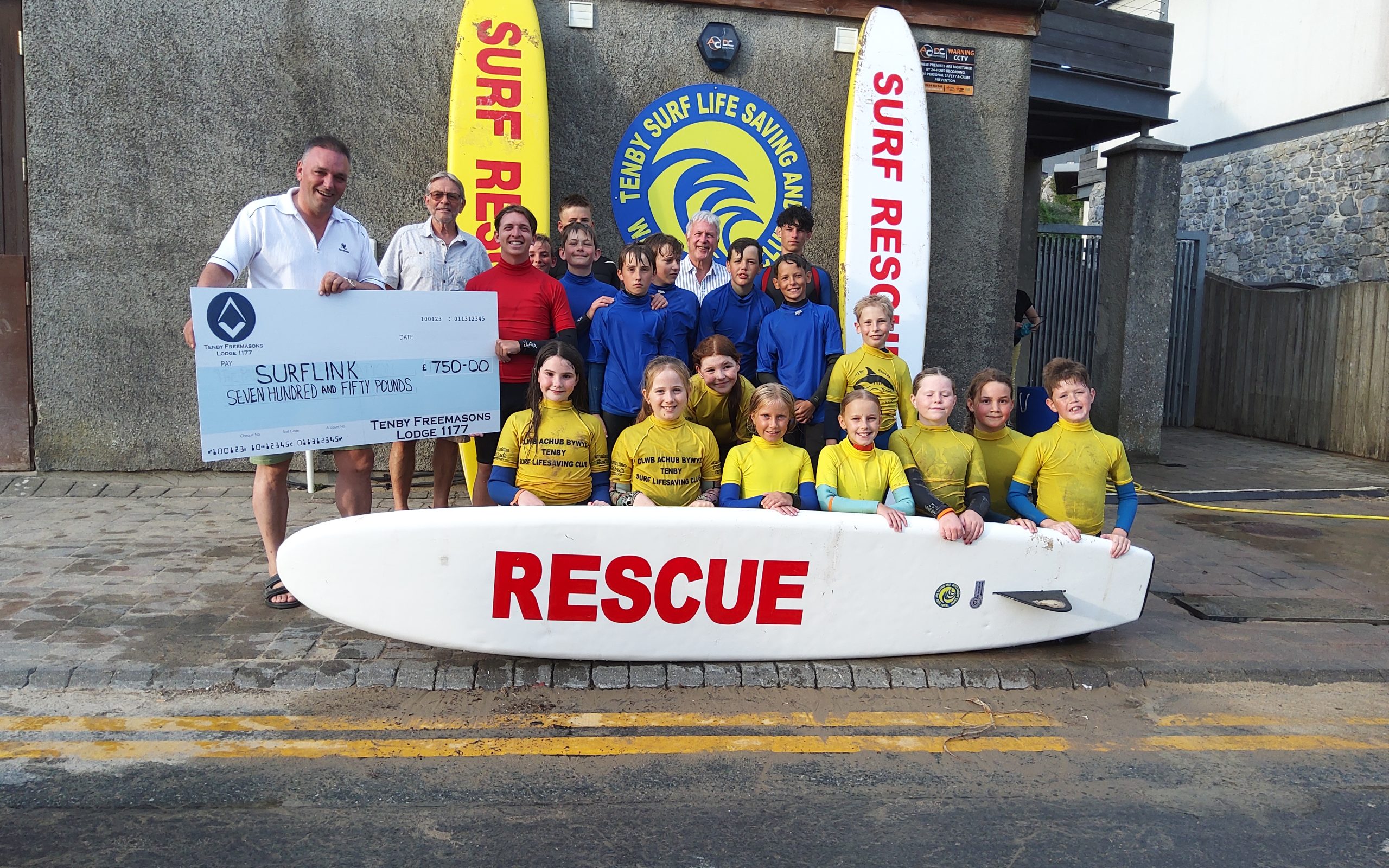
Funding will help volunteers purchase distinctive uniforms for patrols at Tenby South Beach
TENBY Freemasons have donated £750 to Tenby Surf Lifesaving Club to support its volunteer beach patrols and lifesaving work.
Members of Tenby Lodge presented the donation to the club, also known as Surflink, following a training session last week.
The club is introducing volunteer lifesaving patrols at Tenby South Beach on busy days when lifeguards are not on duty, helping to complement the work of the RNLI.
Volunteers require distinctive patrol uniforms so they can be easily recognised by members of the public on the beach.
Senior lodge member Tony Upham put forward a proposal to Tenby Lodge’s committee, which quickly agreed to provide the money needed to purchase the uniforms.
Surf club leader Tai Jackson said: “Lifeguard services have reduced in recent times, so we were keen to offer our skills.
“We are grateful once again for the assistance from the Freemasons in purchasing the essential kit required.”
Tenby Lodge charity steward Steve Thurgood said: “We are committed to supporting local good causes, so we are delighted to make these funds available to Surflink.
“The club provides an excellent voluntary service to the community, particularly to young people.”
Tenby Surf Lifesaving Club has taught the multi-disciplined sport of lifesaving since 1993, educating participants aged eight and above in surf safety, open-water skills and swimming confidence.
Weekly summer training sessions are held at the club’s facility at South Beach Car Park in Tenby. During the winter, the club runs weekly pool sessions at Tenby Leisure Centre, helping members develop the core swimming skills needed for beach training.
Through its links with the RNLI, the club also provides training and assessments for those hoping to become beach lifeguards, first aiders or sports coaches.

Its volunteers provide lifesaving cover for a number of major local events, including Ironman Wales, Long Course Weekend, the Saundersfoot New Year’s Day Swim and Tenby North Beach Boxing Day Swim.
The club’s stated aim is to save lives and prevent drowning through surf lifesaving education and training within the local community.
Anyone interested in joining Tenby Surf Lifesaving Club can email [email protected].
Pictured: Tenby Lodge Master Damian Brown presents the £750 donation to Tai Jackson. Also pictured at the rear are Steve Thurgood, left, and Tony Upham, right, with young members of Tenby Surf Lifesaving Club.
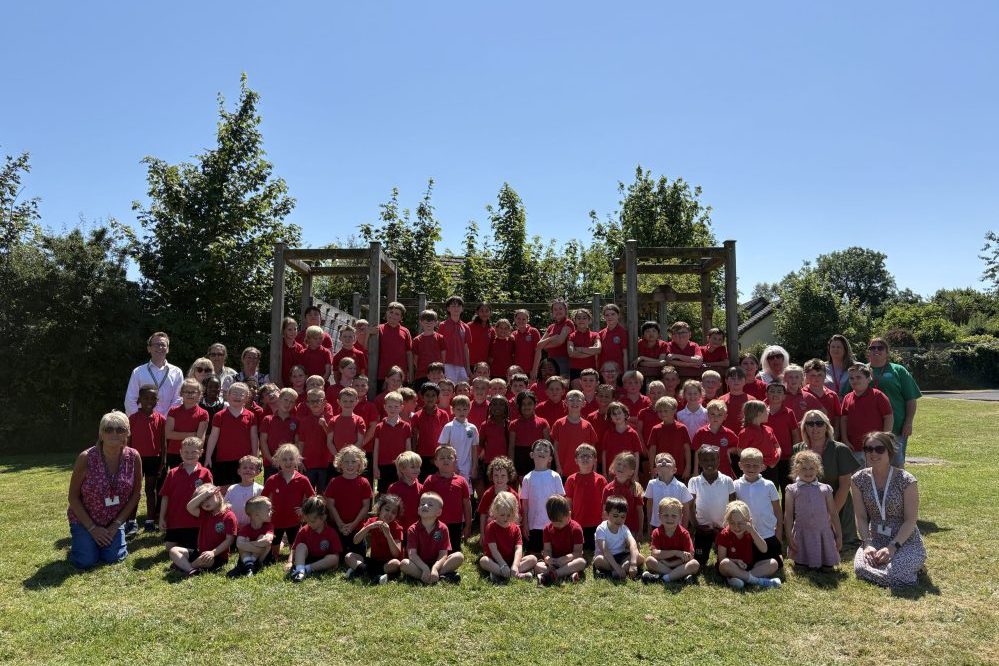
A PEMBROKESHIRE school at threat of closure as part of education reorganisation in the south of the county has now been saved after councillors backed a call from the deputy leader for it to remain open.
Stepaside CP School was being earmarked for closure by Pembrokeshire County Council, as part of proposals to establish a new 3-11 primary school on the Saundersfoot School site, discontinuing both Saundersfoot school and Stepaside school.
The Stepaside proposal was based on surplus places for all the schools in the proposals, with Stepaside having a surplus capacity of over 50 per cent, councillors had previously heard; figures that have since been much debated.
In March, a vote at a full meeting of Pembrokeshire County Council reaffirmed a decision of last December, that the Director for Education be authorised to commence statutory consultation to discontinue Stepaside and Saundersfoot and establish the new three-11 primary school.
Since then, Pembrokeshire’s deputy leader Cllr Paul Miller, who has recently taken on Cabinet member responsibility for education, made a call for the school to instead remain open, rescinding the previous decision to discontinue Saundersfoot and Stepaside schools, which was heard at the July 16 meeting of Pembrokeshire County Council.
Cllr Miller said: “Following a thorough review, I have decided to recommend to council that it not proceed with the closure of Stepaside School. I believe the school is providing good educational outcomes for its local population and is sustainable in its current form.”
A lengthy supporting statement from Cllr Miller also said: “I assumed portfolio responsibility for Education on May 15. Since appointment I have reviewed in detail the substantive plans of the Directorate including those for school modernisation and reorganisation.
“To date I consider that the primary focus of our reorganisation work has been on addressing surplus places. While that focus absolutely aligns with Welsh Government guidance, measuring surplus places tells us simply how many empty classrooms we have.
“That’s an interesting estates and facilities metric but it tells us very little about the educational experience of the children inside those buildings. I accept that there is a size (pupil number) at which a small school becomes unviable and must shut. That’s not simply unviable from a financial perspective but also from the perspective of the education provided.”
It added: “It may also be that there are mitigations, for example shared leadership roles or formal federations, that can be explored to strengthen the sustainability of both schools.
“Equally, the planned temporary full decant of Tenby VC School [which needs a new roof] may utilise a significant proportion of the existing surplus places at Saundersfoot School. In those circumstances, I do not believe the available evidence currently demonstrates that closure of Stepaside School represents a necessary or proportionate response to the level of surplus places within the Tenby Cluster.”
At the meeting Cllr Miller stressed the Stepaside decision would not lead to a revisiting of the recently backed closures of Manorbier school or Ysgol Clydau.

While there were claims of “a massive U-turn” and a “purely political move” around Cllr Miller’s call, the latter of which he said he said was “completely outrageous,” members unanimously backed the call.
Cllr Miller said he accepted the process around Stepaside had “been imperfect,” but added: “I firmly believe this school has a viable future.”
Speaking after the meeting, Laura Burnett, Chair of Governors at Stepaside Community Primary School said: “The Governing Body of Stepaside Community Primary School are delighted to share the exciting news that the school will remain open for many years to come. This is a tremendous achievement for the community that is served by the school in Kilgetty.
“The Governing Body continues to believe that the original proposal to close Stepaside School and transfer all pupils to Saundersfoot was ill-informed. We remain concerned that the school capacity, projected pupil numbers and budgetary figures used to inform the proposal were outdated and did not provide a reliable basis for decision-making.
“In addition, we feel that the potential impact on the local community was not explored in sufficient depth, with limited engagement undertaken with those most affected.”
She added: “The appointment of new cabinet members provided a valuable opportunity for a fresh perspective. We are grateful to Cllr Paul Miller, along with the many county councillors, members of parliament and Senedd members who took the time to visit the school and see first-hand the high-quality education it provides, as well as the significant impact that its closure would have on pupils, families and the wider community.”
She went on to say: “We are delighted that Stepaside School will continue to serve the children and families of our catchment area for many years to come. As we look ahead to September, we look forward to welcoming new pupils into our thriving school community.”
Welsh professional footballer Liam Cullen, who plays for Swansea and the Welsh national team is a former pupil.
He said: “Alongside my brilliant education from all of the staff, they also facilitated my aims and dream of making it to where I am today being a footballer.
“Me and my family couldn’t have done it without the help of the school’s staff, allowing me to train and play most days whilst keeping on top of my education and giving me exactly what I needed to succeed both in school and out of school.”



Crime14 hours ago
Jury hears final arguments in Milford Haven teacher stabbing trial
Defence says there was no motive or intention to kill as judge reviews competing accounts of classroom knife incident SPECIAL...


News18 hours ago
Andy Burnham becomes Labour leader and prepares to enter No 10
Former Greater Manchester mayor promises an ‘unashamedly Labour’ government after completing extraordinary return to Westminster ANDY BURNHAM has been formally...


News19 hours ago
Motorcyclist dies following collision near Narberth
Police appeal for witnesses and footage after fatal crash on B4313 at Redstone A MOTORCYCLIST has died following a collision...

Local Government2 days ago
Stepaside school saved as council abandons closure proposal
Governors welcome decision but maintain original plans were based on outdated information STEPASIDE Community Primary School will remain open after...

Crime2 days ago
Footballer given 200 hours’ unpaid work for eye-gouging assault during match
Magistrates heard Robert Hedley put an opposing player in a headlock before gouging at his eyes during a match in...


Community2 days ago
Tenby Summer Spectaculars brought to an end after harbour licence revoked
Round Table says it was willing to make major safety changes but could not secure the access controls needed to...
Local Government4 days ago
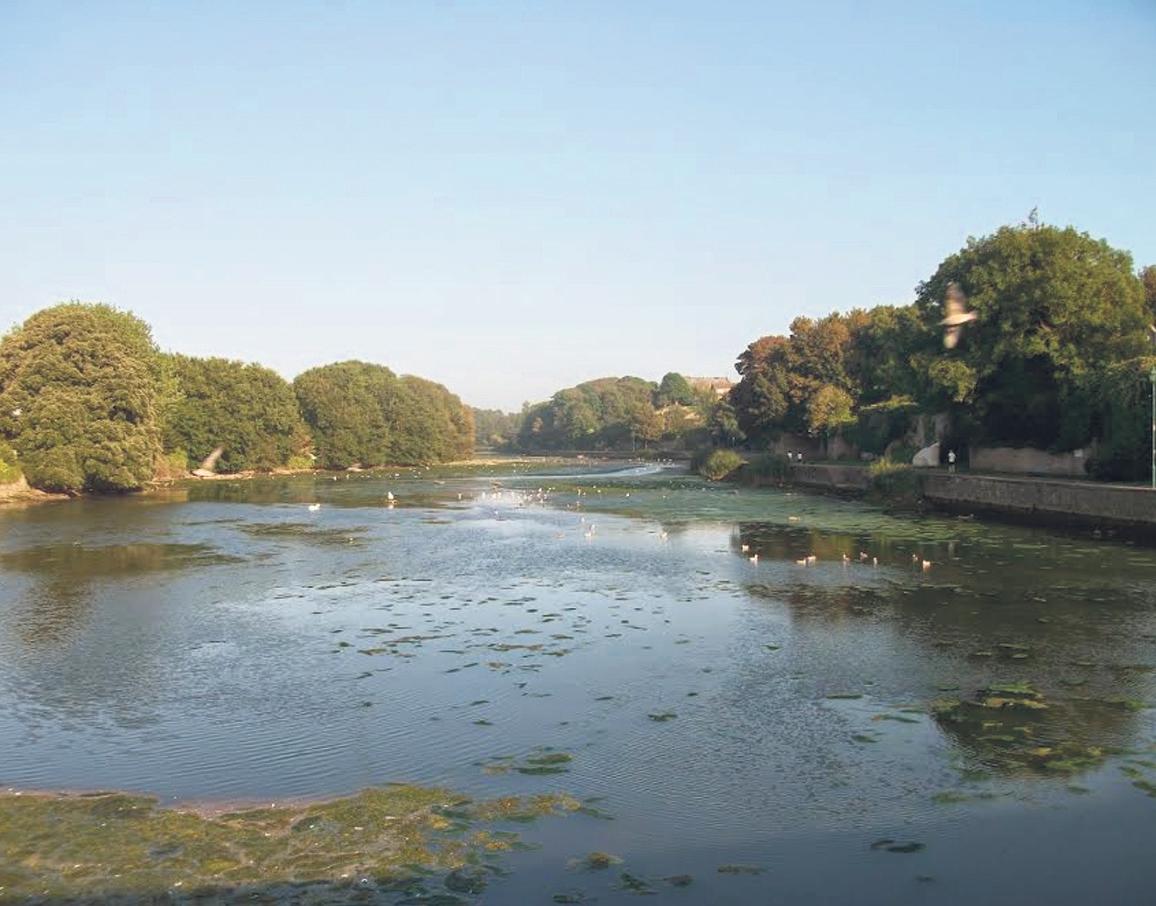
Catapult attacks suspected after wildlife deaths at Pembroke Mill Pond
Wildlife Crime Officers are investigating after the town council said around five animals showed signs of deliberate injury WILDLIFE found...

Crime4 days ago
Narberth retailer speaks of shoplifting toll after ‘collectable bear’ stolen
Independent shop owner said rising costs meant businesses could not afford to absorb losses caused by theft A NARBERTH retailer...


Crime4 days ago
Teen accused of attempting to murder teacher says she lied about stabbing
Defendant accepts teacher was terrified and that a knife wound to the head could kill, but denies deliberately attacking her...


Local Government5 days ago
Calls grow for independent investigation into Manorbier school closure
Councillor alleges misleading figures, inadequate insurance and poor treatment of staff CALLS for an independent investigation into the controversial closure...
-
Crime18 hours ago
Milford Haven teacher ‘fought for her life’ during alleged knife attack
-

 News2 days ago
Welsh broadcasting authority plan sparks row over powers and cost
-
Community2 days ago
Tenby Summer Spectaculars brought to an end after harbour licence revoked
-
Crime14 hours ago
Jury hears final arguments in Milford Haven teacher stabbing trial
-
Local Government2 days ago
Stepaside school saved as council abandons closure proposal
-
 Crime2 days ago
Police searching for driver who abandoned car after Haverfordwest pursuit
-
 Crime2 days ago
Fisherman admits safety offence after death of crewman off Pembs coast
-
 Community2 days ago
Llangwm LitFest returns with tales of slow travel and inclusive writing
GregoryBoR
June 19, 2026 at 2:03 pm
islam makhachev ufc http://ufc-330.com/ ufc 330 start time
CharlesAgoth
July 6, 2026 at 5:57 am
https://farmaciabesurica.com/# comprare medicinali online senza ricetta