


News
Company at forefront of stress breakthrough



Directors: Dr Frederic Boy and Sian Roderick
A WHITLAND company could join the fight against stress and mood swings, following research by Swansea University Doctors.
Magstim, which has been at the cutting edge of transcranial magnetic stimulation (TMS) for many years, could find themselves developing research recently carried out at the University of Swansea.
Brain scientists and psychologists at the university are developing a new technique which can reduce the impact of stress on mood and help improve your emotional wellbeing.
Dr Frederic Boy, who works at both the College of Human and Health Science and the School of Management at the university, is leading the research. And his work is already receiving international interest in the short period since his paper was published in scientific journal Frontiers in Psychology.
Dr Boy said: “When facing stressful events, the frontal regions of the brain are particularly active and constantly appraise the positive or negative emotions which are generated, and that will, in turn, shape how we react to situations.

“Over time, the negative impact of stressors build up and the physical and emotional wellbeing may be compromised. We asked ourselves – can the impact of stress on the brain of a non-depressed individual be reduced?”
Along with fellow academic Sian Roderick, new brain science research employing weak electrical impulses to stimulate the frontal cortex by placing electrodes on the top of the head has been developed.
And if this sounds like a intimidating process, Sian says the technique is actually very simple and the stimulation is very subtle. She said: “We don’t want anyone to think this is like electrical treatments used in the past. The volunteers were all very relaxed with the process and the stimulation lasts for a very short period and feels like a much weaker version of a TENS machine, for example.”
Dr Boy added: “Advances in transcranial electrical stimulation techniques mean we are able to investigate different clinical and nonclinical people and specific areas of the human brain and see how those regions regulate people’s behaviour.

“What was clear is that the way people behave results from a complex interaction between a number of genetic, social and environmental factors.”
The scientists studied 66 healthy young women, with no history of psychiatric disorders or substance dependence. The volunteers filled in questionnaires, which helped assess different aspects of their current mood, the building bricks of the emotional and physical wellbeing. They underwent a course of 12 min-a-day brain electrical stimulations sessions for five days. A total of 22 individuals received an ineffective, but realistic, placebo stimulation, while the 44 others were administered a real, active stimulation.
Dr Boy explained: “This technique employs electrical power that is more than a thousand times lower than the one used by an energy saving light bulb, and result in a feeble tingling lasting a few seconds in the first instants of the stimulation session.”

Over the duration of the research, the team found that those volunteers who received the active stimulation gradually reported having experienced less negative mood states in the past day. On the contrary, participants in the placebo group did not report notable changes in mood.
“This type of treatment has been accredited by the NHS to be used to treat depression last August. We have shown that weak electric stimulation is also effective to improve the mood of those who are not depressed, but are still affected by the consequence of a stressful, restless and demanding lifestyle,” added Dr Boy, who is Head of Translational and Consumer Neuroscience in the Department of Psychology.
“This technique is based on robust scientific research and we hope it will be developed to create an over-thecounter device which can be used to improve mood and lower stress.”
With the recent statistics showing that more and more young people, are turning to medicating their emotional wellbeing – the number of young people in the UK prescribed anti-depressants increased by more than 50% between 2005 and 2012, according to the new study – could Dr Boy’s research lead to a reduction in this worrying trend?
“Yes, we are hopeful this research can assist in the treatment of low mood without having to resort to medication. “As well as the possible side effects this type of treatment can have on the patient, prescribing drugs in the first instance is a huge drain on the NHS. We are aiming to align our work with the Prudent Healthcare agenda set out by the Health Minister.
“As a university we are excited to be part of ARCH (A Regional Collaboration for Health).
“The ARCH partners are working to use innovation and research to drive health service improvements and we believe this research could be a part of this transformational approach.
“We hope that in developing a device which people can choose to use we are also empowering the population to take responsibility for their own health and wellbeing.”
Dr Boy and Sian Roderick are both directors of the emerging life science firm Neurotheraputics, and are hopeful their research can be developed by West Wales medical devices firm Magstim.
The Whitland-based company, who pioneer and manufacture non-invasive magnetic stimulation devices, say they are excited by the research.
Charles Hounsell, Magstim product specialist, said: “Magstim is delighted to explore opportunities with Swansea University to expand our understanding of therapeutic techniques using neurostimulation devices.
“The field of non-invasive brain stimulation is expanding rapidly and we are hugely excited about the potential benefits of Transcranial Magnetic Stimulation (TMS). We look forward to discussing this research further with Dr Boy and his team.”



Nigel Farage will face an extraordinary field of 33 opponents when voters in Clacton return to the polls next month
A RECORD 34 candidates have been confirmed for the Clacton parliamentary by-election, which will take place on Thursday, August 13.
The contest was triggered after Mr Farage resigned as the constituency’s MP before announcing that he would stand again for Reform UK.
He said the election would allow local voters to judge his conduct following intense scrutiny of his financial backing and two inquiries by Parliament’s standards commissioner.
Mr Farage has denied wrongdoing and maintains that gifts and other support he received were personal and did not need to be registered under parliamentary rules. He has described the by-election as a contest between the public and the political establishment.
Labour, the Conservatives, the Liberal Democrats and the Green Party are among the larger parties that have declined to field candidates.
Their absence has left political satirist Count Binface and Reclaim Party leader Laurence Fox among the best-known names challenging Mr Farage.
The ballot paper will also feature three candidates from the Official Monster Raving Loony Party, several representatives of smaller political parties and a large number of independents.
Tendring District Council confirmed the final list after nominations closed on Friday.
The council said the field of 34 is believed to be the largest ever assembled for a UK parliamentary election.
The previous record is understood to have been 26 candidates at the Haltemprice and Howden by-election in July 2008. That election was called after Conservative MP David Davis resigned and stood again to campaign over civil liberties.
Full list of Clacton candidates
The candidates standing on August 13 are:
- Joseph 77, Independent
- Adham Alkhatip, The Forward Party
- Count Binface, Count Binface Party
- Nick The Incredible Flying Brick, Official Monster Raving Loony Party
- Tony Cane, Independent
- Woke Trump Carrzee, Independent
- William Stuart James Clouston, Social Democratic Party
- Rees Cowne, Independent
- Glenn Charles Cummings, Independent
- Martin Davies, Freedom Alliance – Real People, Real Alternative!
- Andy Erlam, Independent
- Nigel Farage, Reform UK
- Attieh Fard, Independent
- Laurence Fox, The Reclaim Party
- Tony Francis, Independent
- Robin Green, Independent
- Abi Hookway, Independent
- Howling Laud Hope, Official Monster Raving Loony Party
- Stephen Richard Ingram, Independent
- Amy Morris, Independent
- Derrick Norbert Morris, Independent
- Michael Noel O’Keeffe, Independent
- Martyn OBrien, Independent
- Nick Pelas, Independent
- Ketankumar Pipaliya, UK VOICE safer and stronger UK
- Daniel Pocock, Independent
- James Ransley, Consensus Party Candidate
- Gerry Smith, Independent
- Kai Stephens, British Democrats
- John Stevens, Rejoin EU
- Baron Von Thunderclap, Official Monster Raving Loony Party
- Pamela Walford, Independent
- Marcus White, Everyone is God Party
- Marc Wilkinson, Independent
Almost 80,000 people are eligible to vote across the constituency’s 51 polling stations.

Residents who are not already registered must apply by July 28. The deadline for postal vote applications is 5pm on July 29, while applications for proxy votes and free Voter Authority Certificates must be submitted by 5pm on August 5.
Mr Farage first won Clacton for Reform UK at the 2024 general election, receiving 21,225 votes and securing a majority of 8,405 over the Conservatives.
The seat has officially been vacant since July 8 following his resignation.

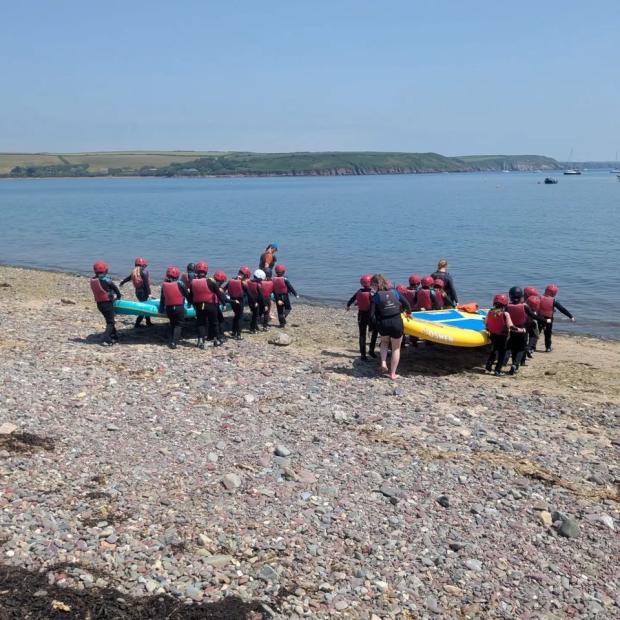
A CHARITY established in memory of 11-year-old Zac Thompson is helping almost 2,000 Pembrokeshire schoolchildren learn potentially life-saving skills in and around the water.
Forever 11 was founded following Zac’s death in 2022, when he was swept into the sea.
The charity began delivering water safety programmes in 2023, initially working with one school. It now supports pupils at 13 primary schools across Pembrokeshire, with around 2,000 children expected to take part in its sessions this year.
Forever 11 chair Carli Newell said the charity believes water safety should be treated as an essential life skill for children growing up in a coastal county.
She said: “Every child in Pembrokeshire deserves the right to have water safety sessions.
“Especially where we live, it should be as important as being able to read.”
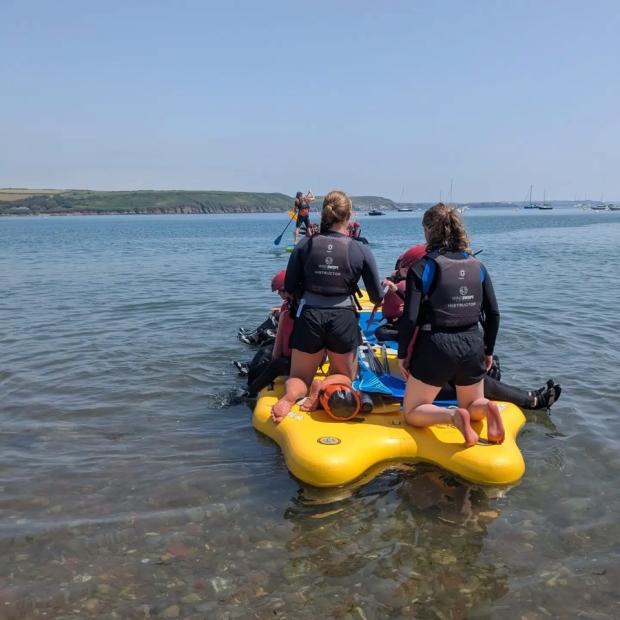
Working alongside organisations including PaddleWest, Activity Pembrokeshire and Windswept Wales, the charity provides practical kayaking, paddleboarding and sea kayaking sessions.
Pupils are also taught important safety advice, including the RNLI’s Float to Live guidance, while some children have the opportunity to gain nationally recognised Paddle Safe and Swim Safe qualifications.
The programme was originally aimed at pupils in Years 5 and 6, but it has since been extended to children in Years 3 and 4.
The charity hopes that introducing younger pupils to the water will help them build confidence and develop essential skills before reaching the age group most at risk of accidental drowning.
Forever 11 trustee Lucy Garett said national drowning figures are reviewed each year to help shape the programme.
She said: “The trends are all the same every year.

“It’s mostly children aged between 10 and 19 who are at risk of accidental drowning.
“We want children to have at least one or two sessions in the water before they reach that higher risk group.”
The sessions are offered to schools free of charge, with the costs covered through fundraising and public donations.
This means children can participate regardless of their family’s financial circumstances.
Forever 11 estimates that it has delivered more than 10,000 hours of water safety education since its work began.
Ms Garett said the response from schools, parents and pupils had been extremely positive.
She added: “Some parents have told us their child had been completely scared of going in the water, but afterwards they said it was one of the best days they’d ever had at school.”
The charity now hopes to work with more watersports providers, allowing the scheme to reach additional schools throughout Pembrokeshire.
Its long-term ambition is for every primary school pupil in the county to finish school with the knowledge and confidence needed to stay safe around the water.
The charity said: “We want every primary-aged child to know what to do to keep themselves and others safe in and around the water.”
Forever 11 will continue raising awareness and funds at Pembroke Regatta on Saturday, July 25, followed by its annual Forever 11 Fun Day on Sunday, July 26.

Coastguard teams and two RNLI lifeboats were called after the group was pushed south while attempting to pass through Jack Sound
THREE kayakers were rescued after getting into difficulty while returning from Skomer Island through Jack Sound.
Watchkeepers at NCI Wooltack Point had been monitoring the group as they attempted to make the crossing, but the kayakers were pushed south and eventually disappeared from view from the station.
One watchkeeper continued searching from the lookout while another went outside to try to locate them. The kayakers were eventually spotted from the cliff-top path in a nearby bay, where it was confirmed that they required assistance.
HM Coastguard was alerted and both Angle RNLI lifeboat and Little and Broad Haven RNLI lifeboat were tasked to the incident.
The rescue was successfully completed, with NCI Wooltack Point praising the teamwork between Pembrokeshire’s search and rescue agencies.
The kayakers later made a donation to the station in recognition of the assistance they had received.
Photo: NCI Wooltack Point watchkeeper Charles



Crime21 hours ago
Jury hears final arguments in Milford Haven teacher stabbing trial
Defence says there was no motive or intention to kill as judge reviews competing accounts of classroom knife incident SPECIAL...


News1 day ago
Andy Burnham becomes Labour leader and prepares to enter No 10
Former Greater Manchester mayor promises an ‘unashamedly Labour’ government after completing extraordinary return to Westminster ANDY BURNHAM has been formally...


News1 day ago
Motorcyclist dies following collision near Narberth
Police appeal for witnesses and footage after fatal crash on B4313 at Redstone A MOTORCYCLIST has died following a collision...


Local Government2 days ago
Stepaside school saved as council abandons closure proposal
Governors welcome decision but maintain original plans were based on outdated information STEPASIDE Community Primary School will remain open after...

Crime2 days ago
Footballer given 200 hours’ unpaid work for eye-gouging assault during match
Magistrates heard Robert Hedley put an opposing player in a headlock before gouging at his eyes during a match in...


Community2 days ago
Tenby Summer Spectaculars brought to an end after harbour licence revoked
Round Table says it was willing to make major safety changes but could not secure the access controls needed to...

Local Government4 days ago
Catapult attacks suspected after wildlife deaths at Pembroke Mill Pond
Wildlife Crime Officers are investigating after the town council said around five animals showed signs of deliberate injury WILDLIFE found...


Crime4 days ago
Narberth retailer speaks of shoplifting toll after ‘collectable bear’ stolen
Independent shop owner said rising costs meant businesses could not afford to absorb losses caused by theft A NARBERTH retailer...


Crime4 days ago
Teen accused of attempting to murder teacher says she lied about stabbing
Defendant accepts teacher was terrified and that a knife wound to the head could kill, but denies deliberately attacking her...


Local Government6 days ago
Calls grow for independent investigation into Manorbier school closure
Councillor alleges misleading figures, inadequate insurance and poor treatment of staff CALLS for an independent investigation into the controversial closure...
-
Crime1 day ago
Milford Haven teacher ‘fought for her life’ during alleged knife attack
-
Crime21 hours ago
Jury hears final arguments in Milford Haven teacher stabbing trial
-
 Crime5 hours ago
Fears wildlife at Mill Pond beauty spot being targeted by catapults
-

 News2 days ago
Welsh broadcasting authority plan sparks row over powers and cost
-
Local Government2 days ago
Stepaside school saved as council abandons closure proposal
-
 Crime2 days ago
Fisherman admits safety offence after death of crewman off Pembs coast
-

 Crime2 days ago
Police searching for driver who abandoned car after Haverfordwest pursuit
-
News1 day ago
Andy Burnham becomes Labour leader and prepares to enter No 10