


News
Pembrokeshire farmers’ fears over WG scheme



River Cleddau: 2,000 farms affected
WELSH GOVERNMENT plans to introduce restrictions on the activities that farmers can carry out on their land and designated times of the year has been met with scepticism and concern by Pembrokeshire’s farmers.
The Welsh Government has introduced a consultation on its scheme to designate the Haven Waterway and two Cleddaus as a Nitrate Vulnerable Zone (NVZ). Farmers claim that the move will increase the costs of production, threaten farms’ viability, and have an adverse effect on the Pembrokeshire Early crop.
WHAT IS AN NVZ?
An NVZ designation places a series of restrictions on farmers’ ability to use certain types of fertiliser on their land at prescribed times of the year. The aim is to reduce the effect that run off from agricultural land has on the environment.
The effects of nitrate pollution on the aquatic environment can be significant. High nitrate concentrations can cause a deterioration in water quality and disturb the ecosystems of rivers and other watercourses. Over enrichment of water can lead to a depletion of oxygen levels leading to a loss of marine life and causes increased toxic and non-toxic algal blooms, which make the situation worse by reducing water transparency. Nitrate pollution can reduce not only the diversity of plant life but also damage fish and shellfish stocks, as the algae consume the available oxygen suffocating other life.

In the worst case scenario, anaerobic (oxygen-starved) conditions cause toxic bacteria to thrive and can create ‘dead zones’.
In order to tackle the threat posed by nitrate pollution, in 1991 the European Union adopted rules governing nitrate pollution and sought to regulate the extent of nitrate pollution entering the environment.
UKIP OPPOSES MOVE
Speaking to The Herald in August, UKIP Wales leader Neil Hamilton told us: “With the imminence of Brexit, it is absurd for the Welsh Government to go ahead with consultations on potential NVZs under the EU Nitrates Directive.

“If implemented, these new zones will adversely affect about 25% of the Welsh dairy herd and 50% of the Welsh potato crop. I will oppose strongly any move by the Welsh Government to impose these zones.
“Farmers don’t need to be dictated to. They know what is best for their land and their crops and they should be allowed to make their own decisions based on personal knowledge of their land and weather conditions.”
Notwithstanding Mr Hamilton’s words, the Welsh Government has decided that now is the time – with Article 50, triggering the UK’s departure/divorce from the EU, due to be activated next March at the latest – to embark upon a round of consultations about the imposition of a regulatory burden based on EU law upon farmers already uncertain about the effect of Brexit upon their incomes.

The rationale underpinning the consultation is based on the environmental principles underpinning the original policy. However, the potential impact of agriculture around the Haven Waterway is significant.
‘EXTREMELY COSTLY’
Pembrokeshire NFU Cymru County Chairman, Walter Simon, said: “Up to 2,000 farmers in in the western and eastern Cleddau river catchments and the Milford Haven estuary could face strict limitations on the use of nitrates on their farms and also face the challenge of a whole host of tough new rules due to potential plans from Welsh Government to extend Nitrate Vulnerable Zones (NVZ) in Wales.
“The Welsh Government are now consulting on proposals that have the potential to bring in 25% of all the land in Wales which is used for milk production and also half of the area that is used to grow potatoes in Wales under a new NVZ designation.”
Mr Simon explained his members’ concerns: “The potential new rules include strict limitations and restrictions on the amount of livestock manure, slurry and fertiliser farmers can spread on their land, particularly during the autumn and winter months and, in tandem with this, there would be very strict requirements on farmers to keep detailed records.
“Dairy and beef farmers would also be required to have storage facilities for slurry and manure for five months from October to March. This is likely to be extremely costly for farmers to implement at a time when they’re receiving very low prices in the market for their products.”
He concluded by questioning the basis upon which the Welsh Government was advancing the plans at this time: “In the context of the EU Referendum decision, it’s very questionable if the implementation of this EU directive should be taken forward. However, if Welsh Government choose to implement this then NFU Cymru is calling on them to base any new NVZ areas on sound scientific evidence. We will scrutinise the evidence in great detail and we’re willing to challenge government plans unless they are robust and stand up to scrutiny.”
‘LONG TERM DAMAGE’ CLAIM
Responding for the Welsh Conservatives, Paul Davies AM warned that excessive regulations could do ‘long term damage’ to the farming industry.
The Conservatives’ Rural Affairs spokesperson said: “Farmers across Wales will be rightly concerned about the Welsh Government’s proposed new Nitrate Vulnerable Zones (NVZ) designations.
“The regulatory burden will do nothing to attract people to farming and the costs attached to these proposals will put a heavy burden on Welsh farmers, at a time when the Welsh Government should be doing more to support our rural economy.
“It seems that both options would unnecessarily and unreasonably affect Welsh farmers.
“That’s why it’s important that a strong message is sent to the Welsh Government and I strongly urge farmers from all parts of the country to respond to this consultation and make sure their voices are heard.”
WG APPROACH LACKS EVIDENCE
FUW Senior Policy Officer Dr Hazel Wright, who has been representing the Union in the review process, said: ‘‘The FUW has been involved in the NVZ review and has made successful representations on several designations, which resulted in their removal from the discrete areas option of the consultation.
“However, the number of proposed new designations remain a concern and the FUW continues to reiterate the operational and financial impacts those designations would have upon farms that reside within an NVZ area. Given such costs, there must be full justification for any proposed increases in designation.”
Two options outlined in the consultation include the continuation of the discrete approach to designation or the designation of the whole of Wales as a NVZ. A continuation of the discrete approach would see an increase in the amount of NVZ designations in Wales rise from 2.4% to 8%. This would mean significant changes to NVZ designation in counties such as Pembrokeshire, Carmarthenshire and Anglesey.
“The FUW remains resolutely against the option to apply the action programme throughout the whole of Wales as this would require all landowners to comply with the NVZ action programme measures.
“There is a distinct lack of evidence for a whole territory approach and the difficulties and costs associated with regulatory compliance for farms whose land does not drain into nitrate polluted waters, makes this option both unwarranted and unreasonably excessive,” added Dr Wright.
2,000 FARMS COULD BE AFFECTED
Mid and West AM, Shadow Cabinet Secretary for Energy, Climate Change and Rural Affairs, Simon Thomas said: “Plaid Cymru understands that up to potentially 2,000 farms that border on the Cleddau tributaries and the Cleddau estuary area would be affected. These farmers would face the need to make huge investments at a difficult time, for example, in slurry storage.
“We have called upon the Welsh Government to provide those farmers with support to meet the requirements without jeopardising their businesses.
“Natural Resources Wales would be tasked with regulating the NVZs. The organisation has faced cuts in the last Assembly Term. We have called upon the Welsh Government to ensure that NRW has the resources it needs to carry out its duties. As much as possible, both NRW and the Labour Welsh Government should work to achieve the aims of the NVZ through voluntary means and must also examine other potential factors outside of farming.”
NFU Cymru is encouraging affected farmers within the county to get involved with the consultation process. A meeting will be held on Thursday (Oct 13) at The Pavilion, Pembrokeshire Showground, Withybush, Haverfordwest, starting at 7:30pm. Access to The Pavilion for the meeting is via Gate 3, which is 200m past the main entrance to the Showground.



Claire Archibald says proposals affecting Cilgerran and Manorbier show rural families risk losing real parental choice
A REFORM UK Senedd member has asked the Welsh Government to intervene over the future of Church schools in West Wales, following growing concern about proposals affecting rural schools in Pembrokeshire and Ceredigion.
Claire Archibald MS, who represents Ceredigion Penfro, has written to Education Minister Anna Brychan asking what safeguards are in place to protect Church schools, Christian education and parental choice.

Her intervention follows months of controversy over the future of rural education provision, including proposals affecting Cilgerran Church in Wales Voluntary Controlled School and Manorbier Church in Wales Voluntary Controlled School.
Pembrokeshire County Council has consulted on plans to discontinue Cilgerran Church in Wales VC School and establish a new 3-11 community school in its place.
In Manorbier, the council has also progressed proposals to discontinue the village’s Church in Wales school, which has been at the centre of a long-running row following a serious fire.
Ms Archibald said the issue should not be treated as a simple administrative change.
She said: “Christianity has helped shape Wales for generations. It is part of our history, our values, and the life of many of our villages and towns.

“Church schools matter. They give parents the choice of a Christian education for their children, and in rural areas that choice can be lost very easily when a school is closed, reorganised, or stripped of its Church status.
“I fully understand that councils face financial pressures and difficult decisions, but we cannot allow those pressures to quietly erase Christian school provision from rural Wales.
“These are not just technical changes. They affect parental choice, community life, and the future of Christian education in Wales.”
Rural school concerns
The Herald has previously reported on strong opposition to changes at Cilgerran, where many parents and residents have argued that the school’s Church status is part of its identity and community role.
The Manorbier case has also attracted significant local attention, with campaigners arguing that the village school should be protected following the disruption caused by the fire and the temporary relocation of pupils.
Ms Archibald said the pattern across rural Wales was worrying.
She has also raised concerns about proposals affecting village schools in Ceredigion, including Ysgol Llanfihangel y Creuddyn, a community school on a Church in Wales-owned site.
She said: “Parents should not be told they have choice on paper when the nearest realistic alternative may be many miles away.
“In rural areas, distance matters. Transport matters. Community matters.
“I have asked the Education Minister to set out what safeguards are in place to protect Church schools, Christian education, rural communities, and parental choice before these decisions are allowed to go ahead.”
Questions for ministers
In her letter, Ms Archibald asked the Welsh Government to confirm what assessment has been made of Church schools closed, discontinued, or proposed for category change in Wales.
She has also asked whether stronger guidance will be issued to councils considering proposals that affect Church schools.
The MS has requested that the minister meet affected parents, governors, local representatives and the relevant dioceses.
Councils have previously argued that school reorganisation proposals must take account of pupil numbers, building conditions, budgets, educational standards and long-term sustainability.
However, campaigners say that in rural communities the closure or reclassification of a school can have consequences beyond education, including the loss of community identity, longer journeys for children and fewer realistic choices for parents.

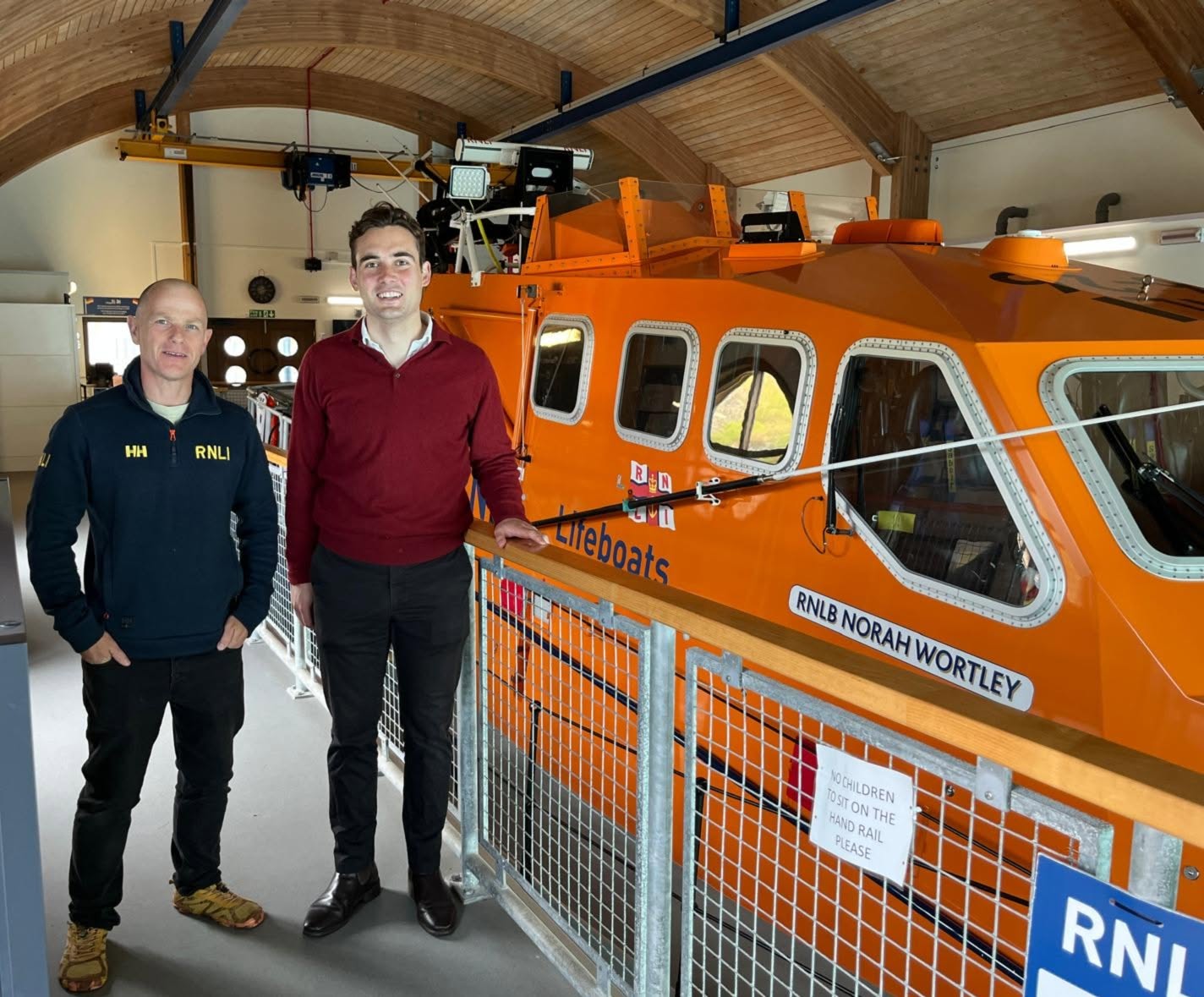
MP pledges to raise funding and regulation concerns after meeting volunteer crew at St Justinian
HENRY TUFNELL MP has visited St Davids RNLI lifeboat station to hear first-hand about the work of its volunteer crew.
The Mid and South Pembrokeshire MP met crew members at St Justinian, where he was briefed on some of the rescue missions carried out by the station off the Pembrokeshire coast.
Mr Tufnell said the visit had highlighted both the dedication of the lifeboat crew and the pressures facing the service.
He said: “It was a privilege to visit the RNLI St Davids Lifeboat at St Justinian and hear first-hand about some of the remarkable rescue missions the crew have undertaken.
“They do extraordinary work keeping our community safe.”
Mr Tufnell added that crew members had also raised concerns about ongoing challenges, including funding and regulation.
He said: “It was also important to hear about the ongoing challenges they face, particularly regarding funding and regulation.
“As your MP, I will continue to champion and protect the interests of our community heroes in Westminster.”
The RNLI station at St Davids is one of Pembrokeshire’s key coastal rescue bases, serving a busy and often challenging stretch of coastline popular with walkers, kayakers, boat users and visitors.
The charity relies on volunteer crews and public support to continue its lifesaving work.

Hartt family members listed at Haverfordwest Magistrates’ Court over unpaid penalties linked to major cattle prosecution
TWO PEMBROKESHIRE farmers convicted in a major bovine tuberculosis-related cattle case are due back before the courts this week over unpaid financial penalties.
Henry Hartt, 66, of Ciffig, Whitland, and Edward William Henry Hartt, 48, of Llandewi Velfrey, are both listed to appear at Haverfordwest Magistrates’ Court on Thursday (June 11).
Court records show both men face proceedings relating to the non-payment of fines of £94,739.64 imposed on March 4, 2024. Separate applications to lodge committal warrants are also listed, relating to unpaid fines of £22,300 and £22,400 respectively.
The pair were among three members of the Hartt family sentenced at Swansea Crown Court in March 2024 following a major prosecution brought by Pembrokeshire County Council involving bovine TB controls.
The court heard that cattle known to have reacted to bovine tuberculosis tests were knowingly kept on-farm, while substitute animals were allegedly presented for slaughter instead.
At the time, Henry Hartt, Edward Hartt and Charles Hartt admitted a total of 12 cattle identification offences connected to Longford Farm, Clynderwen.
The case centred on failures to comply with bovine TB restrictions and cattle tracing rules designed to prevent the spread of the disease.
Each defendant was fined £24,000, while confiscation orders and prosecution costs running into hundreds of thousands of pounds were also imposed.
Thursday’s hearing is expected to deal with enforcement proceedings connected to the unpaid financial orders rather than the original criminal offences.
The Herald will be attending court.



Crime2 hours ago
Farmers fined in bovine TB scandal face fresh court action
Hartt family members listed at Haverfordwest Magistrates’ Court over unpaid penalties linked to major cattle prosecution TWO PEMBROKESHIRE farmers convicted...


Crime6 hours ago
Pembrokeshire child killer stabbed to death in prison cell, murder trial hears
Kyle Bevan, jailed for the murder of Haverfordwest toddler Lola James, was allegedly stabbed 25 times and left ‘as if...


News13 hours ago
Pendine cliff fall victim recovering after major emergency response
A 22-YEAR-OLD man who suffered serious injuries after falling from cliffs overlooking Pendine Beach is recovering well following emergency surgery....


News1 day ago
First Minister challenged over jobs for student nurses
REFORM WALES has accused the First Minister of failing to guarantee jobs for student nurses in Wales, despite continuing pressure...

Crime1 day ago
Knife blankets call as school staff face rising violence fears
GMB says protective equipment should be considered where risk assessments show staff could face blades SCHOOL staff should be given...


News1 day ago
Claire Archibald secures review of Milford Haven train times
RURAL TRANSPORT CONCERNS RAISED WITH TFW CLAIRE ARCHIBALD MS has secured a review of train times between Milford Haven and...


Crime1 day ago
PCC review calls for stronger youth crime prevention work
REPORT MAKES 13 RECOMMENDATIONS A REVIEW into crime and anti-social behaviour services for young adults has called for stronger prevention...


Crime2 days ago
Families condemn failed appeal by paddleboard boss jailed over Haverfordwest tragedy
RELATIVES SAY LATEST COURT BID HAS REOPENED PAIN AFTER FOUR DEATHS ON WESTERN CLEDDAU THE FAMILIES of victims of the...


Community2 days ago
Forgotten wartime archive found in Pembroke Dock attic after 80 years
Remarkable family collection reveals story of father and son who served through two world wars A REMARKABLE untouched family archive...


Crime2 days ago
Sex offender in senior role at Tenby family hotel
CREST HOTEL GROUP says it is investigating safeguarding concerns after staff at the Imperial Hotel in Tenby raised alarm over...
-
Crime5 days ago
Paddleboard company owner loses bid to cut sentence over Haverfordwest tragedy
-

 Crime4 days ago
Milford Haven man admits harassment and assault
-

 News4 days ago
Community appeal for privacy after serious emergency in Pendine
-
Crime2 days ago
Sex offender in senior role at Tenby family hotel
-
Community2 days ago
Forgotten wartime archive found in Pembroke Dock attic after 80 years
-

 Business5 days ago
Call for gym and Padel courts at Kiln Park Farm unanimously backed
-
Crime2 days ago
Families condemn failed appeal by paddleboard boss jailed over Haverfordwest tragedy
-

 Community4 days ago
Founders Day hailed a success despite rising costs and extra security